Near the edge of a Paris sidewalk, there is a small bronze disc set into the stone. It is worn smooth. People step on it all day. Most never notice it.
Stamped at the center is a single word: ARAGO.
There are more than a hundred of these discs scattered across the city. They appear in courtyards, museum floors, sidewalks, and streets. On their own, they mean nothing. Together, they mark a straight line running north to south through Paris for nearly six miles.
That line once mattered. A great deal.
It is the Paris Meridian, a reminder of the period when France believed it could fix the coordinates of the world.
When an Imaginary Line Determined Where Maps Began and Time Was Set

A meridian is an imaginary line from the North Pole to the South Pole. Before satellites and atomic clocks, these lines were not academic. They were tools. Ships depended on them. Maps depended on them. Time depended on them.
The Paris Meridian was formalized on June 21, 1667. Louis XIV ordered the Paris Observatory built so the line would pass directly through it. The placement was intentional and political. From Dunkirk to Perpignan, the meridian cut straight through the country.
French sailors navigated by it. Cartographers used it as their reference. More importantly, it became the spine of the metric system. The meter was defined as one ten-millionth of the distance from the equator to the North Pole, measured along the Paris Meridian. That decision still sits quietly inside every measuring tape.
In 1884, the world chose Greenwich instead. The vote took place in Washington, D.C. France abstained and continued using its own meridian for years afterward. Civil time switched in 1911. Navigation followed in 1914. The line faded, but it never vanished.
François Arago, Who Measured the World and Briefly Ran a Revolution

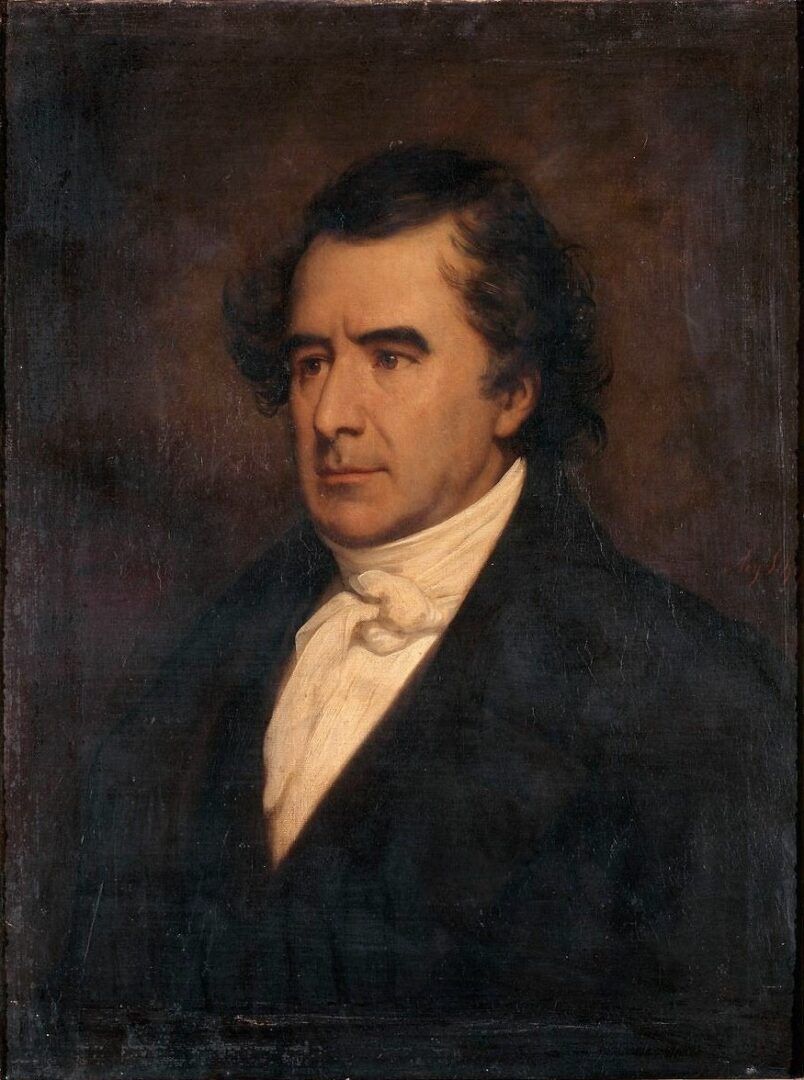
The discs bear the name of François Arago, who was born in 1786 and died in 1853. He was an astronomer and physicist, but also a politician, which was unusual even then.
At nineteen, he was appointed secretary-librarian of the Paris Observatory. Soon after, he was sent to Spain to extend meridian measurements to the Balearic Islands. War intervened. Arago was arrested, imprisoned, escaped, captured again, escaped again, and eventually made his way back to Paris. He returned with his measurements and a reputation for stubborn resolve.
In 1843, he became director of the Observatory. During the revolution of 1848, he briefly became head of the Executive Commission, a position close to head of state. In six weeks, he abolished slavery in French colonies and argued against the death penalty.
Arago believed that measurement was political. Shared standards meant shared reality. Accuracy was a form of equality.
Jan Dibbets’s Decision to Bury a National Idea in Plain Sight
The medallions were installed in 1994 to mark the bicentennial of Arago’s birth. The artist, Jan Dibbets, refused the usual solution. No statue. No plinth. No single place to stand and admire.
Instead, he embedded 135 identical bronze discs along the exact path of the Paris Meridian. Each is twelve centimeters across. Each reads “ARAGO,” with an N and an S.
Dibbets was interested in perception, not spectacle. The work only exists if you notice it, and it never fully reveals itself. You cannot see it whole.
Walking the Meridian Through Cafés, Museums, and the Middle of Daily Life
The meridian cuts through six arrondissements: the 18th, 9th, 2nd, 1st, 6th, and 14th. It crosses Montmartre, Pigalle, the Palais-Royal, the Louvre courtyard and galleries, the Pont des Arts, Saint-Sulpice, the Jardin du Luxembourg, the Paris Observatory, Parc Montsouris, and the Cité Universitaire.
Some medallions are easy to spot. Others are inside museums or on private property. A few sit under café tables.
Officially, 134 remain. The 135th was set into the pedestal of a statue of Arago on Boulevard Arago.
The statue is gone.
How War, Theft, and Roadwork Broke the Line Without Erasing It

In 1941, under the Vichy government, dozens of bronze statues in Paris were removed and melted down. Metal was scarce. Republican symbols were unwanted. Arago’s statue was destroyed.
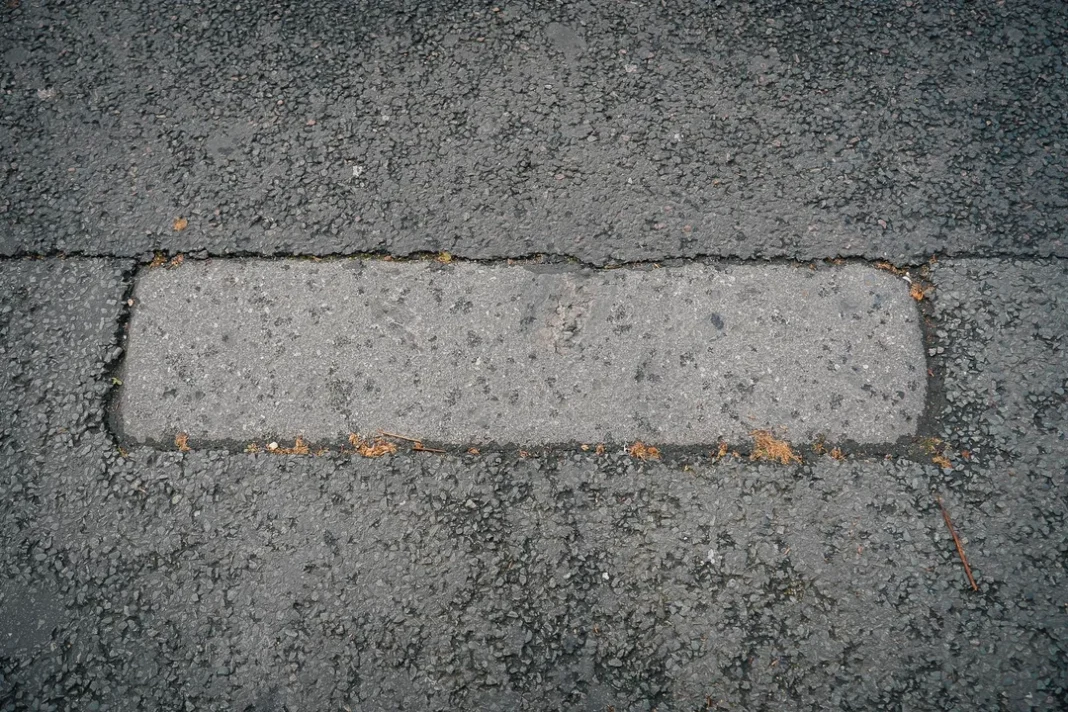
The pedestal was left behind. One medallion marks the place.
Other discs have disappeared over time. Some were stolen. Others were lost during roadwork. Their absence has become part of the piece. The line is now incomplete. You have to imagine parts of it.
How The Da Vinci Code Turned a Surveyor’s Line Into a Myth
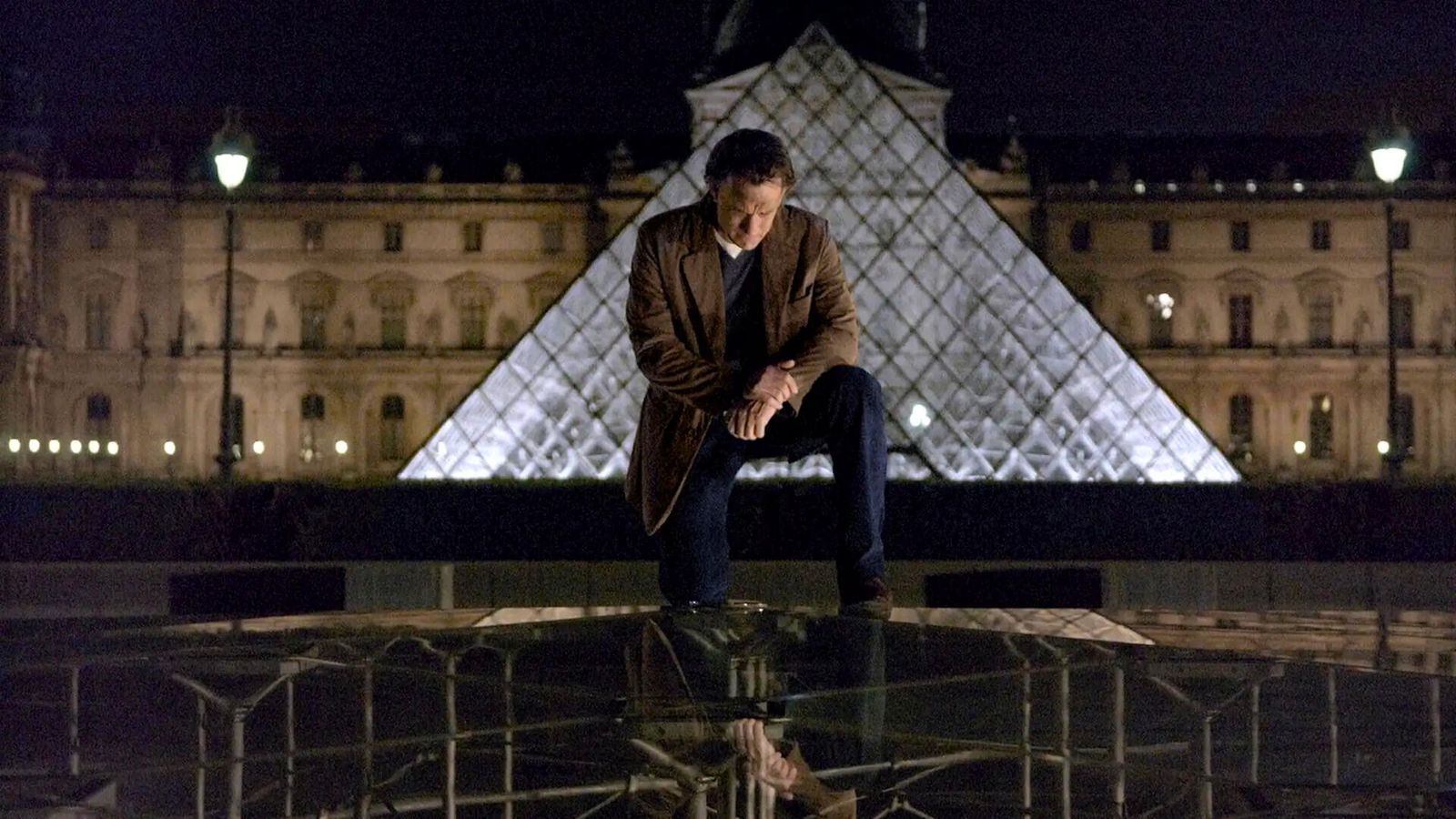
The medallions acquired a second life through fiction. In The Da Vinci Code, Dan Brown renamed the Paris Meridian the “Rose Line” and turned it into something mystical. The idea stuck, despite having no basis in history.
In fact, the markers are exact, secular, and deliberately plain. They reflect a time when Paris believed that shared measurement could organize the world.
Most people still walk over them without noticing.
Readu to Explore the City Through Arago’s Markers?
Now that you know about them, you can go hunting for the Arago Medaillons all over Paris! There are many to find; some have been damaged or even stolen, but most remain, secret and hidden in plain sight, waiting for the curious eye.
The most famous ones, over a hundred, are listed below. Happy hunting 😉
Arago Medaillons in Paris (ordered by arrondissement):
1st arrondissement
- 24 rue de Richelieu (1)
- 9 rue de Montpensier (1)
- Palais Royal: Montpensier and Chartres peristyles, Nemours gallery, covered passage on the square side
- Place Colette (7)
- Corner of Place Colette and Conseil d’État, rue Saint Honoré (1)
- Place du Palais Royal, on rue de Rivoli side (1)
- Rue de Rivoli, at the entrance of the covered passage (1)
- Louvre, Richelieu wing: French sculpture room and in front of the escalator (3)
- Louvre, Cour Napoléon, behind the pyramid (5)
- Louvre, Denon wing: Roman antiquities room, staircase and corridor (3)
- Quai du Louvre, near the entrance of Pavillon Daru (1)
- Port of the Louvre, not far from Pont des Arts (1)
2nd arrondissement
- 16 rue du 4 Septembre (1)
- 15 rue Saint Augustin (1)
9th arrondissement
- 21 boulevard de Clichy, sidewalk side and central reservation (2)
- 5 rue Duperré (1)
- 69/71 rue Pigalle (2)
- 34 rue de Châteaudun, inner courtyard of the Ministry of National Education (2)
- 34 rue de Châteaudun (1)
- 18/16 and 9/11 boulevard Haussmann, in front of the restaurant (2)
- Corner of rue Taitbout, in front of the brasserie
- 24 boulevard des Italiens (2)
6th arrondissement
- Port des Saints-Pères (1)
- Quai Conti, one at the corner of Place de l’Institut (2)
- Place de l’Institut, passage rue de Seine (1)
- 3 and 12 rue de Seine (4)
- Corner rue de Seine / rue des Beaux-Arts (1)
- 152 and 125-127 boulevard Saint-Germain (2)
- 28 rue de Vaugirard, Senate side (1)
- Luxembourg Garden, on asphalted or cemented spaces (10)
- Rue Auguste Comte, at the entrance of the garden (1)
- Avenue de l’Observatoire, sidewalk side toward the garden (2)
- Corner Avenue de l’Observatoire / rue Michelet (1)
- Marco Polo Garden (3)
- Corner Avenue de l’Observatoire / rue d’Assas (1)
- Place Camille Jullian (2)
- On the traffic island at the corner of Avenue Denfert-Rochereau / Avenue de l’Observatoire, Observatoire side (1)
- Avenue de l’Observatoire (2)
14th arrondissement
- Courtyard of the Paris Observatory (2)
- Inside the Observatory (1)
- Terrace and upper garden, inside the protected Observatory grounds (7)
- Boulevard Arago / Place de l’Ile de Sein (6)
- 81 rue du Faubourg Saint-Jacques (1)
- Place Saint-Jacques (1)
- Parc Montsouris (9)
- Boulevard Jourdan (2)
- Cité Universitaire, axis from the Canadian Pavilion to the Cambodian Pavilion, the last one is behind this pavilion (2)
18th arrondissement
- 18 avenue de la Porte de Montmartre, in front of the municipal library (1)
- Corner rue René Binet / avenue de la Porte de Montmartre (1)
- 45/47 avenue Junot (1)
- 15 rue S. Dereure (1)
- 3 and 10 avenue Junot (2)
- Mire du Nord, 1 avenue Junot, in private courtyard, restricted access (1)
- 79 rue Lepic (1)

For those who wish to follow the story to its end, François Arago rests in Père Lachaise Cemetery, a place where visitors can pause, reflect, and pay homage to the man whose work shaped the world.