A full account, from the fall of the monarchy to the royal tomb (or maybe not).
A Revolution, a Trial, and a Death Sentence

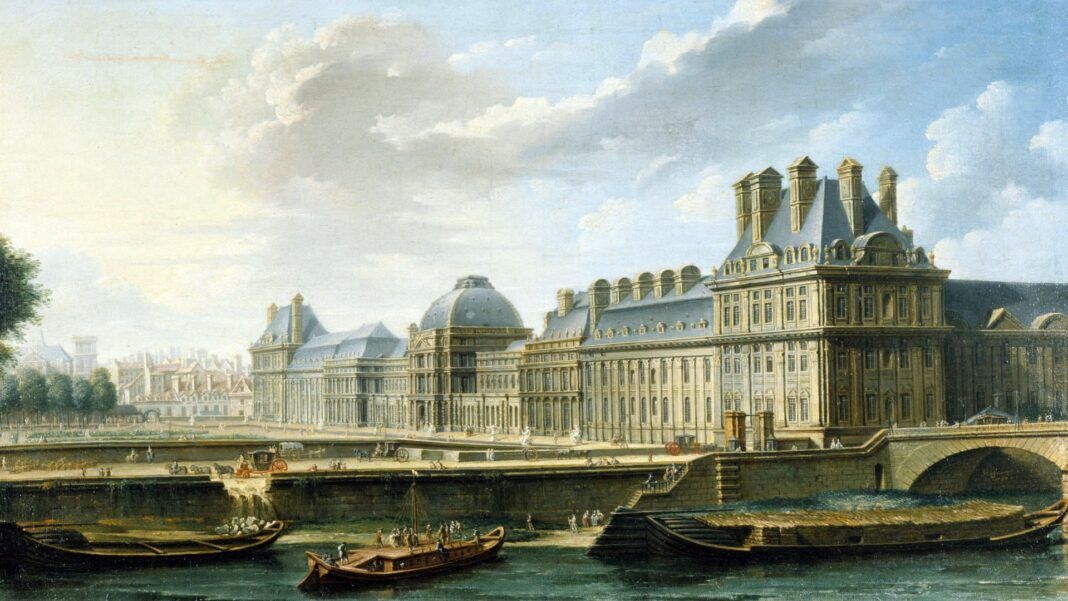
On August 10, 1792, the French monarchy collapsed. The Tuileries Palace was stormed by revolutionary forces — National Guards and armed civilians organized by Jacobins.
King Louis XVI, his wife Marie Antoinette, their two children, and his sister Élisabeth were imprisoned in the Temple, a medieval fortress in Paris. The monarchy was officially abolished on September 21, and Louis was stripped of all titles.

Charged with high treason and conspiracy against the state, Louis XVI was put on trial before the National Convention. After 37 continuous hours of debate, the assembly narrowly voted for execution. The sentence was announced to the king on January 20, 1793. His final request — a delay of three days to prepare spiritually — was denied.

That evening, Louis had a final meal, met with his family one last time, and spent hours with his confessor, Abbé Edgeworth de Firmont. He went to bed around midnight.
January 21, 1793: The Final Morning
At 5 a.m., Louis was woken by his valet, Cléry. At 6, the abbé returned and celebrated Mass. The king received the Eucharist. He refused a final goodbye with his family, on his confessor’s advice, to avoid emotional collapse.
Before leaving, he passed a seal bearing the royal arms to Cléry, to be given to his son. He gave his wedding ring to be sent to Marie Antoinette. He wore a white quilted vest, grey breeches, and grey silk stockings. Outside, it was cold and foggy — around 3°C.
Due to a request from the mayor of Paris, the king was not sent to his death in the usual open cart, but in a green mayoral carriage. He rode with the abbé and two guards. The streets were filled with 80,000 armed men: National Guards, fédérés, and regular soldiers. Cannons were posted at major junctions.
The procession took a winding route through Paris. Near the rue de Cléry, Baron de Batz and a few royalist conspirators tried to launch a last-minute rescue. It failed. Three men were killed, and de Batz fled.
On the Scaffold

The guillotine was erected at the center of the Place de la Révolution — formerly Place Louis XV, and known today as the Place de la Concorde. The statue of Louis XV had been torn down. The scaffold, painted red, was heavily guarded and surrounded by 20,000 troops. The public was kept at a distance.
At about 10:15 a.m., Louis arrived. He stepped down from the carriage, removed his overcoat and cravat. When Sanson’s assistant moved to bind his hands, Louis hesitated. At the urging of Abbé Edgeworth, he consented. His hands were tied behind his back with his own handkerchief. His hair and shirt collar were trimmed.
With the crowd watching in silence, he climbed the scaffold. He walked to the edge and called out:
“I die innocent of all the crimes laid to my charge. I pardon those who have occasioned my death, and I pray to God that the blood you are going to shed may never fall upon France.”
Before he could finish, the order was given and the drums drowned him out.
At exactly 10:22 a.m., the guillotine fell. Some say the executioner’s son, Henri Sanson, lifted the severed head and held it aloft. Others credit another assistant named Gros. The crowd responded with cries of “Long live the Republic! Long live the Nation!” Some danced the farandole, a traditional circle dance. Cannon salutes echoed across Paris.
Burial at the Cimetière de la Madeleine
Louis XVI’s body was placed in Sanson’s cart and transported to the Cimetière de la Madeleine, then a quiet burial ground located behind the Church of the Madeleine, in what is now Paris’s 8th arrondissement. During the Revolution, it served as the main cemetery for guillotine victims.
The Convention rejected the royal family’s request to bury Louis alongside his father in Sens. Two constitutional priests, loyal to the Republic, conducted a brief funeral. Eyewitness Vicar Damoureau described the scene:
“He wore a white vest, grey silk breeches, and matching stockings. We chanted vespers and the prayers for the dead. The body was laid on a bed of quicklime in a deep grave. His head was placed at his feet, and the pit was filled with lime and earth, tamped down firmly.”
The burial was intentionally deep, and the lime ensured quick decomposition — both meant to prevent recovery or royalist glorification.
Marie Antoinette’s Trial, Execution, and Burial

Nine months later, on October 16, 1793, Marie Antoinette was sentenced to death by the Revolutionary Tribunal after a two-day trial. Charges included depleting state funds, conspiring with Austria, and incest with her son — a baseless claim that horrified even some revolutionaries.
At 10 a.m., the sentence was read. Her hands were tied, her hair was cut, and she was led through the streets in an open cart — no special treatment. Unlike Louis, she wasn’t allowed to choose her priest, and she rejected the state-appointed one.
Thirty thousand troops lined the route. Crowds jeered as the cart rolled slowly through Paris. When she reached the scaffold, she lost a shoe while climbing the steps — it’s now preserved in a museum in Caen. Legend holds she stepped on Sanson’s foot and whispered:
“Pardon me, sir, I did not do it on purpose.”
She was strapped in. The blade fell. Her head was held up and displayed to the crowd, accompanied by cries of “Vive la République!”

Her body was then taken to the Cimetière de la Madeleine, the same site where her husband had been buried nine months earlier. Like him, she was laid in a deep pit and covered with quicklime. According to some reports, her head was deliberately placed between her legs as a final humiliation.
Cambacérès, a member of the Executive Council, was tasked with ensuring the monarchs’ bodies decomposed quickly and would not be recovered.
Reburial and Restoration

In 1814, after the fall of Napoleon, Louis XVIII — brother of Louis XVI — restored the monarchy and ordered the recovery of the royal remains.
An investigation began to locate their graves, relying on witnesses who had memorized the burial sites. On January 18, 1815, digging began. Marie Antoinette’s remains were found first, then Louis XVI’s the next day.
What was left of their bodies was placed in lead coffins, sealed in wooden ones reinforced with iron. Draped in a black royal mantle and topped with the French crown, the coffins were carried in procession to the royal necropolis at Saint-Denis, to rest among the kings of France.

A memorial to Louis XVI and Marie Antoinette’s final resting place.
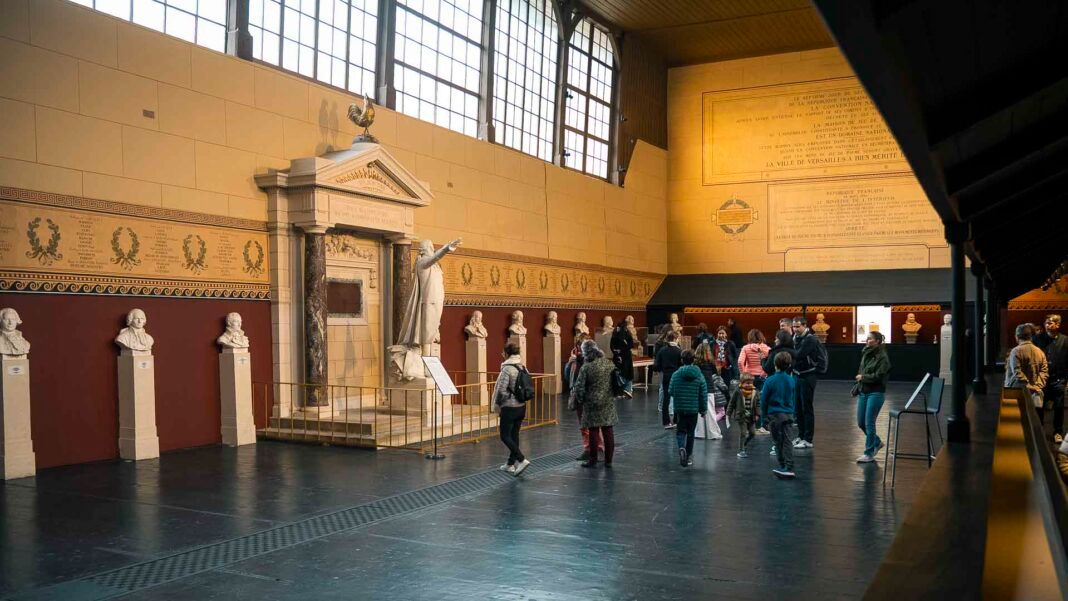
The Chapelle Expiatoire, built on the site of the Madeleine Cemetery, commemorates the tragic fate of Louis XVI and Marie Antoinette, whose remains were initially buried here after their execution.


A year after the reburial, sculptor François-Joseph Bosio created a white marble statue of Louis XVI supported by an angel, symbolizing martyrdom and divine grace.
Facing him is Jean-Pierre Cortot’s statue of Marie Antoinette, shown kneeling before a personification of Religion. Her posture reflects both submission and redemption — a royal figure brought low, but spiritually reconciled.
Are They Really There?
Historians generally agree that Marie Antoinette’s body was correctly identified. But there’s lasting doubt about Louis XVI’s.
Some 1815 accounts suggest the body found may have been naked — yet Louis had been buried clothed in a white vest and grey breeches. With multiple bodies buried close together and no markers, some suspect the wrong remains were recovered and reburied. If true, Louis XVI’s real remains may still lie beneath modern Paris.
The revolutionaries buried them to erase their legacy. More than two centuries later, their deaths remain among the most symbolically powerful events in French history.