I’m standing in Place Joachim-du-Bellay. A teenager in a Supreme hoodie vapes by the fountain. His girlfriend films TikTok. Tourists eat ice cream. An old man feeds pigeons.
Almost no one knows that beneath this square, two million bodies once rotted in mass graves.
And fewer still remember the women who chose to be buried alive.
The Stone Coffins
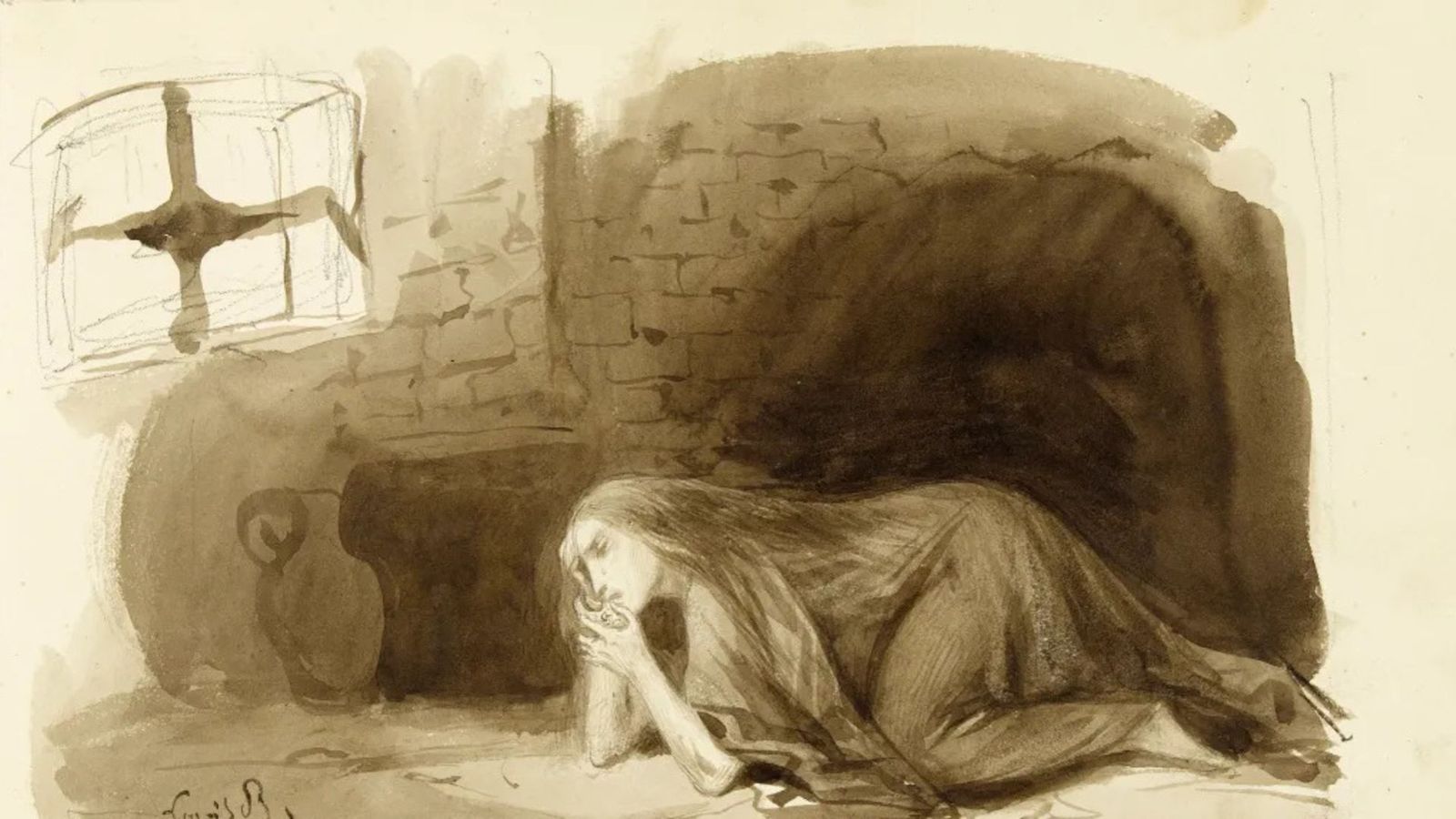
They were called recluses, from recludere—to shut away. Between the 11th and 16th centuries, some women asked to be sealed into stone cells barely larger than a prison toilet. Often under four square meters.
Each cell had two small windows: one toward the church so the woman could watch Mass through iron bars, and one toward the street where people passed food and coins through a grate.
The door was sealed during a funeral ceremony. Because that’s what it was. Your own funeral, while still alive.
Stand here and imagine the smell. The Cimetière des Saints-Innocents filled this area for centuries. Victor Hugo described its stench as somewhere between war and plague. Bones were stacked in galleries along the walls once the mass graves overflowed.
Built into those same walls were the reclusories. The women lived facing a cemetery that never slept.
Forty-Six Years in Four Square Meters
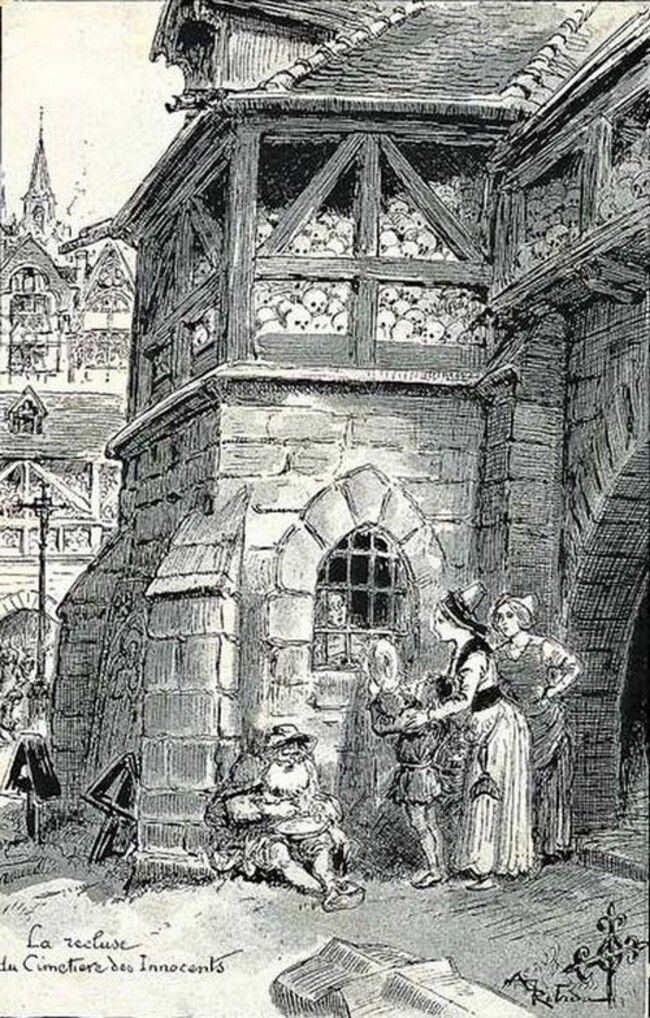
Her name was Alix la Burgotte. She had been a nun at the Hôpital Sainte-Catherine, but wanted more severity.
On July 2, 1420, she bought about 20 square meters of land near this spot. Then she asked to be walled inside it.
She stayed there for 46 years.
Alix likely entered in her twenties and died in her seventies, in 1466. She lived through the end of the Hundred Years War, plagues, riots, famine. She watched it all through a window about the size of a book.
Louis XI later commissioned a bronze tomb for her. The inscription said:
“She reigned humbly and long / And remained a full forty-six years.”
Reigned. That word mattered.
The Ceremony Nobody Wants to Attend
The ritual was meant to frighten you. Once sealed, there was no return.
The bishop questioned the woman repeatedly to be sure she understood. Then came last rites. A requiem Mass. Prayers for the dead, spoken while she stood there alive.
The entrance was bricked up as she sang, if she could: “This is my rest forever and ever.”
Medieval records called recluses part of the “Order of the Dead.” Legally and socially, they no longer existed.
Inside, the cell might be six to nine square meters. A hard bed. Maybe a stool. A tiny fireplace that barely worked in winter. Through the church window—the hagioscope—she saw the altar and received communion. Through the street window—the fenestrelle—strangers passed bread and cheese.
A hole in the floor served as a toilet.
The Most Famous Cemetery in France
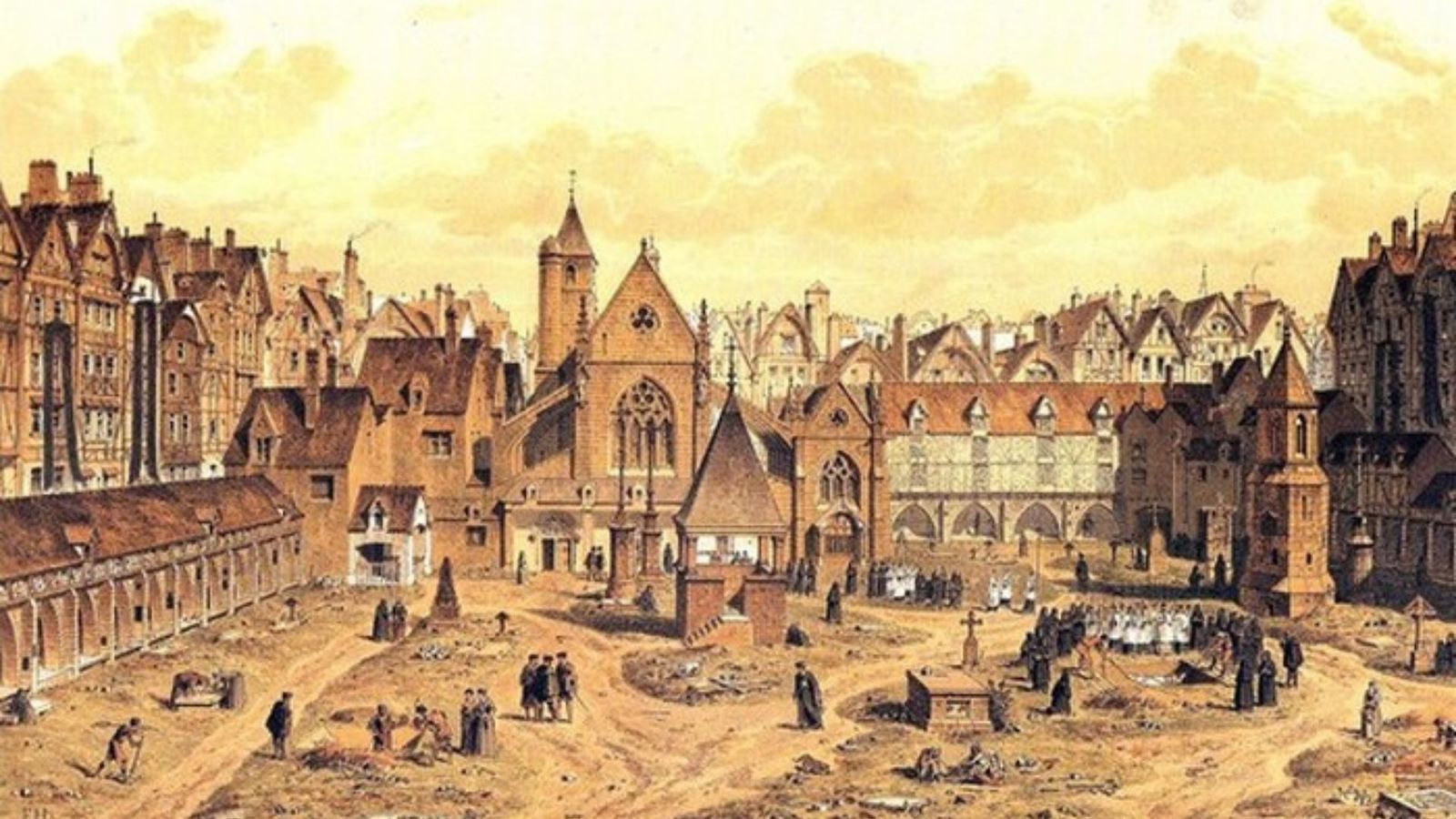
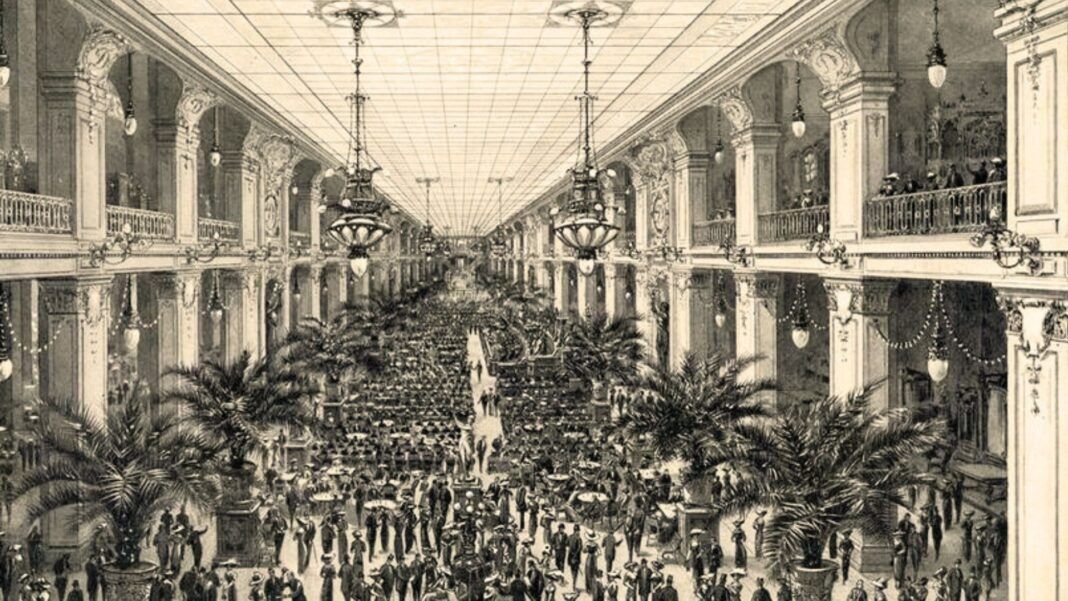
Saints-Innocents wasn’t just a cemetery. It was a marketplace.
Merchants sold produce under its arcades. Prostitutes worked the shadows. Pickpockets circled crowds. Beggars displayed wounds. Couples met for sex. All while bodies were dumped into pits so deep they stacked the dead like firewood.
The cemetery had at least two reclusories. Records from 1247 mention four recluses here at once. Wealthy Parisians left them money in their wills. These women were considered living saints, praying to protect the city from plague and invasion.
Their cells opened directly onto the noise and filth. Prayer competed with haggling, corpse wagons, and street fights.
The Murderer’s Cell
Not all recluses chose this life.
In 1485, Renée de Vendômois arranged her husband’s murder and was also having an affair. She was sentenced to burn alive.
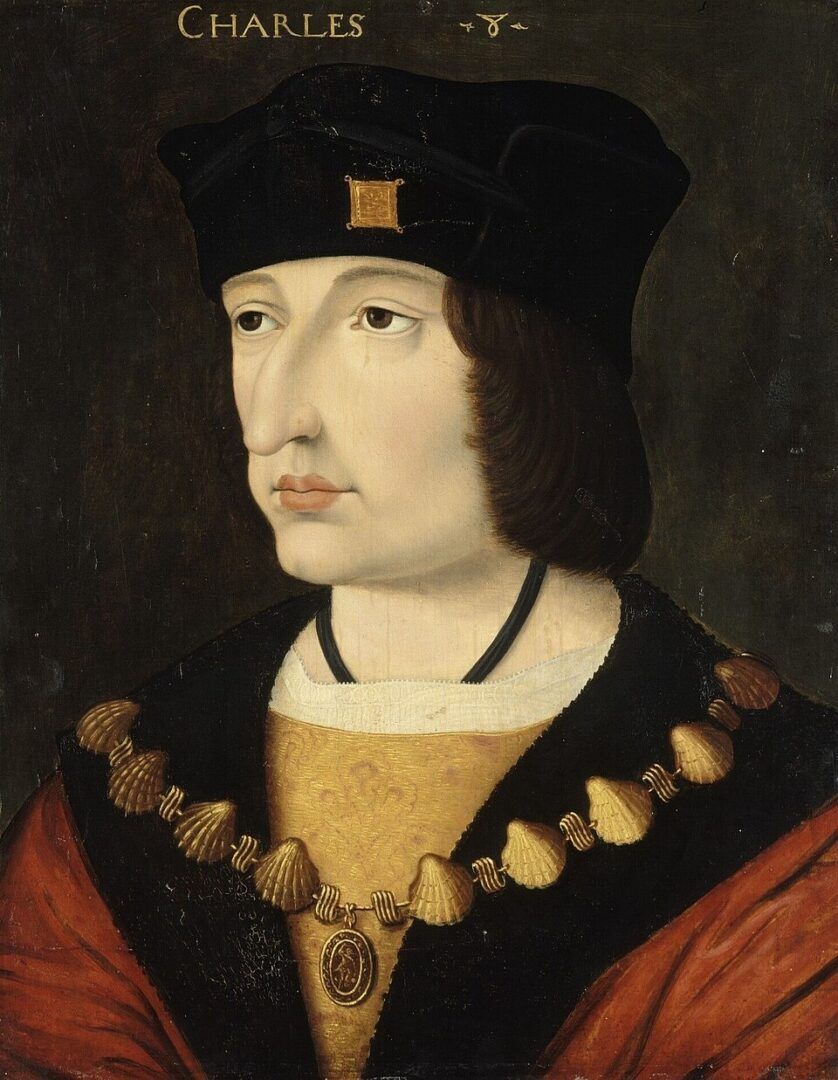
King Charles VIII intervened. Instead, she was condemned to lifelong enclosure at Saints-Innocents, sealed into a cell built at her own expense.
She paid for her living tomb. Then spent the rest of her life listening to Paris through a slit in the wall.
Church records mention other recluses who begged to be released or went mad. Some tried to escape. After a few years in a stone box, devotion and insanity looked much the same.
Why Would Anyone Do This?
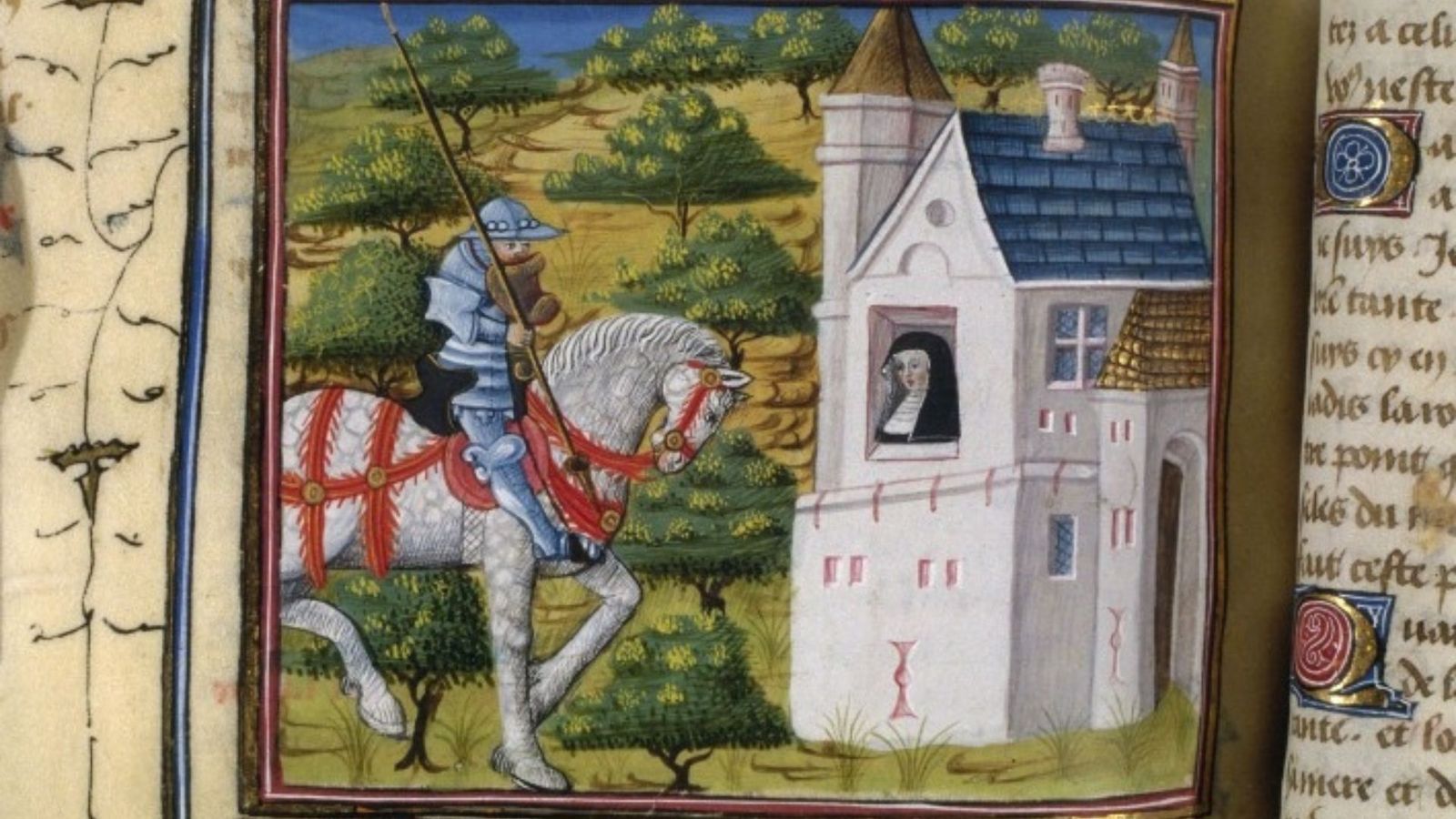
Medieval women had few good options.
Marriage meant submission to a husband you didn’t choose, frequent pregnancy, and a high chance of dying in childbirth. Half of all children died young. Poverty meant hunger and violence. Wealth meant political marriages and family poisonings.
Convents required dowries many families couldn’t pay. The streets meant constant risk of assault.
A reclusory offered something rare: autonomy. A woman answered only to God and the bishop. She received food through donations. She was protected from men. She had time to read, pray, and think.
People believed her prayers had power. Kings sought their advice. She was feared and respected.
It wasn’t freedom. But for some women, it was the least brutal option.
Hugo Made Them Famous
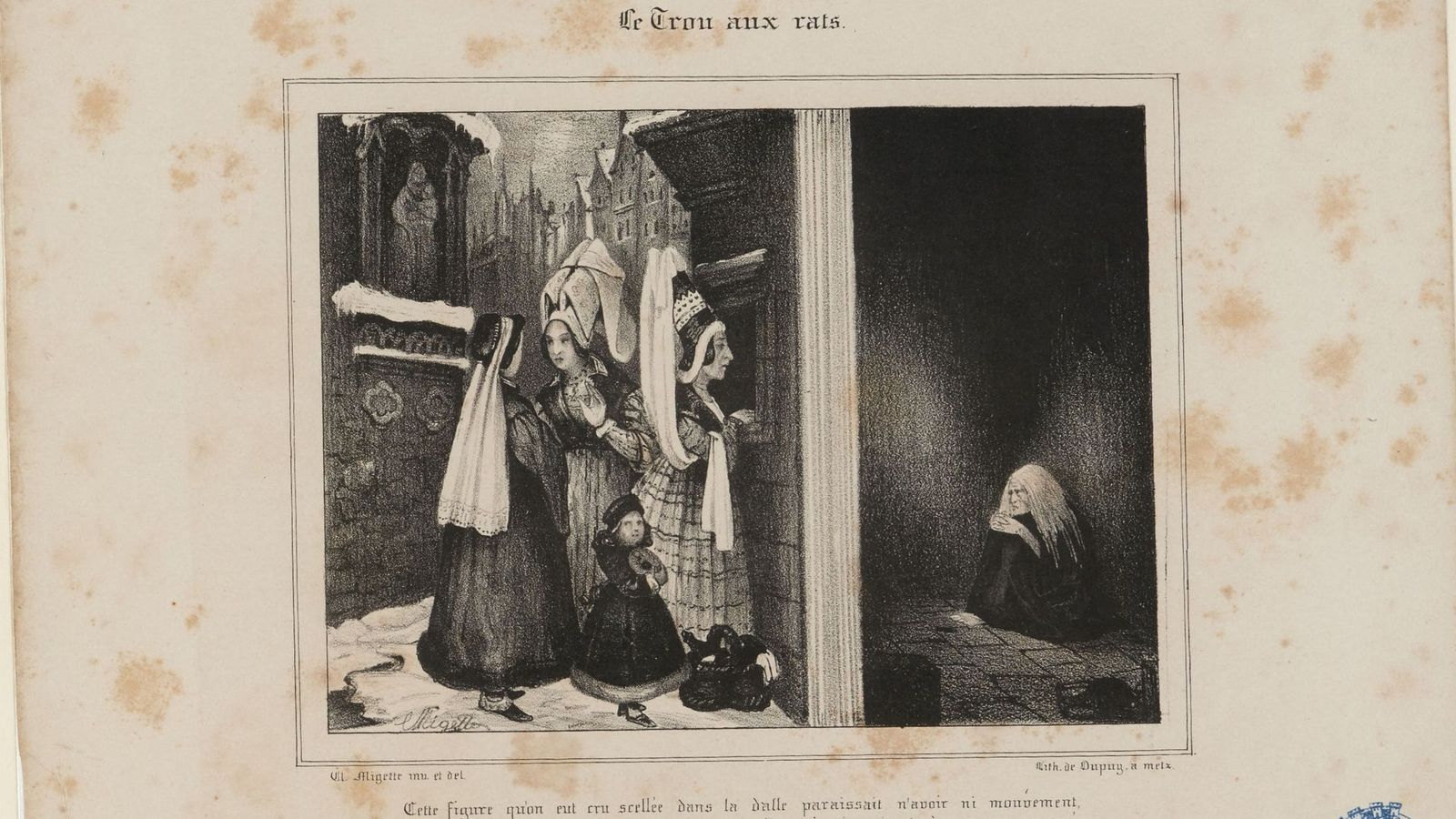
Victor Hugo turned recluses into Gothic horror in Notre-Dame de Paris (1831). His recluse lives in the “Trou aux Rats,” a cell between city and cemetery.
He described a woman counted among the dead while still alive, a soul trapped in a body trapped in stone.
His story is melodrama, but it gets something right. These women lived between life and death, venerated and feared at once.
Hugo claimed the Latin Tu, ora (“You, pray”) was corrupted into Trou aux rats. Probably false. Still a good line.
When It All Disappeared
By the 1500s, reclusion faded. Renaissance ideas about dignity, the Reformation, and the Inquisition changed how extreme enclosure was viewed. What had been holy began to resemble punishment.
The last recluses disappeared in the 16th century.
The cemetery survived until 1780, when disease and smell forced its closure. Two million bodies were moved to the Catacombs. The church was demolished in 1788.
By the time the fountain was moved here, the memory was gone.
What You Can See Today

Fontaine des Innocents (Place Joachim-du-Bellay, 1st arrondissement)
Built 1547–1550. Once part of the cemetery wall, now a centerpiece. Jean Goujon’s sculptures are elegant and serene. Nothing hints at what stood here.
Musée Carnavalet (23 rue de Sévigné, 3rd arrondissement)
Fragments of the original fountain and prints of the cemetery before demolition.
Rue Saint-Denis (1st and 2nd arrondissement)
Several churches along this street once had reclusories built into their walls. The cells are gone. The buildings remain.
The Catacombs (14th arrondissement)
The bones from Saints-Innocents are here now. You can walk past stacked skulls and femurs. Many belonged to people the recluses once prayed for.
That’s all that’s left. A fountain, a few streets, and some bones underground. The rest survives only if you remember it while you’re standing there.