Visiting Paris and have a passion for history, especially Napoleon? Let me guide you through the city’s most iconic historic sites that bring his legacy to life. From the majestic Arc de Triomphe to the solemn tomb at Les Invalides, these landmarks are steeped in Napoleonic history and will take you on a captivating journey through the heart of Paris during his reign.
Napoleon’s Early Years & Rise to Power
1 – École Militaire – The Making of a General

Before he became the Emperor of France, Napoleon Bonaparte was just a determined young cadet from Corsica with a thick accent and a talent for strategy. At the École Militaire (Military School), the future conqueror honed his military prowess, immersing himself in artillery studies and mastering the art of war. It was here, under the strict discipline of France’s most prestigious military academy, that he developed the tactical genius that would one day shake Europe.
Barely 16 years old, Napoleon completed the rigorous two-year program in just one—an early sign of his brilliance. Standing before this imposing complex today, one can almost picture the young officer in training, walking the same grounds, unknowingly preparing for a destiny that would change the course of history.
2 – Rue d’Antin – Where Love Met Politics

At first glance, Rue d’Antin appears to be just another quiet Parisian street. But on March 9, 1796, it bore witness to a moment that intertwined passion and ambition: the wedding of Napoleon Bonaparte and Joséphine de Beauharnais. Their civil ceremony took place at the Hôtel de Mondragon, then serving as the town hall of the 2nd arrondissement.
Far more than a simple romantic union, their marriage was a calculated move—Napoleon, an ambitious general, gained access to Joséphine’s powerful social network, while she secured a rising star as her protector. Though the building has changed hands over the years, two plaques still mark the spot where their fateful vows were exchanged, a reminder of the love, jealousy, and political intrigue that shaped their legendary relationship.
3 – Château de Saint-Cloud – The Coup of 18 Brumaire (1799)

November 9, 1799: France teetered on the edge of chaos, and Napoleon Bonaparte saw his chance. At the Château de Saint-Cloud, he orchestrated the infamous Coup of 18 Brumaire, dissolving the unstable Directory and seizing power as First Consul. With a mix of military pressure and political maneuvering, he ended the French Revolution and paved the way for his empire.

The castle itself no longer stands, destroyed in the 19th century, but its sprawling Parc de Saint-Cloud remains—a tranquil space where history’s greatest political gamble once played out. Wander its paths and imagine the tension of that fateful day when a republic crumbled and a dictatorship was born.
4 – Notre Dame Cathedral – Where Napoleon Crowned Himself Emperor

On December 2, 1804, Notre-Dame Cathedral became the stage for one of the most dramatic moments in French history. Napoleon Bonaparte, who had risen from general to the ruler of France, was about to crown himself Emperor in a grand ceremony that would reshape the future of Europe. The grandness of the occasion was matched by the majesty of the cathedral, with its towering gothic arches and stunning stained glass windows.

What makes this event so memorable is that Napoleon didn’t wait for the Pope to crown him. Instead, he took the crown from Pope Pius VII and, with a bold flourish, placed it upon his own head—an act that symbolized his total control over both France and its destiny.
5 – Tuileries Palace & Gardens – The Seat of Power

Though the Tuileries Palace was tragically destroyed in 1871, its gardens still whisper tales of imperial grandeur. Napoleon made this palace the beating heart of his empire, turning it into the epicenter of power where he ruled with an iron will. Lavish receptions, military strategy sessions, and the grandeur of imperial life all unfolded within its walls.

While the palace itself is gone, the meticulously manicured Jardin des Tuileries offers a glimpse into his world. As you stroll past the grand fountains and sculptures, picture Napoleon’s carriage racing through the gardens, heading toward his next conquest.
His Reign & Ambitions
6 – Panthéon – Napoleon’s Influence on France’s Legacy

The Panthéon was originally built as a church, but Napoleon saw it as something far greater: a temple for France’s greatest minds. Under his rule, this neoclassical monument became a national mausoleum, enshrining revolutionary figures such as Voltaire and Rousseau.

Though Napoleon himself rests at Les Invalides, several of his era’s greatest military minds—such as Louis-Alexandre Berthier, his brilliant chief of staff; Jean Lannes, a fearless marshal who fell in battle; and Géraud Duroc, his loyal Grand Marshal of the Palace—embodied the same spirit of brilliance and strength he sought to honor. As you walk beneath its soaring dome, consider how Napoleon’s vision extended beyond politics and warfare, shaping France’s lasting tribute to intellect, valor, and national greatness.
Hot tip: When visiting the Pantheon, don’t miss the Foucault Pendulum
7 – Palais Brongniart – The Birthplace of Modern Finance

Napoleon’s reforms extended beyond the battlefield—he reshaped France’s economic foundations as well. The Palais Brongniart, home to the Paris Stock Exchange, was commissioned by the Emperor in 1807 as part of his efforts to modernize commerce.
Designed by the architect Alexandre-Théodore Brongniart, this neoclassical masterpiece provided a dedicated space for financial transactions, reinforcing Napoleon’s vision of a strong, organized economic system. Though stock trading has since moved elsewhere, the building still stands as a monument to his administrative genius, hosting conferences and events within its grand colonnaded halls.
8 – Museum of the Legion of Honor – Napoleon’s Reward System

For a soldier under Napoleon, there was no greater distinction than the Legion of Honor. Established in 1802, this prestigious order rewarded military valor and civil excellence, replacing the old aristocratic system with a new, merit-based hierarchy.

The Museum of the Legion of Honor showcases this legacy, displaying medals, uniforms, and stories of those who earned this coveted decoration.
9 – Vendôme Column – The Austerlitz Monument

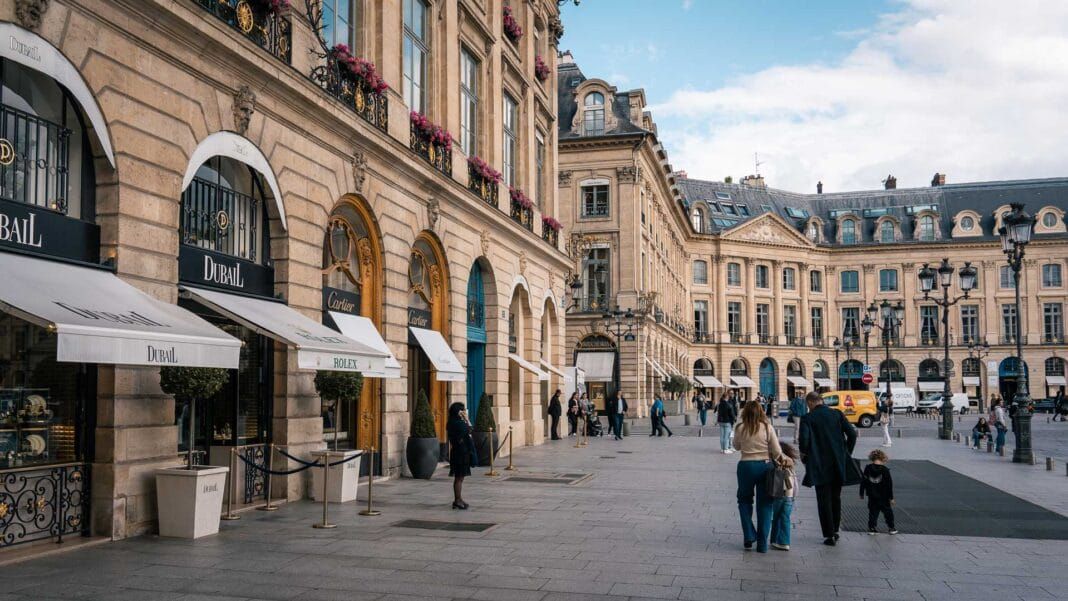
Towering over Place Vendôme, the imposing Vendôme Column is a testament to Napoleon’s military prowess and imperial ambition. Commissioned in 1806 and inspired by Trajan’s Column in Rome, it was cast from the melted-down bronze of enemy cannons seized at the Battle of Austerlitz. A spiraling bas-relief winds its way up the shaft, narrating his campaigns in exquisite detail, culminating in a statue of the Emperor himself at the top.

Though torn down during the Paris Commune of 1871, it was soon rebuilt, standing once again as a defiant symbol of Napoleonic glory, and remains an unmissable landmark, whispering stories of conquest to all who pass beneath its shadow.
10 – Arc de Triomphe du Carrousel – A Smaller, but No Less Grand, Victory Arch

Before the Arc de Triomphe, there was the Arc de Triomphe du Carrousel, built in 1808 to celebrate Napoleon’s victories. Once the grand entrance to the Tuileries Palace, this arch is adorned with bas-reliefs depicting his military campaigns. Smaller than its more famous counterpart, it remains an elegant tribute to his imperial conquests. Stand beneath it and picture the victorious French troops marching through, banners flying, as Napoleon’s empire reached its zenith.
11 – La Madeleine – A Church Fit for an Emperor

Today, La Madeleine is a church, but Napoleon had grander plans. He envisioned it as a Temple of Glory, dedicated to his Grand Army and its victories. The monumental columns and the Greek temple design reflect his obsession with classical antiquity—after all, why settle for being a mere ruler when you could be immortalized like the emperors of Rome?

Construction began in 1806, under Napoleon’s reign, but was not completed until 1842. Though later converted into a church, its grand design and historical purpose still whisper of Napoléon’s ambition and vision to honor his military might and legacy.
Napoleon’s Influence on Paris
12 – Louvre Museum (Napoleon Museum) – The Emperor’s Artistic Conquests

Napoleon wasn’t just a soldier; he was a collector—of entire civilizations. The Louvre expanded massively under his rule, filling its halls with treasures looted from Egypt, Italy, and beyond. Many pieces were returned after his defeat, but some still remain.

Walk through the galleries and imagine the sheer scale of his artistic empire, where the spoils of war became the adornments of France.
13 – Pont des Arts – The Bridge Napoleon Disliked

The Pont des Arts, Paris’s first metal bridge, was an engineering feat of its era. Commissioned under Napoleon Bonaparte in 1802 and completed in 1804, it was designed to connect the Louvre to the Institut de France, symbolizing the link between culture and knowledge. While Napoleon may have preferred grander monuments, this bridge was part of his broader vision to transform Paris into a modern imperial city.
Though it may not have been his most monumental creation, the Pont des Arts stands as a testament to his influence on Paris’s urban development and the lasting legacy of his reign.
14 – Les Invalides – Napoleon’s Military Legacy and Resting Place

Les Invalides, initially commissioned by Louis XIV to provide a home and care for wounded soldiers, became much more under Napoleon Bonaparte. When Napoleon ascended to power, he envisioned transforming the complex into a symbol of military glory and imperial might. The building was expanded and repurposed, housing not just veterans but also a vast array of military artifacts, and it became home to one of the most prestigious military museums in the world today, The Army Museum.

But what truly defines Les Invalides is the golden dome that crowns the building, sheltering Napoleon’s tomb. After his exile and death on Saint Helena, Napoleon’s body was returned to France in 1840, and he was entombed in a grand sarcophagus beneath the dome. His tomb, made of red quartzite and green granite, is designed to reflect both his power and the reverence his legacy commands. The sarcophagus lies at the center of a grand, circular crypt, meant to draw the gaze of anyone who enters, forcing them to look up in admiration.


Surrounding Napoleon’s tomb are the final resting places of other significant figures from his era. Among them are Marshal Michel Ney, known as the “bravest of the brave,” Marshal Jean Lannes, a key general who fought alongside Napoleon, and Marshal Pierre-Auguste Grouchy, who played a role in the Battle of Waterloo. Napoleon’s brother, Joseph Bonaparte, and Marshal Jacques MacDonald are also buried nearby.
15 – The Ourcq, Saint-Martin & Saint-Denis Canals – Engineering Napoleon’s Paris

Napoleon didn’t just shape Paris with monuments—he reshaped its very infrastructure. To ensure the capital had a steady water supply, he commissioned an ambitious canal network: the Ourcq, Saint-Martin, and Saint-Denis Canals. These waterways, initiated in 1802, were meant to provide clean drinking water to Parisians while also facilitating trade and transportation.

Today, the picturesque Saint-Martin Canal, with its iron footbridges and tree-lined banks, is a far cry from its utilitarian origins, but it remains a lasting testament to Napoleon’s vision for a modernized Paris. Stroll along its locks and imagine the engineering prowess that turned stagnant marshes into vital lifelines of the city.
16 – Arc de Triomphe – A Monument to the Grande Armée

Nothing embodies Napoleonic grandeur quite like the Arc de Triomphe. Ordered in 1806 after his triumph at Austerlitz, this colossal arch was designed to celebrate the invincibility of the Grande Armée. Inscribed with the names of his generals and victories, its sculpted reliefs depict moments of military glory—and its sheer scale speaks to his imperial ambition.

Though Napoleon never saw its completion, his remains passed beneath it in 1840 during their return from Saint Helena. Climb to the top for a view he never beheld, but one that perfectly frames the city he sought to rule forever.
17 – Le Procope – The Café Where a Hat Became a Legend

A Parisian institution, Le Procope was already the city’s oldest café when Napoleon walked through its doors. According to legend, he once left his hat here as collateral for an unpaid bill, a story that perfectly encapsulates his blend of audacity and charisma.
You may admire now the bicorne, proudly displayed inside, as a relic of the young general who dined among intellectuals and revolutionaries. Whether fact or folklore, the café remains steeped in history, its walls lined with echoes of conversations that once shaped France.
18 – Malmaison Castle – A Love Story in Stone

Nestled just outside Paris, Malmaison was more than a retreat—it was the heart of Napoleon and Joséphine’s romance. Acquired by Joséphine in 1799, this elegant estate became their sanctuary, a place where the Emperor could momentarily shed the weight of empire.
He designed its gardens to resemble an English park, and Joséphine filled them with rare botanicals and exotic animals. Though their love faded, Malmaison remained Joséphine’s refuge until her death.
19 – Fontainebleau Castle – The First Farewell

If walls could talk, Fontainebleau would tell a tale of triumph and tragedy. This sprawling château, a favorite of French monarchs, became the stage for Napoleon’s first abdication in 1814. In the grand Cour des Adieux, he bid an emotional farewell to his loyal guards before departing for exile on Elba.
The castle, with its Renaissance splendor and Imperial apartments, remains a living chronicle of his rise and fall. Step into the very room where he signed away his throne, and feel the weight of a moment that reshaped Europe.
20 – Rambouillet Castle – A Hunting Lodge Fit for an Emperor

Napoleon admired Rambouillet but rarely used it, preferring the grandeur of Fontainebleau. Yet, this secluded hunting lodge, with its 14th-century towers and lush forests, held a certain allure. He ordered renovations, envisioning it as a potential imperial retreat.
Ultimately, history passed it by, and Rambouillet remains a lesser-known but fascinating Napoleonic site. Visit its opulent interiors and imagine what might have been had the Emperor found more time for leisure amid his ceaseless campaigns.
21 – Versailles Palace – A Stage, Not a Seat of Power

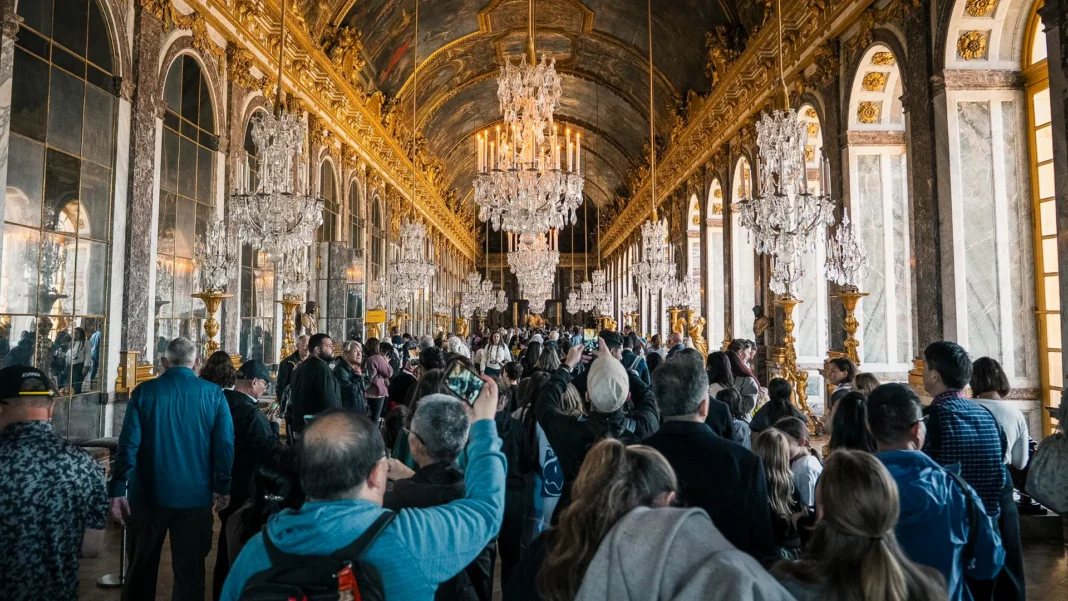
Versailles Palace, the pinnacle of royal extravagance, never served as Napoleon’s primary residence, but he understood its symbolic power. He used it for ceremonies, receptions, and grand gestures that reinforced his legitimacy.
In the Hall of Mirrors, once the seat of absolute monarchy, he crowned his son, Napoleon-François-Charles-Joseph Bonaparte, as King of Rome in 1811. Though he preferred the Tuileries, Versailles played its role in his reign, a gilded backdrop to his imperial ambitions.
22 – Père Lachaise Cemetery – Napoleon’s Lasting Urban Influence

Paris’s most famous cemetery owes its origins to Napoleon. In 1804, he decreed that cemeteries should be relocated outside city limits for hygiene reasons, leading to the creation of Père Lachaise. Designed as a garden cemetery, it transformed burial practices, introducing elaborate mausoleums and tree-lined paths.
Though Napoleon himself rests at Les Invalides, his impact is felt here, where statesmen, writers, and revolutionaries lie beneath sculpted tombstones, in a necropolis shaped by his vision of urban planning.
23 – Luxor Obelisk (Place de la Concorde) – Egypt’s Gift, Napoleon’s Dream

While the obelisk was installed in Place de la Concorde long after his death, its origins trace back to Napoleon’s Egyptian campaign. His fascination with antiquity led to the surge of Egyptomania in France, and though he never managed to bring an obelisk to Paris, his successors did.
Erected in 1836, this 3,000-year-old monument stands where the guillotine once reigned during the Revolution—a silent nod to the Emperor’s unfulfilled dreams of an empire stretching from Paris to Cairo.
Read more: The Epic Voyage of the Luxor Obelisk
24 – Carnavalet Museum – The Napoleonic Time Capsule

For a deep dive into the Napoleonic era, look no further than the Carrnavalet Museum. This treasure trove of Parisian history houses relics from his reign—paintings, furniture, personal effects, and even the Emperor’s death mask. Wander through its atmospheric halls and piece together the fragments of his life, from the revolutionary fervor that birthed him to the imperial splendor that defined him.
Want to dive deeper into Napoleon’s legacy?
Booking a guided tour is a great way to uncover hidden stories and fascinating details that bring these historic sites to life!
Paris is like a treasure hunt for Napoleon fans! Every corner you turn, there’s a piece of his story waiting to be discovered. Whether you’re exploring his tomb or snapping pics at his favorite spots, it’s impossible not to feel his larger-than-life presence in the city. I had a blast diving into his history—hope you do too!