A stone’s throw from Versailles’ gilded halls, Marie-Antoinette built herself a fantasy village. But here’s the twist: it wasn’t a fantasy at all.
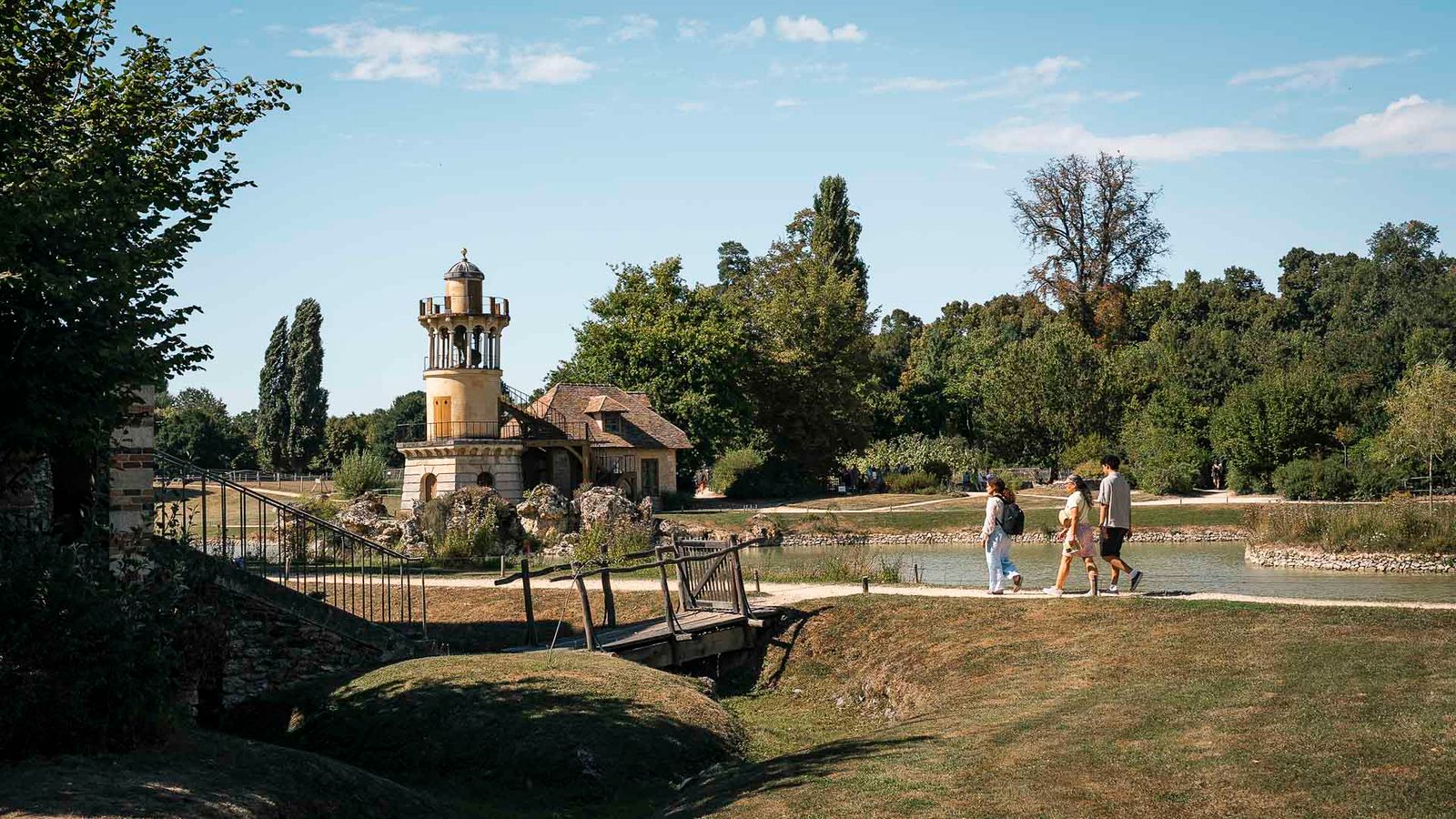
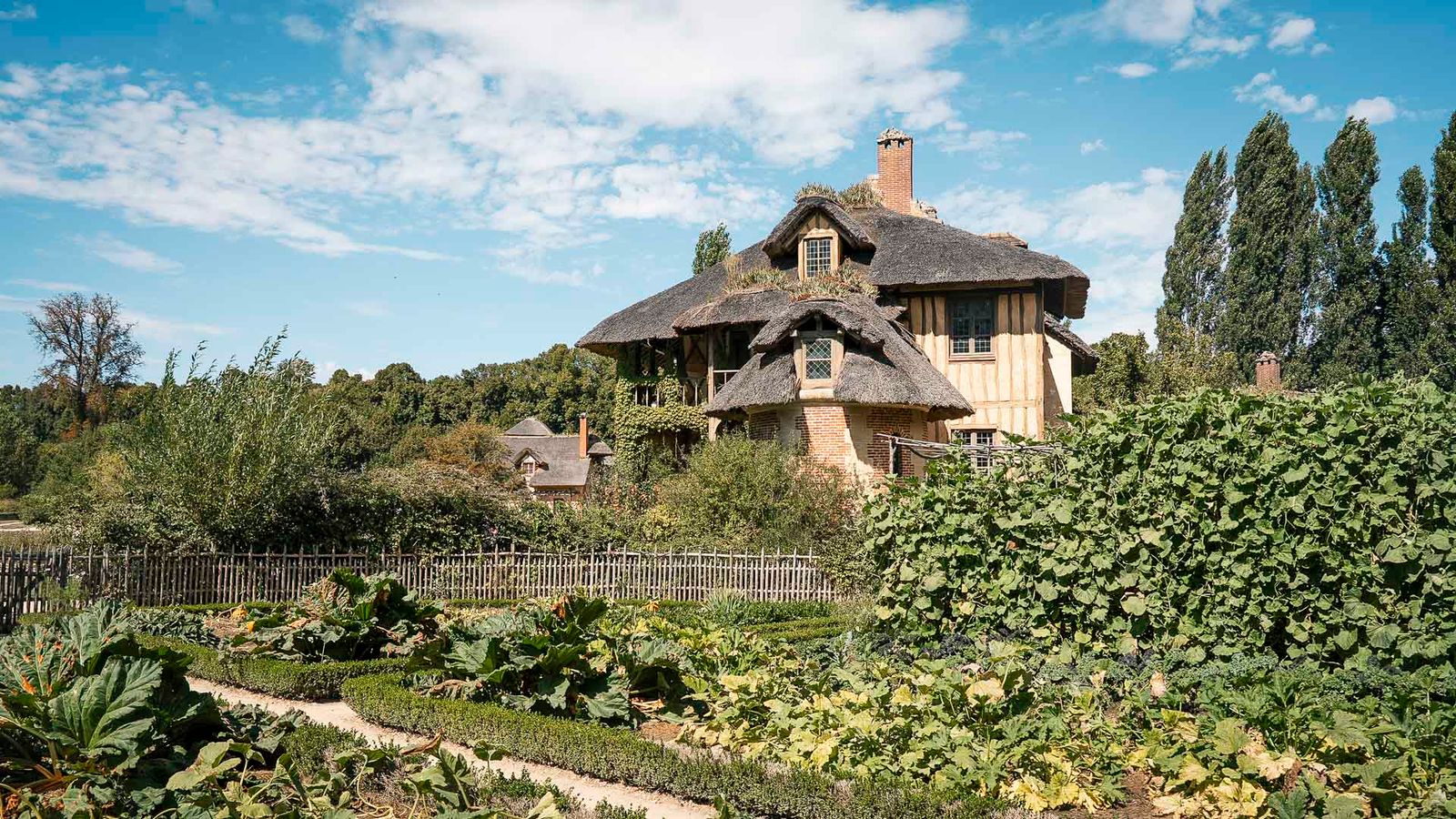
There’s a peculiar moment that happens when you round the corner of Marie-Antoinette’s English garden at Versailles. The manicured lawns give way to something stranger; a cluster of cottages that look like they’ve been plucked from a Norman countryside and arranged just so around a shimmering lake. Your brain does a double-take. Is this Disney? A movie set?
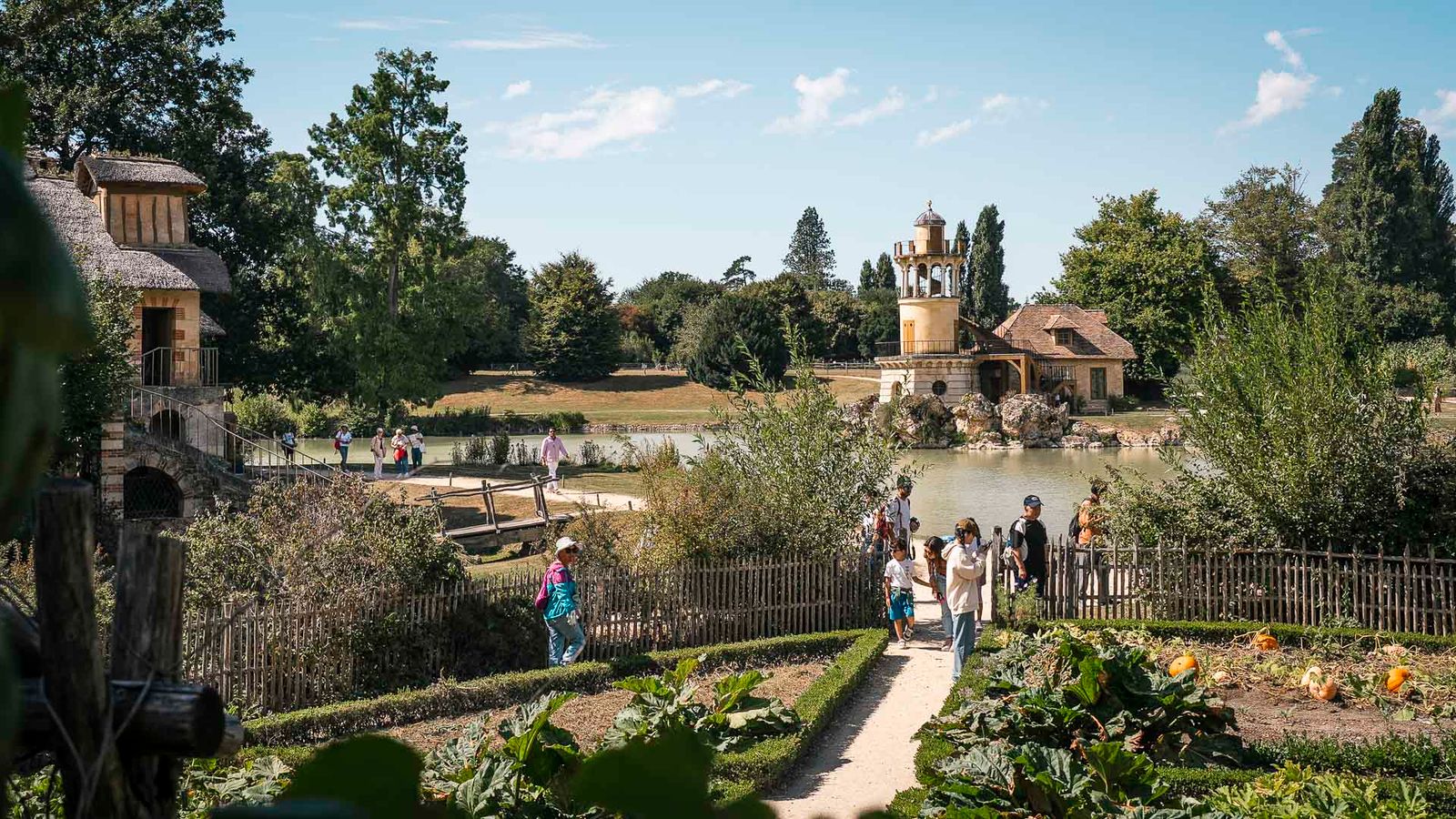
No. This is the Hameau de la Reine, and it’s far weirder and more wonderful than the caricature history has handed us.
The Queen Who Wanted Out
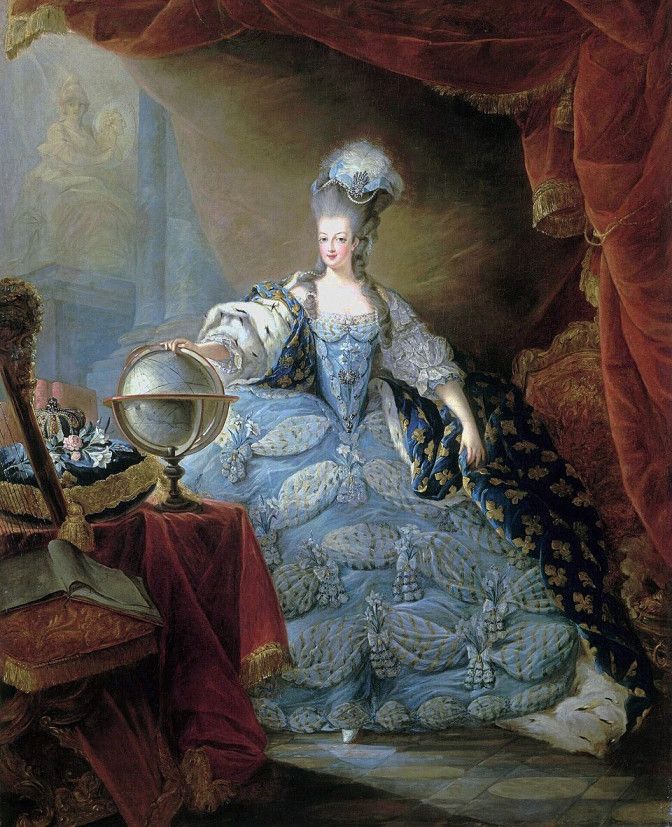
It’s 1782, and you’re Marie-Antoinette. You’re 27 years old. Your husband is king but would rather tinker with locks than govern. The court at Versailles is a pressure cooker of 10,000 scheming courtiers watching your every move, critiquing your hair, your dresses, your friends, your failures to produce a male heir. You need to breathe.
So you commission something radical. Not another gilded salon—you’ve got dozens of those. You want dirt under your fingernails. Or at least the illusion of it.

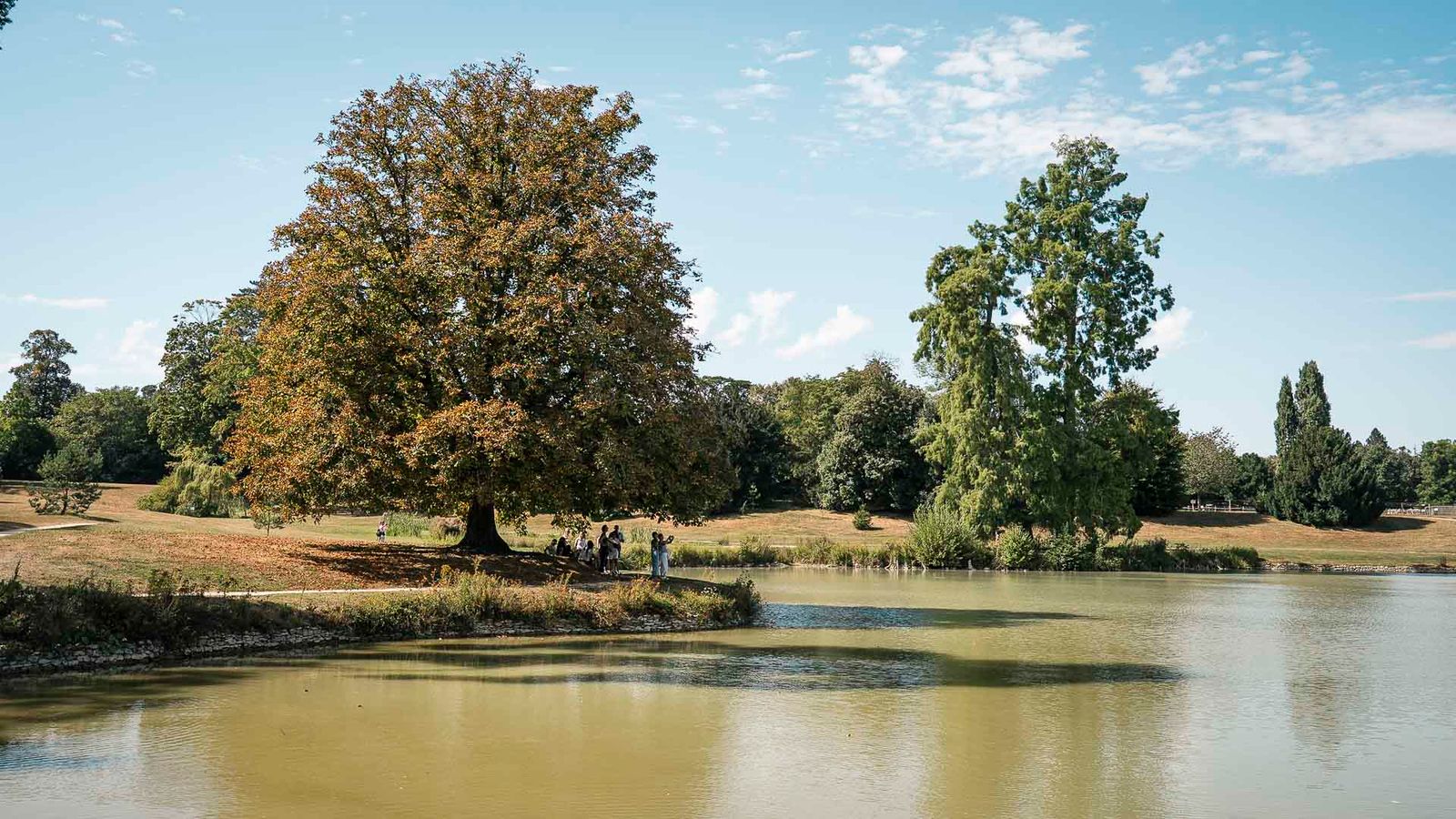
Between 1783 and 1786, the architect Richard Mique turned the queen’s fever dream into reality. He excavated an artificial lake, engineered streams and cascades, built a complex water system pulling from sources beyond the grounds, and constructed twelve little buildings—fabriques, they called them—that looked like they’d been there for generations.
What Actually Happened
It’s winter, 1782-83. Marie-Antoinette is exhausted. She’s been queen for eight years, living in a palace with 10,000 people, where getting dressed in the morning requires seventeen people and a rigid hierarchy of who hands you what garment. She’s twenty-seven and desperate for somewhere she can just exist.
So she tells her architect Richard Mique: build me a village. Make it look real. Make it be real.
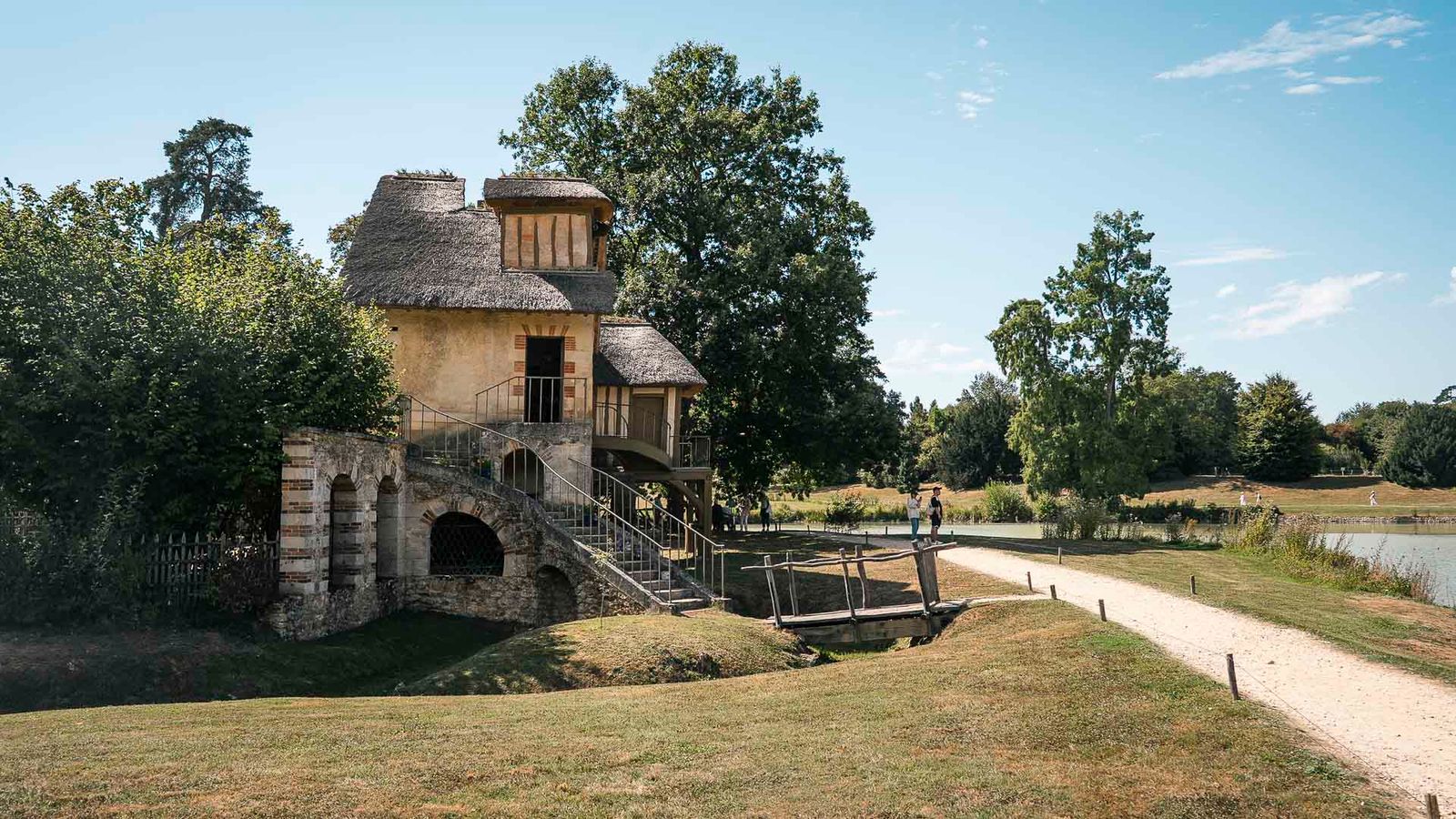
Mique spent three years on it. He dug an artificial lake. Engineered streams and waterfalls. Built twelve buildings mixing Norman, Flemish and local architectural styles, then artificially aged them with trompe-l’œil effects—painted cracks, fake wear and tear. In 1783, Marie-Antoinette basically invented distressed denim.
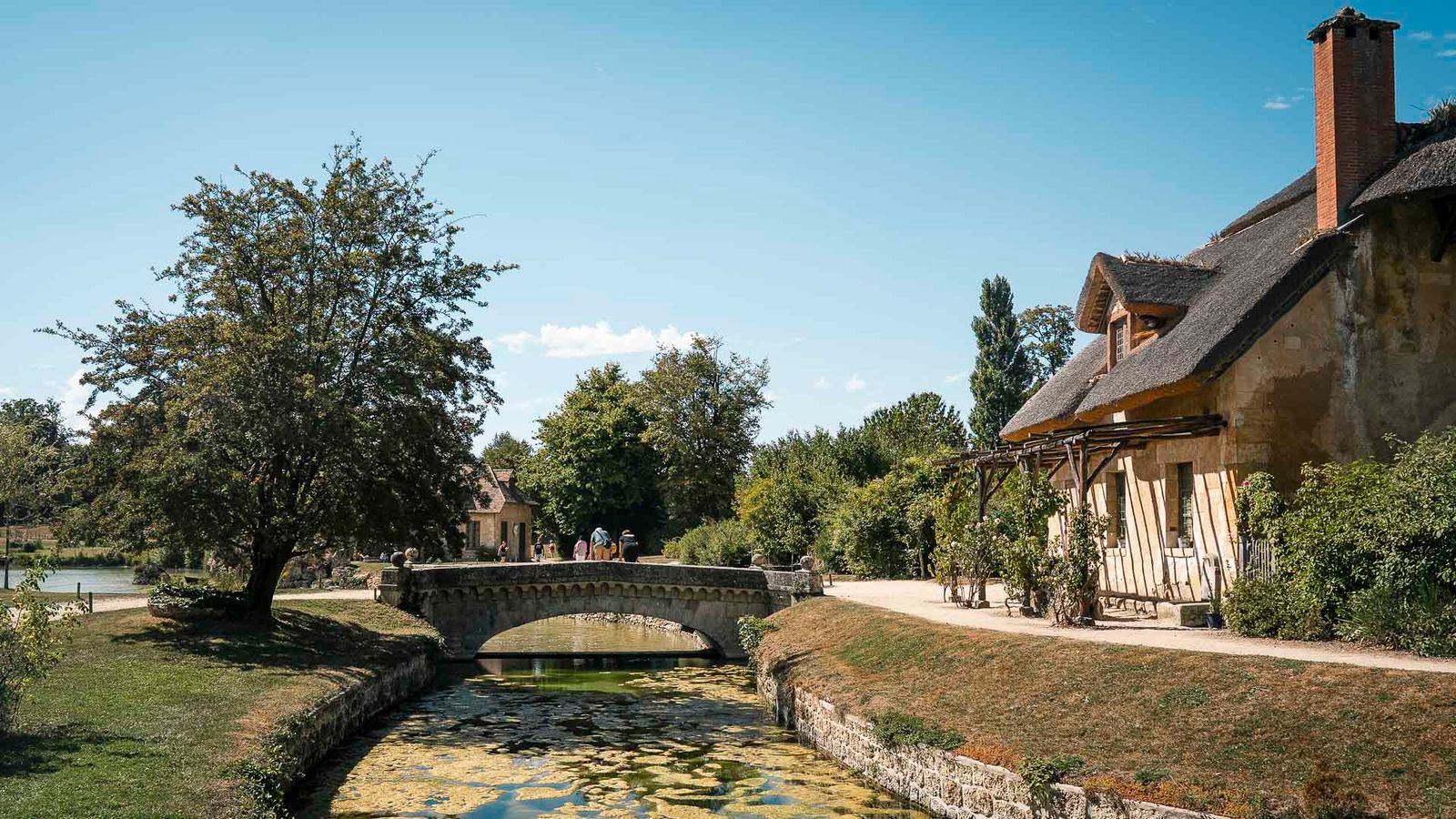
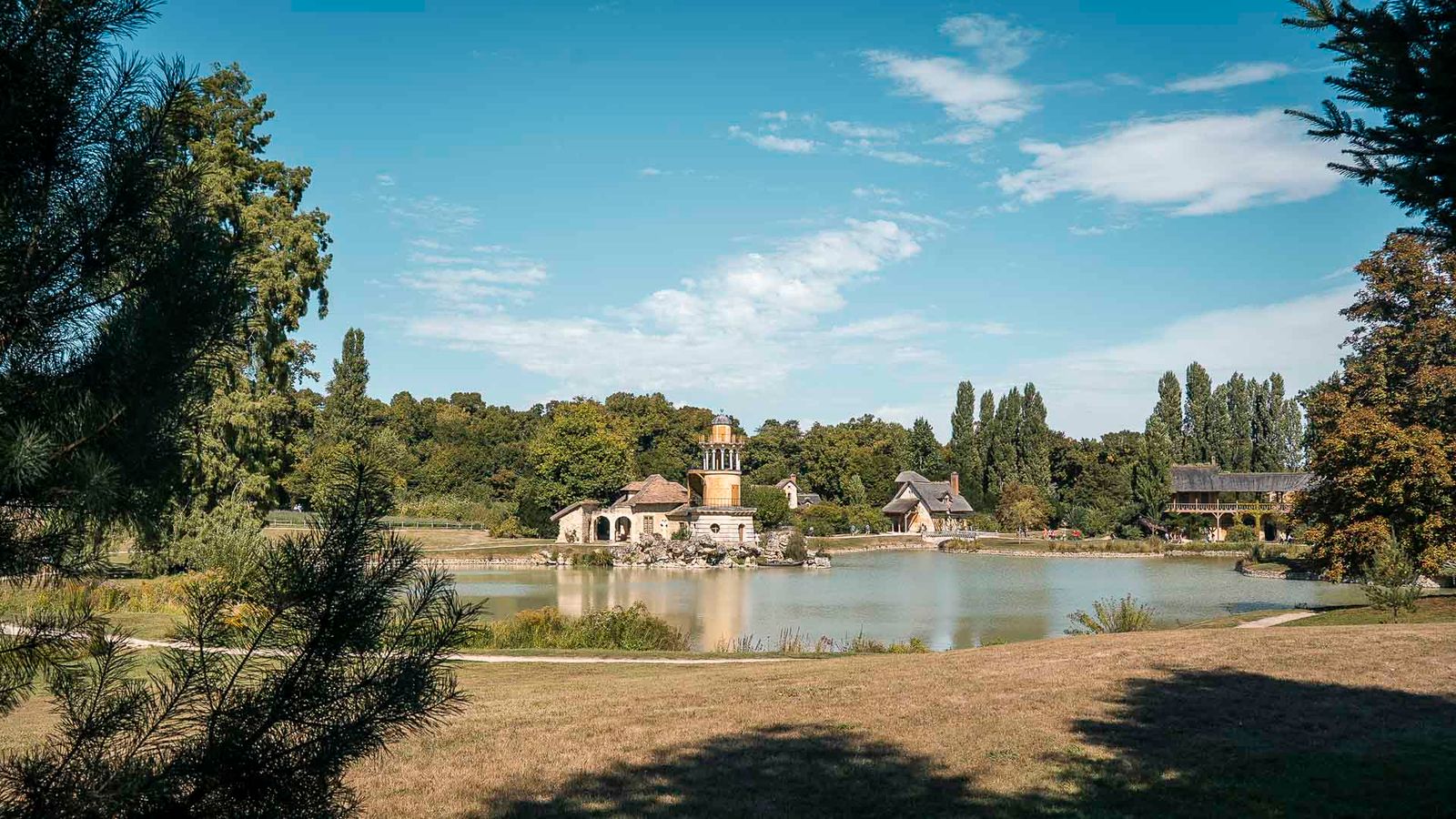
The layout is smart. Stand on one side of the lake and the buildings curve along the opposite shore in this perfect theatrical arc. But walk among them and the illusion holds. They’re not stage sets. They’re actual structures with actual interiors.
North Side: The Real Farm
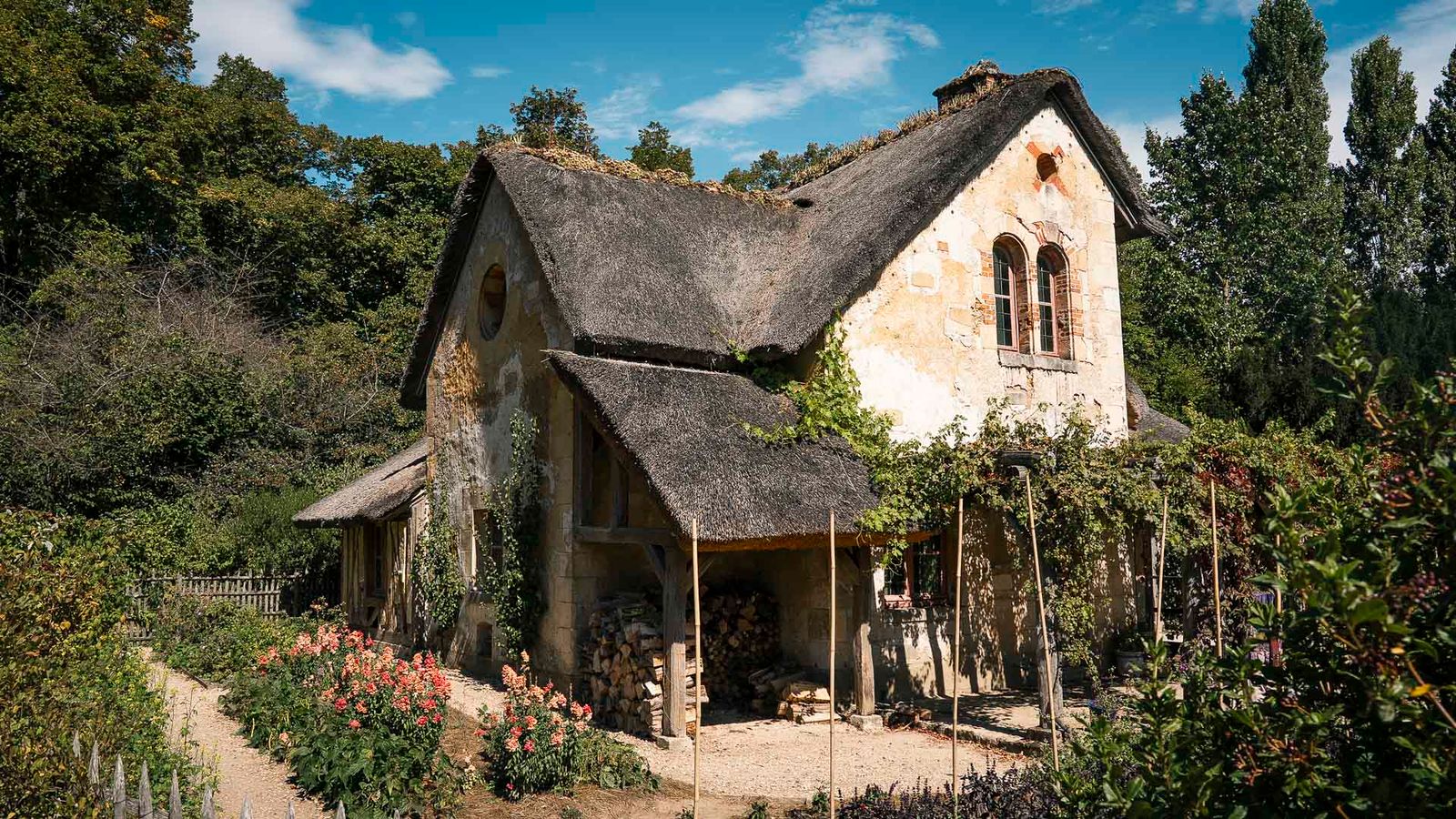
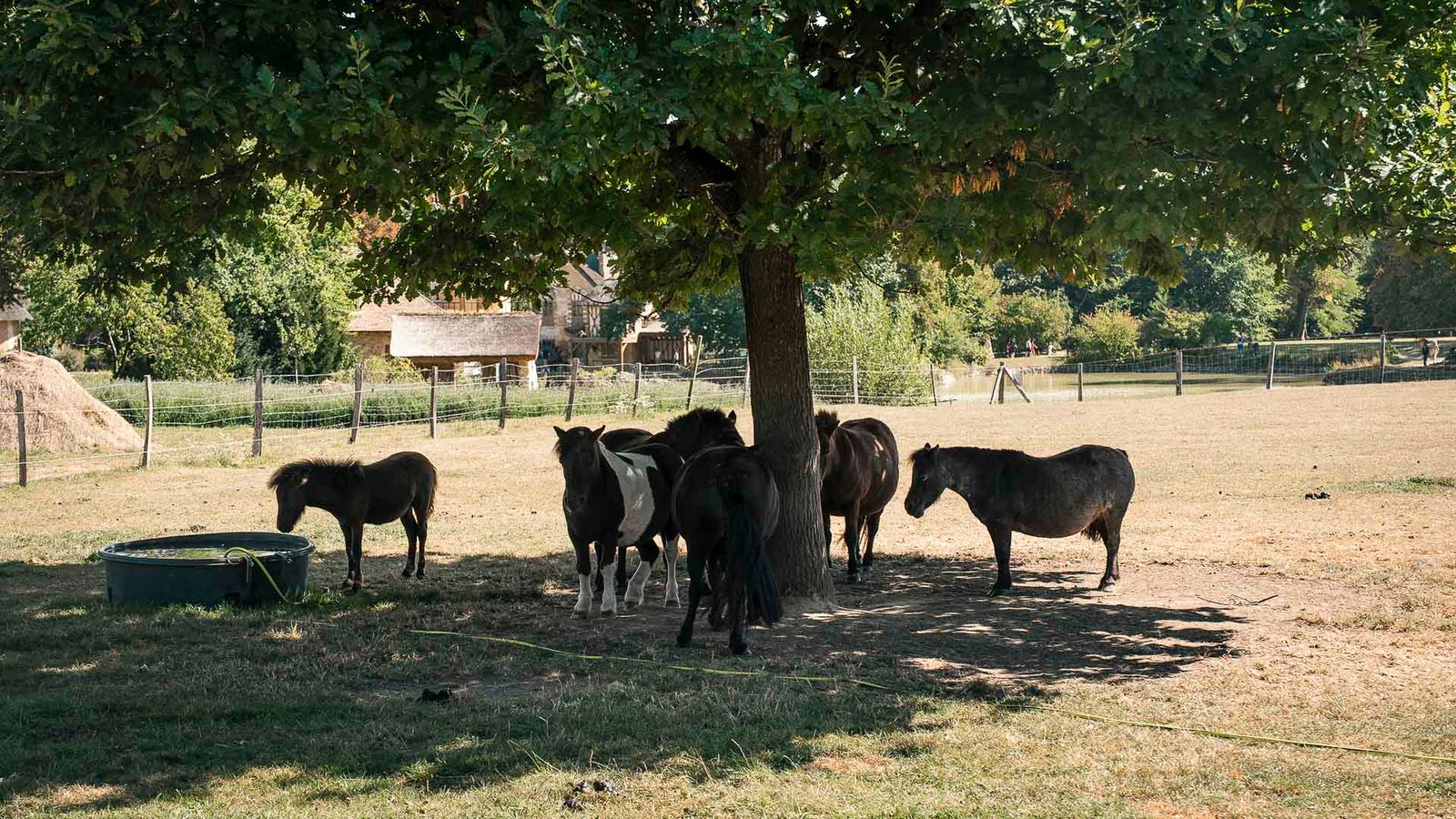
Here’s what nobody tells you. North of the stone bridge was a working farm. Not a pretend one. An actual farm with cows, sheep, pigs, chickens, the whole operation. Marie-Antoinette hired a professional farmer named Valy Bussard to run it. This place produced milk, eggs, vegetables, fruit—real food that people at Trianon actually ate.
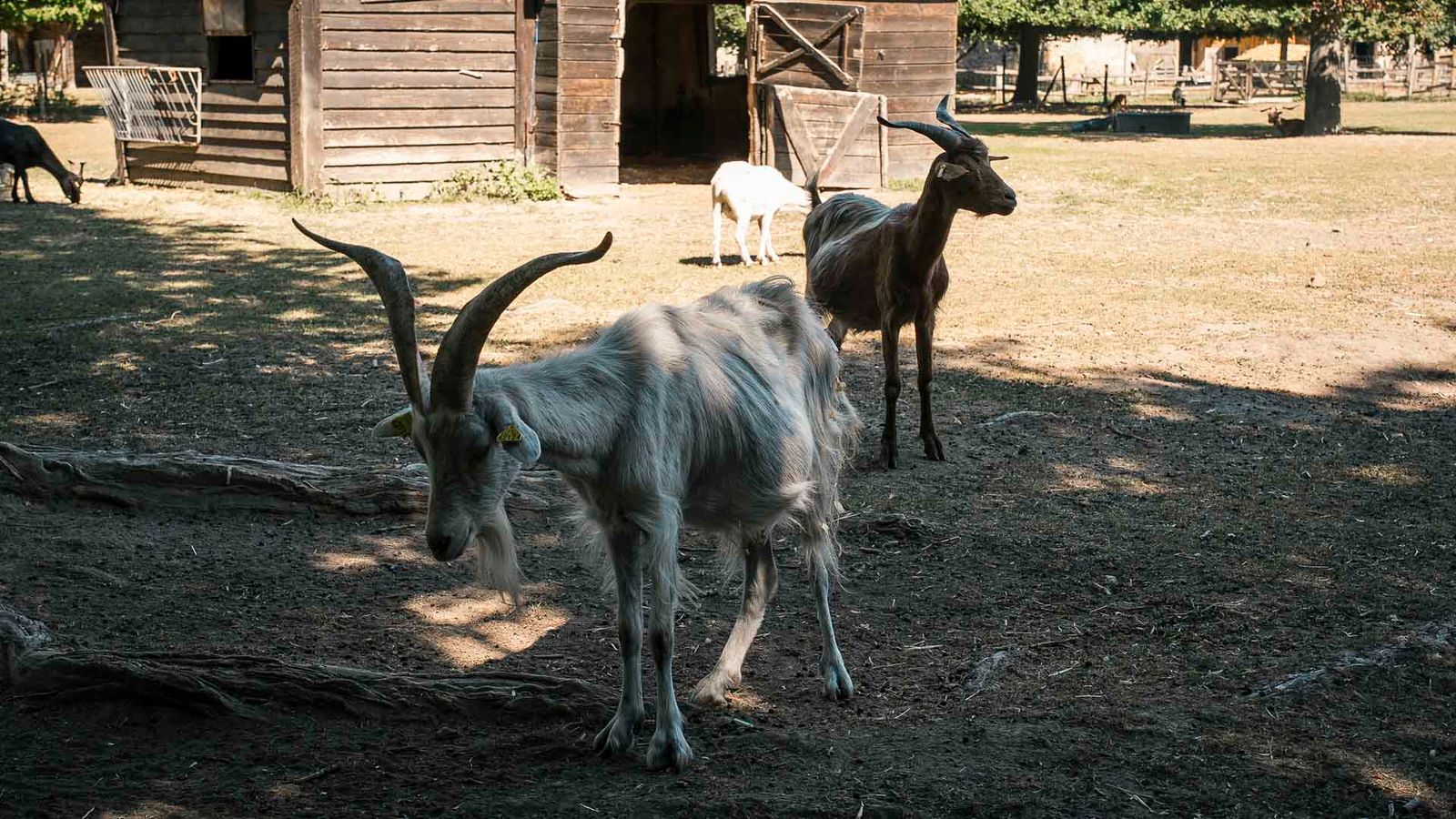
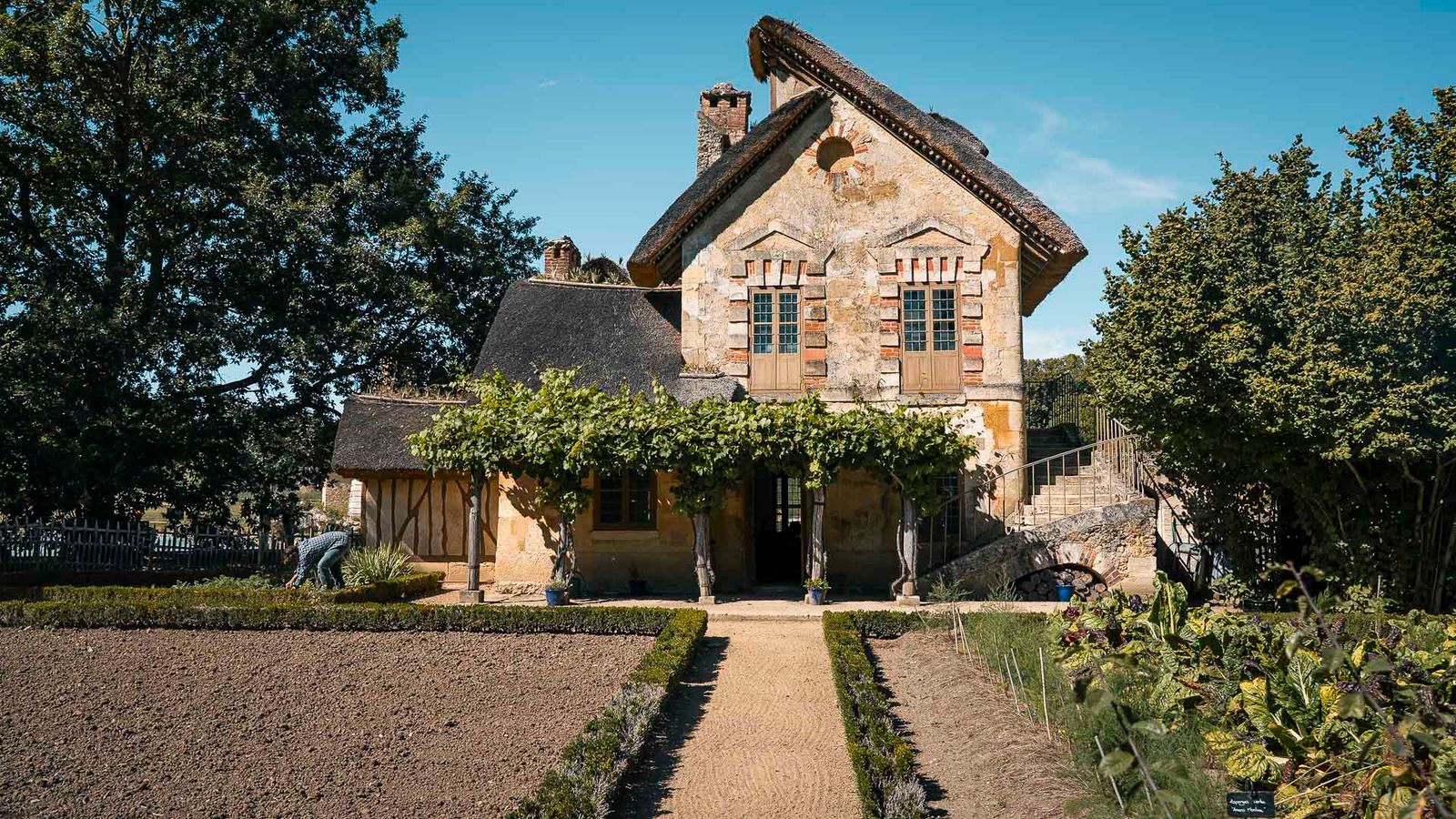
The farm kept running until the Revolution. Her kids came here to learn where food came from, which honestly seems pretty reasonable for royal children who’d otherwise grow up thinking cheese materialized in the palace kitchens by magic.
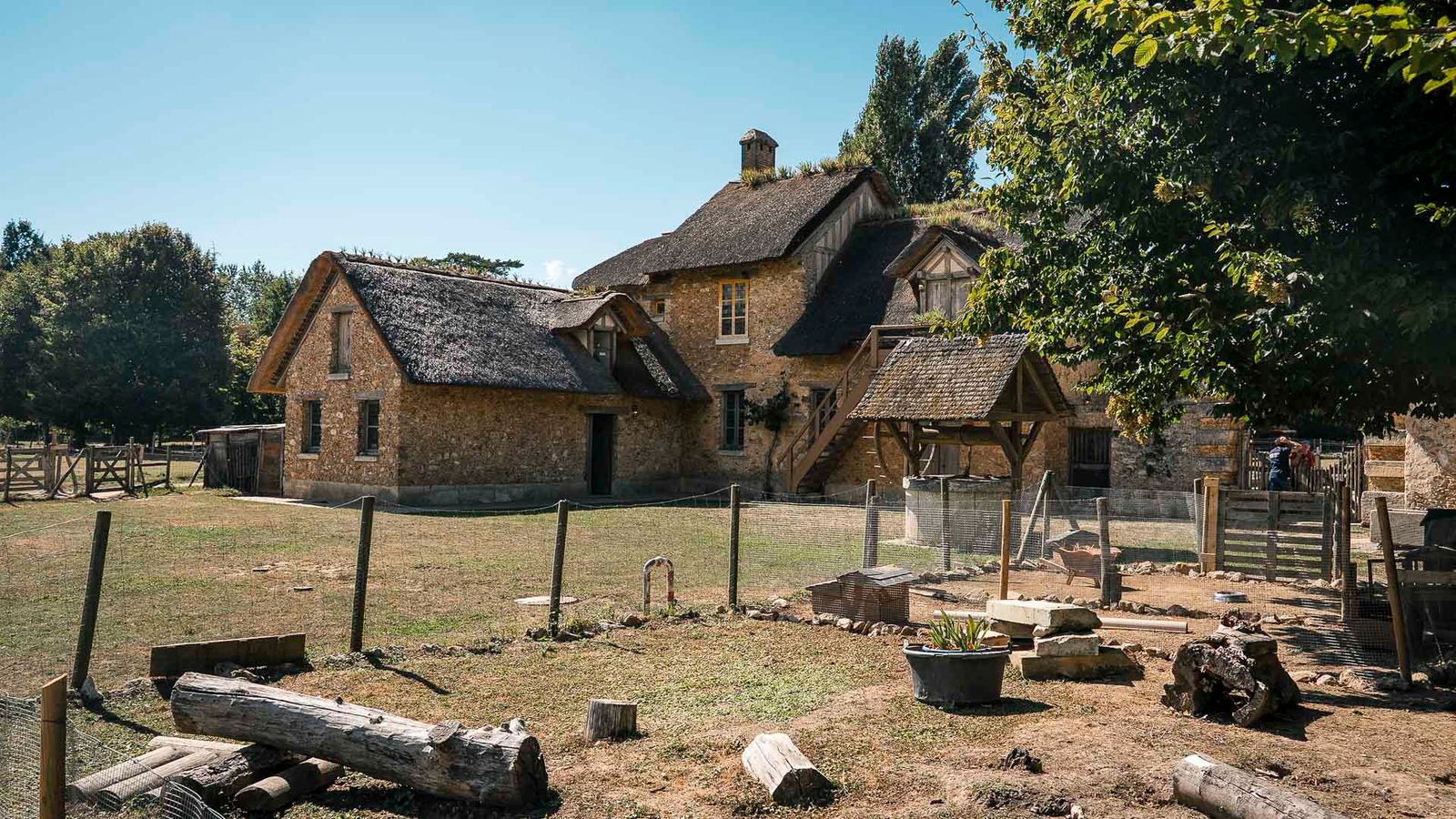
South Side: The Queen’s Escape
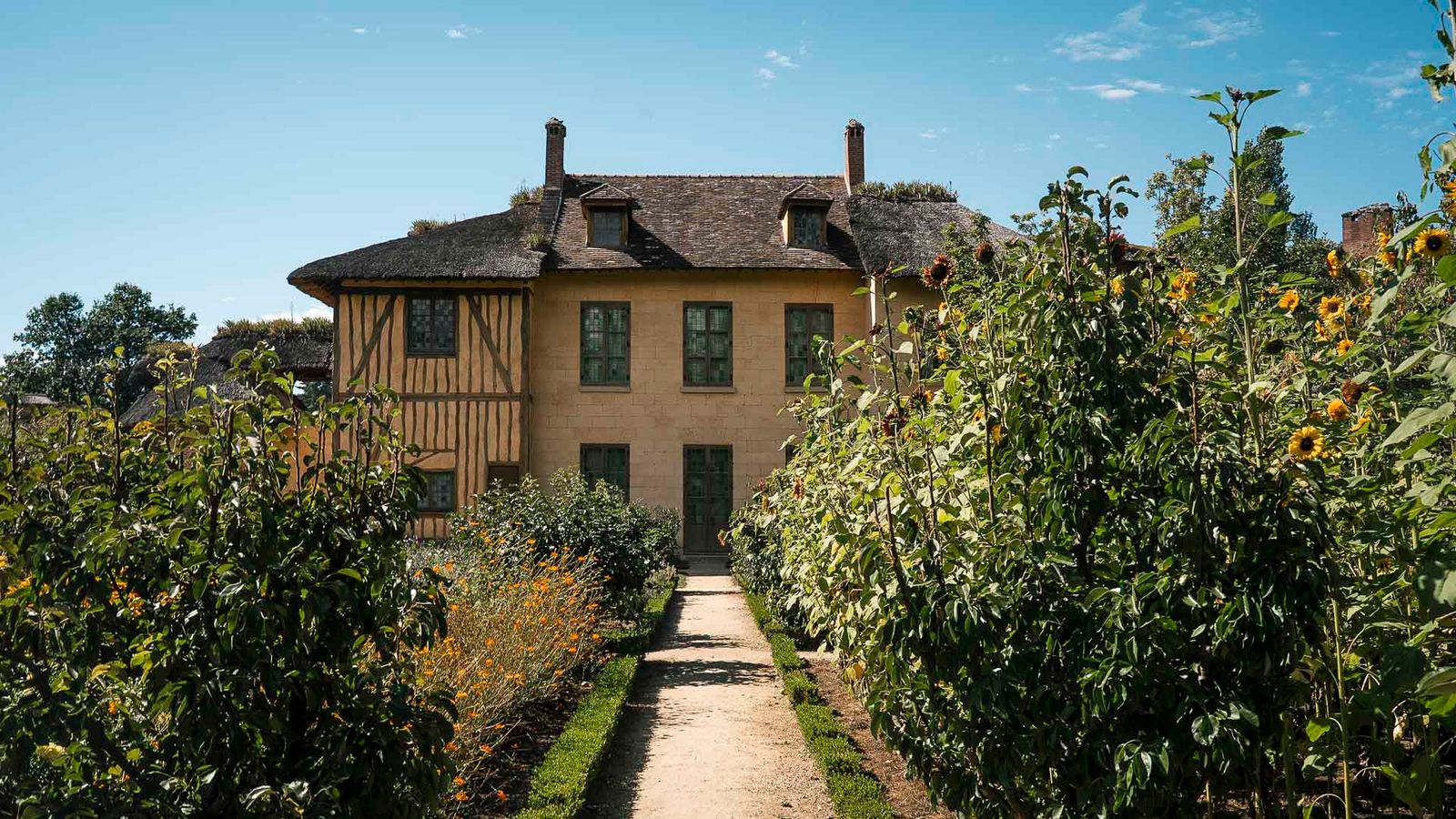
South of the bridge is where Marie-Antoinette actually spent time. The Maison de la Reine sits in the center—two buildings linked by a covered gallery, with this fairy-tale round tower. From outside it looks like a country cottage.
Inside? Different story.
The reception rooms had tapestries, a harpsichord, windows overlooking the fields. She’d host small gatherings here—by which I mean maybe a dozen people instead of several hundred. Meals were prepared in the nearby réchauffoir (basically a warming kitchen). Still fancy, obviously. She was the queen. But you could have a conversation without someone writing it down for the court gossip mill.
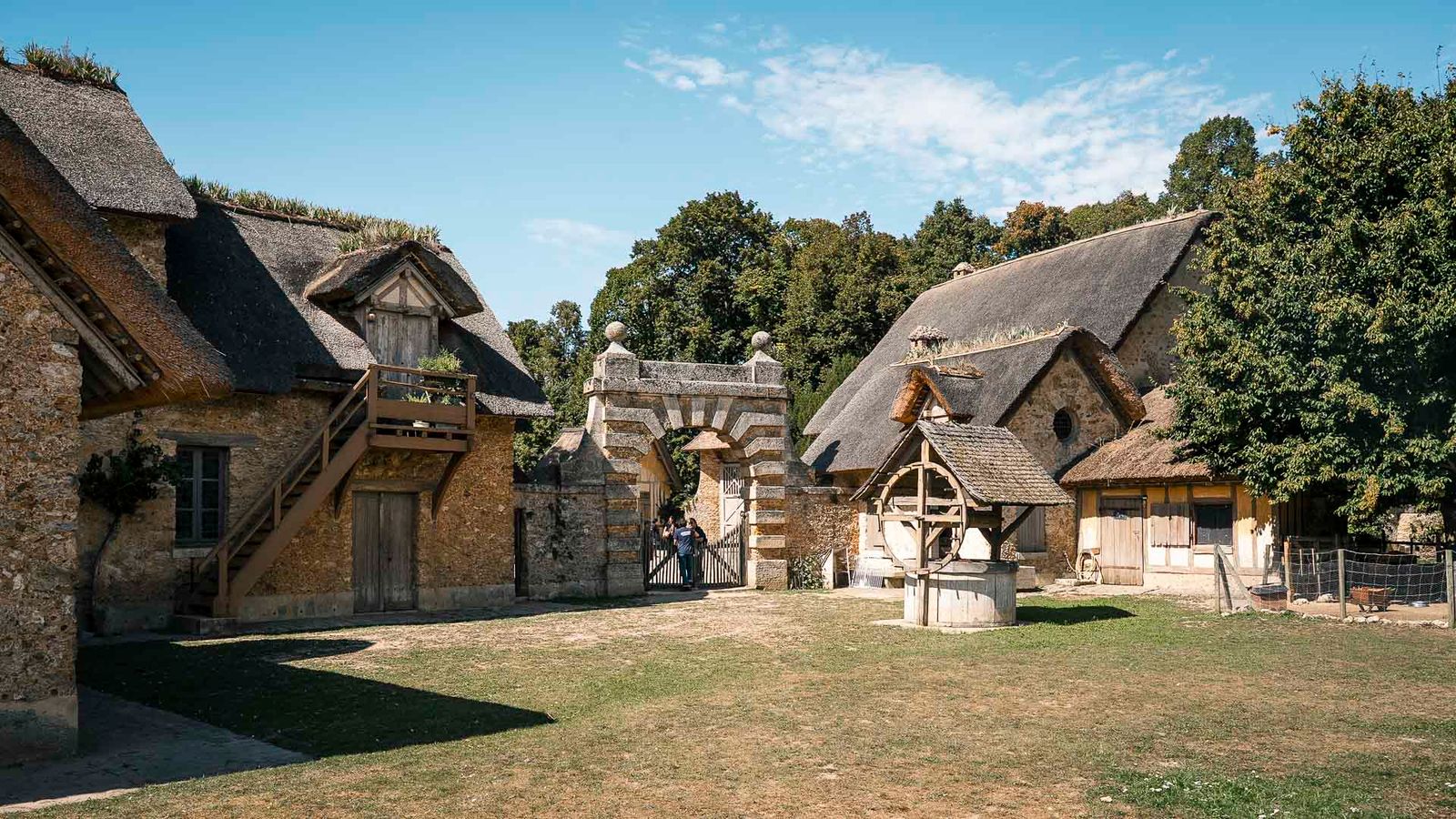
The mill is hilarious. Big impressive waterwheel on the side. Never ground a single grain of anything. Pure decoration. It’s the 18th-century equivalent of buying exercise equipment that becomes a clothes rack.
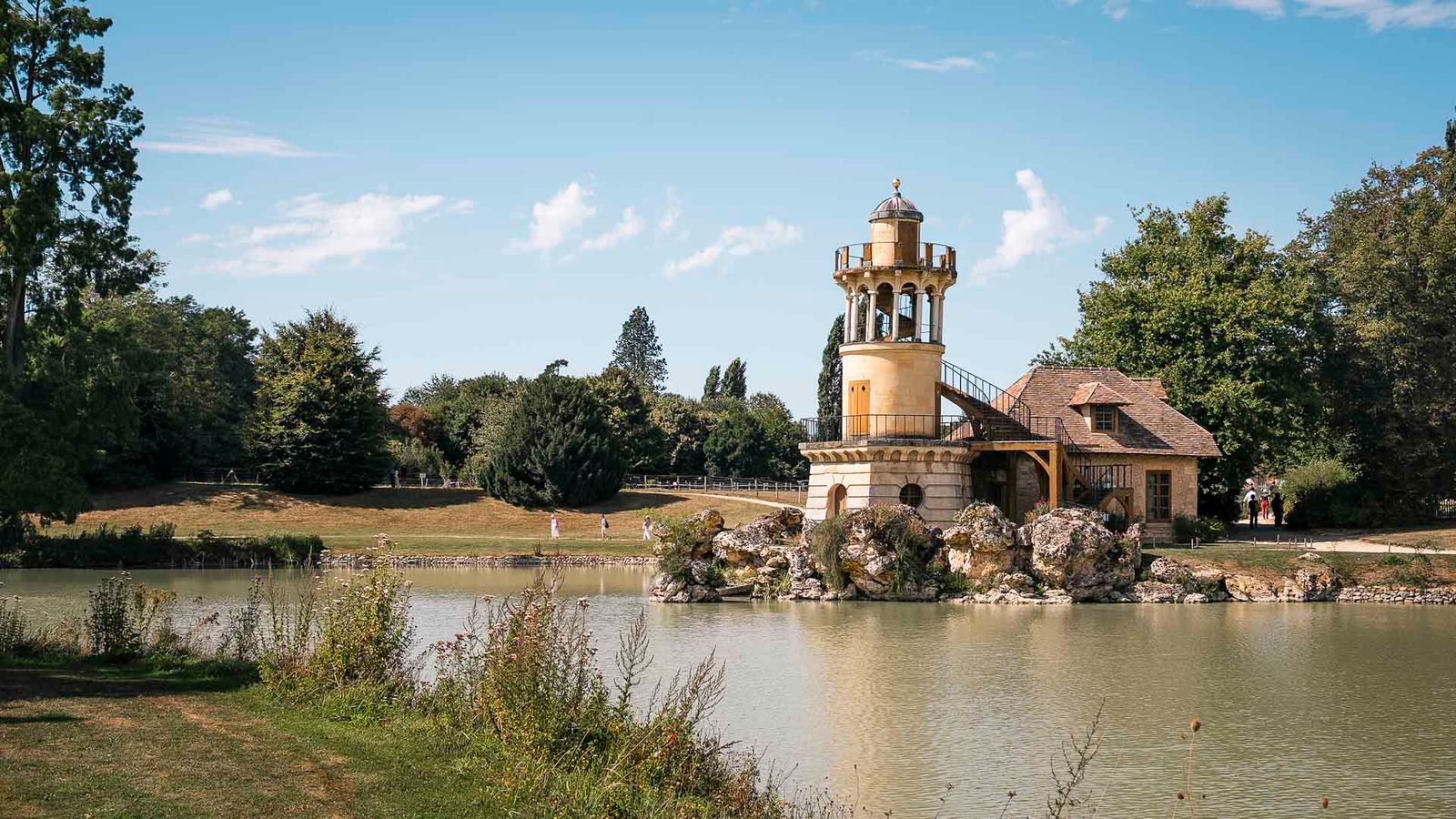
The Tour de Marlborough was storage and a lookout tower, named after some popular song about a dead English duke. The laiterie de propreté is where they served fresh dairy on marble tables using porcelain specially made at Sèvres. So yes, fancy. But the dairy products were real, from the cows fifty meters away.
The Money Question
This cost about 500,000 livres, a quarter of what got spent on Marie-Antoinette’s properties between 1776 and 1790. Sounds like a lot until you learn that the Château de Saint-Cloud cost six million. The Revolution made this place a symbol of royal excess, which is ironic given it was literally a working farm producing food.
After the Fall
The Hameau got abandoned after 1789. Furnishings sold. Buildings falling apart since Mique built them for looks, not longevity. Napoleon ordered some fixes for his empress around 1810-12, but several buildings were already too damaged. They tore down the grange and one of the dairies.
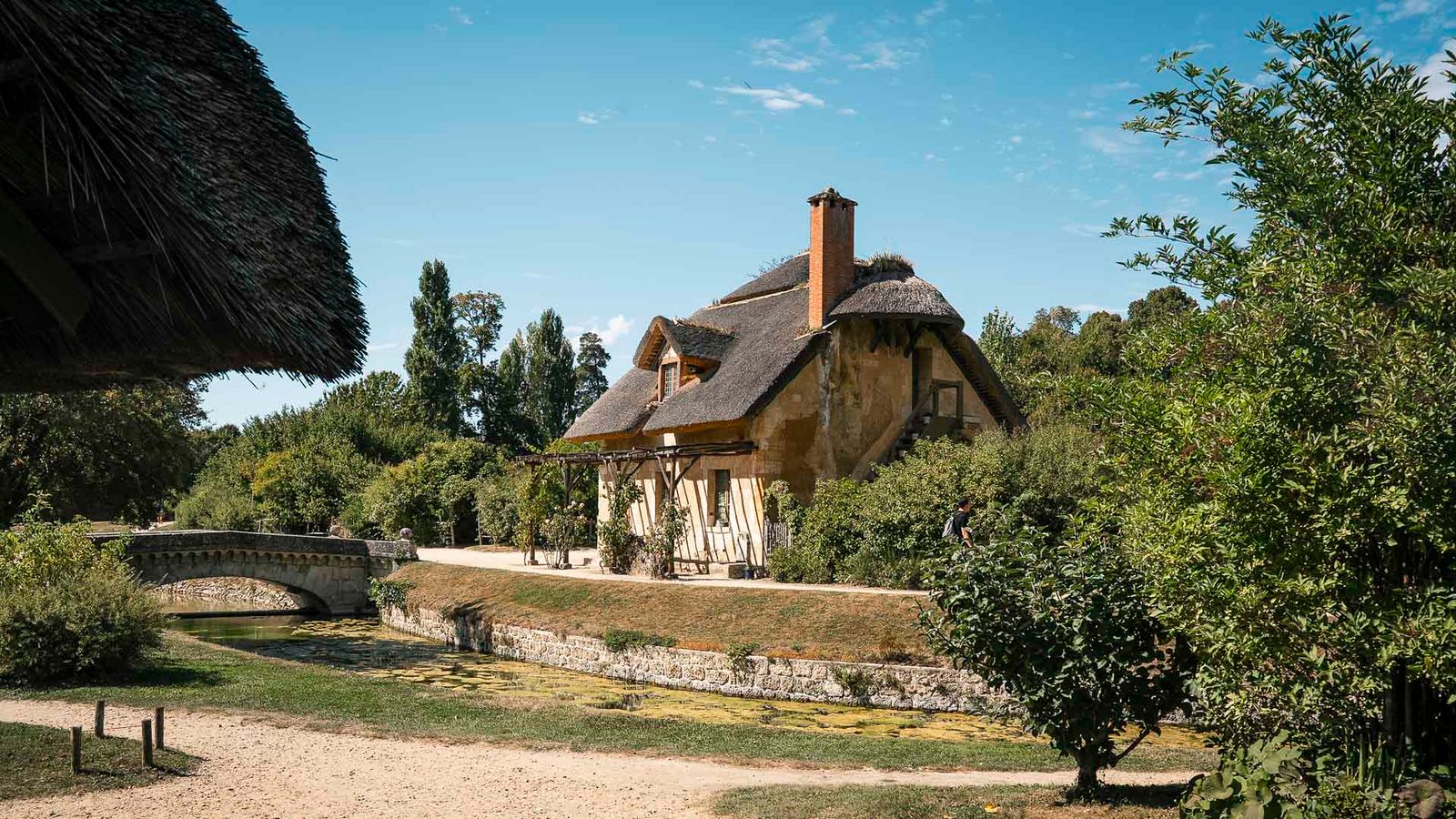
By the 1930s the whole thing was nearly gone. John D. Rockefeller Jr. funded a major restoration; apparently being obscenely wealthy and interested in French royal history runs in certain families. More restoration work happened in the 1990s using original architectural plans. They completely rebuilt the farm in the early 2000s and reopened it in 2006 with actual animals again.
Going There
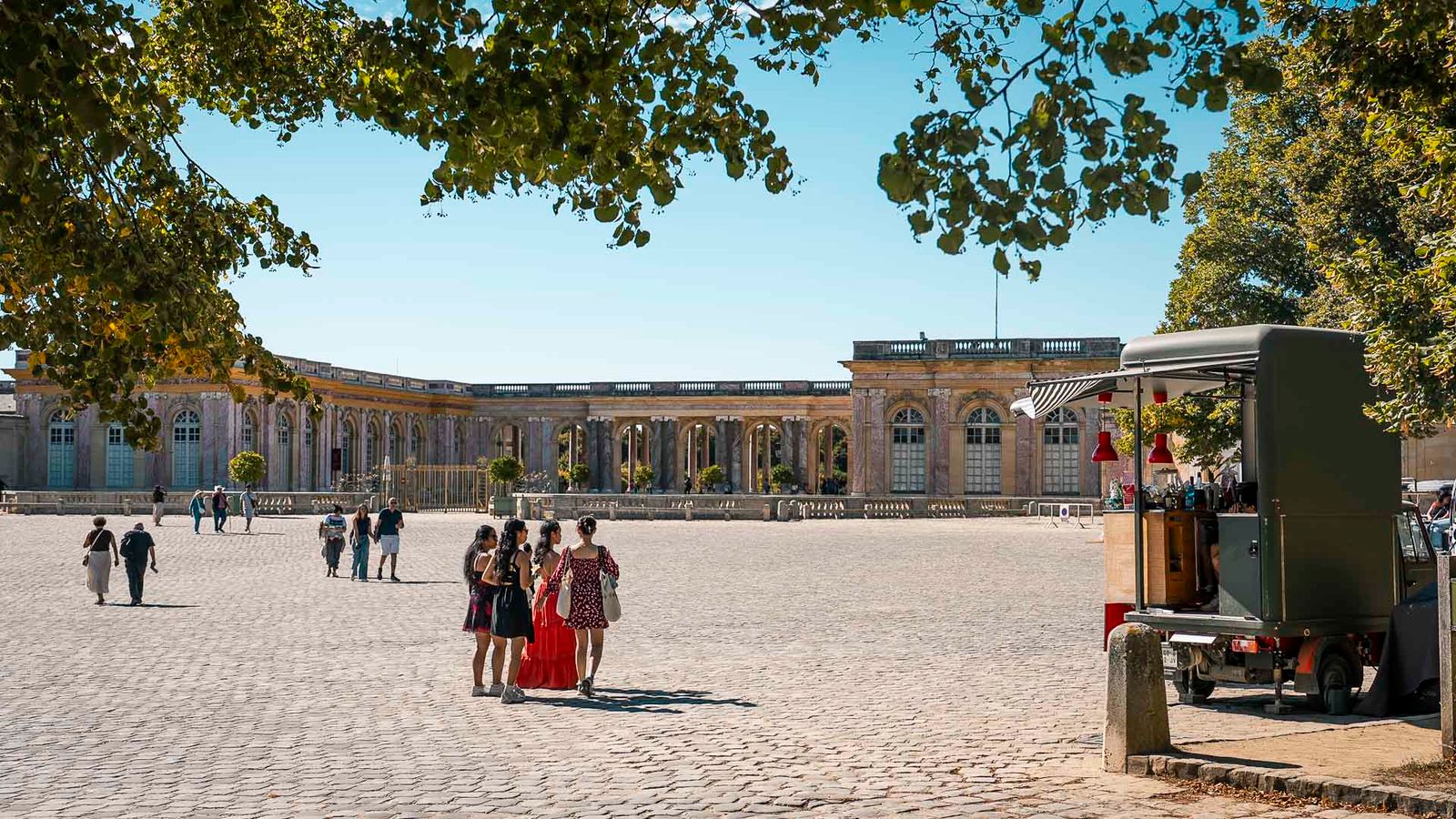
It’s part of the Domaine de Marie-Antoinette now, open to visitors with some restrictions. You’ll need to plan ahead. It’s been a UNESCO World Heritage site since 1979.
When you go, take time around the lake. Look for those fake cracks in the plaster, once you spot them you’ll see them everywhere. Try to picture what it meant for someone to be simultaneously the most visible woman in France and desperate for privacy.
The revolutionary propaganda painted her as a queen playing pretend peasant. But she was running a real farm, raising children, trying to breathe in a system designed to suffocate her.
Then the system collapsed anyway. But for a few years there was a village by a lake where she could walk around without performing for an audience.
That’s the actual story. Turns out it’s more interesting than the myth.