




Historical Significance: From Water Supply to Urban Icon
The Canal Saint-Martin was inaugurated in 1825 as part of Napoleon Bonaparte’s efforts to improve Paris’s water supply system. Initially intended to carry fresh water to the growing city, it has since become an iconic part of Paris’s landscape.
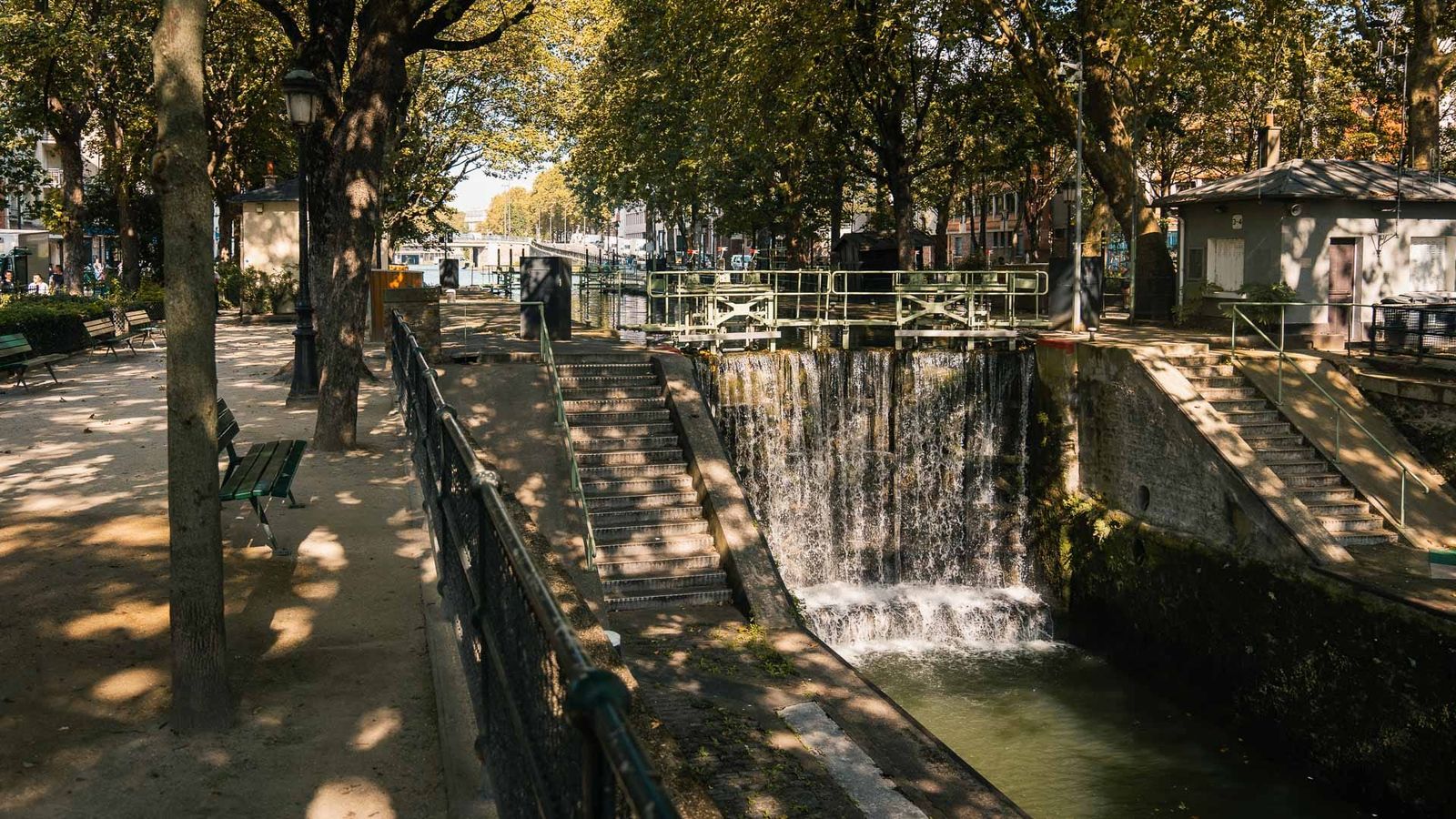
The canal was originally part of a larger project to bring water from the Canal de l’Ourcq, over 100 kilometers away. Over time, the canal evolved to include industrial uses, contributing to the city’s growth as a commercial hub. The canal features nine locks and two rotating bridges, designed to address the natural elevation changes across Paris, with a total drop of 25 meters.
Architectural Features: Locks, Bridges, and Tunnels
The Canal Saint-Martin is known for its distinctive locks and rotating bridges, which contribute to its charm and functionality. The canal is punctuated by five basins: Bassin des Morts, Bassin du Combat, Bassin Louis-Blanc, Bassins des Récollets, and Bassin des Marais, which are separated by ecluses (locks). These locks help navigate the various elevations of the canal, making it an important feat of engineering from its time.
Perhaps most striking are the two rotating bridges and several pedestrian bridges that allow passage across the canal, adding to the area’s unique character. Some of these bridges include the Pont Maria-Pacôme, Pont Maria-Casarès, and the Passerelle Michèle-Morgan, which cross the water at various points and enhance the scenic experience.
The canal’s tunnels, which run beneath streets like Boulevard Jules-Ferry and Boulevard Richard-Lenoir, are also remarkable feats of engineering. These tunnels were constructed to facilitate transportation, and they are lit by oculi (ventilation holes), which provide natural light.
The Canal’s Urban Revival: From Industrial Artery to Cultural Destination
Over the decades, the Canal Saint-Martin transitioned from a vital industrial waterway to a scenic and cultural hotspot, particularly during the 1990s and 2000s, when gentrification transformed the area.
The canal became a gathering place for Parisians and visitors alike, drawn by its trendy cafés, boutique shops, and picturesque walkways. The Canal Saint-Martin now attracts those seeking a relaxing stroll or a peaceful boat ride, offering a quiet retreat from the hustle and bustle of Parisian life.
A Scenic Stroll Along the Water: Enjoying the Canal’s Beauty
Walking along the canal is a unique way to explore Paris. The quays of Valmy and Jemmapes, lined with trees, are particularly popular for casual walks. These beautiful streets, along with the passerelles (footbridges), provide the perfect setting for a day out.
For those interested in a more leisurely experience, a boat ride on the canal offers a chance to experience Paris from a different angle. Canal boat tours are available and offer a scenic way to appreciate the architecture and history surrounding this iconic waterway.
Canal Saint-Martin Culture: A Hub of Inspiration
The Canal Saint-Martin has been a muse for many artists, writers, and filmmakers. In the 19th century, it inspired Impressionist painters like Gustave Caillebotte, and was featured in Émile Zola’s novel L’Assommoir, reflecting the lives of Paris’ working class. The canal also gained fame in Marcel Carné’s 1938 film Hotel du Nord, capturing the romantic, melancholic atmosphere of Parisian life.
In modern times, the canal has appeared in iconic films like Amélie Poulain (2001) and the Netflix series Emily in Paris (2020–present), where it showcases the charm of Paris. It continues to be a popular setting in music videos and other media, cementing its place as a symbol of the city’s creative spirit.