Welcome, fellow travelers, to a tale that will whisk you away to the opulent court of Louis XIV, the Sun King, where scandal and intrigue were as common as the lavish balls and glittering chandeliers. Today, we delve into the captivating story of Queen Marie Thérèse and the mysterious Black Nun of Moret.
A Royal Affair or a Rumor?
Marie Thérèse, the Spanish-born Queen of France, was known for her devout Catholic faith and her unwavering love for her husband, Louis XIV. Yet, amidst the splendor of Versailles, whispers of an astonishing scandal began to circulate. It was said that the Queen had given birth to a black child, a tale so sensational that it captured the imagination of the entire court.
The child in question, Louise Marie Thérèse, later became a nun of the Benedictine order. She claimed to be the illegitimate daughter of Queen Marie Thérèse, a claim that sent shockwaves through the royal court. But how did such a rumor begin, and was there any truth to it?
The Birth of a Scandal
In 1664, Queen Marie Thérèse gave birth to a daughter, Marie-Anne, who was born prematurely and died shortly after. This tragic event was witnessed by many at court, as royal births were public affairs meant to prevent any foul play. However, it was this very public nature that fueled the rumors.
Some accounts, like those of the Princesse de Montpensier, claimed that the baby was born with a dark complexion, possibly due to oxygen deprivation. Yet, the gossipmongers of Versailles had a different story. They whispered that the child was the result of an affair between the Queen and an African dwarf named Nabo, a favorite among her Spanish attendants.
The Queen’s Bedroom
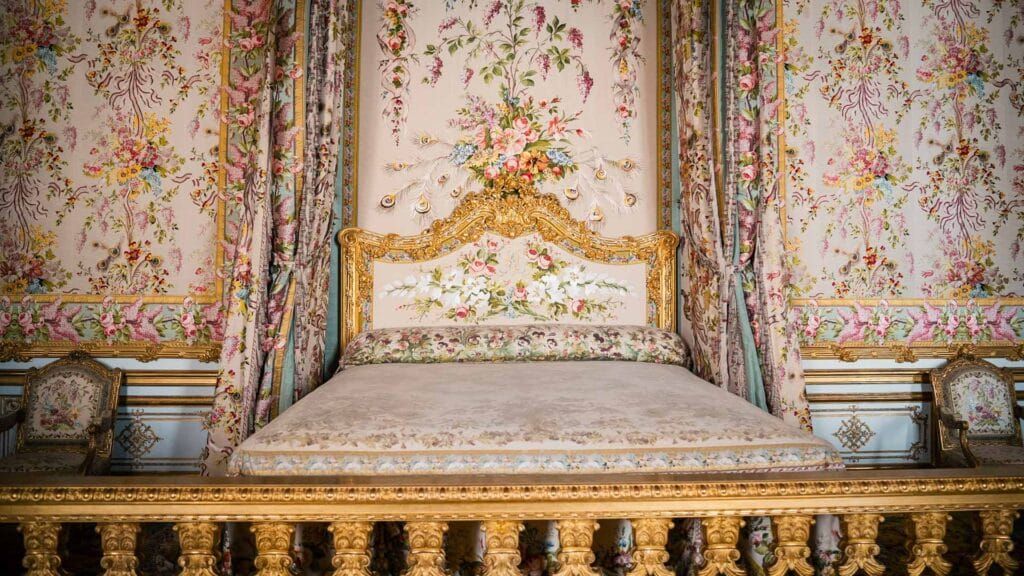
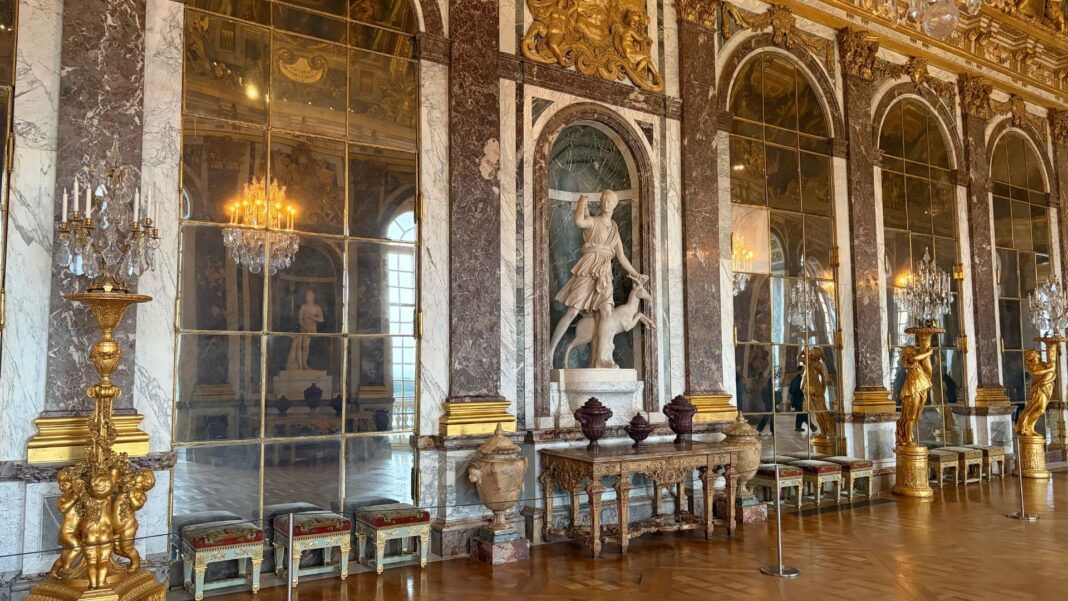
Imagine the scene in the Queen’s bedroom at Versailles, a room adorned with opulent tapestries, gilded mirrors, and a magnificent bed draped in rich fabrics. This was the very room where Marie Thérèse gave birth under the watchful eyes of the court, a practice designed to ensure the legitimacy of royal heirs. The room itself is a testament to the grandeur of the French monarchy and the intense scrutiny under which the Queen lived.
The Black Nun of Moret
Louise Marie Thérèse, known as the Black Nun of Moret, grew up in a convent and was convinced of her royal heritage. Her presence at Versailles and the pension settled on her by Louis XIV added fuel to the fire. The memoirs of Saint-Simon recount how she once addressed the Grand Dauphin as “brother,” a bold claim that certainly raised eyebrows.
Despite the scandalous rumors, there are other plausible explanations for her origins. One theory suggests that Louise was the daughter of Louis XIV’s Moorish coachman, whose wife died shortly after giving birth. Louis and Marie Thérèse, acting as godparents, may have placed her in the convent out of a sense of duty and compassion.
A Tale of Intrigue and Mystery
The story of Queen Marie Thérèse’s black child remains one of the most intriguing mysteries of Louis XIV’s court. Whether Louise Marie Thérèse was indeed the Queen’s daughter or simply a victim of courtly gossip, her tale adds a fascinating layer to the already rich tapestry of Versailles.
As you wander through the resplendent halls of the Palace of Versailles, imagine the hushed whispers and stolen glances that must have followed the Black Nun of Moret. Her story, like so many from that glittering age, reminds us that history is often a blend of fact and fiction, woven together by the imaginations of those who lived it.