Gliding along the Seine offers a rare kind of privilege: a slow, cinematic reveal of the world’s most beautiful city, uninterrupted by traffic or tourists. From the Eiffel Tower’s iron lattice to the golden dome of Les Invalides, from medieval strongholds to 21st-century architectural feats, this is Paris told in stone, glass, and river light.
We’ve charted the ultimate visual itinerary, following the river eastward from the Eiffel Tower to the far reaches of the Left Bank, then back west past lesser-known marvels. Whether you’re on a daytime sightseeing boat or a candlelit dinner cruise, here’s exactly what to watch for, in the order you’ll float by.
From the Eiffel Tower to Île de la Cité
The city’s ceremonial core — home to empires, revolutions, and the legends of Parisian grandeur.
1. Eiffel Tower

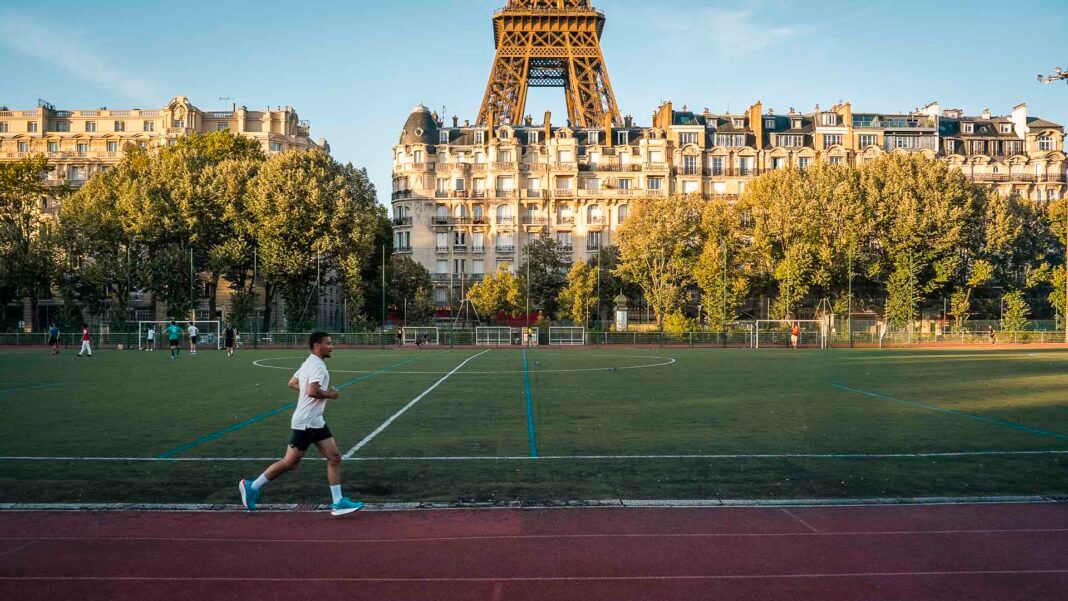
No matter how many times you’ve seen it, the Eiffel Tower from the river hits different. Here, it rises above the quays in all its wrought-iron glory, reflected in the ripples of the Seine. Cruises often depart from its base, giving passengers a full-circle view of Paris’s most iconic silhouette. Come sunset, when it begins its golden-hour glow, it’s pure poetry.
2. Trocadéro Gardens & Palais de Chaillot

Across the water on the Right Bank, the Trocadéro terraces spill down like a grand stage toward the Seine. The sweeping steps and twin pavilions of Palais de Chaillot form one of the best panoramic viewpoints in Paris — and from the boat, the symmetry is striking. Even the fountains, when flowing, seem choreographed.
3. Flame of Liberty & Pont de l’Alma

High above the embankment, you’ll see a gold flame flickering in the daylight — a replica of the Statue of Liberty’s torch and an unofficial shrine to Princess Diana, whose fatal car crash occurred in the tunnel below.

The nearby Pont de l’Alma is solid and unassuming, but its name and location make it one of the most poignant stops on the cruise.
4. Hôtel des Invalides

There it is — the dome that gleams even under overcast skies. Commissioned by Louis XIV for wounded soldiers, the Invalides complex now holds Napoleon’s tomb. From the Seine, the golden dome peeks through the skyline, a regal beacon amid the rooftops.
5. Pont Alexandre III

Behold the showstopper. With its Art Nouveau lamp posts, gilt statues, and swirling cherubs, Pont Alexandre III is Parisian excess in bridge form. Completed for the 1900 Exposition Universelle, it links the Champs-Élysées to Les Invalides — and from below, it looks like a crown stretched across the water.
6. Grand Palais & Petit Palais

On the Right Bank next to the Pont Alexandre III , the Grand Palais stuns with its towering glass canopy — a monument to French ambition and elegance. Its sister, the Petit Palais, is smaller but exquisitely adorned, with a sculpted pediment and curved colonnades. Together, they mark the city’s commitment to beauty, both monumental and delicate.
7. Palais Bourbon (National Assembly)

A neoclassical temple of French democracy, the Palais Bourbon commands respect with its colonnaded façade. It’s not flashy, but it matters: this is where debates rage and laws are born. A key player in the Republic’s daily drama.
8. Musée d’Orsay

This Belle Époque stunner once welcomed trains; now the Orsay Museum welcomes the art-hungry. From the boat, its massive clock windows are unmissable, looming like sentinels of Impressionist masterpieces. Manet, Monet, and Degas await inside — but even from outside, the museum is a visual treat.
9. Louvre Museum
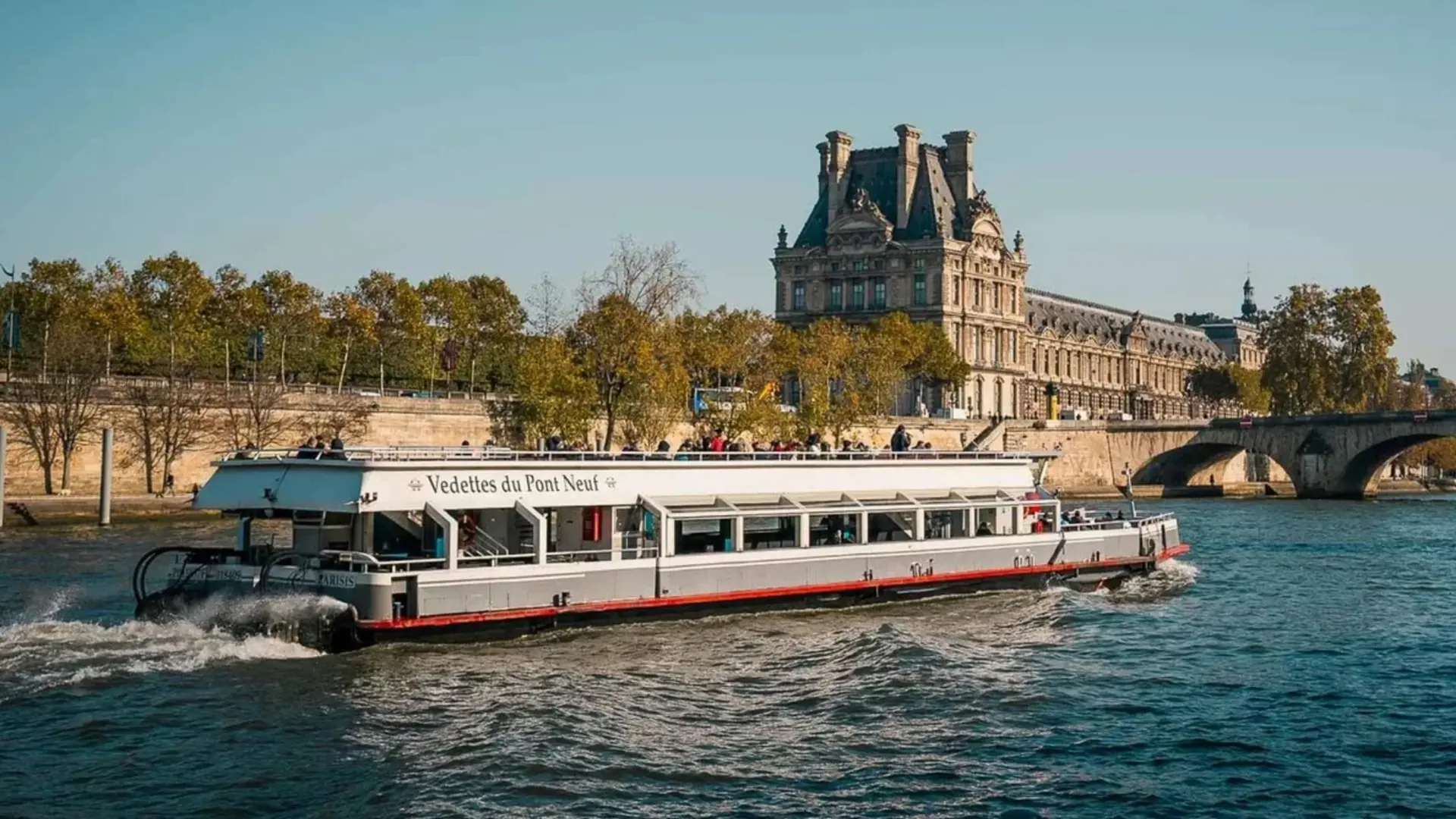
Stretching along the Right Bank, the Louvre is less pyramid here and more fortress-palace — a vast parade of arcades, sculptures, and ornate pediments. You float past history in layers: medieval ramparts, Renaissance wings, Napoleonic additions. It’s not just a museum — it’s a monument to power.
10. Pont des Arts & Institut de France

Once weighed down by “love locks,” the Pont des Arts is now lighter — both structurally and metaphorically. Its iron railings offer unobstructed views of the Seine, while the Institut de France, with its dignified dome, anchors the Left Bank in scholarly prestige. It’s a moment of calm and balance.
Around Île de la Cité & Île Saint-Louis
The cradle of Paris — where medieval stone meets postcard perfection.
11. Square du Vert-Galant

At the tip of Île de la Cité, the Square du Vert-Galant dips into the water like a boat’s bow. From the deck, you’ll see couples sprawled on blankets, Parisians reading novels, and ducks drifting by like they own the place.
12. Conciergerie & Clock Tower

A brooding Gothic hulk with pointed turrets, the Conciergerie was once a royal residence and later, during the Revolution, a prison for the condemned. Marie Antoinette’s final hours unfolded behind these grim walls. Its 14th-century clock tower is the oldest public clock in Paris — ticking through centuries of power and downfall.
13. Notre-Dame Cathedral

Even under scaffolding, Notre-Dame radiates spiritual and architectural gravitas. From the river, you get a side angle most tourists miss: the flying buttresses that seem to levitate, the delicate apse curving into the water. The towers still stand tall — wounded but resilient.
14. Pont Neuf

The irony is sweet: “New Bridge” is the oldest in Paris. The Pont Neuf arcs gracefully over the Seine, connecting the tip of Île de la Cité to both banks. Its stone mascarons (carved faces) peer down at you, laughing silently across four centuries.
15. Hôtel de Ville (City Hall)

A Neo-Renaissance masterpiece, the Hôtel de Ville stretches grandly along the riverbank. Its façade bristles with statues and pediments; it’s a city hall with the soul of a palace. Look for the clock tower — and imagine the revolutions planned behind those windows.
Further East: Contemporary Contrasts and Riverside Calm
Paris’s modern edge and lesser-known charms unfurl downstream.
16. Tino Rossi Garden

Named after a Corsican crooner, this riverside park is one of Paris’s hidden delights. Sculptures by Brancusi and Zadkine mingle with trees and joggers. From the water, Tino Rossi Garden reads as an oasis — green, quiet, and human-scaled, especially in contrast to the stone giants upstream.
17. Institut du Monde Arabe

Designed by Jean Nouvel, the Institut du Monde Arabe with its shimmering façade of metallic geometry reflects the sky and river in ever-changing ways. Its mashrabiya-inspired windows open and close like camera shutters, blending technology with tradition. A bold reminder that Paris speaks many languages — including Arabic.
18. Bibliothèque François-Mitterrand

Four L-shaped structures, shaped like open books, rise from the Left Bank in perfect symmetry. They signal the eastern edge of central Paris — bold, modern, intellectual. From the river, the Bibliothèque François-Mitterrand feels like a sentinel of the city’s future, holding centuries of knowledge within its soaring glass walls.
19. Passerelle Simone-de-Beauvoir

An elegant pedestrian bridge that snakes across the water without a single pillar touching it. Named after the famed feminist philosopher, the Passerelle Simone-de-Beauvoir is a tribute to intellect and movement — and a favorite of locals heading to riverside cinemas or cafés.
West of the Eiffel Tower: A Quieter, Quirky Circuit
Fewer crowds, more cinematic moments — and a Parisian take on Lady Liberty.
20. Île aux Cygnes & Statue of Liberty (Paris version)
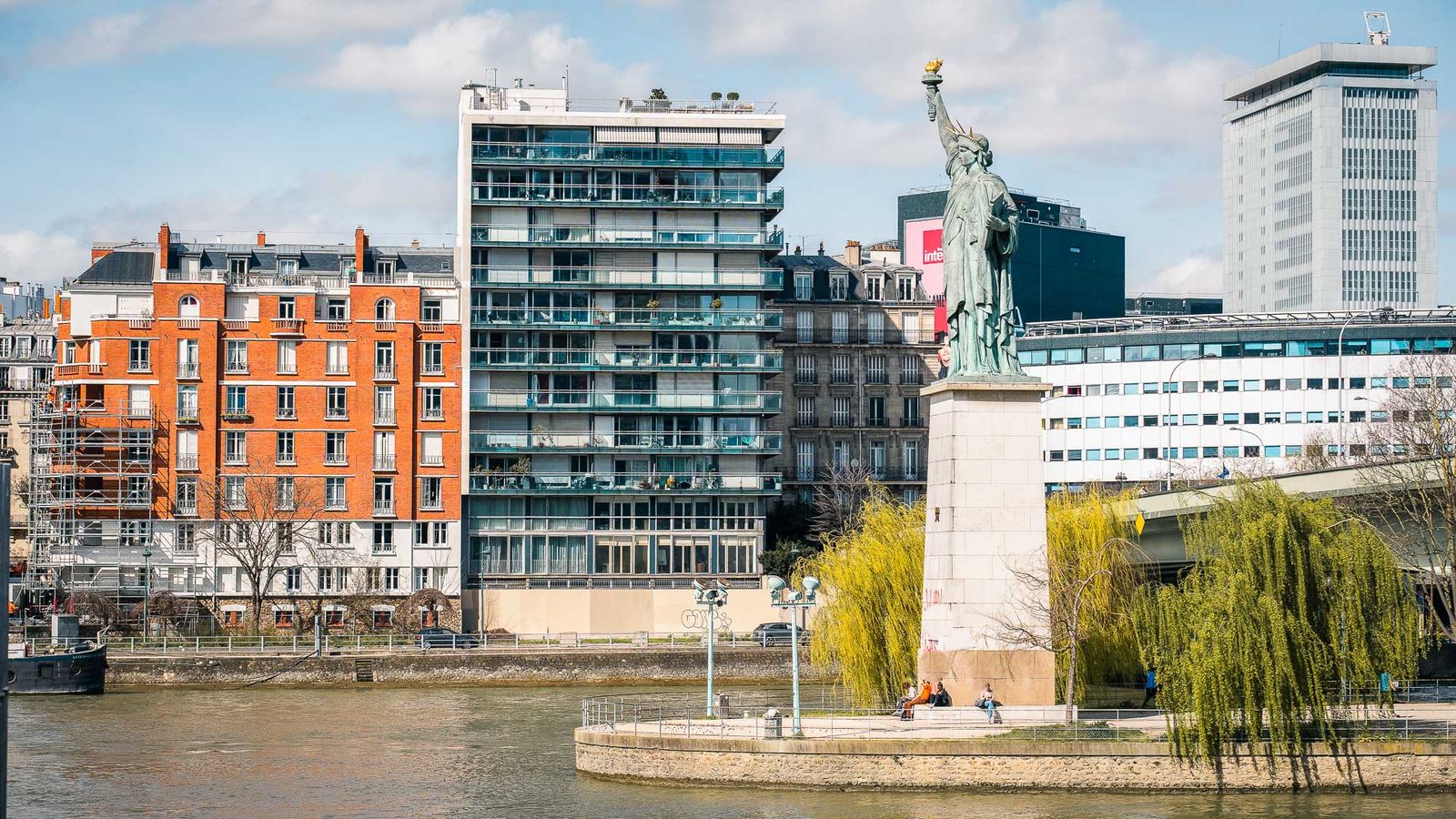
This narrow artificial island runs parallel to the Right Bank, shaded by trees and lined with benches. It’s a favorite spot for joggers and dog walkers — and a lovely surprise from the boat. You’ll see staircases leading down to the path, like secret entries to another Paris.
A gift from American expats in 1889, the Statue of Liberty in Paris stands 11 meters tall and gazes west toward her iconic twin in New York. Poised at the tip of Île aux Cygnes, she’s the ultimate photo op — and a striking symbol of Franco-American friendship.
21. Pont de Bir-Hakeim

Two levels of steel span the river here: trains above, pedestrians below. Arches frame the Eiffel Tower with cinematic perfection — no wonder it’s been featured in everything from Inception to Last Tango in Paris. From your cruise, Pont de Bir-Hakeim is one of the most famous bridges in Paris you’ll catch.
Bonus Tips for the Best Cruise Experience
- Compare before you cruise: Paris offers a flotilla of cruise options — from simple sightseeing jaunts to indulgent lunch and dinner cruises. Prices and inclusions vary wildly depending on the operator, the type of boat, and the route. Compare Seine cruise tickets price options and book the experience that suits your style and budget.
- Timing matters: Sunset and evening cruises bathe landmarks in golden light or sparkling illuminations. Some boats even time their route to catch the Eiffel Tower’s hourly sparkle.
- Choose your route wisely: Not all cruises go east of Île Saint-Louis or west of the Eiffel Tower. If you want to see the Statue of Liberty and the Bibliothèque François-Mitterrand, confirm the loop in advance.
- Bring binoculars: Especially for nighttime rides — the details on bridges and facades pop when you zoom in.
- Don’t just sit inside: Head to the open deck. The Seine is meant to be felt — breeze in your hair, camera in hand, Paris all around.