


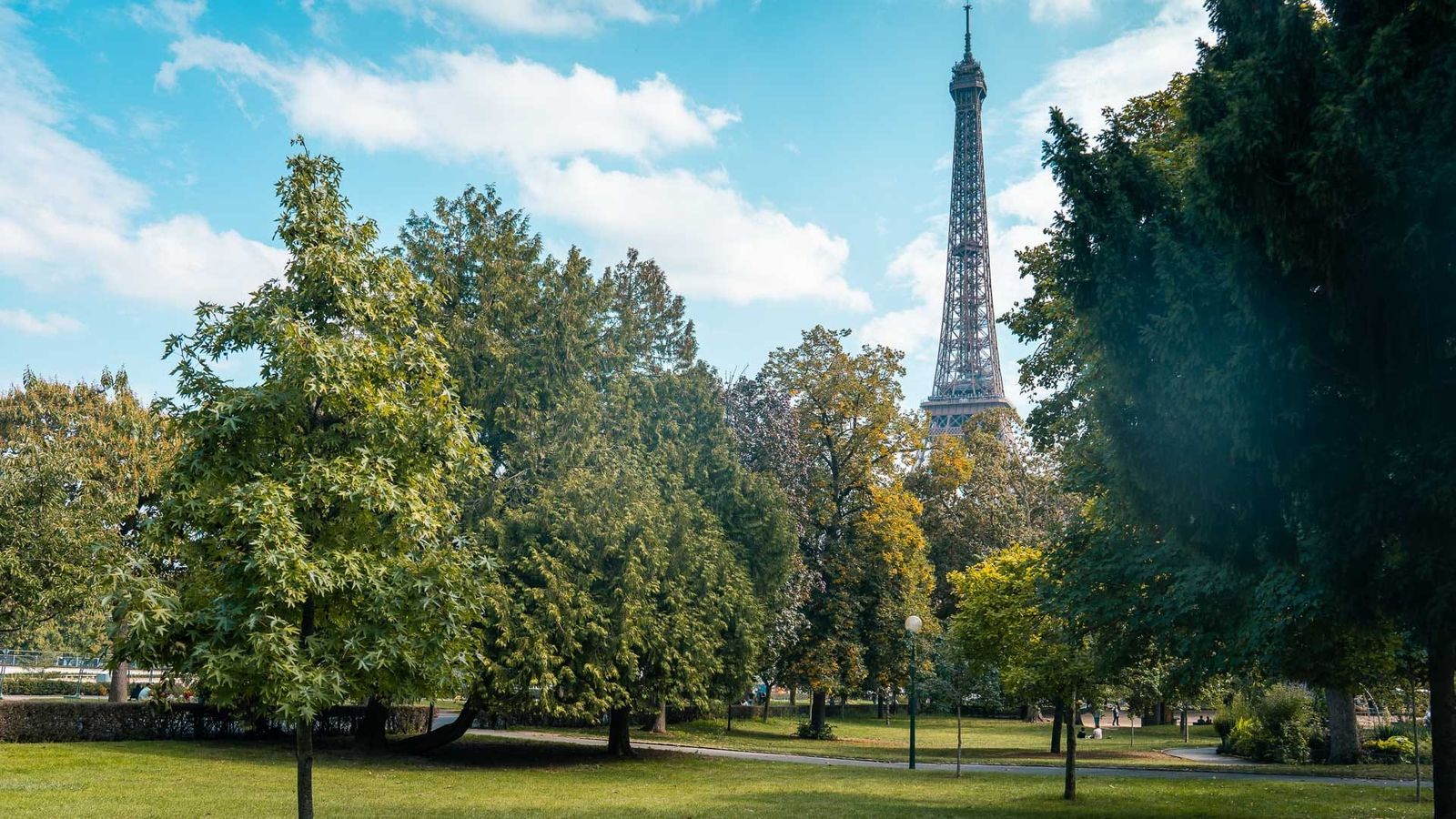
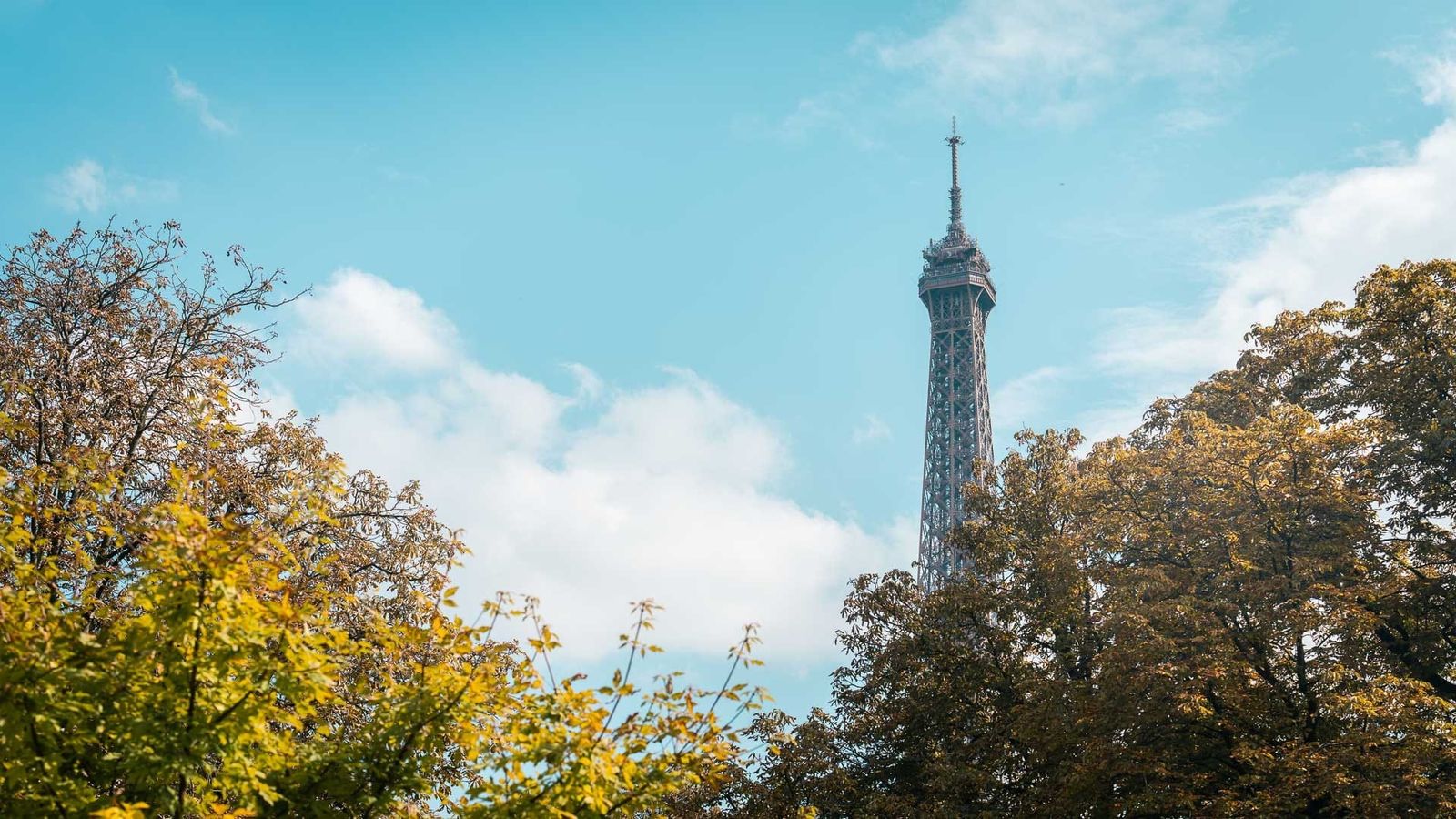
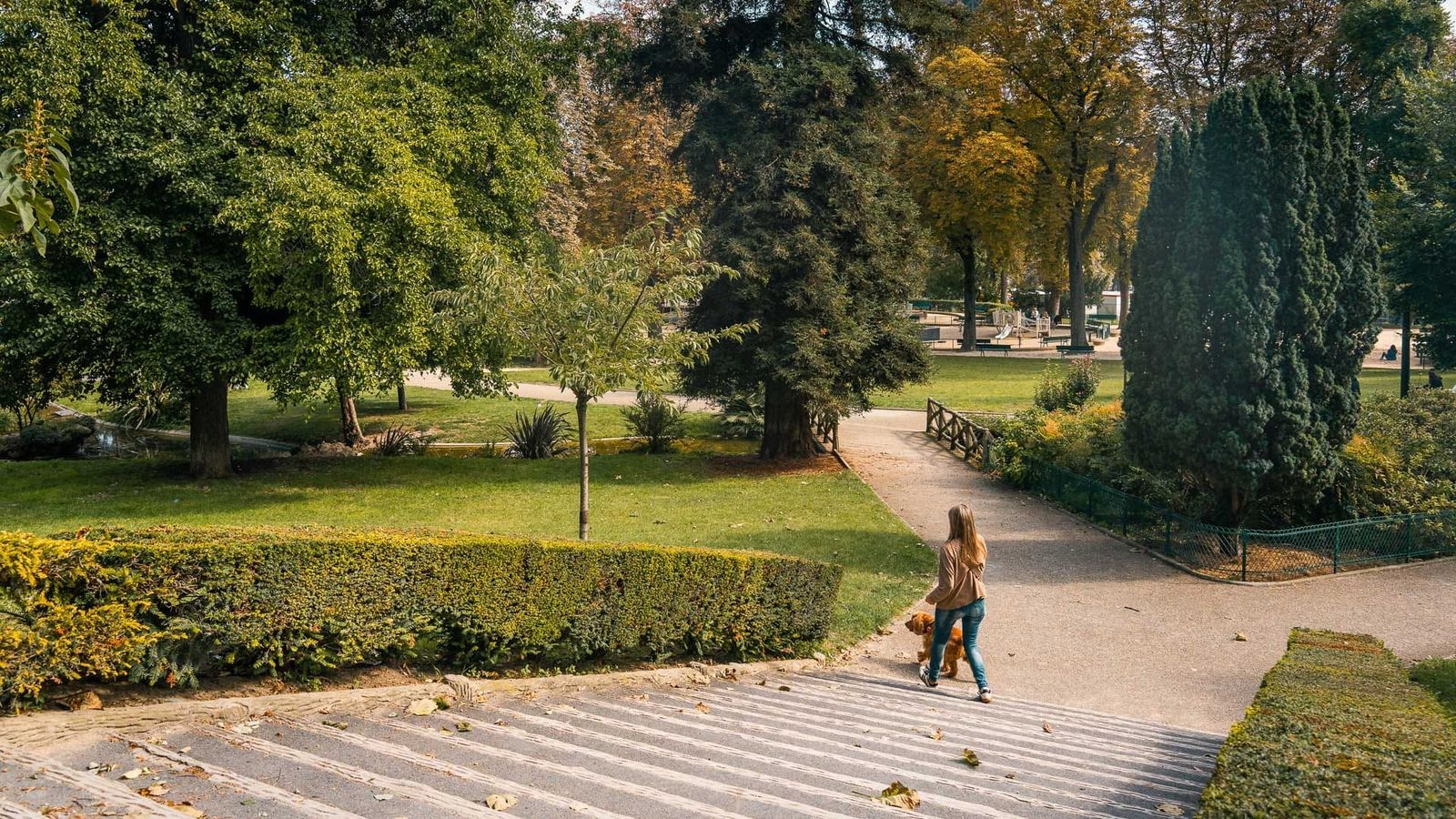
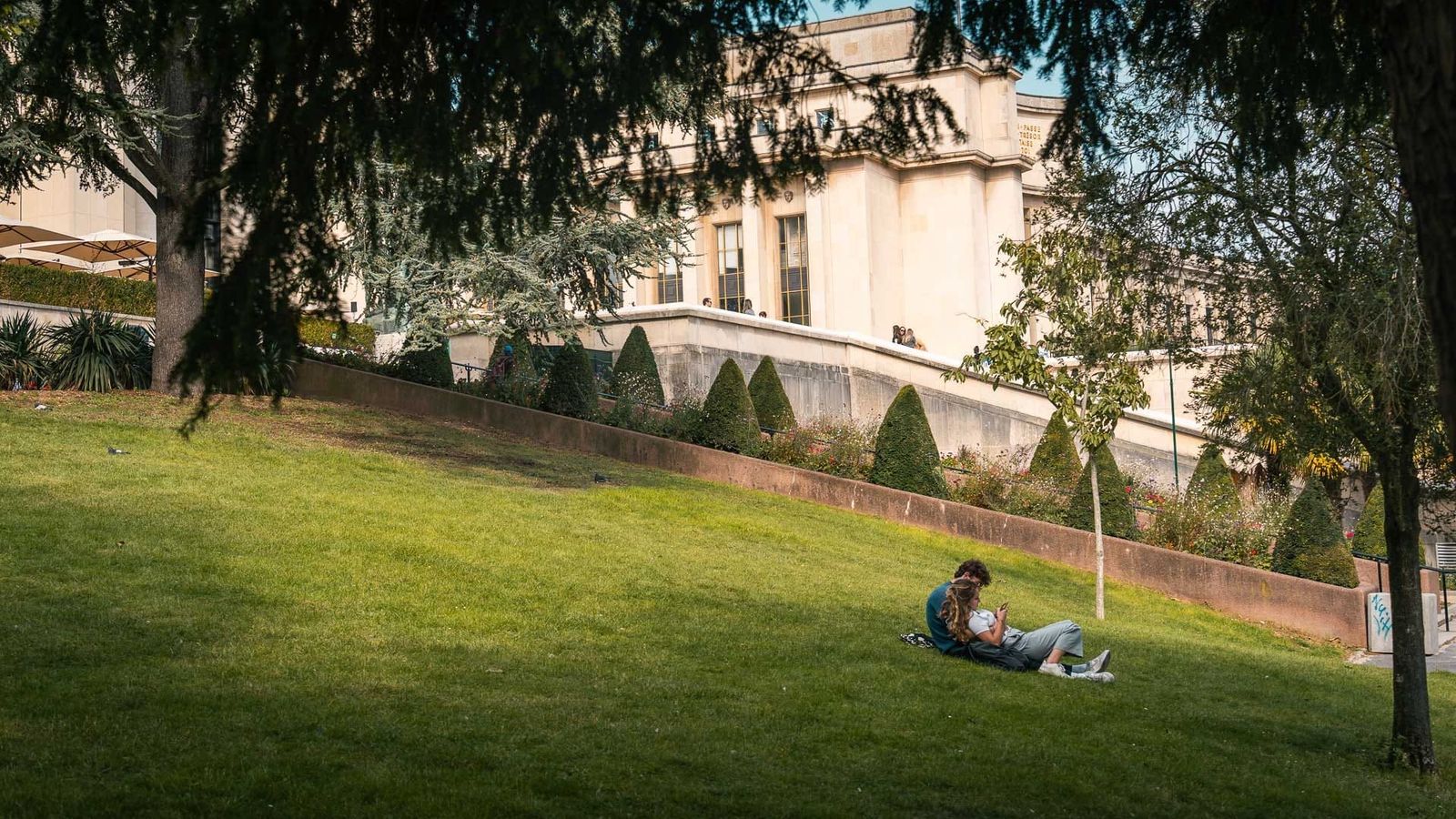
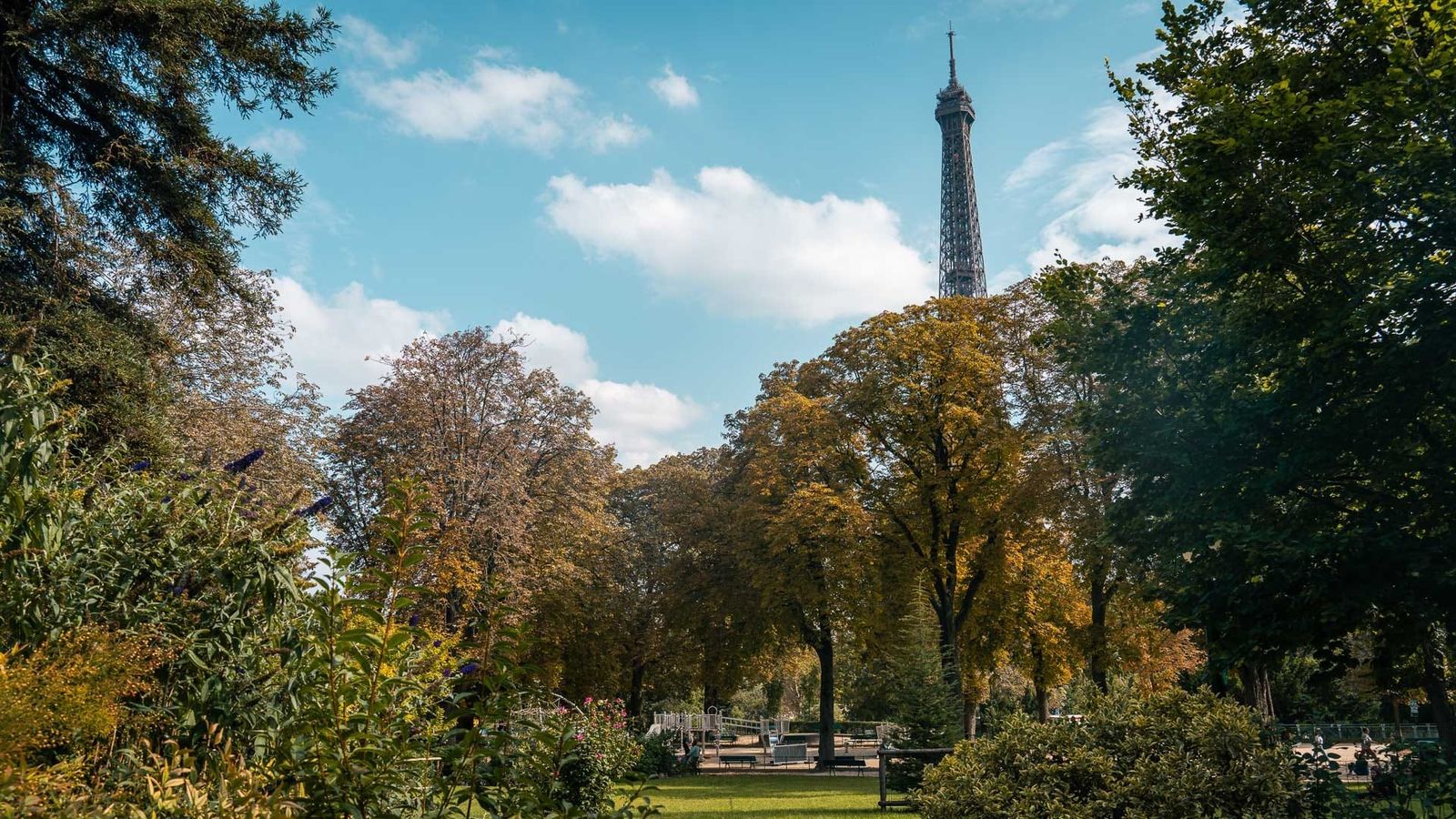
Trocadéro Gardens offer breathtaking views of the Eiffel Tower while blending historical design with tranquil green spaces and impressive sculptures.
A Historic Landscape Shaped by World Expos
The Trocadéro Gardens were designed and reimagined over time, influenced by two major World Expositions: 1878 and 1937.
Originally created for the 1878 Exposition Universelle, the gardens were sculpted by Adolphe Alphand, who is renowned for his work on Parisian parks.
This first version featured sweeping alleys shaded by large trees, cascading waterfalls, and rocky outcrops—a hallmark of the Haussmannian garden style. The gardens’ layout from this era remains, although the 1937 exposition brought significant changes with the construction of the Palais de Chaillot and the magnificent Warsaw Fountain, a feature that still defines the gardens today.
Fountains and Sculptures: Artistic Masterpieces Amidst Nature
One of the most iconic features of the Trocadéro Gardens is the stunning Warsaw Fountain, which spans 50 meters and is adorned with 20 powerful water cannons. This fountain serves as the focal point, with golden sculptures of bulls and horses that glow under evening lights, creating an enchanting display.
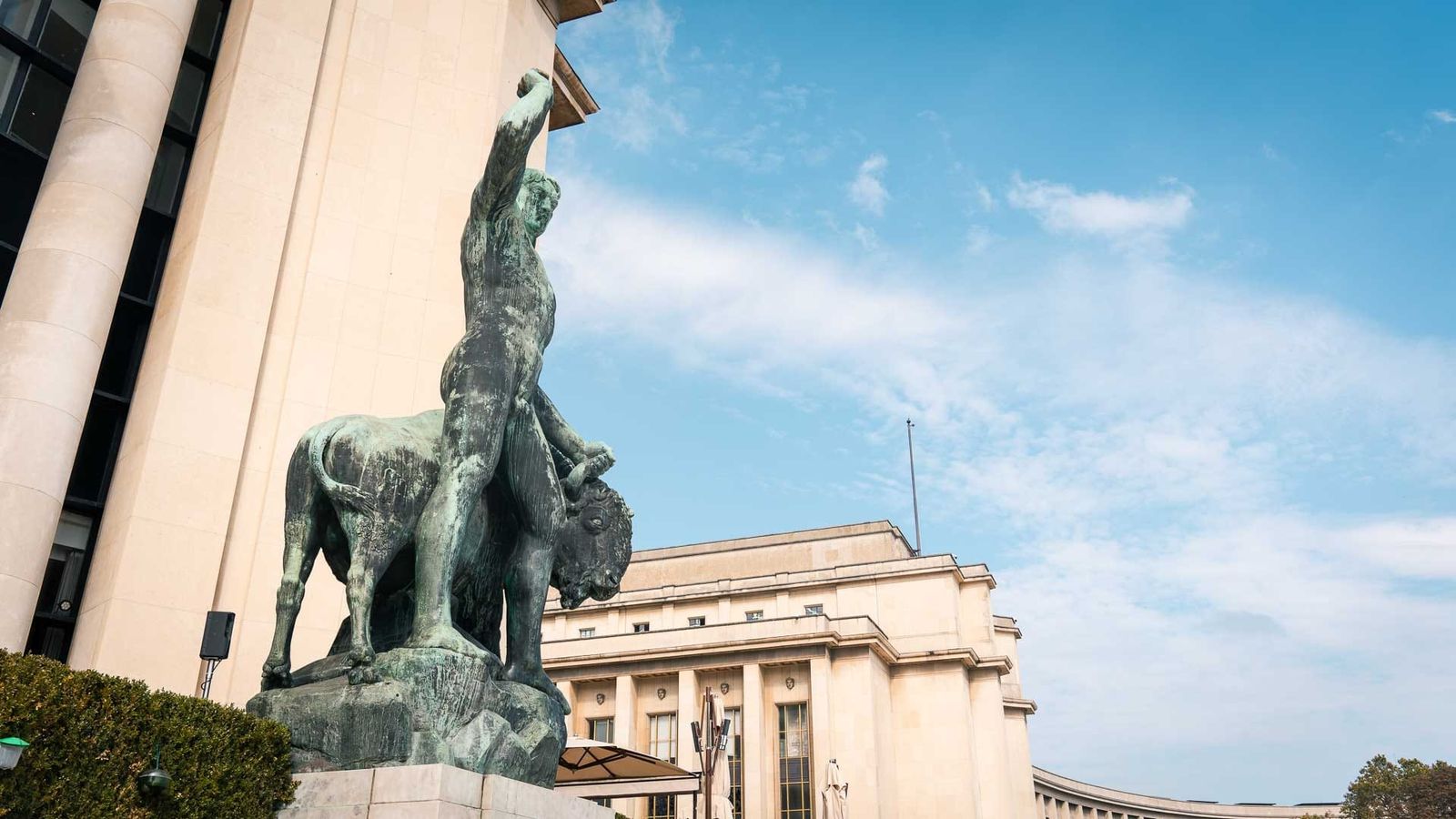
Around the gardens, you will find a wide variety of sculptures, including Homme de Traverse and Femme de Bacqué, which were installed in the 1930s.
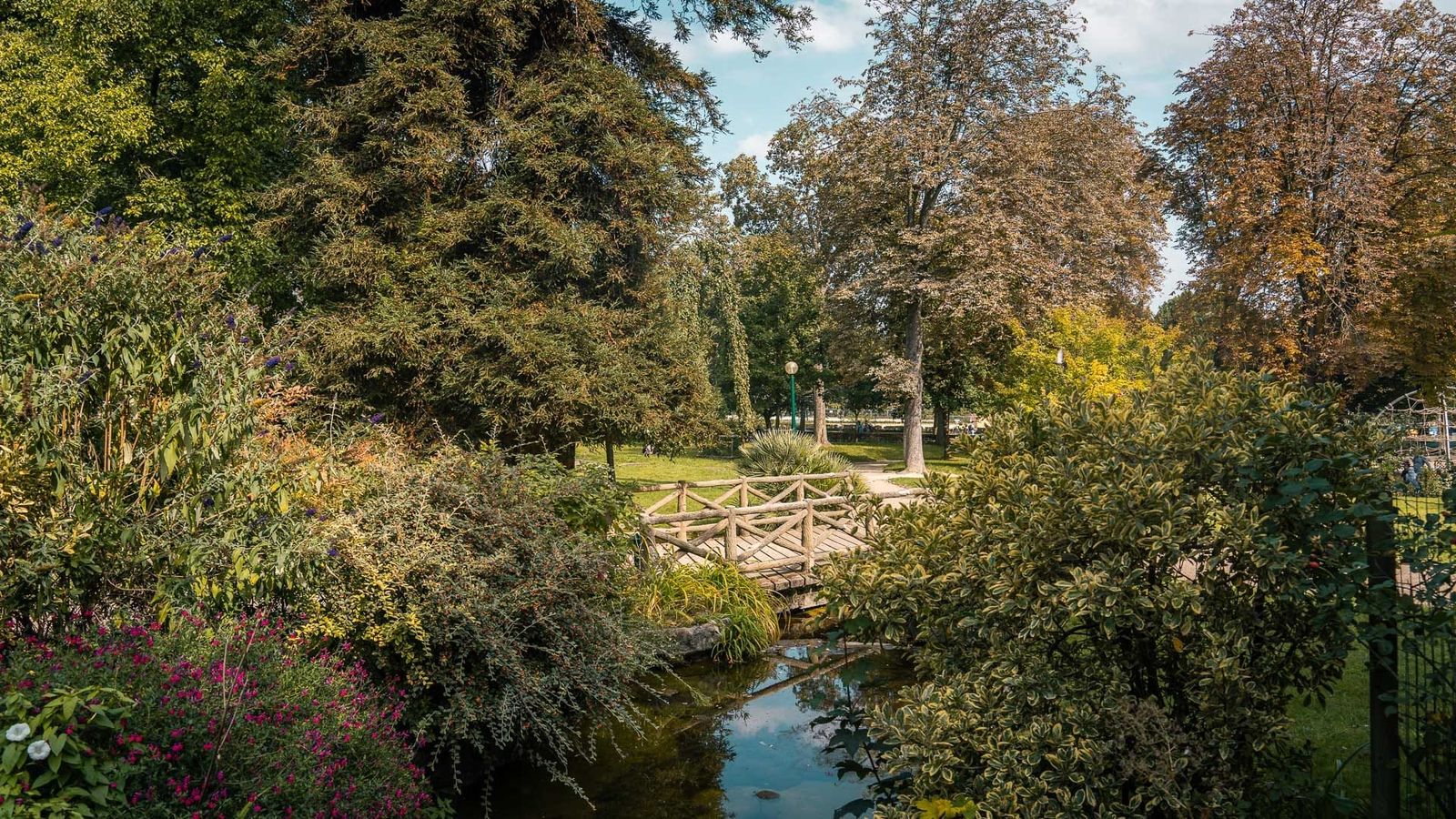
The gardens are a visual treat, with their combination of modern art and nature. Two English-style gardens flank the Palais de Chaillot, featuring a mix of blue Atlas cedars, oaks, and hazelnuts, alongside an artificial river that weaves through the landscape.
The Trocadéro Gardens also provide access to the Aquarium of Paris, making it a perfect spot for both art and animal lovers.
A Diverse Flora in the Heart of Paris
The Trocadéro Gardens are not only home to exquisite sculptures but also host a remarkable array of plants. Visitors can stroll through a forest of trees such as lime trees, chestnuts, and one of the largest plane trees in Paris.
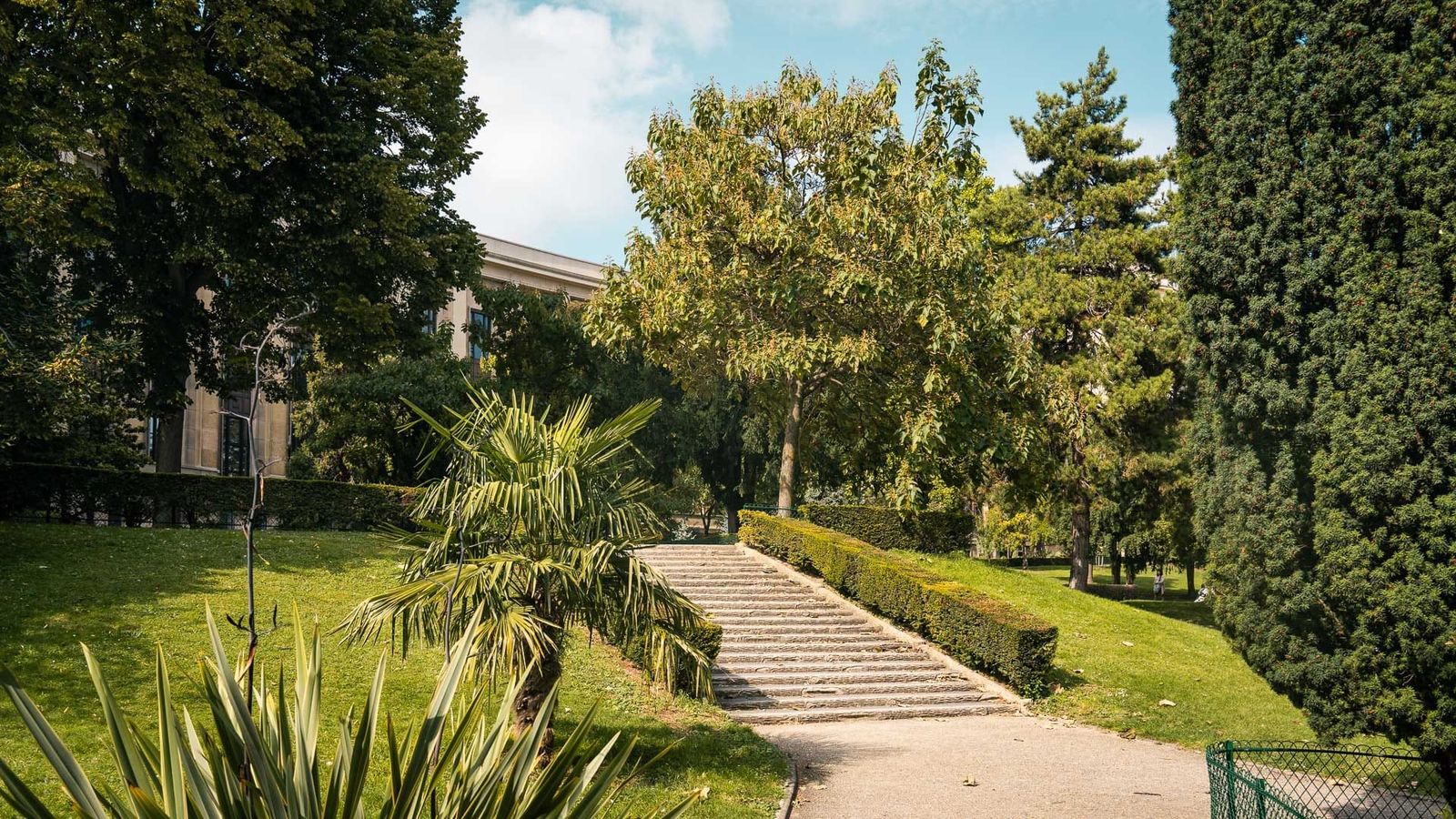
This lush vegetation contrasts beautifully with the more structured rows of paulownias, which frame the entry to the fountains. The variety of plant life here makes it a peaceful retreat, offering both shade and visual delight throughout the year.
A Monument to History and Commemoration
The Trocadéro Gardens are deeply embedded in Parisian history. The hill of Chaillot, where the gardens are located, was once the site of a battle in 1823, commemorated in the name “Trocadéro,” referring to the fort at the heart of the conflict.
The gardens and the Palais de Chaillot, which replaced the original Palais du Trocadéro in 1937, stand as tributes to the military victory and cultural heritage of the site. Visitors can also explore remnants of history, including architectural fragments from the Commune of Paris of 1871.