Ah, Paris! The city of lights, love, and… shopping?
Yes, dear reader, let me whisk you away on a journey through the grand magasins of Paris—those shimmering temples of retail that have enchanted both locals and globetrotters for centuries.

The Birth of Retail Royalty
Once upon a time, in the bustling heart of 19th-century Paris, shopping was a bit of a chore. Imagine darting from one tiny boutique to another, clutching your list of essentials, while dodging horse-drawn carriages and street vendors. Enter Aristide Boucicaut, the visionary behind Au Bon Marché, established in 1838. Here was a man who dreamed of a one-stop paradise for all your shopping desires. Fixed prices, a dizzying array of goods, and—get this—no need to haggle! Boucicaut’s brainchild soon became the blueprint for the modern department store.
The Rise of the Magnificent Malls
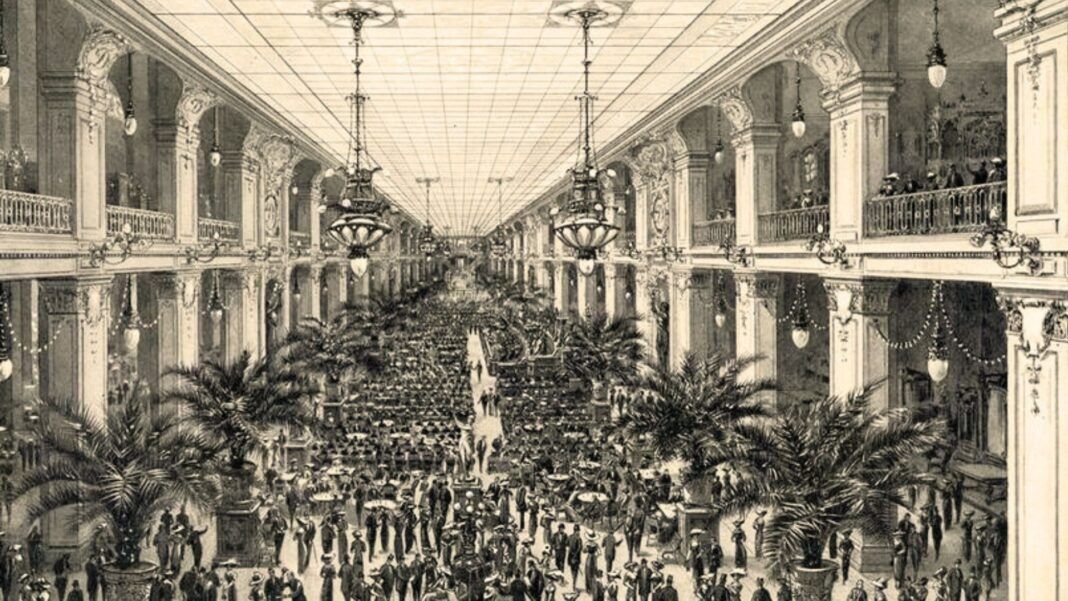
Paris didn’t stop there. Oh no, the city was just warming up. By 1865, Printemps had sprung into existence, followed by the dazzling Galeries Lafayette in 1893. These stores weren’t just places to shop; they were destinations. Picture sprawling floors filled with everything from the latest fashions to household items, all wrapped up in architectural splendor. Cafes and viewing galleries turned shopping into a social affair—a place to see and be seen.

Architectural Marvels: Where Shopping Meets Art
Let’s talk architecture. Parisian department stores are not just buildings; they are masterpieces. Take Le Bon Marché, with its interconnected buildings and grand skylights that flood the space with natural light. Or the iconic Galeries Lafayette, crowned with a glass dome that could make even the most jaded shopper gasp in awe. These structures weren’t just about utility; they were about creating an experience. Shopping here felt like stepping into an art gallery, where every corner held a new delight.
Retail Revolution: The Belle Époque Extravaganza
Ah, the Belle Époque—a time of optimism, luxury, and oh-so-much style. Parisian department stores were at the forefront of this cultural renaissance. They introduced self-service models, exclusive merchandise collaborations, and themed displays that turned window shopping into an art form. Cafes and restaurants within the stores provided perfect spots for a mid-shopping spree respite. Shopping became an event, a leisurely pursuit rather than a mundane task.

From Golden Age to Digital Dazzle
The 20th century brought its share of challenges. World Wars tested the resilience of these retail giants, but they adapted, survived, and thrived. Post-war reconstruction saw stores embracing modernity with escalators, air conditioning, and expansive product lines. The 1950s and 60s were a time of renewal, and Parisian department stores emerged as beacons of innovation and style.
Fast forward to today, and these grand magasins have seamlessly blended tradition with technology. E-commerce platforms, sustainability initiatives, and personalized shopping experiences keep them relevant in the digital age. Collaborations with local designers and artists ensure that these stores remain cultural landmarks, not just retail spaces.

Cultural Icons and Economic Powerhouses
Parisian department stores are more than just places to buy things; they are cultural icons. They play a crucial role in the fashion and luxury goods market, offering a stage for both established and emerging designers. Seasonal fashion shows and exclusive product launches draw fashionistas from around the globe, making these stores integral to Paris’s identity as the fashion capital of the world.
And let’s not forget the tourists. These stores are major attractions, offering unique shopping experiences that blend retail with culture. Multilingual staff, tax refund services, and exquisite displays cater to international visitors, ensuring that a trip to Paris isn’t complete without a visit to one of its iconic department stores.

The Ones That Endured
Galeries Lafayette: Perhaps the most famous of all, Galeries Lafayette on Boulevard Haussmann has become a symbol of luxury shopping in Paris. Known for its stunning Art Nouveau architecture, including its iconic glass dome, the store offers a wide range of high-end fashion, beauty products, and gourmet food. It also hosts art exhibitions and cultural events, making it a must-visit destination.
Le Bon Marché: As the world’s first department store, Le Bon Marché continues to be a haven for shoppers seeking a curated selection of designer goods, gourmet foods, and exclusive home decor. Its elegant atmosphere and innovative displays keep it at the forefront of Parisian retail.
Printemps: Another staple on Boulevard Haussmann, Printemps is celebrated for its fashion-forward selections and luxurious shopping environment. The store’s rooftop terrace offers breathtaking views of Paris, adding an extra layer of allure to the shopping experience.
La Samaritaine: After being closed for several years, La Samaritaine reopened in 2021 with a fresh, modern look. The store now combines luxury retail with contemporary art installations, a boutique hotel, and fine dining options, revitalizing its historic charm for a new generation of shoppers.
The Ones That Closed
Le Louvre: Once a giant in the Parisian retail scene, Le Louvre department store closed its doors in 1974. The building, however, remains a part of Paris’s architectural heritage, repurposed for various uses over the years.
Dufayel: The grand Dufayel Stores, known for their innovative credit system and architectural splendor, ceased operations in the early 20th century. While the building no longer serves as a retail space, its historical significance continues to be remembered.
Parisian department stores are more than just shopping venues—they are a testament to the city’s ability to blend tradition with innovation, luxury with accessibility, and commerce with culture. So next time you find yourself in the City of Lights, take a detour from the usual tourist traps and lose yourself in the magic of these retail palaces. Trust me, your inner shopaholic will thank you.