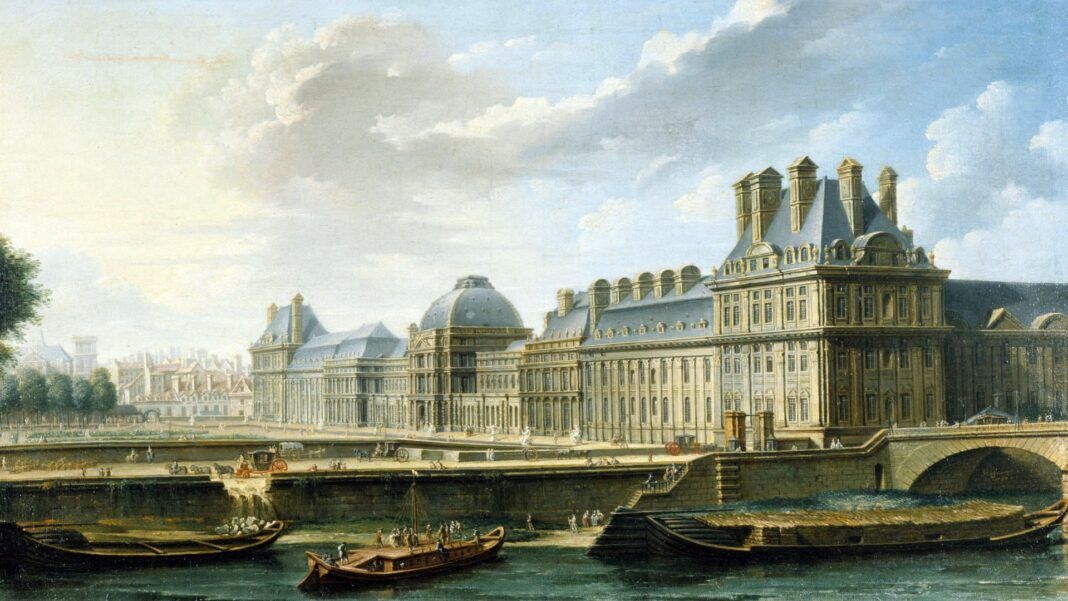
In the heart of Paris, cradled by the whispers of the Seine, stands a sanctuary of light and color—the Sainte-Chapelle. Commissioned by King Louis IX, destined to be Saint Louis, this Gothic gem was conceived as a private haven within the royal apartments of the Palais de la Cité. Today, it beckons travelers and dreamers alike, not only for its historical gravitas but for the celestial beauty of its stained-glass windows, which transform the chapel into a living, breathing kaleidoscope.

A Symphony of Color and Light: The Ethereal Beauty of the Upper Chapel
Step into the upper chapel, and the world outside fades into a distant memory. The stone walls dissolve into a delicate lattice, giving way to fifteen immense stained-glass windows that envelop you in a sea of vibrant hues. These windows, crafted in the mid-13th century, stand among the finest of their kind, turning the chapel into a luminous vessel where light pirouettes through thousands of glass shards, predominantly in profound blues and reds, creating a mesmerizing ballet that changes with the sun’s journey across the sky.
Between 1242 and 1248, three distinct ateliers, as identified by art historian Louis Grodecki, breathed life into these windows. The first atelier, responsible for the apse and most of the north nave, is known for its supple forms and simplified features. The second, the Master of the Ezekiel window, crafted elongated, elaborate draperies. The third, the Master of Judith and Esther, is distinguished by subtle facial details, reminiscent of illuminated manuscripts.

A Biblical Tapestry Unfolded: The Narrative Splendor of Sainte-Chapelle’s Stained Glass
These windows are not merely decorative marvels; they weave a rich biblical tapestry. The eastern apse windows sing the New Testament’s hymn, with scenes of The Passion, the Infancy of Christ, and the Life of John the Evangelist. In contrast, the nave windows, adorned with Old Testament tales, celebrate ideal kingship and queenship—a nod to the chapel’s royal patrons.
The story begins on the north wall with Genesis, followed by Exodus, Joseph, and other pivotal books. The south wall continues with Jeremiah, Judith, Esther, and David, culminating in a window depicting King Louis IX himself, intertwining the divine with the royal.

The Flamboyant Rose Window: A 15th-Century Gothic Masterpiece Depicting the Apocalypse
At the western end of the upper chapel, the 15th-century rose window stands as a crowning jewel of flamboyant Gothic style. Nine meters in diameter, it comprises eighty-nine panels depicting the Apocalypse. This window, showcasing the advanced silver stain technique, allows artists to paint and fuse enamel paints onto the glass, creating intricate shading and detail. Recently restored in 2014-15, it now shines with renewed brilliance, offering a clearer glimpse into its apocalyptic narrative.

A Divine Light: The Symbolic and Chromatic Brilliance of Sainte-Chapelle’s Stained Glass
The primary purpose of these windows extends beyond storytelling. They are designed to flood the chapel with divine light, symbolizing the heavenly realm. The limited palette—reds, blues, greens, purples, yellow, and a few translucent pieces—ensures a chromatic coherence, enhancing the chapel’s ethereal atmosphere.

A Historical Comic Book: The Medieval Narrative Art of Sainte-Chapelle’s Stained Glass
With 1,113 scenes illustrated, the stained-glass windows of Sainte-Chapelle serve as a medieval comic book, chronicling biblical episodes from Genesis to the Apocalypse. The north and south façades, known as the “historic cycle,” feature major Old Testament figures like Adam and Eve, Noah, Abraham, and Moses on the north side, and Judith, Job, Esther, and David on the south. The final window on the south side even includes King Louis IX, cementing his place in this divine narrative as an intercessor between his people and God.
As you stand within this radiant sanctuary, enveloped by biblical stories and royal symbolism, you cannot help but feel a profound connection to the divine and the historical legacy of Sainte-Chapelle. Whether you are a devout believer or an art enthusiast, the chapel’s stained-glass windows offer a captivating journey through time, light, and color.