Everyone knows the Eiffel Tower. But Gustave Eiffel’s legacy is scattered across Paris in quieter, more surprising places—department stores, churches, footbridges, even wind tunnels. Decades before and after 1889, he was shaping the city with iron and imagination. These are the landmarks where his genius still lives—no tower required.
1. Parc des Buttes-Chaumont Footbridges

Before Eiffel went big, he went quiet. Two bridges tucked into this dramatic park were designed by a young Eiffel in the 1860s. One’s a deep red suspension bridge that spans 65 meters to a cliffside island. The other is a compact green footbridge near the western entrance.
They’re not flashy—but the math, the elegance, the engineering? Pure Eiffel.
How to get there: Metro Line 7bis to Buttes-Chaumont or Line 5 to Laumière.
2. Passerelle de l’Avre
Originally built to carry water into the city, this slim aqueduct bridge now carries walkers and cyclists—and offers one of the most underrated Eiffel Tower views in Paris. Eiffel collaborated with Fulgence Bienvenüe (future father of the Paris Metro) on the design. The structure? Clean. Industrial. Brilliant.
How to get there: RER C to Avenue du Président Kennedy or Metro Line 9 to Exelmans, then walk west toward the Seine.
3. Notre-Dame-des-Champs

At first glance, it looks like your standard 19th-century church. But behind the stone walls is an iron skeleton. Eiffel used metal framing to make the ceilings higher, the space wider, and the windows larger than traditional masonry ever allowed. He didn’t just build cathedrals of steel—he literally made one.
How to get there: Metro Line 12 to Notre-Dame-des-Champs.
4. La Samaritaine

This massive department store is where Eiffel helped flip the script on iron. No longer just structural—it was suddenly stylish. The exposed staircases, metal beams, and airy layout were revolutionary at the time. Today, after a top-to-bottom renovation, his framework still holds it all together.
How to get there: Metro Line 1 to Pont Neuf or Line 7 to Châtelet.
5. Printemps Haussmann

Before glass-and-steel became architectural flexes, Eiffel was already playing with both. In 1882, he helped rebuild this grand magasin using exposed iron on the façade—a bold move for the time. He didn’t just follow the fashion of the era. He designed the frame it stood on.
How to get there: Metro Lines 3, 9 to Havre-Caumartin or RER A to Auber.
6. Le Shack (Former Calmann-Lévy Printing Works)
This place doesn’t scream Eiffel—but it should. He built it as a printing house in 1872, all iron bones and light-filled interiors. Today, it’s a sleek coworking space and restaurant. The iron beams, however, haven’t gone anywhere. They hold up the past, even as laptops hum below.
How to get there: Metro Line 9 to Saint-Augustin or Line 13 to Miromesnil.
7. Paradis Latin
When the original cabaret was left in ruins after the Franco-Prussian War, Eiffel rebuilt it for the 1889 Universal Exposition. He kept the old medieval walls and embedded new metal columns inside, giving the space a cathedral-like openness with the industrial strength to last. It’s one of the oldest cabarets in Paris—and one of the strongest.
How to get there: Metro Line 7 to Place Monge or Line 10 to Cardinal Lemoine.
8. Palais Galliera (Fashion Museum of Paris)

Behind the Renaissance façade is another iron secret. Eiffel was commissioned to build the internal framework—and he delivered. He designed everything from the staircases to the window frames, many of which came from the same workshops that built the Tower. Think of it as a dress form for fashion itself.
How to get there: Metro Line 9 to Iéna or Line 6 to Trocadéro.
9. Musée des Arts et Métiers – Statue of Liberty Replica
Everyone credits Bartholdi with the Statue of Liberty’s design—but it was Eiffel who figured out how to keep her standing. His internal framework supports her from within. A replica of the statue here includes pieces of the iron structure and original construction photos. It’s Lady Liberty’s skeleton, exposed.
How to get there: Metro Line 3 to Arts et Métiers.
10. Aérodynamique Eiffel Wind Tunnel
After the Eiffel Tower, Gustave didn’t slow down—he got scientific. In 1912, he opened this wind tunnel lab to test aerodynamic drag, building off earlier experiments he ran beneath the Tower itself. The lab is still active today and occasionally opens to the public. It’s the Eiffel you don’t see: the physicist.
How to get there: Metro Line 9 to Exelmans.
11. Levallois-Perret – Where Eiffel Built, and Where He Rests
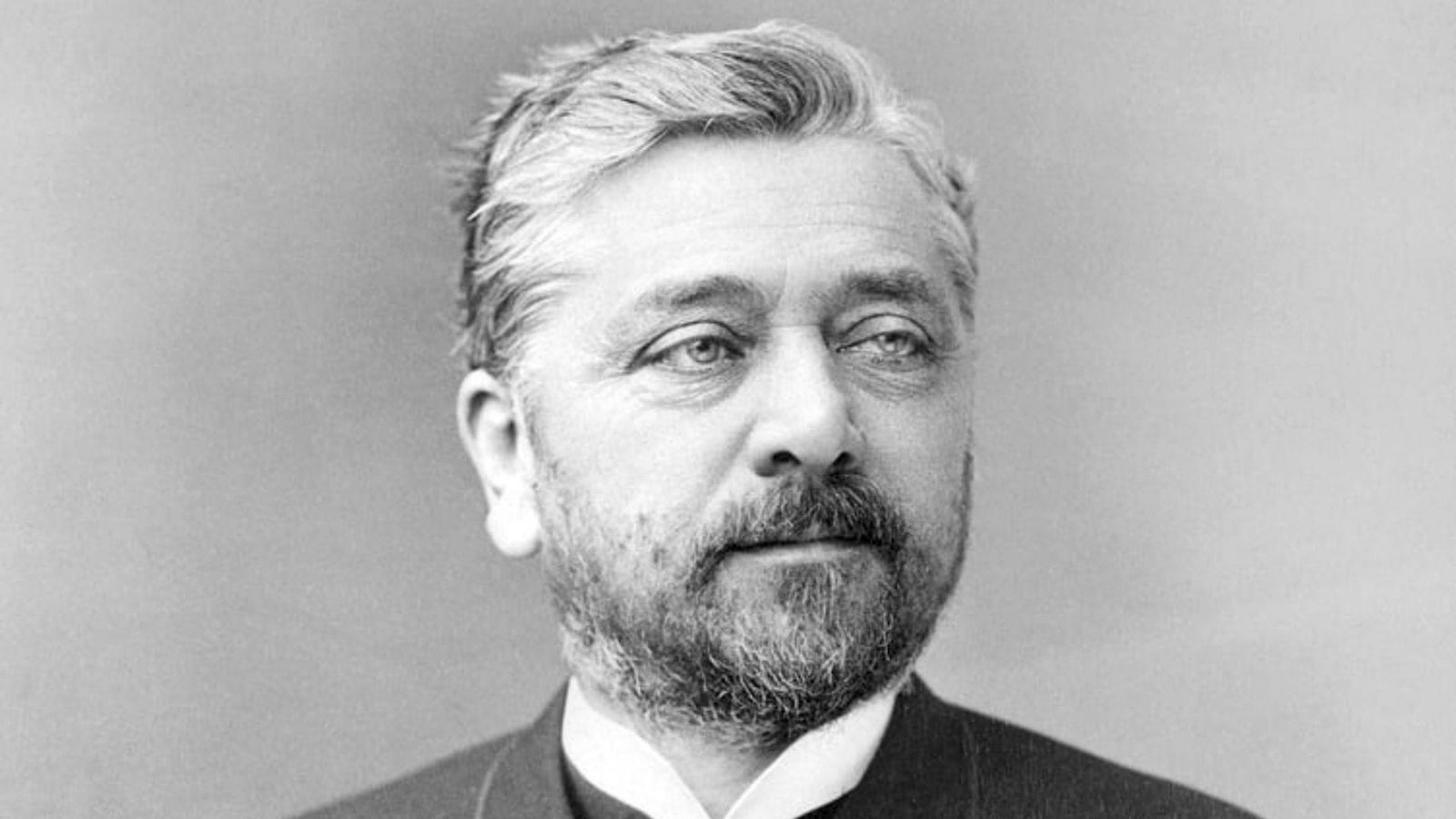
Before the Tower rose, before Liberty sailed to New York, Eiffel had a workshop in Levallois-Perret. This is where it all came together—his metal bridges, his daring experiments, his groundbreaking structures. The factory complex produced parts for some of the most ambitious engineering feats of the 19th century, including many on this list.
Today, that site is Parc Gustave-Eiffel, a quiet green space with murals celebrating his work. Not far from the park is his grave. It’s modest. Simple. No fanfare. But it faces the Eiffel Tower.
How to get there: From central Paris, take Metro Line 3 to Louise Michel or Anatole France, or the Transilien L from Gare Saint-Lazare to Clichy–Levallois.