





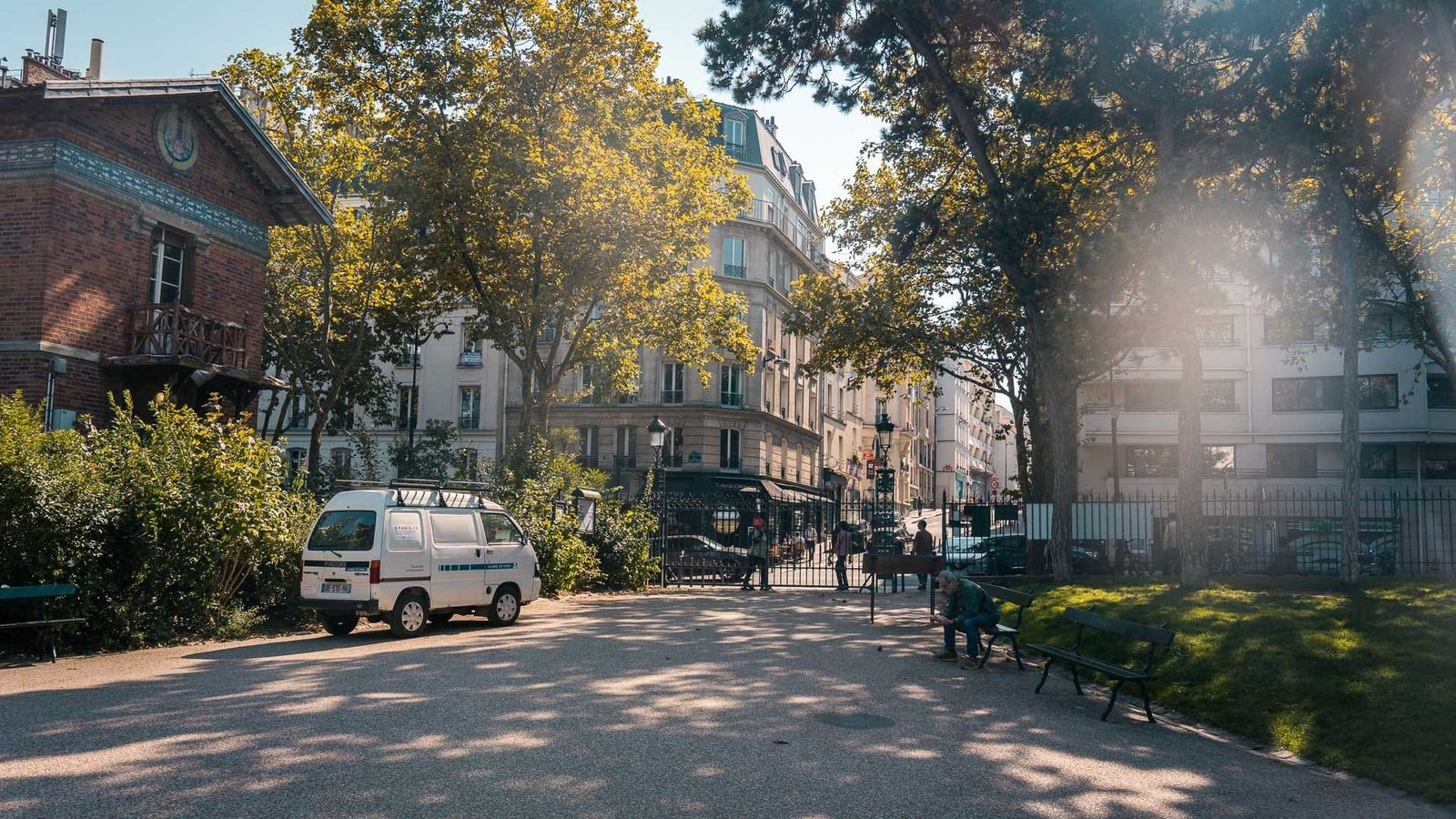


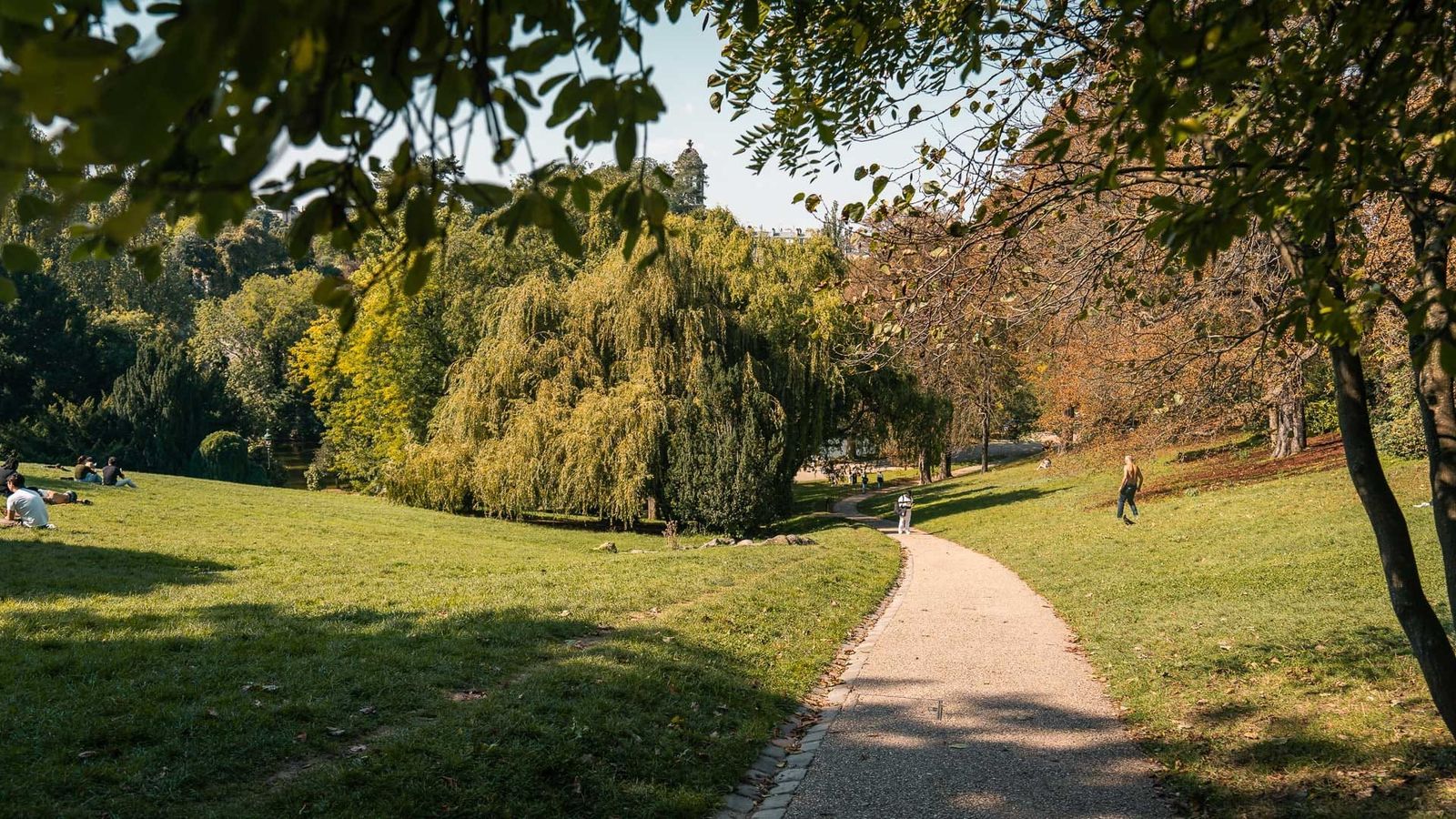

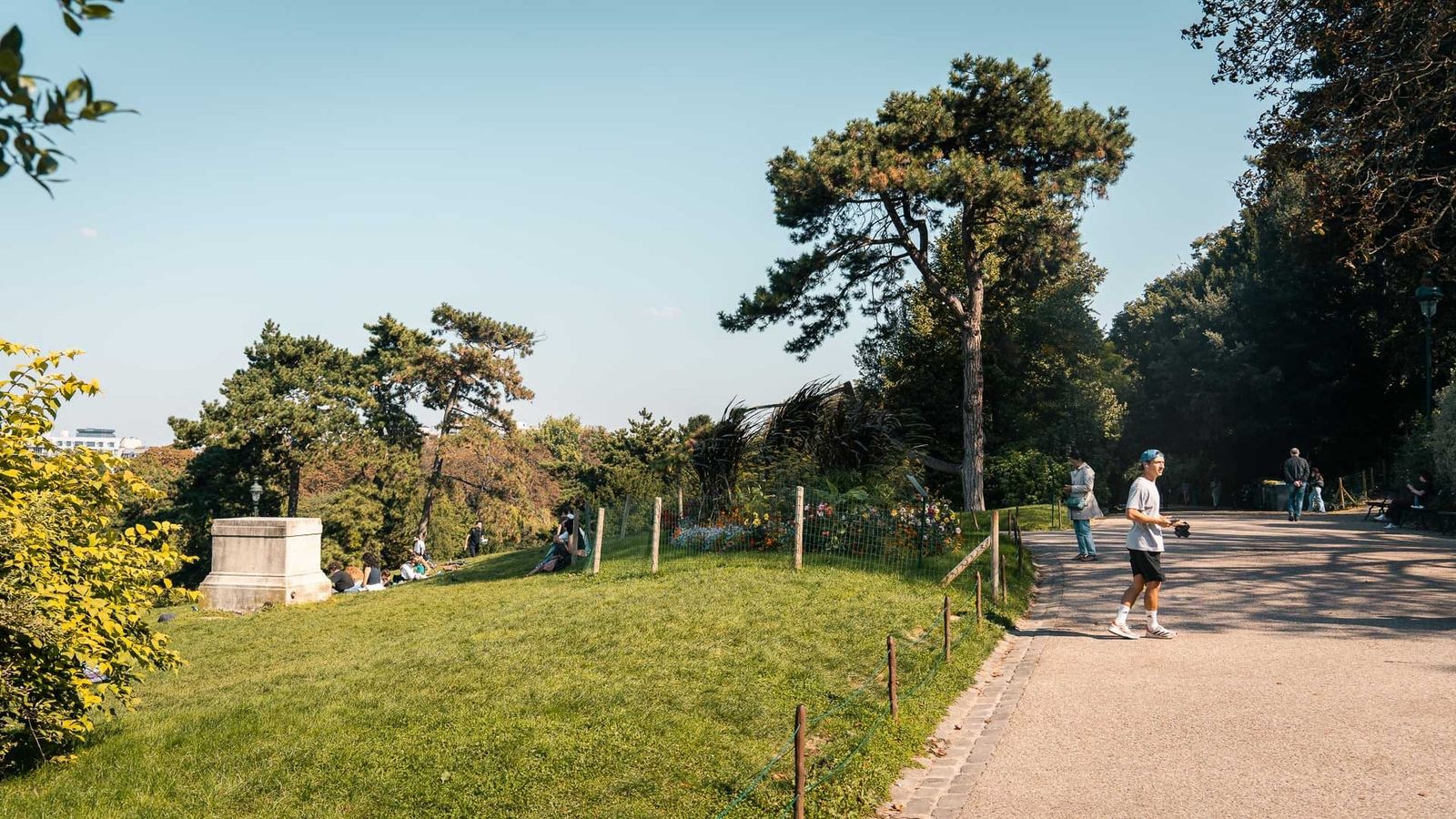
Whether you’re in the mood for a peaceful walk through its lush greenery or to marvel at its grand architectural structures, Buttes-Chaumont Park offers a unique and tranquil retreat from the bustle of Paris.
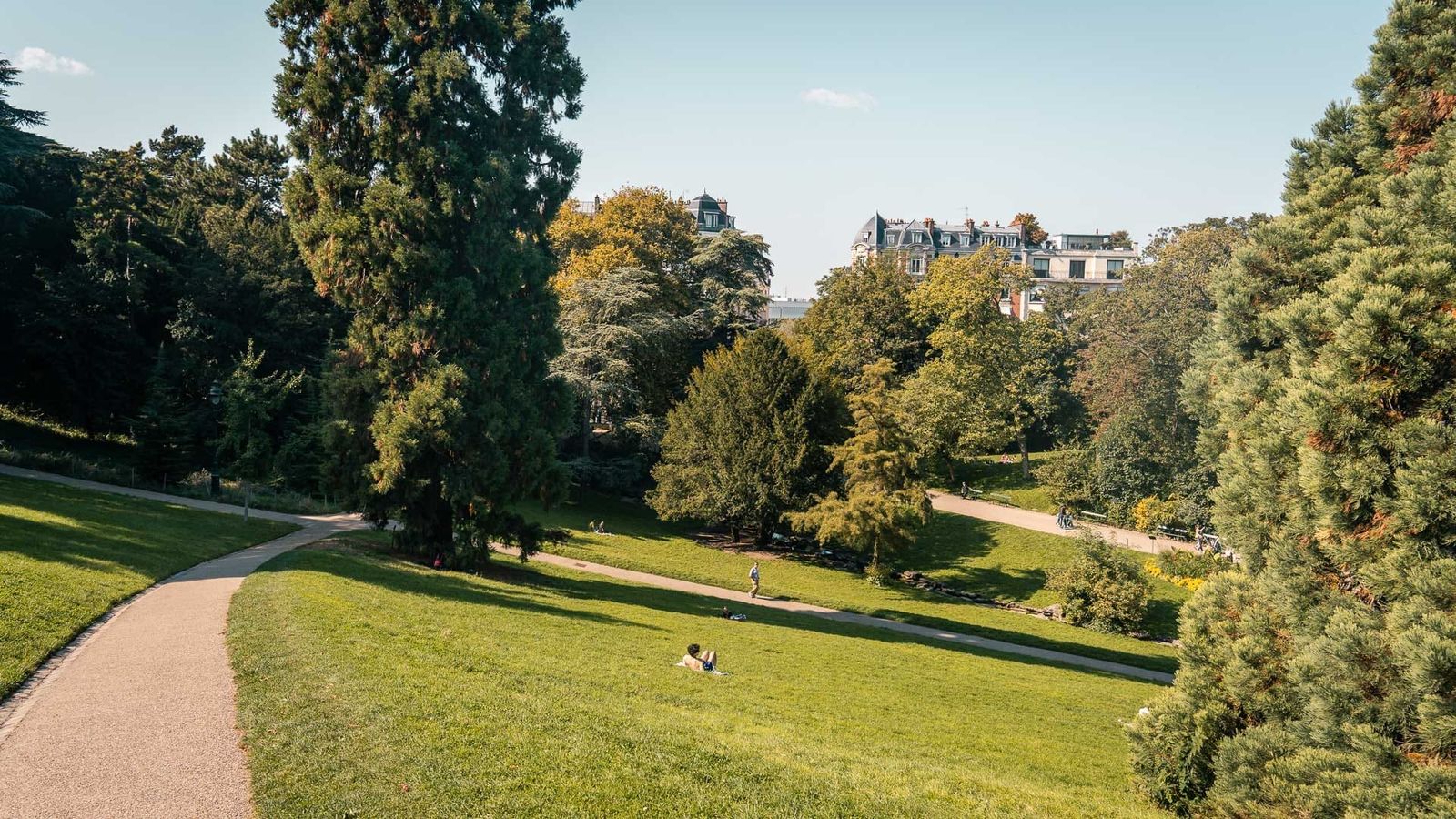
Spanning 25 hectares, it is the largest and steepest park in Paris, an awe-inspiring masterpiece of landscaping dating back to 1867.
Designed under Napoleon III’s reign, the park imitates various French landscapes—from the towering cliffs of Étretat to Alpine meadows and Mediterranean groves. The park’s topography is as dramatic as it is beautiful, featuring rocky cliffs, torrents, cascades, and even a grotto at its entrance.
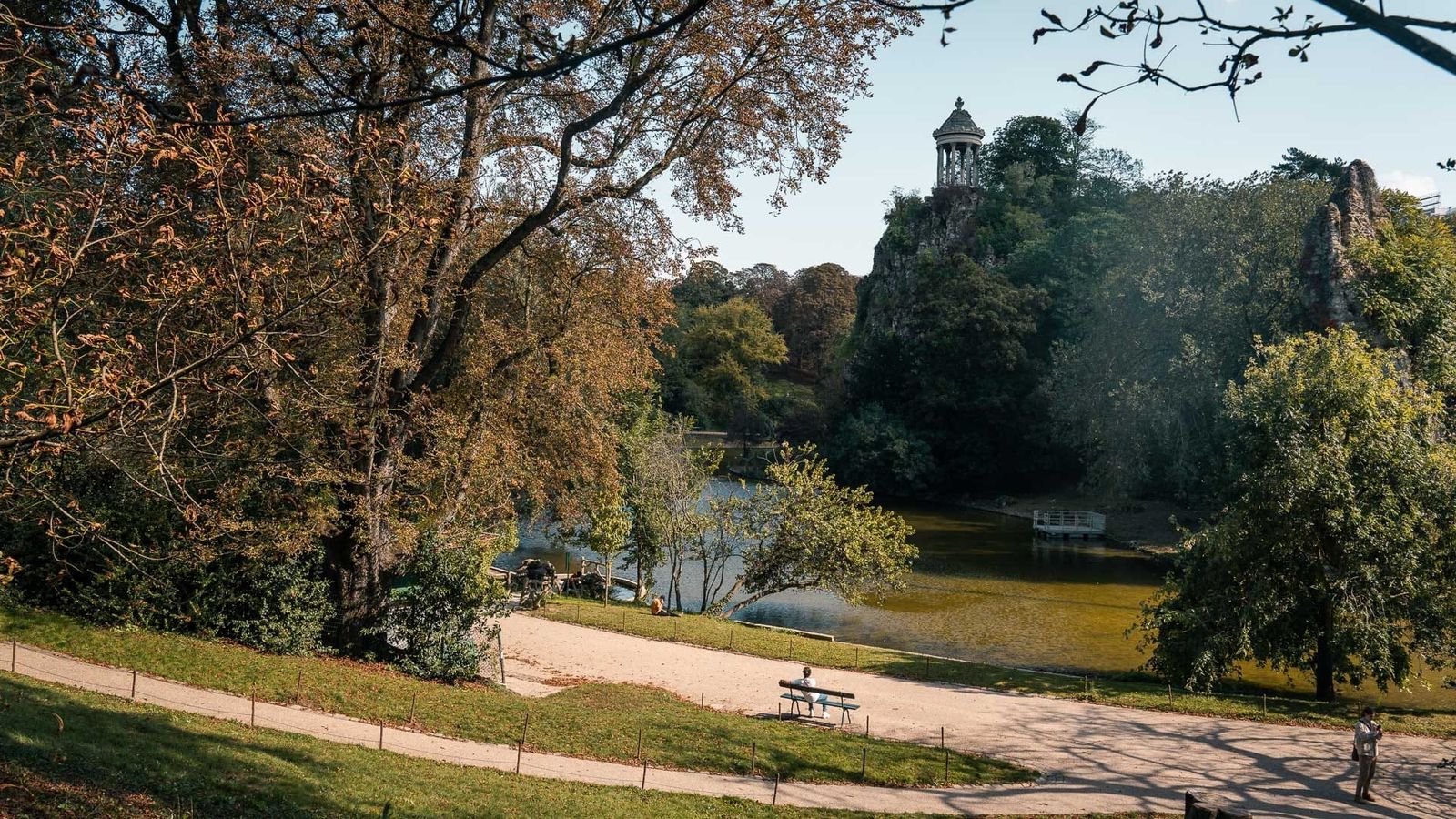
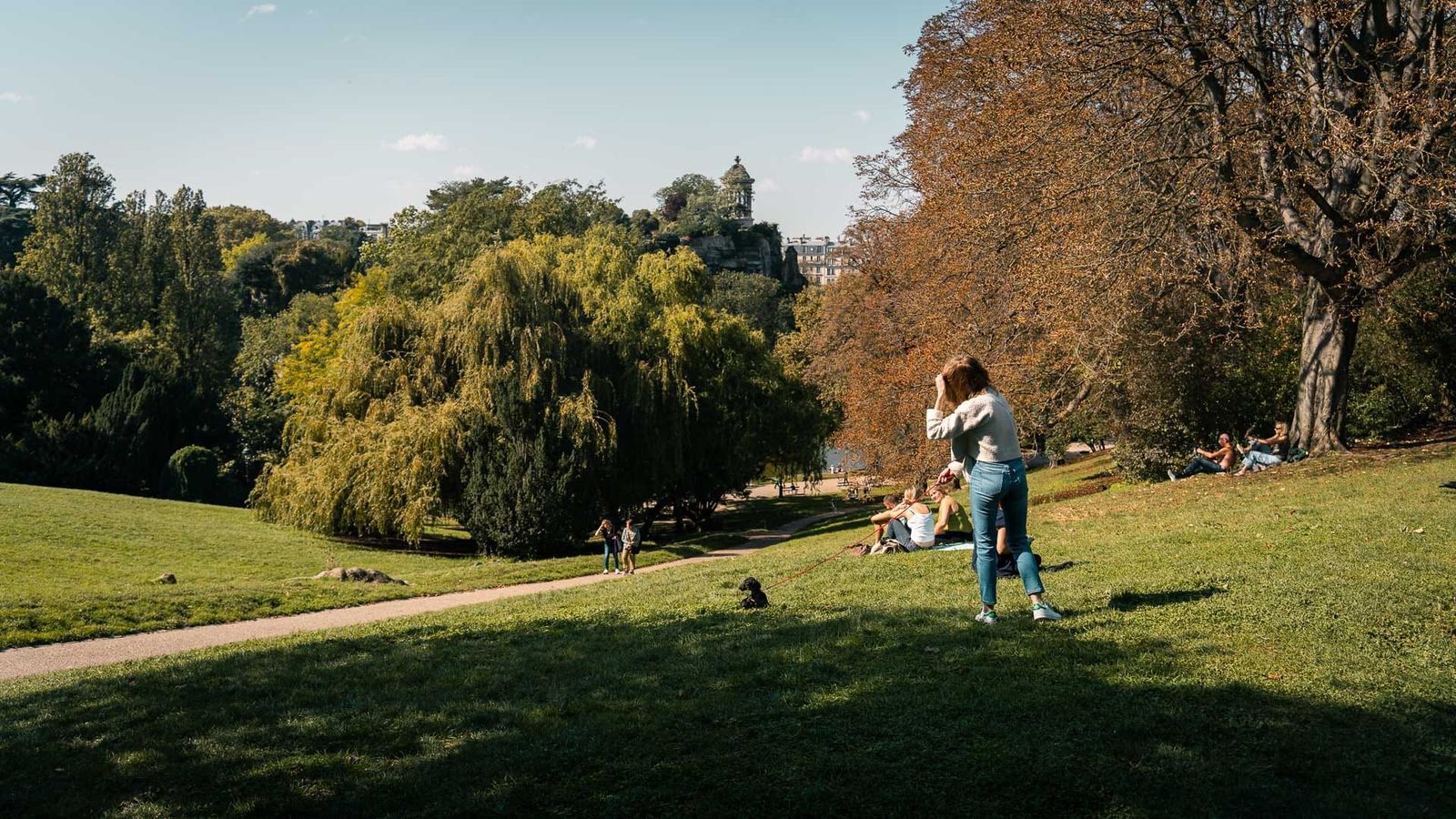
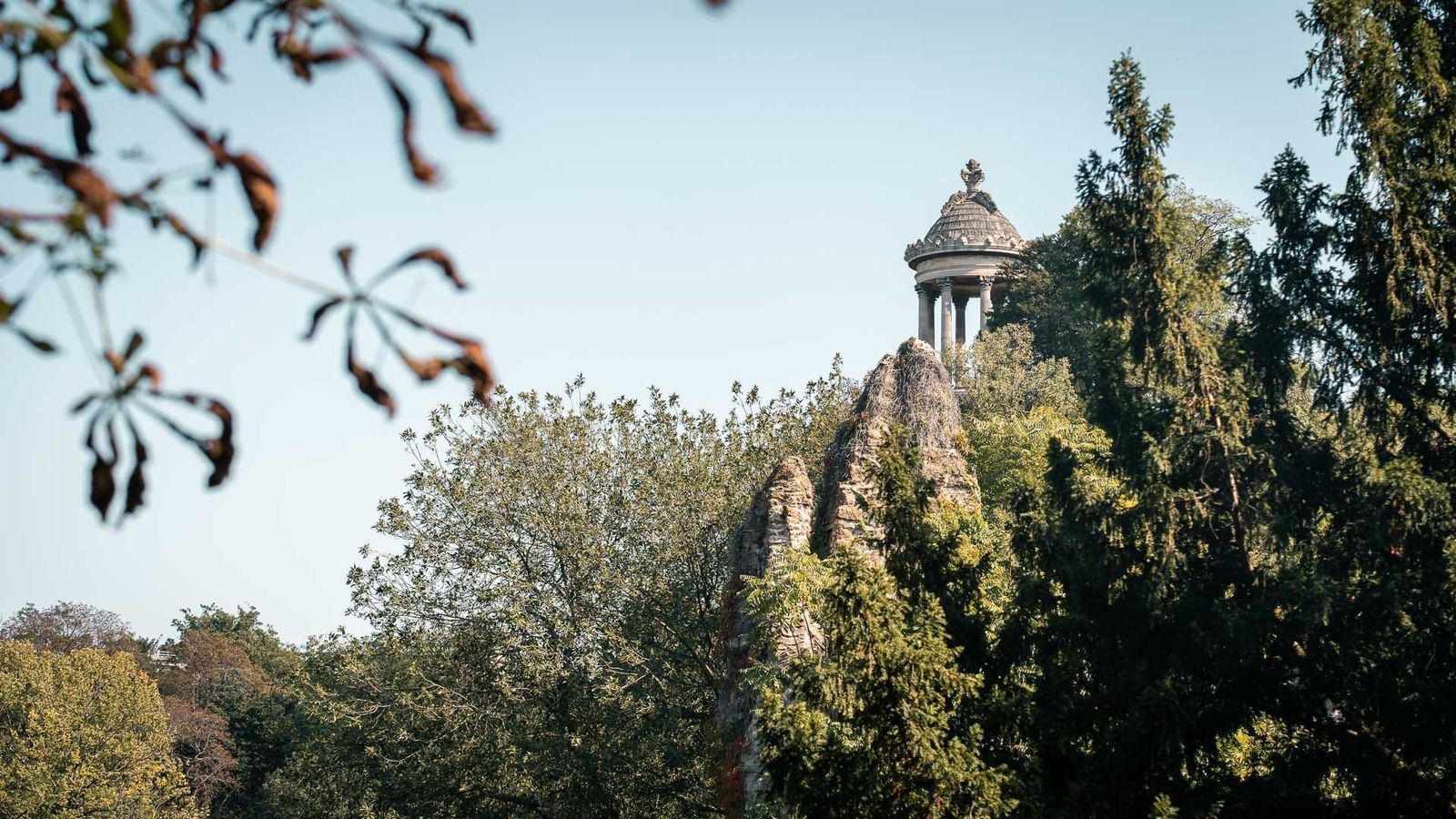
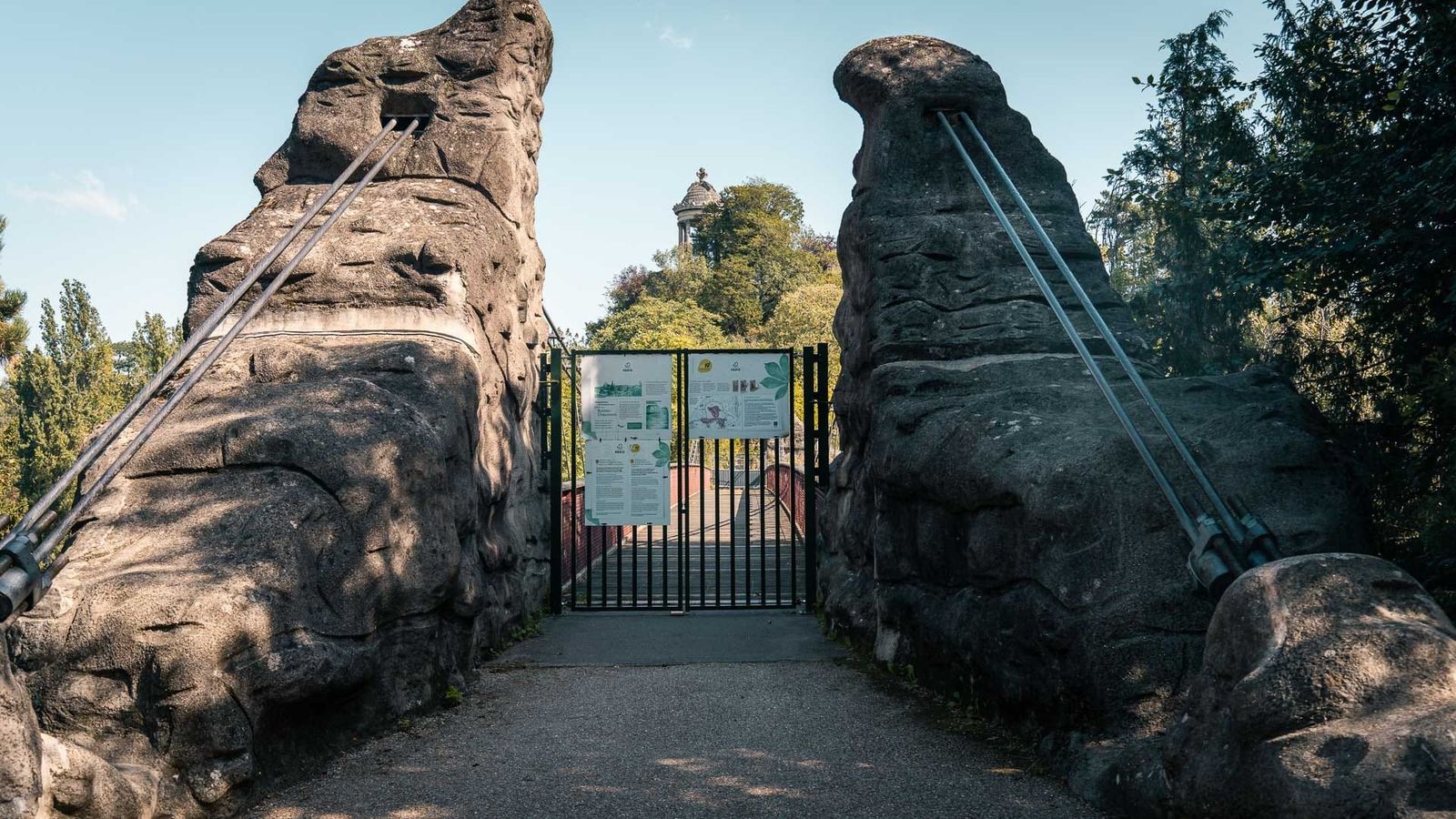
At the heart of the park lies a rocky island, crowned by the Temple of the Sybil, a romantic structure inspired by the Temple of Tivoli. This striking monument, built in 1869, stands proudly over the water, accessible by a suspended footbridge and a stone bridge.
Visitors can enjoy picturesque views from the belvederes and watch a variety of bird species—laughing gulls, water hens, and common ducks—flit across the skies.
Flora and Fauna in Perfect Harmony
The diverse flora of Buttes-Chaumont Park makes it a paradise for nature lovers. Trees such as the twisted Sophora, the Oriental plane tree, and the majestic cedar of Lebanon planted in 1880, thrive within the park’s unique microclimates.
The park is also home to a wealth of birdlife, with species ranging from blue tits to European greenfinches. The park’s biodiversity creates a rich tapestry of colors and sounds, particularly in the spring, when migratory birds join the resident species.
Visitors may even catch sight of more elusive creatures, like the European sparrowhawk or treecreepers, adding to the charm of this urban sanctuary.
A Historic Transformation from Quarry to Garden
Buttes-Chaumont’s history is as colorful as its landscapes. Once a quarry, the park’s location was notorious for its rough terrain and industrial past. During the French Revolution, it served as a site for the extraction of gypsum, the material that earned Paris the name “Lutèce la blanche.”
By the mid-19th century, after the quarries closed, Napoleon III commissioned a transformation of this wasteland into a public park. The project required immense effort, including the use of dynamite to clear rocks and the work of over 1,000 workers.
Today, Buttes-Chaumont’s rich history is reflected in the memorials scattered throughout, including a monument to Jewish children deported during WWII, paying tribute to those who lost their lives.
A Parisian Oasis with Diverse Attractions
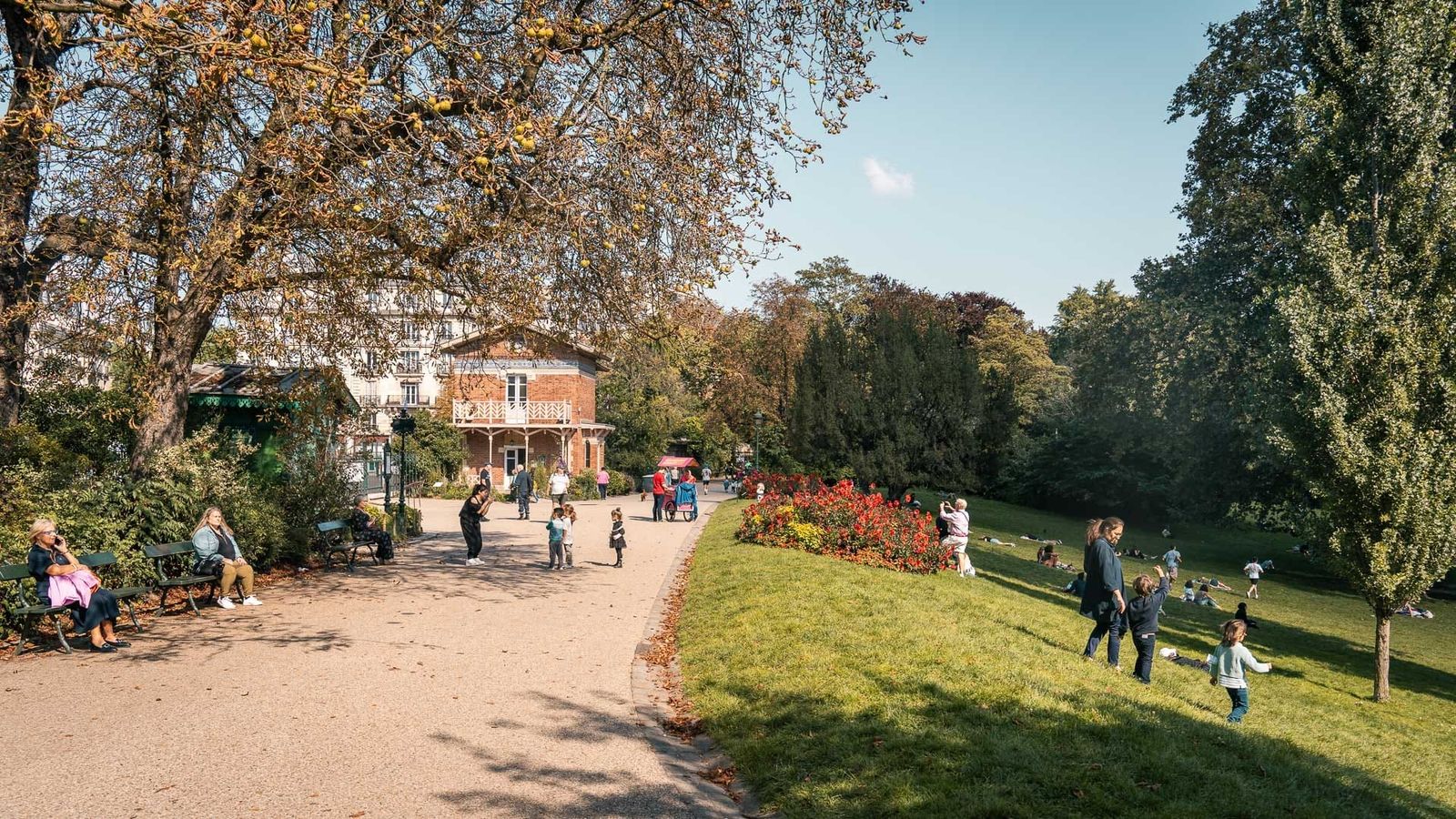
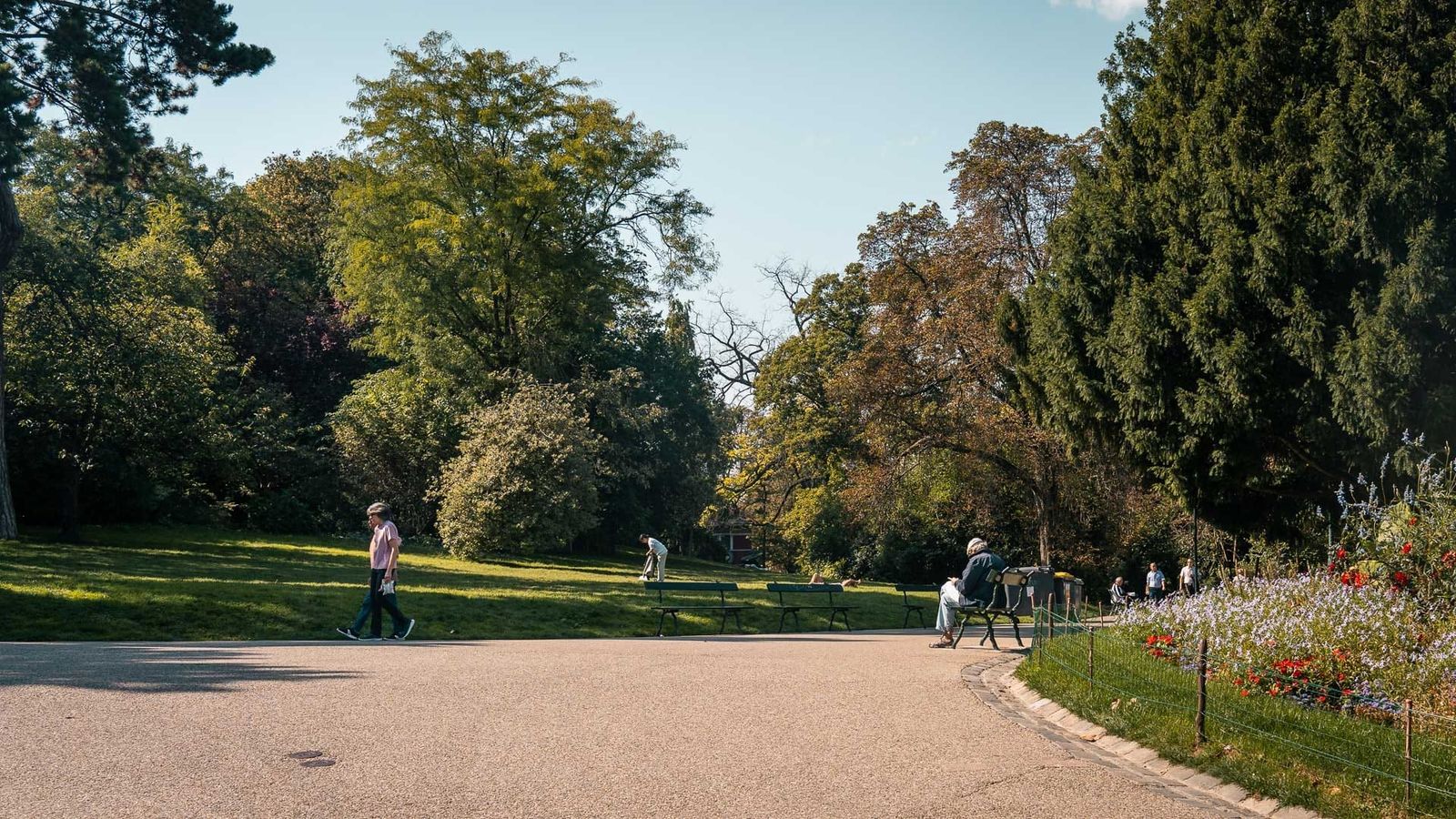
In addition to the grotto and temple, Buttes-Chaumont offers visitors extensive lawns, wooded areas, and rocky outcrops to explore.
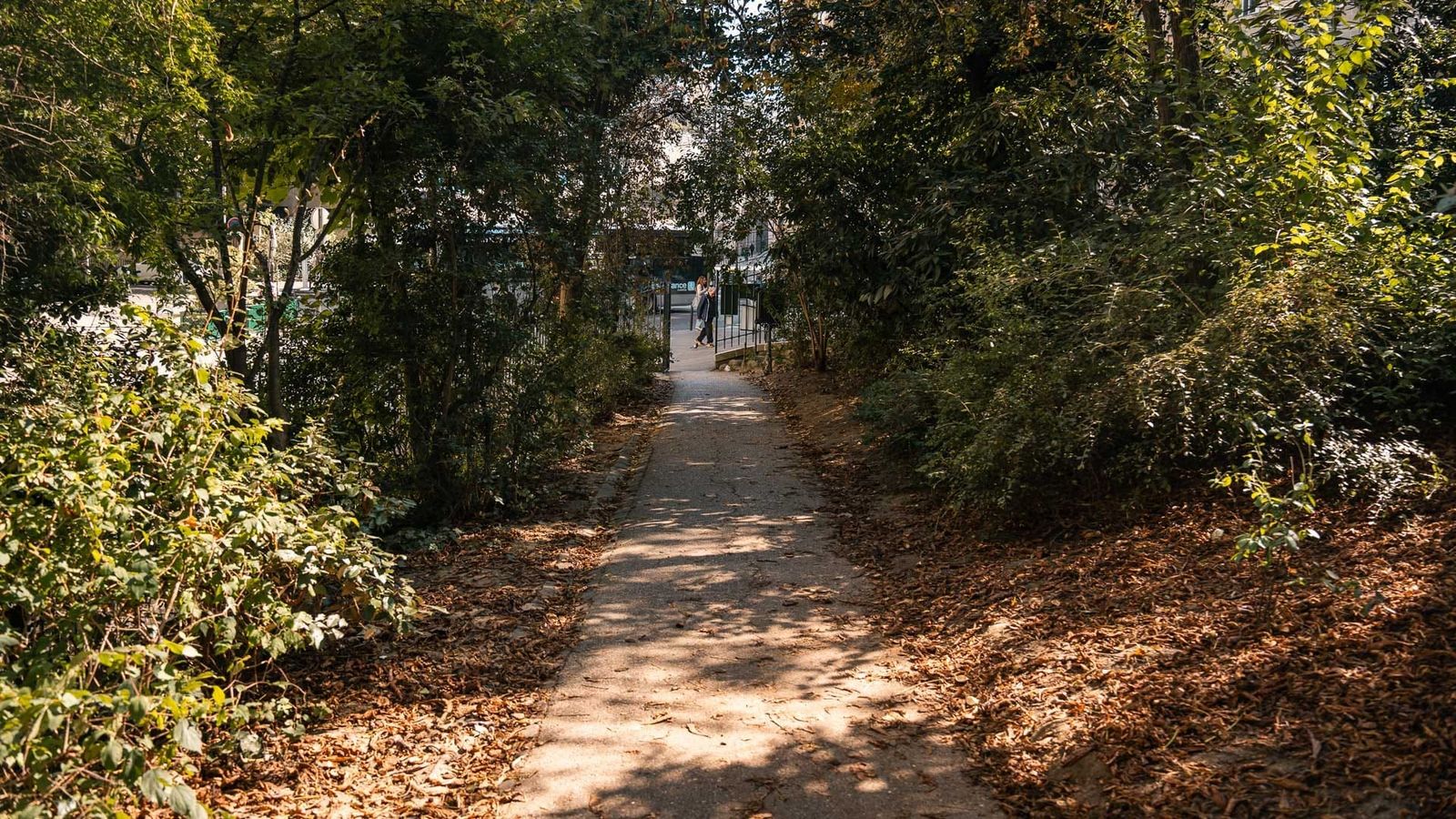
Paths winding through the park lead to different landscapes, offering a range of experiences, from peaceful lakeside strolls to more adventurous climbs up the steep hills. The park also features picnic areas and playgrounds, making it a great destination for families.