There’s a patisserie in the second arrondissement that’s been selling the same desserts since before the French Revolution. Before Napoleon. Before electricity, actually.
Stohrer opened in 1730 on rue Montorgueil, and it’s still there; same address, same recipes, same slightly overwhelming gilded interior that makes you feel like you’ve stumbled into a dowager countess’s sitting room.
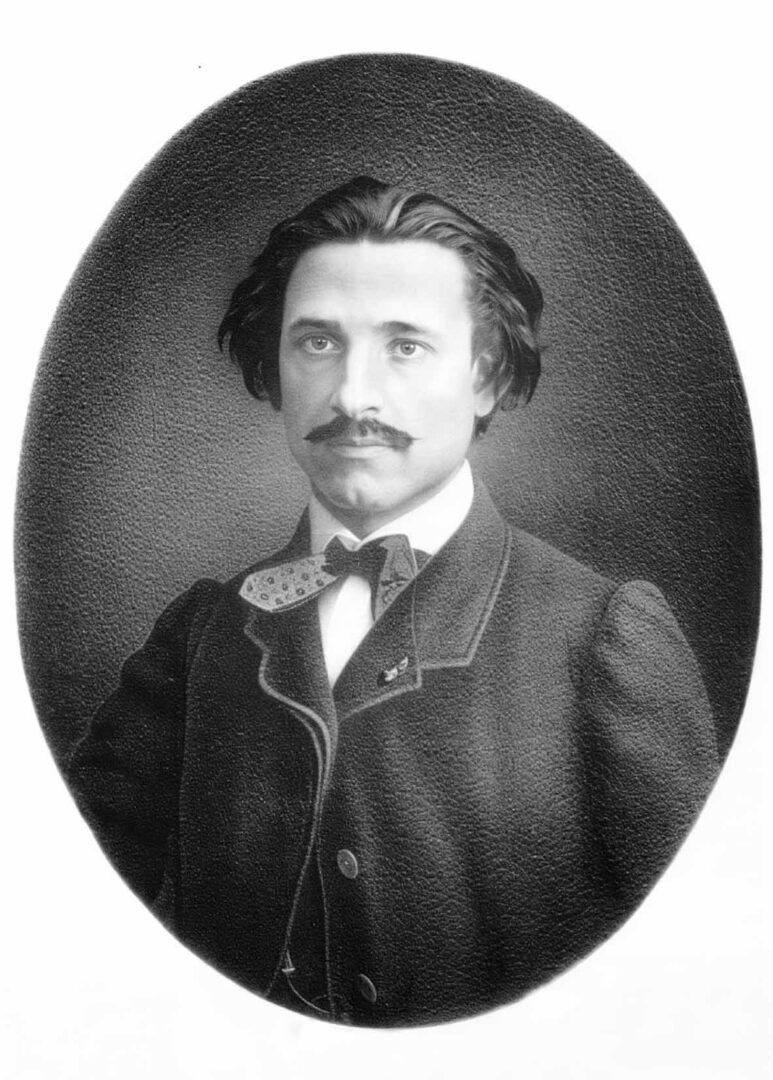
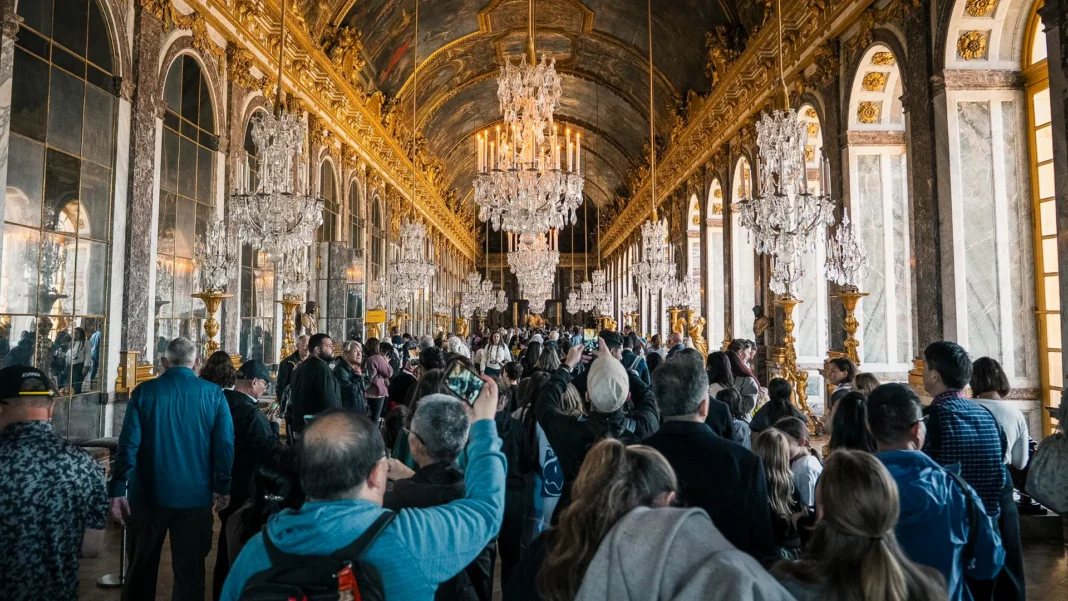
The shop’s founder, Nicolas Stohrer, came to France working for a Polish king in exile. When the king’s daughter married Louis XV in 1725, Stohrer followed her to Versailles. He spent five years making desserts for the French court before opening his own place.
Where the Baba au Rhum Was Born – the Accidental Invention
Stohrer invented the baba au rhum by accident. A kouglof had dried out, so he soaked it in rum syrup. The king ate it and asked for more. Stohrer named it after Ali Baba and put it on the menu.
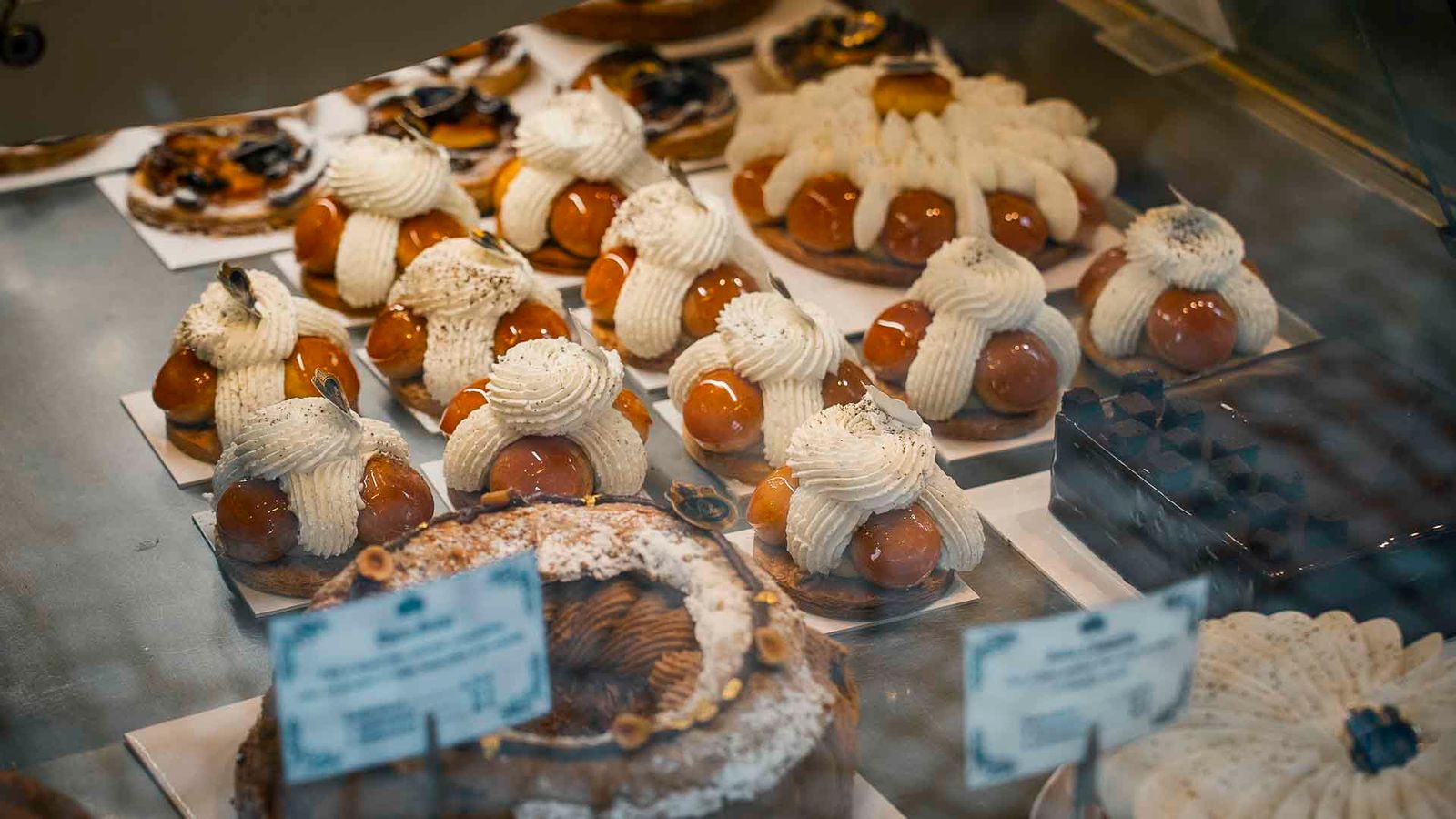
It’s still there. Same brioche base, same rum soak, same pastry cream and currants. You can order what Louis XV ordered, which is either romantic or morbid depending on your relationship with French history.
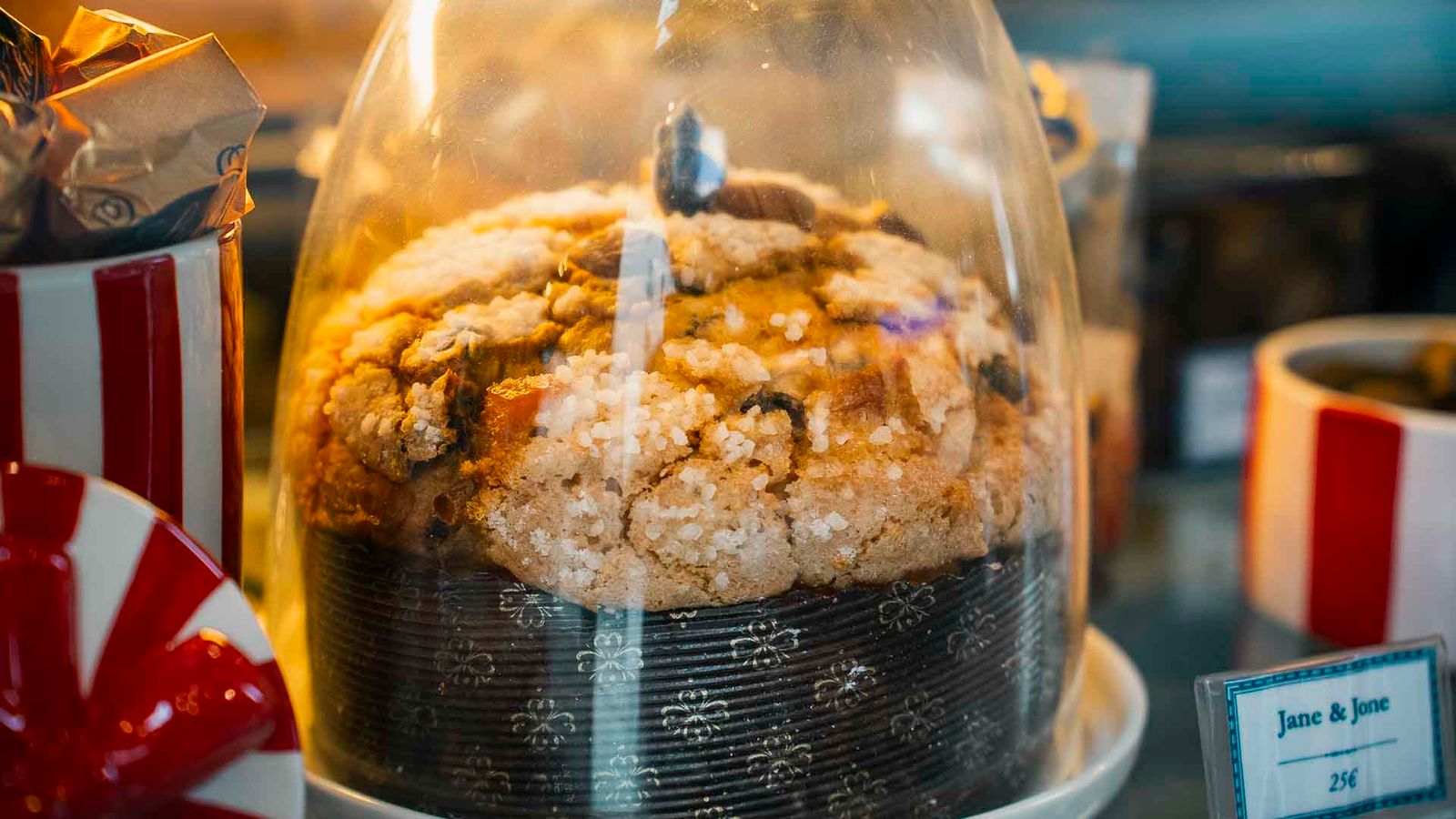
The shop also makes the puits d’amour, a caramel-topped puff pastry that Louis XV allegedly gave to his mistresses. From that, Stohrer created the bouchée à la reine, a savory version with chicken and mushrooms named for Queen Marie. They sell out by lunch most days.
Second Empire Splendor

In 1864, someone decided the shop needed redecorating and hired Paul Baudry, who’d worked on the Opéra Garnier. He covered everything in gold leaf, hung chandeliers, painted murals. It looks like Versailles exploded inside a bakery.
The government declared parts of it a historic monument in 1984, which means the current owners can’t change much even if they wanted to. They probably don’t want to.
Guardians of Tradition

The Dolfi family bought Stohrer in 2017. They also own À La Mère de Famille, another old Paris food shop. They seem to collect these places.
Steve Dolfi says they’re not interested in creating new desserts. “Preserving something from the eighteenth century matters more than making something people will forget in five years,” he says.
Twenty pastry chefs work in the basement making everything on-site. They’ve tweaked recipes slightly, less sugar, seasonal fruit, but the puits d’amour still gets its caramel from a red-hot iron, the same technique from 300 years ago.
Paris has plenty of pastry shops where chefs do experimental things with matcha or deconstruct millefeuilles. Stohrer isn’t trying to compete with that.
Families come here because their grandparents came here. They buy the same cakes. Stohrer has outlasted monarchies and republics and two world wars and the complete reconstruction of Les Halles. It’s still on rue Montorgueil, still making the same things, still drawing lines out the door.
Some businesses survive by adapting. Stohrer survives by refusing to.
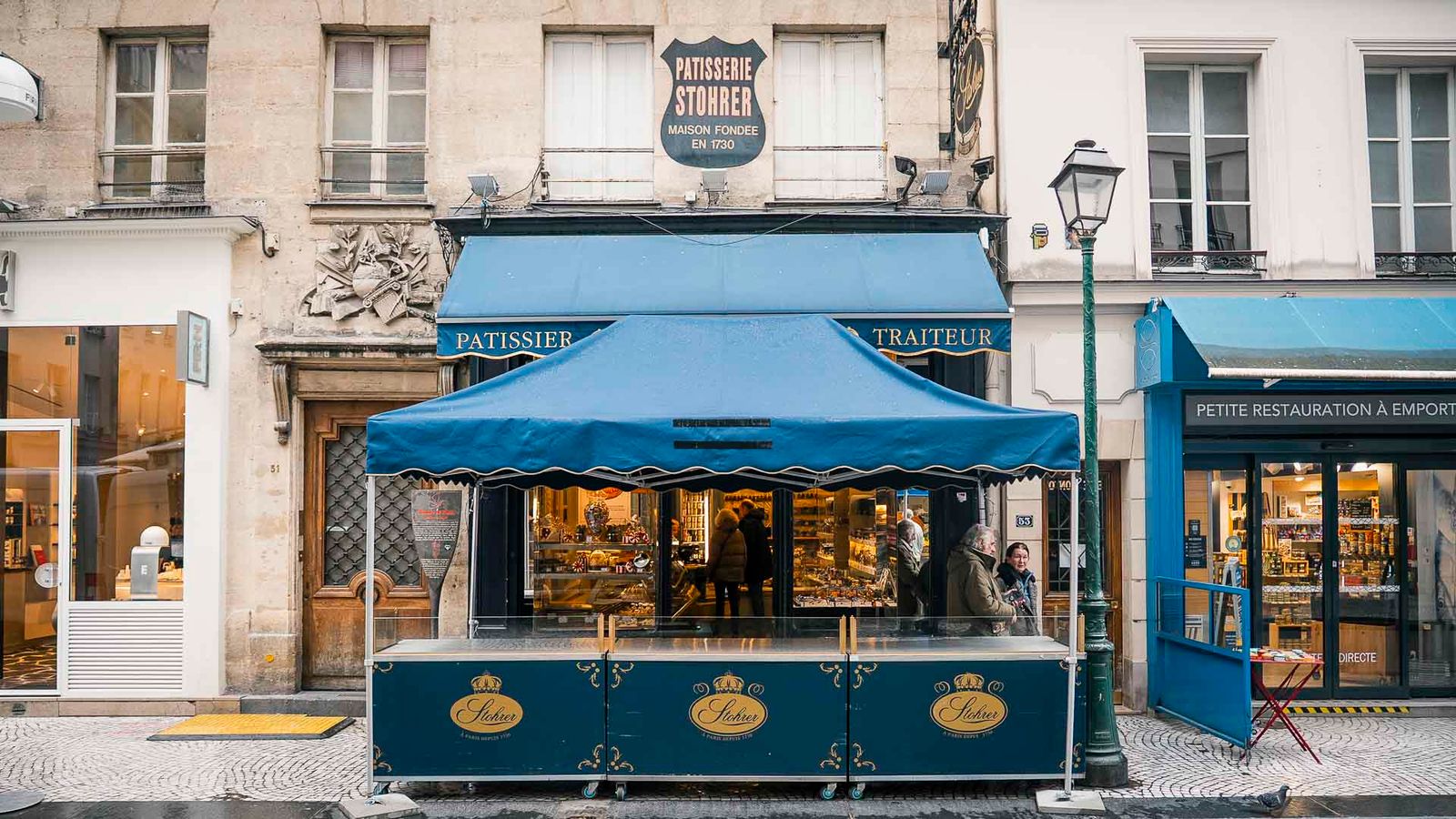
Stohrer is at 51 rue Montorgueil, 75001 Paris, and is open Monday to Saturday from 7:30 a.m. to 7:30 p.m., and Sunday from 8 a.m. to 7 p.m.