Looking for where to see Monet paintings in Paris? Discover the best spots to admire the iconic works of this legendary Impressionist! From the stunning Water Lilies at Orangerie Museum to the world’s largest collection at Marmottan Monet Museum, Paris is a treasure trove for Monet fans. Let’s explore!
Monet and Paris: An Eternal Love Story
Paris was not just a city for Claude Monet—it was a canvas, a muse, a stage for artistic revolution. The smoky cafés of Montmartre, the grand exhibitions of the Salon, and the shimmering light along the Seine all shaped the genius of the Impressionist master.
Though Monet often painted in Normandy and Giverny, Paris remained the heart of his artistic journey. His rebellious brushstrokes and obsession with light sparked a movement that changed art forever.
His ties with the city were undeniable—he exhibited at the Salon des Refusés, he debated with fellow artists in the legendary Café Guerbois, and he studied the Old Masters at the Louvre, though he ultimately chose to break their rules.
Today, his masterpieces are scattered across the city’s finest museums. Are you ready to follow Monet’s footprints in Paris?
Where to See Monet Paintings in Paris
1. The Orsay Museum: A Cathedral of Impressionism

If there’s one place in Paris that truly does justice to Monet’s legacy, it’s the Orsay Museum. Housed in a grand former railway station, this museum boasts an unparalleled collection of Impressionist art. The vast, light-filled halls seem almost designed to enhance the ethereal brushstrokes of Monet’s paintings.


Here, his masterpieces burst into life. “Coquelicots” (Poppy Field) captures a sunny countryside scene with figures dissolving into the vast sea of red poppies. “La Gare Saint-Lazare”, one of Monet’s most celebrated urban works, immerses you in the steam, smoke, and movement of a Parisian train station—modernity at its peak. Then, there’s “Water-Lily Pond”, where Monet’s love for water and shifting light reaches its full expression.
2. The Orangerie Museum: A Dream in Water Lilies


Step into the Orangerie Museum, and you step into Monet’s mind. This intimate museum, tucked away in the Jardin des Tuileries, is home to his monumental “Nymphéas” (Water Lilies) cycle, displayed in two oval rooms designed by the artist himself. Monet envisioned this installation as an immersive experience—a place where one could be surrounded by the shifting reflections of sky and foliage, endlessly mirrored in the tranquil water. The paintings, stretching across entire walls, capture the fleeting beauty of nature with masterful abstraction.
Here, time slows down. The water ripples, the light shifts, and you are transported into Monet’s Giverny garden, where he spent decades perfecting his obsession with light and reflection. The silence of the room, the soft curves of the space—it all feels like stepping into Monet’s very own dream.
3. The Marmottan Monet Museum: A Hidden Treasure Trove


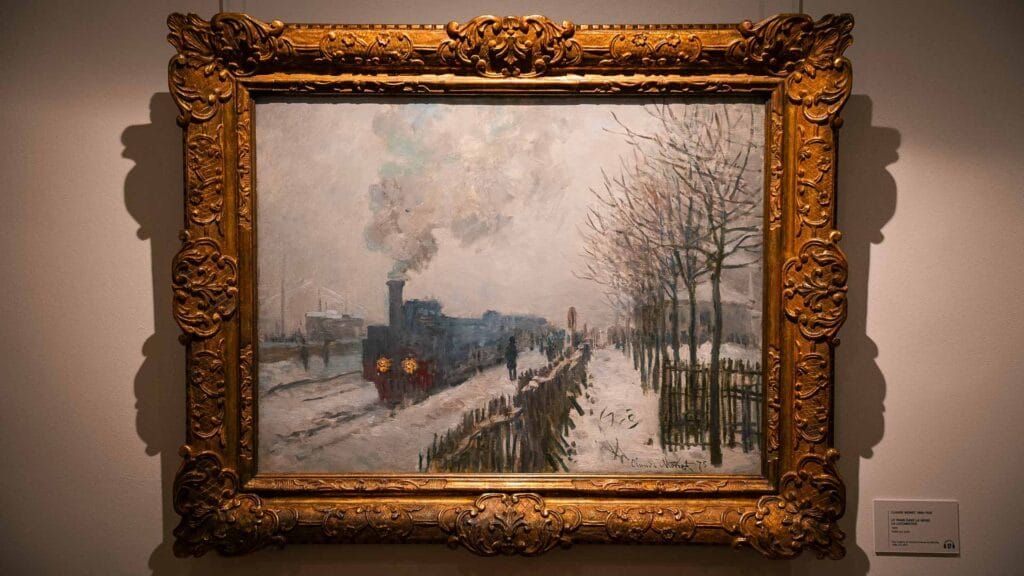
If you want to see Monet’s evolution from a young rebel to a master of light, the Marmottan Monet Museum is a must-visit. Tucked away in the 16th arrondissement, this lesser-known gem holds the largest collection of Monet paintings in the world. It was here that the world rediscovered “Impression, Soleil Levant”, the painting that gave the Impressionist movement its name.
Other highlights include “La Rue Montorgueil, Paris”, where flags flutter in a whirlwind of patriotic celebration, and “Les Tuileries”, which offers a snapshot of bustling Parisian life. This museum allows you to trace Monet’s artistic evolution—from early landscapes to the near-abstraction of his later years. It’s an intimate, almost secretive place—a sanctuary for those who wish to dive deeper into Monet’s world.
4. The Louvre Museum: A Rare Glimpse


Monet at the Louvre? Yes, but don’t expect a vast collection. Only three of his early works reside here: “Glaçons à Bougival”, a wintery masterpiece capturing icy reflections; “Environs de Honfleur”, a delicate landscape; and “La Débâcle près de Vétheuil”, showcasing the Seine’s breaking ice in a dramatic, almost violent portrayal of nature’s power.
Though the Louvre is synonymous with classical art, these rare gems remind us of Monet’s beginnings before he revolutionized painting. They offer a glimpse into his formative years—before the radical loose brushstrokes, before the defiant rejection of the academic style. These paintings whisper of the greatness to come.
5. The Petit Palais: A Sunset on the Seine


The Petit Palais may not be an Impressionist powerhouse, but it holds a single Monet jewel: “Soleil couchant sur la Seine à Lavacourt, effet d’hiver”. This breathtaking piece captures the Seine at dusk, bathed in the cool, fading light of a winter’s day. The atmosphere is thick with frost, and yet the river glows with an inner fire, as if reflecting the last embers of the sun.
A single painting, but one worth the visit, especially as you explore this elegant museum’s Beaux-Arts treasures. It’s like discovering a hidden sunset in the heart of Paris.
Beyond Paris: Monet’s Footsteps in the Countryside
6. The Impressionist House of Claude Monet, Argenteuil

Monet lived in Argenteuil for seven years, painting some of his most vibrant river scenes. This was a golden period for the artist—his style matured, his colors grew more luminous, and his brushwork became more spontaneous. “Argenteuil, la Seine” and “Le Pont d’Argenteuil” both capture the play of light on water, a theme Monet would revisit endlessly.
Though the original house has been reconstructed, the atmosphere remains intact. Strolling along the Seine, you can almost hear the echo of his brushstrokes.
7. Musée de la Grenouillère: A Scene of Bohemian Bliss
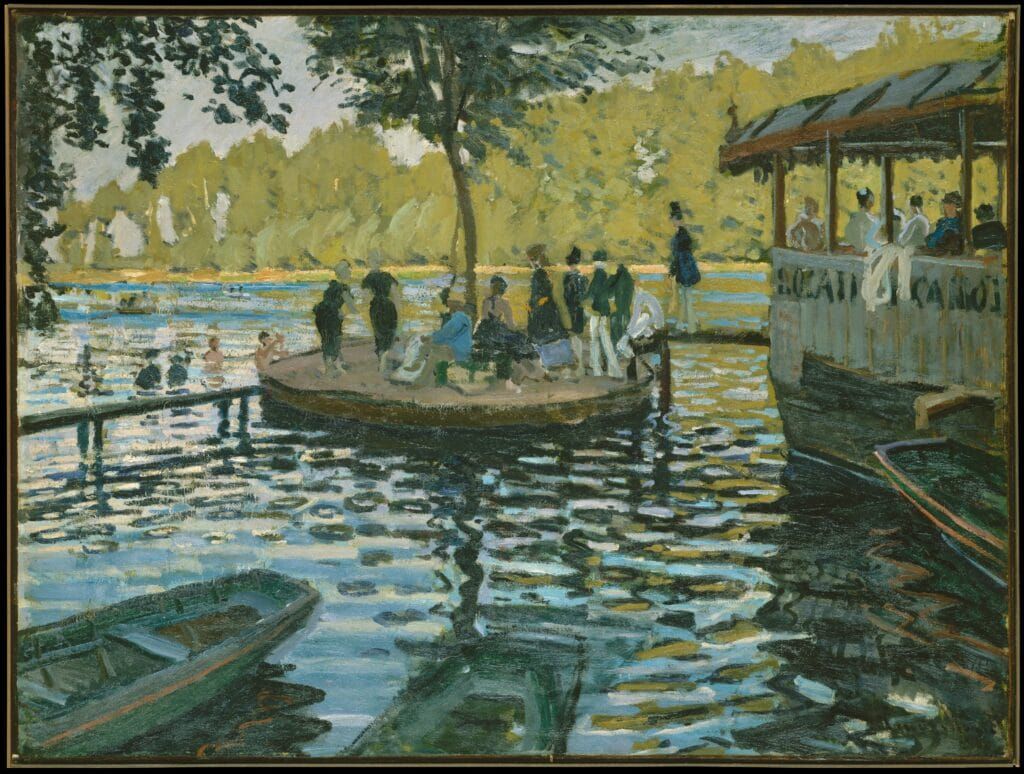
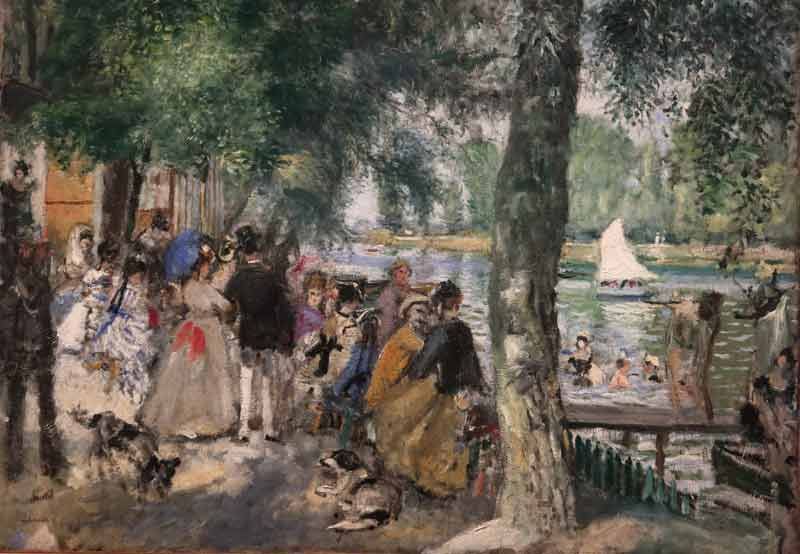
Before Monet’s famous “Bain à la Grenouillère”, there was the actual Grenouillère—a lively riverside retreat in Croissy-sur-Seine. This was where Parisian bohemians came to escape the city, and where Monet and Renoir, side by side, experimented with light and movement. Though his works are elsewhere, the setting itself is an open-air Monet painting waiting to be discovered.
8. Museum of Impressionism Giverny: A Perfect Day Trip

Finally, no Monet pilgrimage is complete without visiting Giverny, where Monet spent the last decades of his life. The Museum of Impressionism Giverny showcases rotating exhibits dedicated to Monet and his contemporaries. But the real masterpiece? Monet’s house and gardens. Stroll across the Japanese bridge, gaze into the pond that inspired his Water Lilies, and see the world through Monet’s eyes.
Paris is a paradise for Monet enthusiasts, with stunning collections at Musée de l’Orangerie and Musée Marmottan Monet. Don’t miss out on exploring other top museums in Paris for Impressionist art. Happy art hunting!