


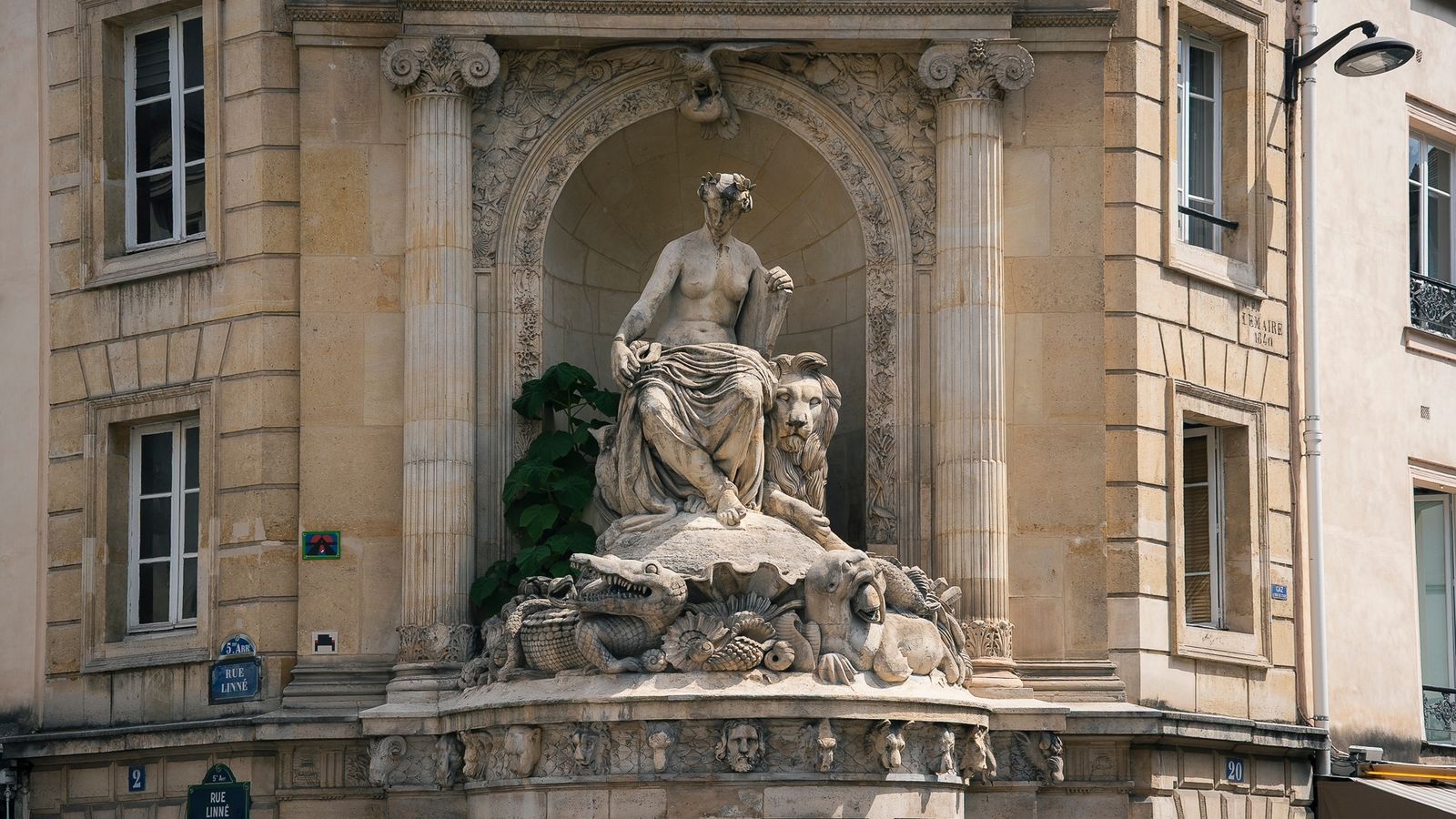
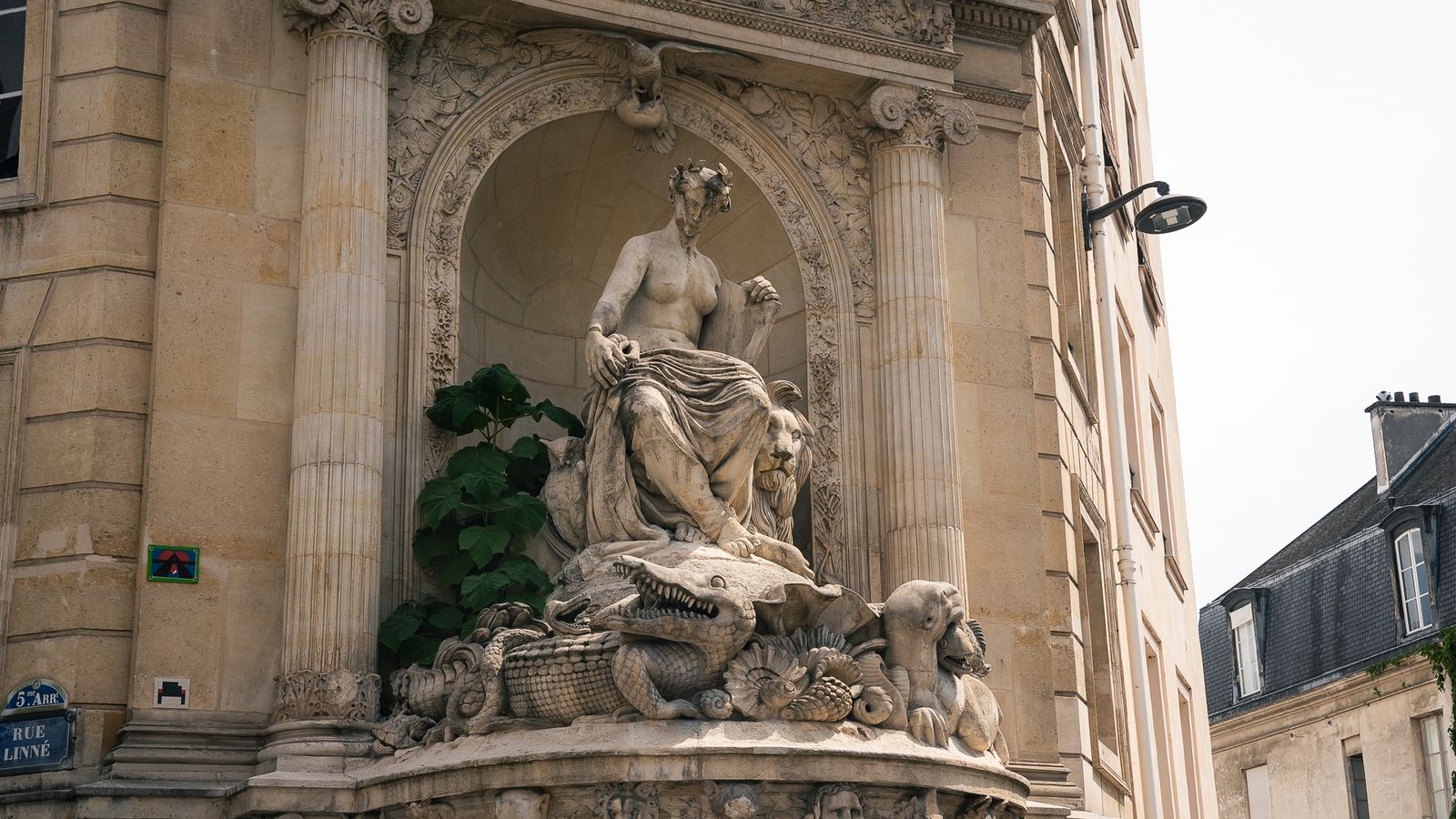
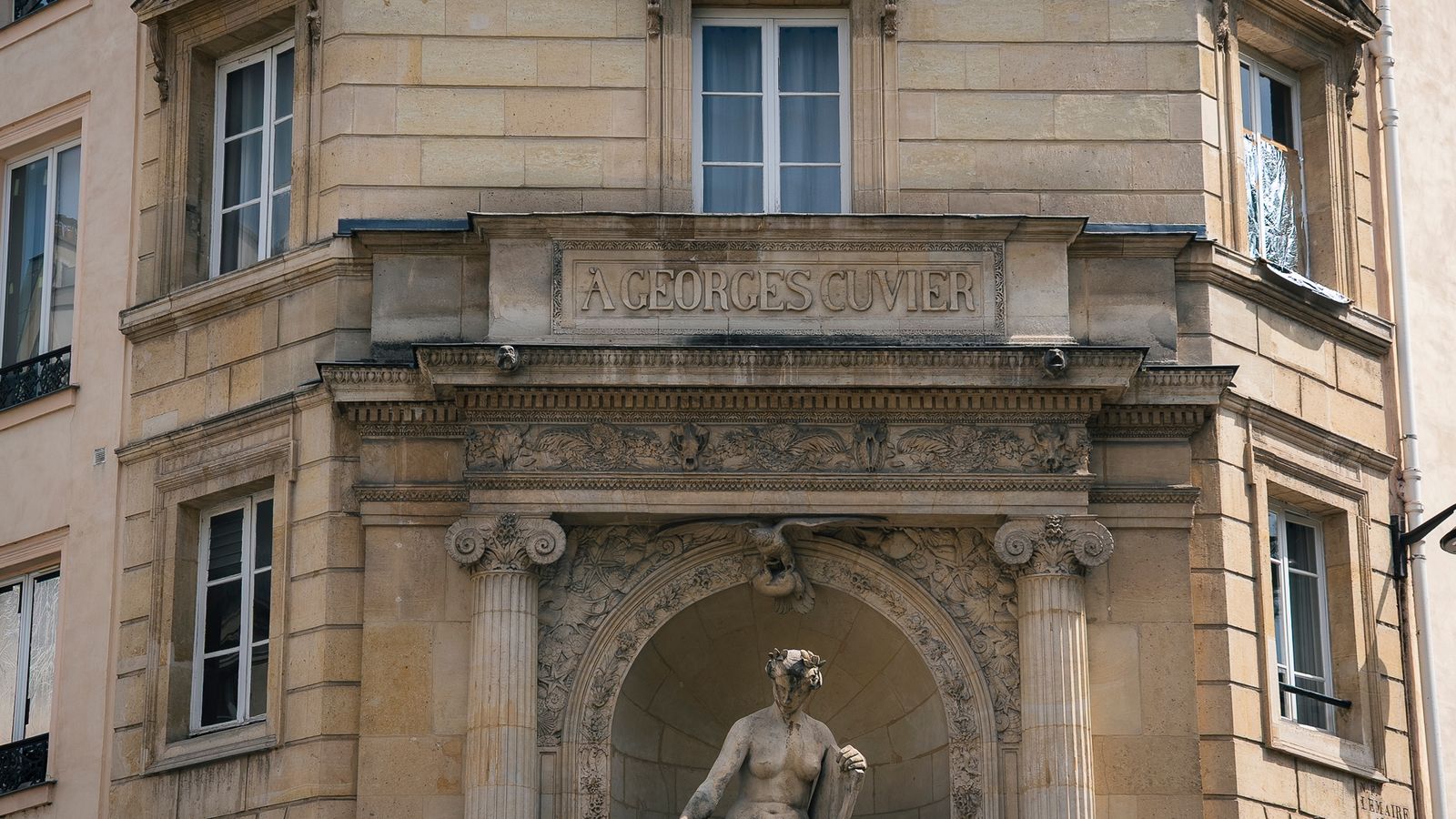
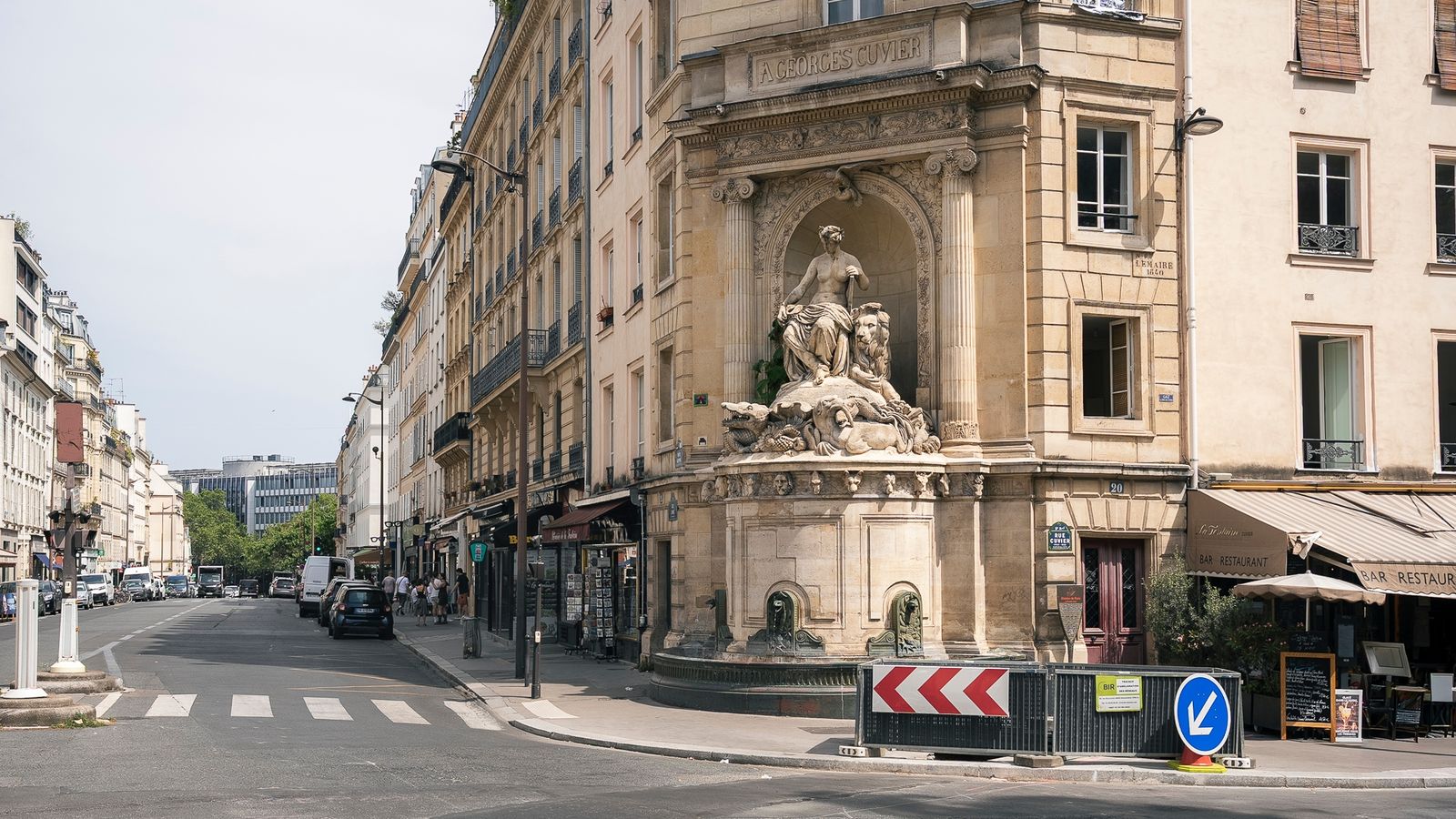
The Cuvier Fountain stands at the corner of Rue Linné and Rue Cuvier, opposite the Jardin des Plantes, in Paris’s 5th arrondissement. It was built between 1840 and 1846 by architect Alphonse Vigoureux (1802–1854), replacing an earlier fountain that had stood against the remains of a tower from the old Saint-Victor abbey prison.
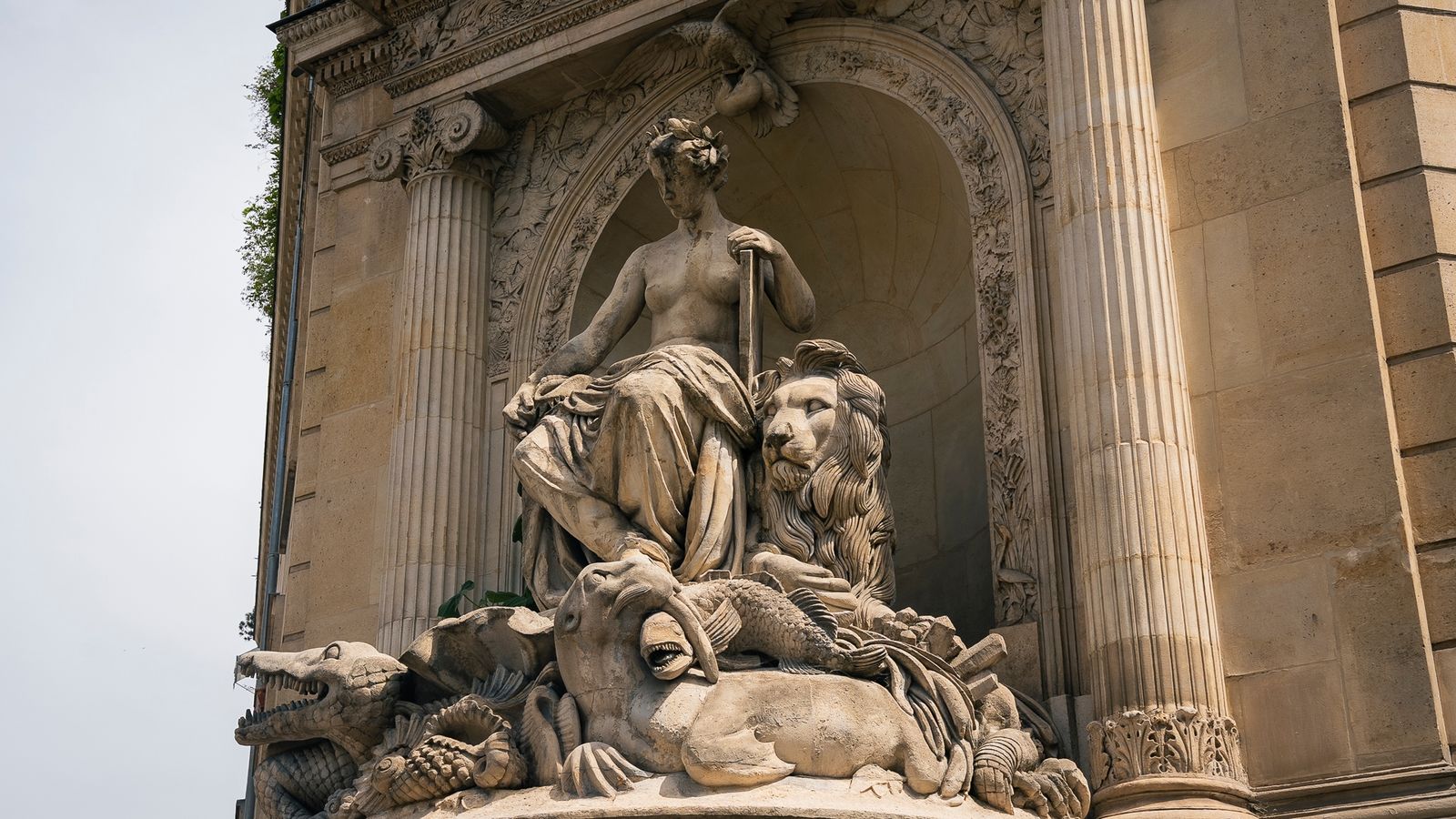
The centerpiece is an allegorical figure representing Natural History, sculpted by Jean-Jacques Feuchère (1807–1852), who also created the Saint-Sulpice fountain. The seated woman holds tablets inscribed with Cuvier’s own motto, “Rerum cognoscere causas” (to know the causes of things), a line borrowed from Virgil. An eagle spreads its wings above her head, and a lion rests at her side.
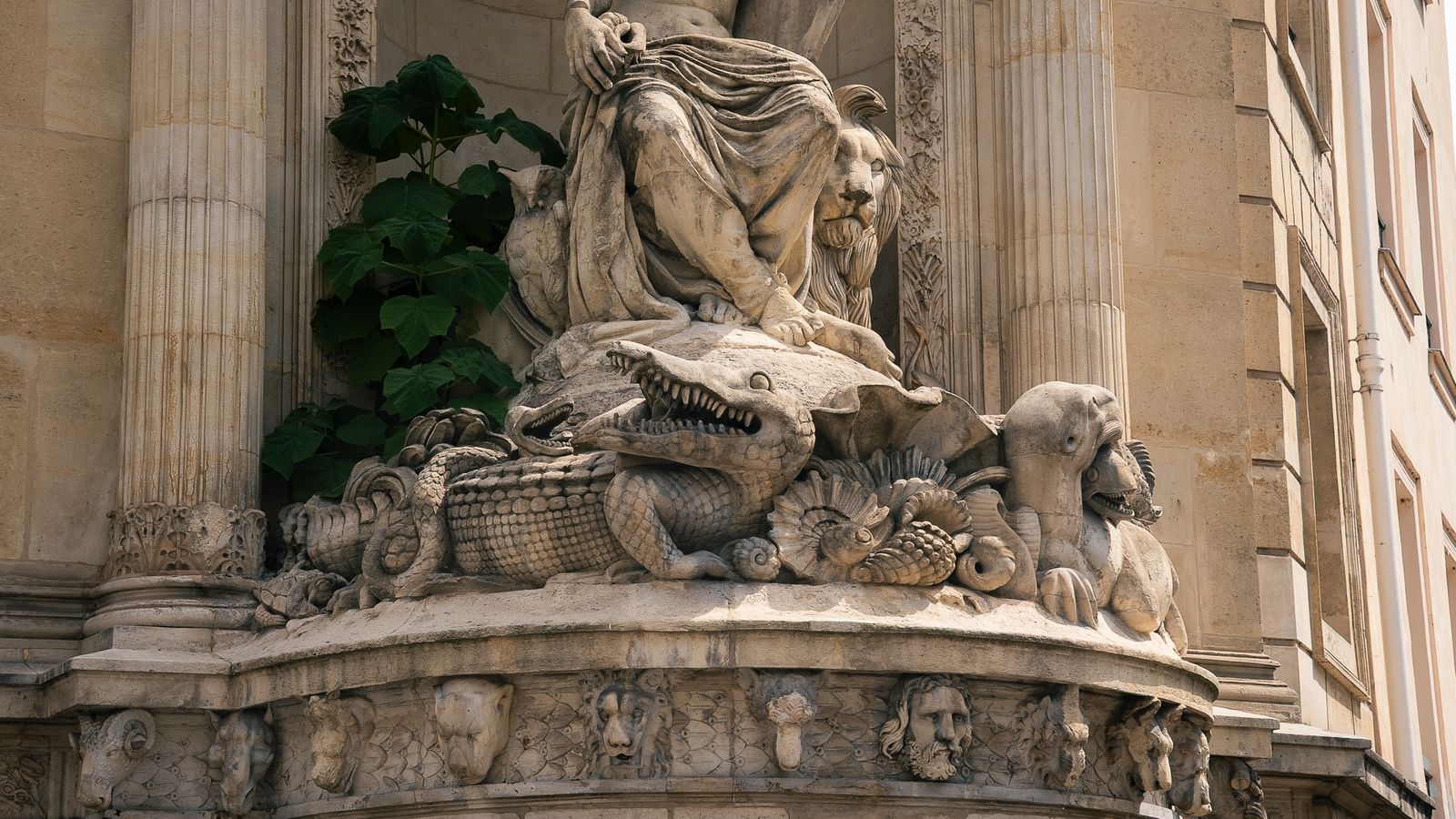
The rest of the fountain leans into a playful, almost fantastical bestiary. Around the base, a frieze and ornamental details, the work of sculptor Pierre-Jules Pomateau, include a lizard with an imaginary anatomy and a crocodile whose neck is twisted at a 90-degree angle, a pose that’s anatomically impossible. Thirteen corbels along the pedestal depict a range of large mammals, and moray eels spout water from the pedestal into the basin below.
A Troubling Legacy
It was built as a tribute to Georges Cuvier (1769–1832), a naturalist, professor of anatomy, and one of the founding fathers of paleontology. But his scientific legacy is not without serious controversy, particularly in his work on human beings. In the early 19th century, Cuvier defended the concept of biological races, classifying humanity into three groups: Caucasians, whom he considered the most civilized, Mongolians, and Africans. He linked these physical classifications to differences in intelligence and morality.