


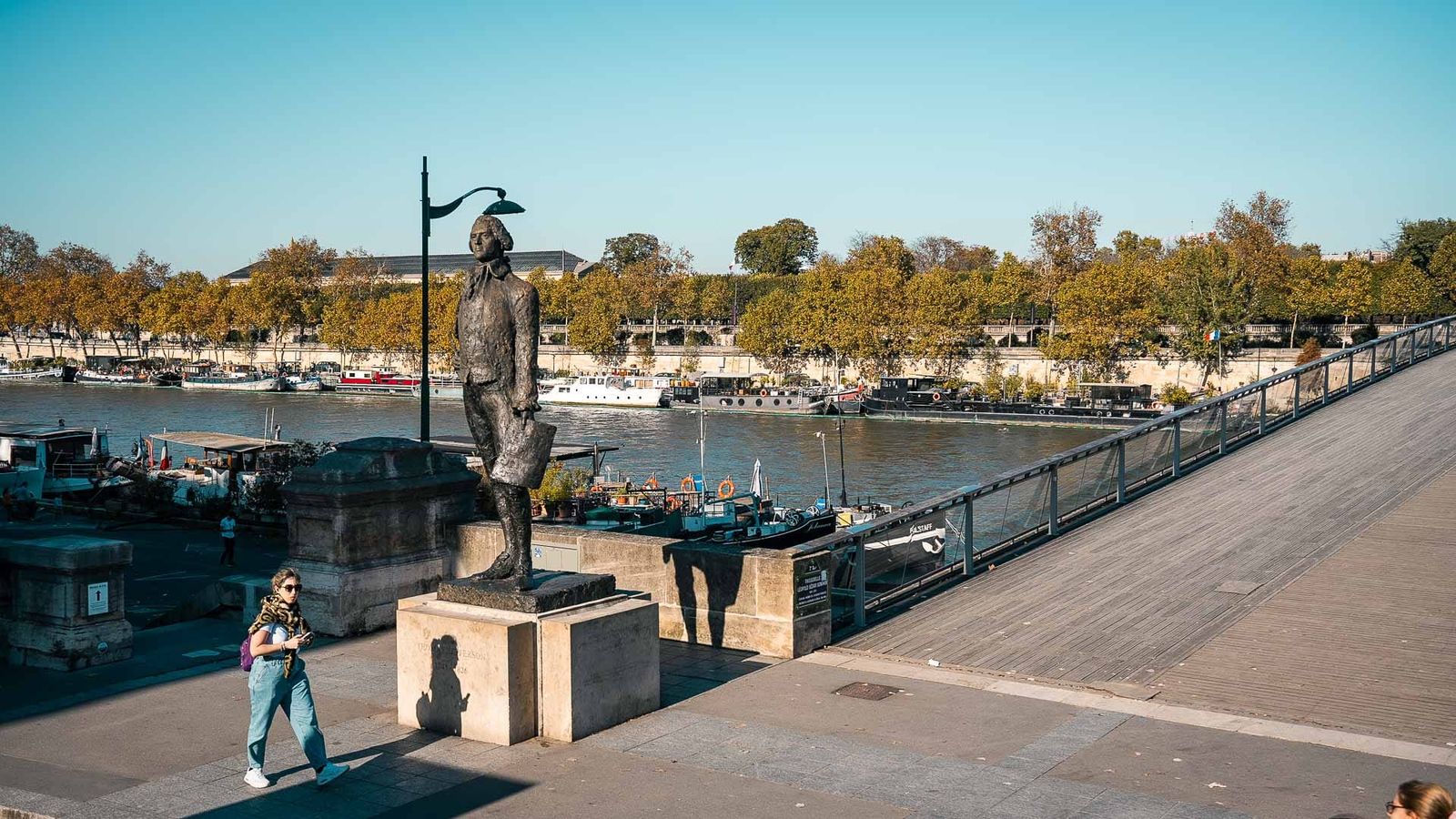
The Statue of Thomas Jefferson stands proudly along the banks of the Seine in the 7th Arrondissement of Paris, near the Léopold-Sédar-Senghor Bridge and the Musée de la Légion d’Honneur.
This bronze sculpture, created by French sculptor Jean Cardot, pays homage to one of America’s Founding Fathers and a key architect of democracy.
Inaugurated on July 4, 2006, to coincide with the 230th anniversary of American independence, the statue reflects the deep historical ties between the United States and France.
A Historical Connection
Thomas Jefferson (1743-1826) was not only the principal author of the Declaration of Independence but also served as the United States’ second ambassador to France from 1784 to 1789.
During his time in Paris, he significantly influenced American foreign policy and developed lasting relationships with key figures of the French Enlightenment, including the Marquis de Lafayette.
Jefferson’s support for the French Revolution, tempered by his opposition to its most violent aspects, highlights his complex engagement with the revolutionary ideas of the time.
The Symbolism of the Sculpture
The statue, standing at 10 feet tall, captures Jefferson in a moment of reflection and creativity. In one hand, he holds a quill pen, symbolizing his literary and philosophical contributions, while in the other, he clutches a drawing of Monticello, his beloved Virginia estate.
This imagery serves to connect Jefferson’s ideals of liberty and governance with his architectural legacy, emphasizing the significance of his vision for America.