


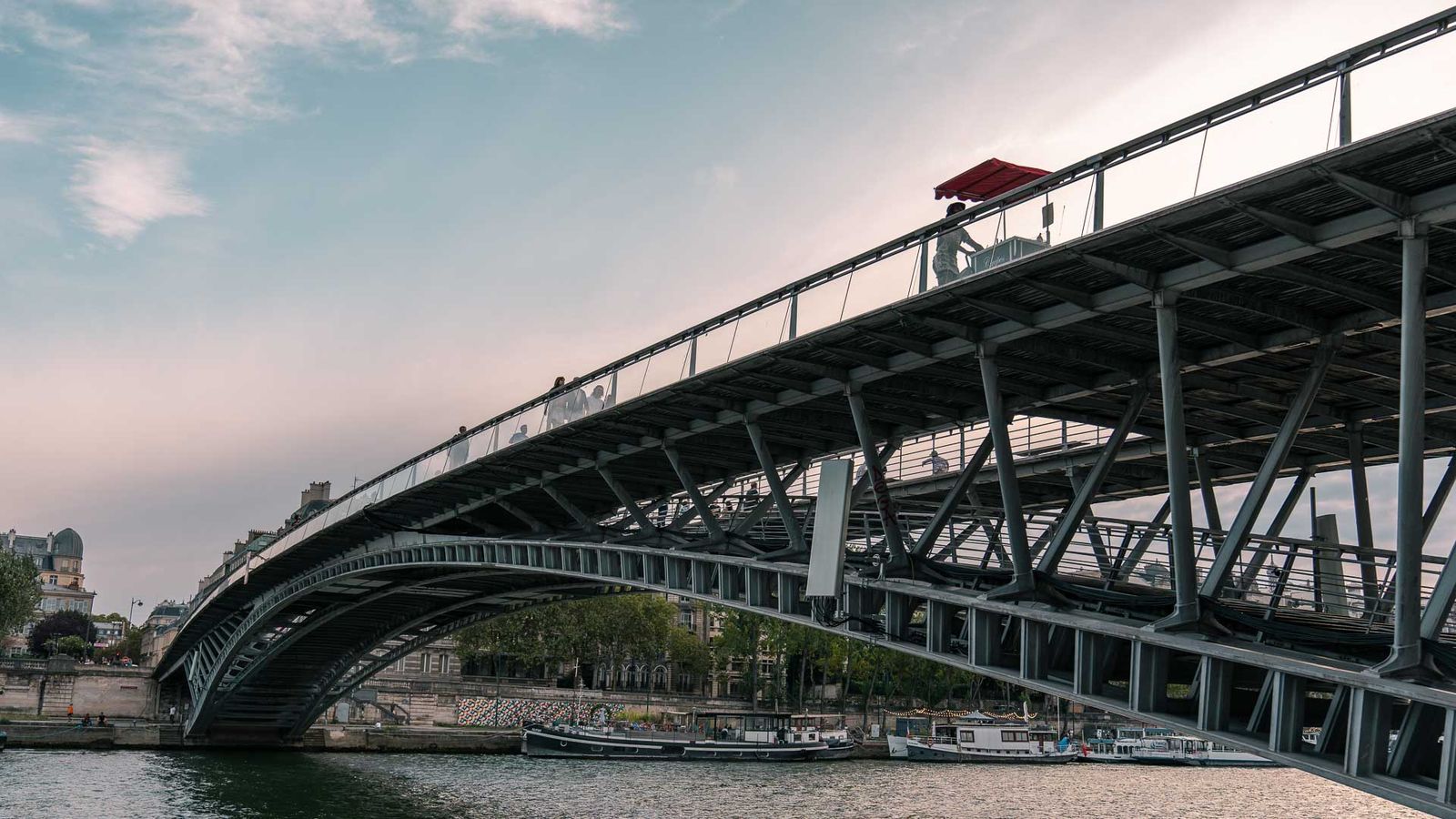
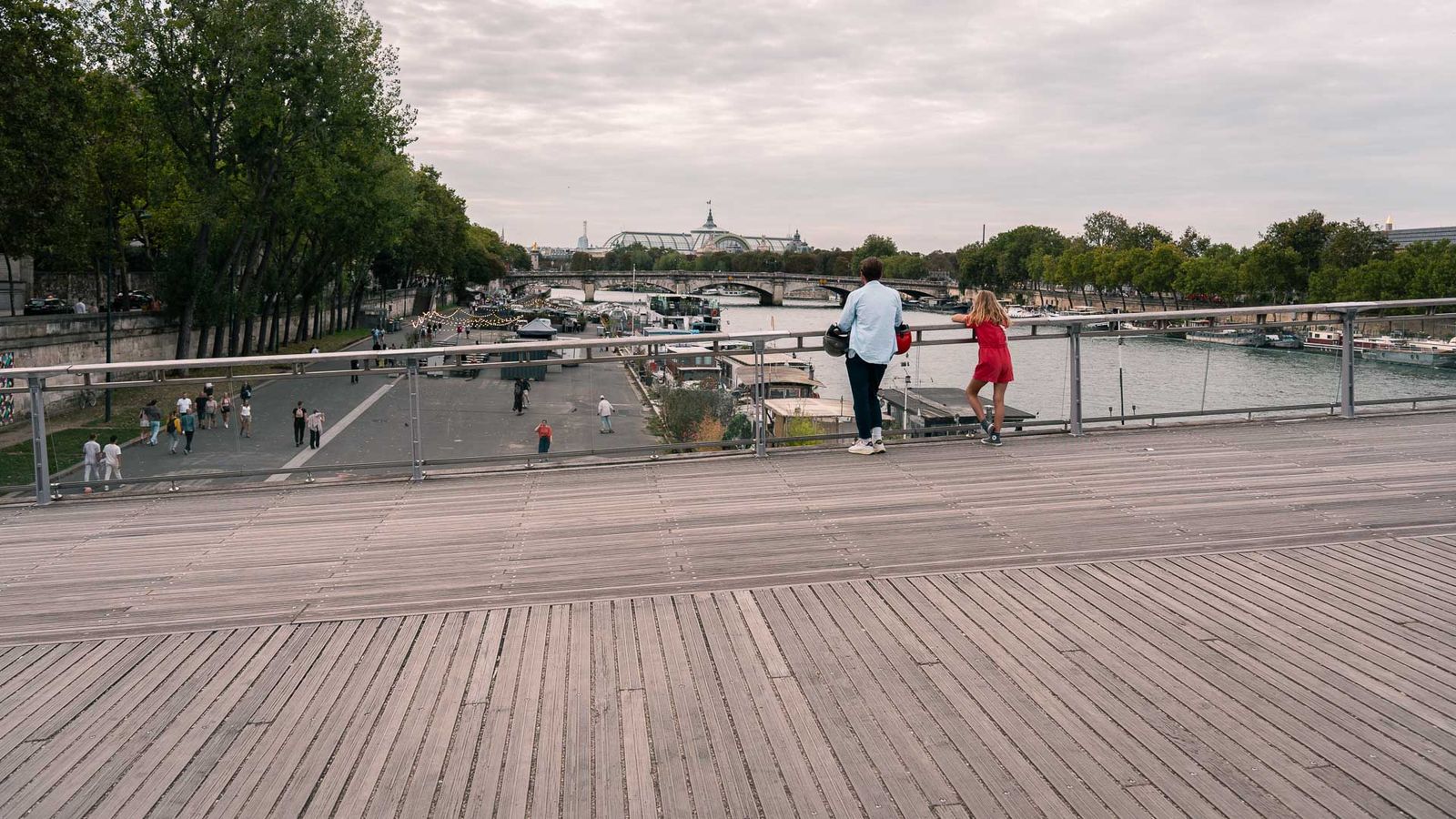
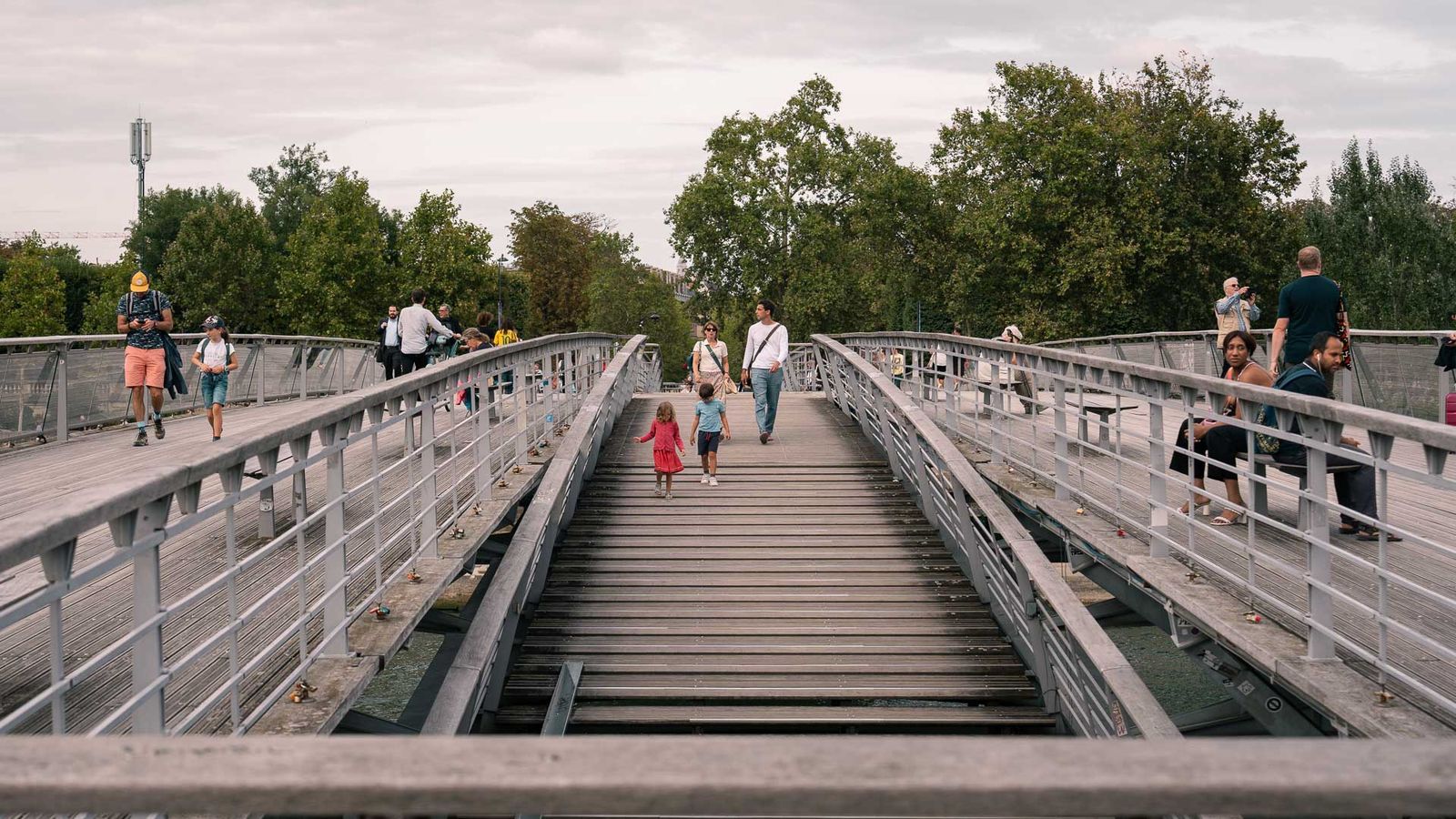
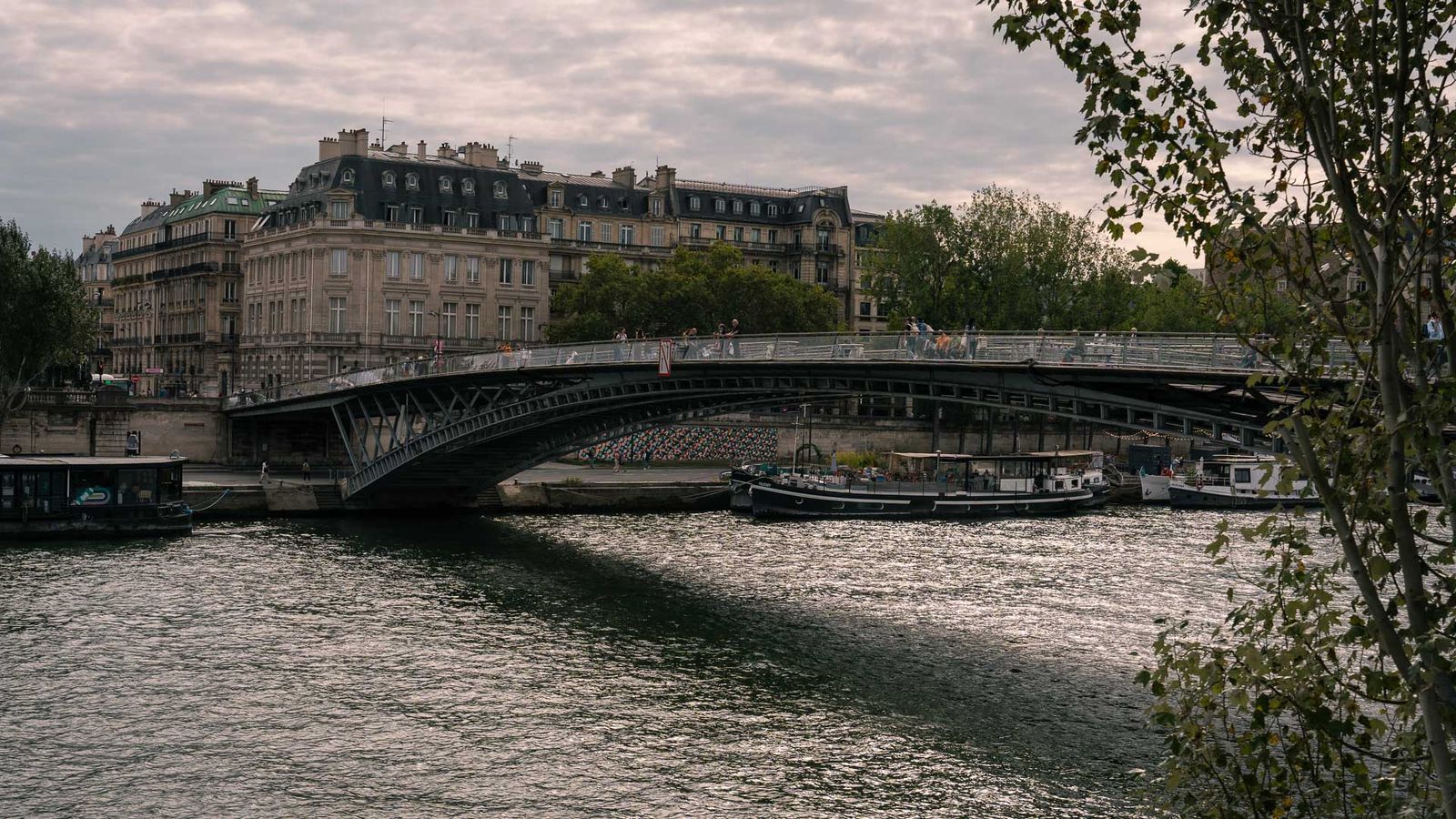
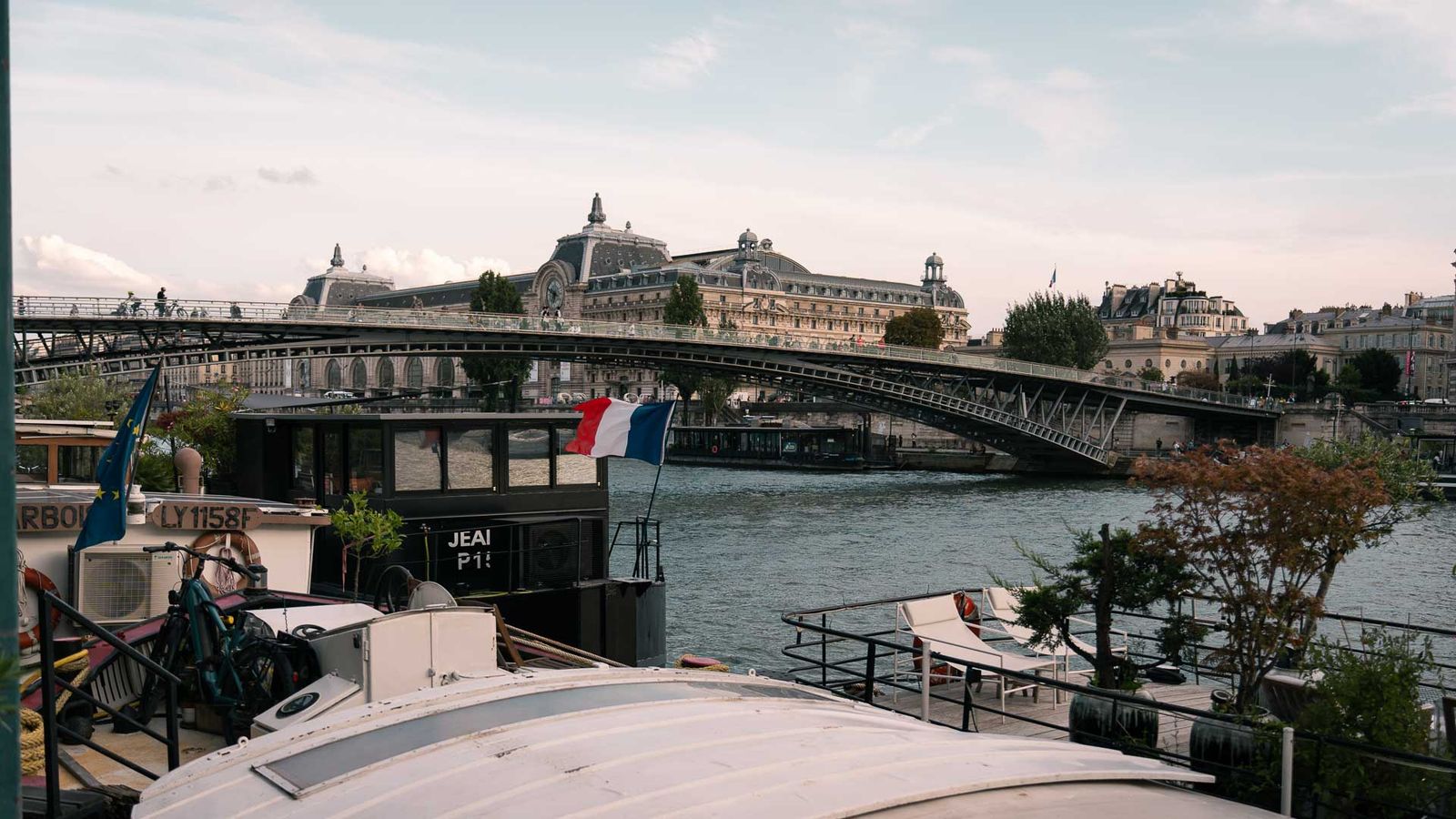
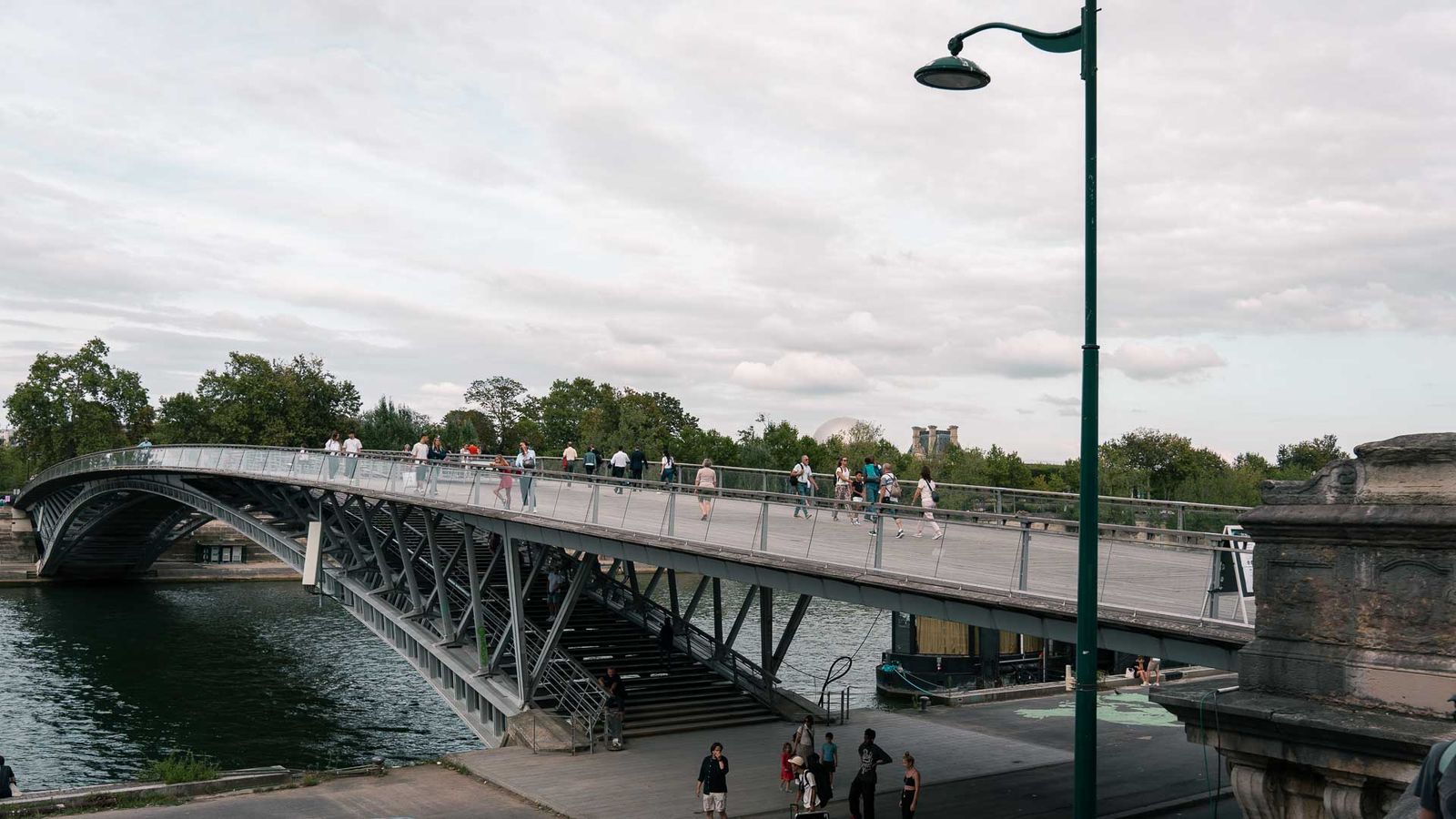
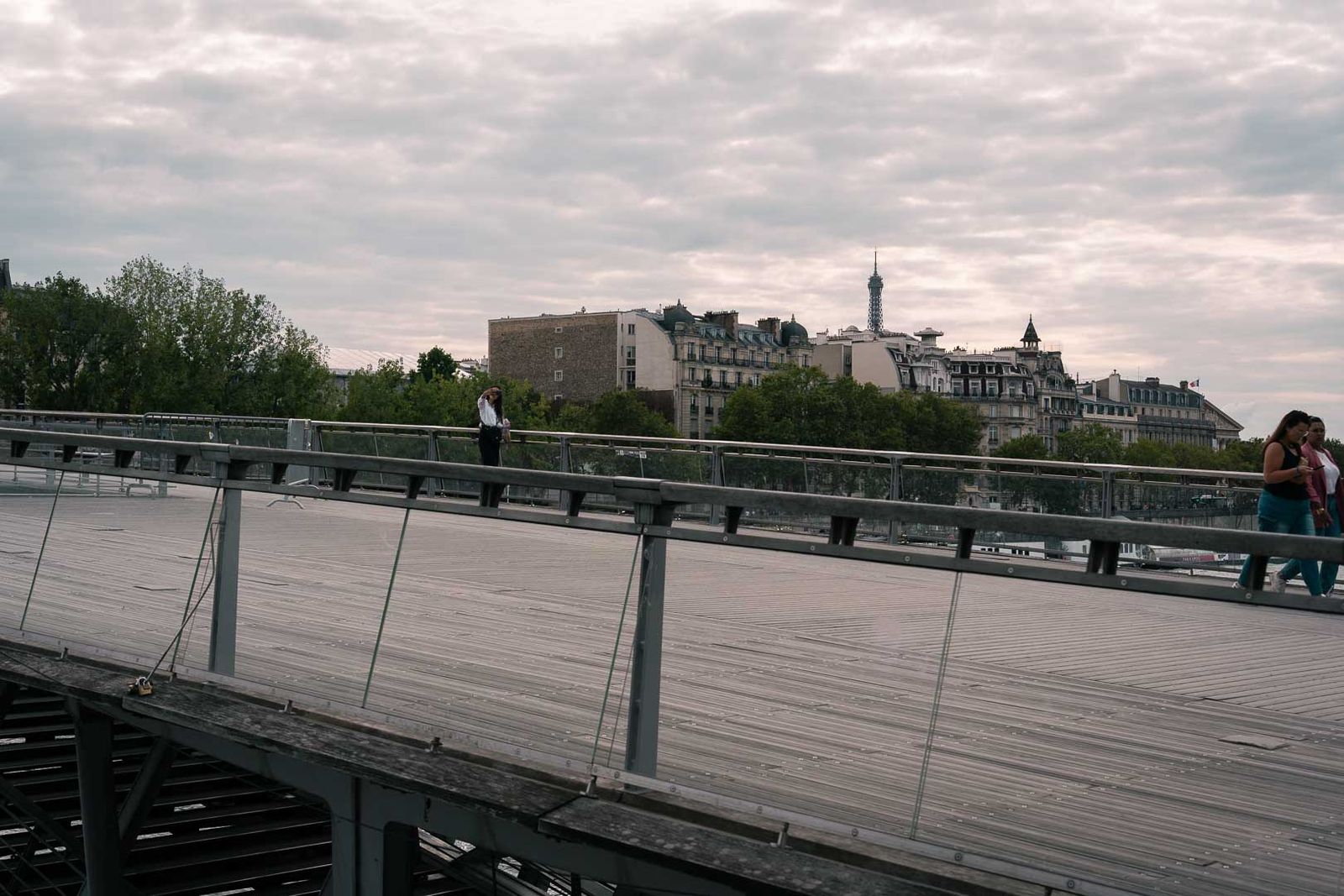
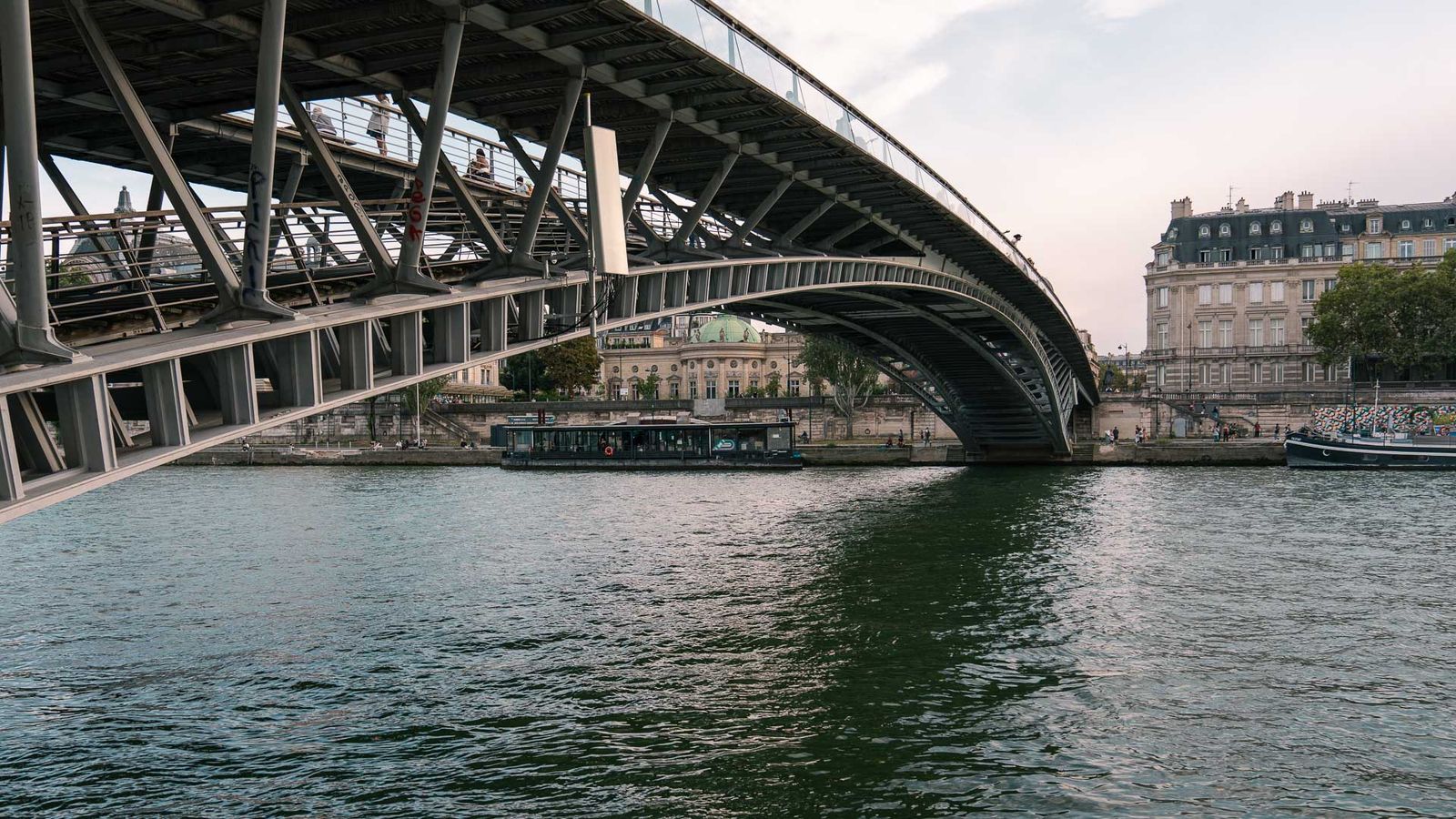
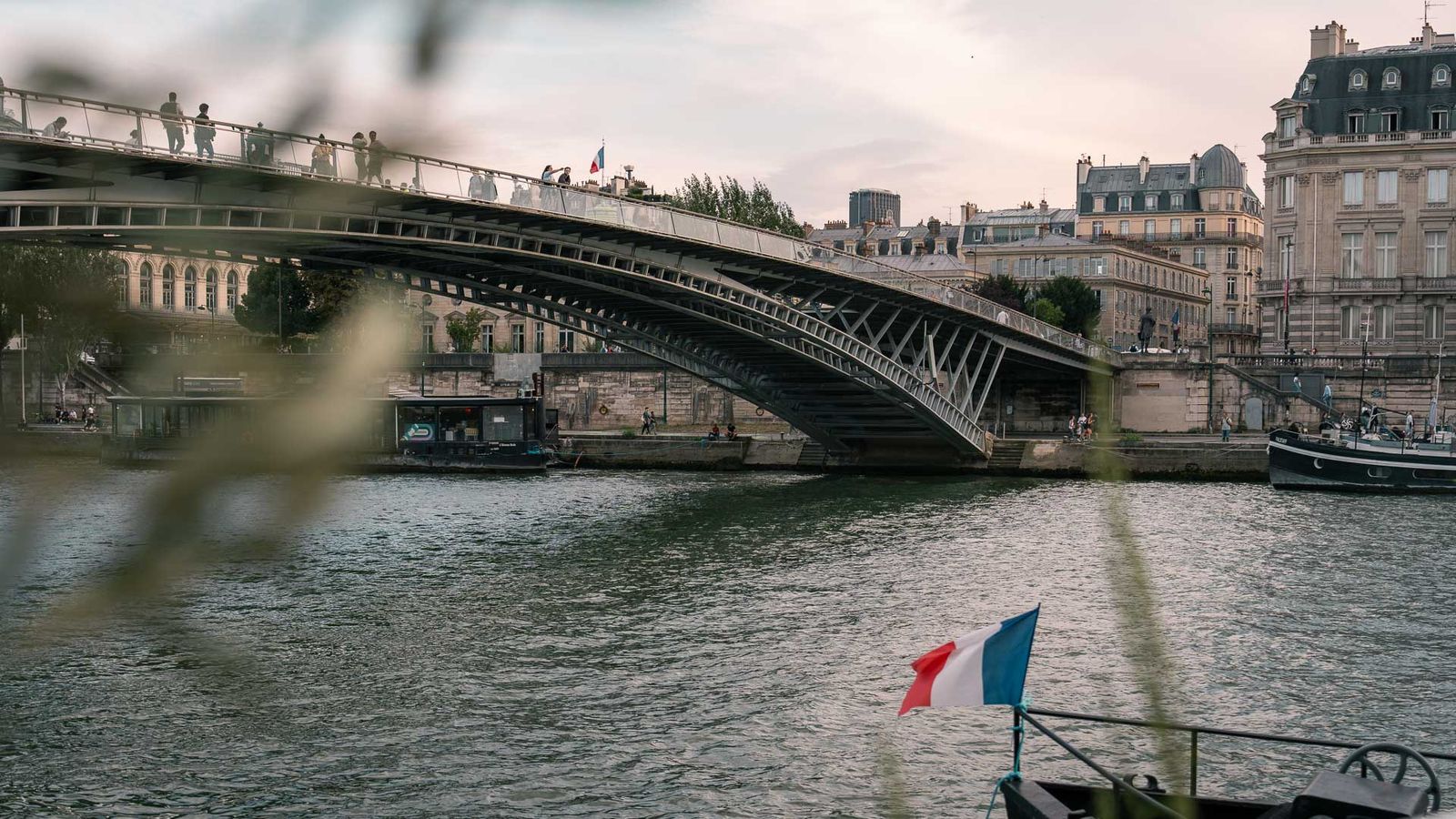
The Passerelle Léopold-Sédar-Senghor, previously known as the Passerelle Solférino, is a stunning pedestrian bridge that gracefully spans the Seine, connecting the bustling port of Solférino in the 7th arrondissement with the tranquil port des Tuileries in the 1st arrondissement.
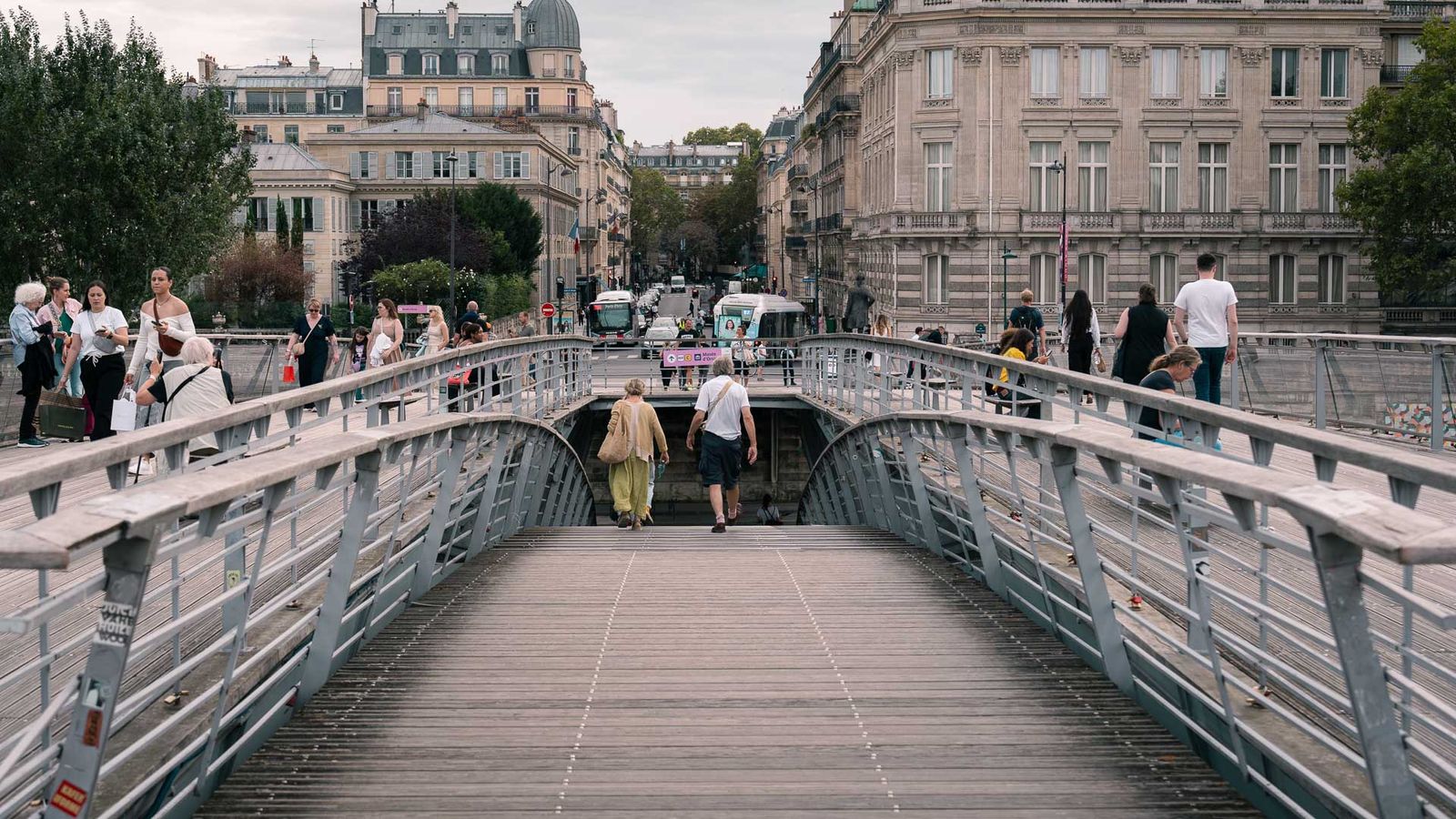
With its elegant design and inviting atmosphere, it serves as a popular thoroughfare for both locals and visitors, offering easy access between iconic sites such as the Musée d’Orsay and the lush Jardin des Tuileries.
A Tribute to a Literary Luminary
This bridge was renamed on October 9, 2006, to honor Léopold Sédar Senghor, a celebrated Senegalese poet, writer, and statesman who significantly contributed to African literature and politics. The renaming coincided with the centenary of his birth, ensuring that his legacy lives on in the heart of Paris.
The statue of Thomas Jefferson at the bridge’s entrance further enriches its cultural significance, symbolizing the connection between the United States and France.
From Iron to Elegance
The history of this crossing began with a cast-iron bridge inaugurated by Napoleon III in 1861, designed to facilitate vehicle passage between quai Anatole-France and quai des Tuileries.
Constructed by engineers Paul-Martin Gallocher de Lagalisserie and Jules Savarin, this original bridge was named after the Battle of Solferino, a significant victory in June 1859. Due to wear and damage from barges, the bridge was demolished in 1961, making way for a temporary steel footbridge that stood until 1992.
Architectural Innovation
The current Passerelle Léopold-Sédar-Senghor was constructed between 1997 and 1999 under the expertise of architect Marc Mimram. With a striking single arch spanning 106 meters without any mid-river supports, this modern footbridge showcases a unique design.
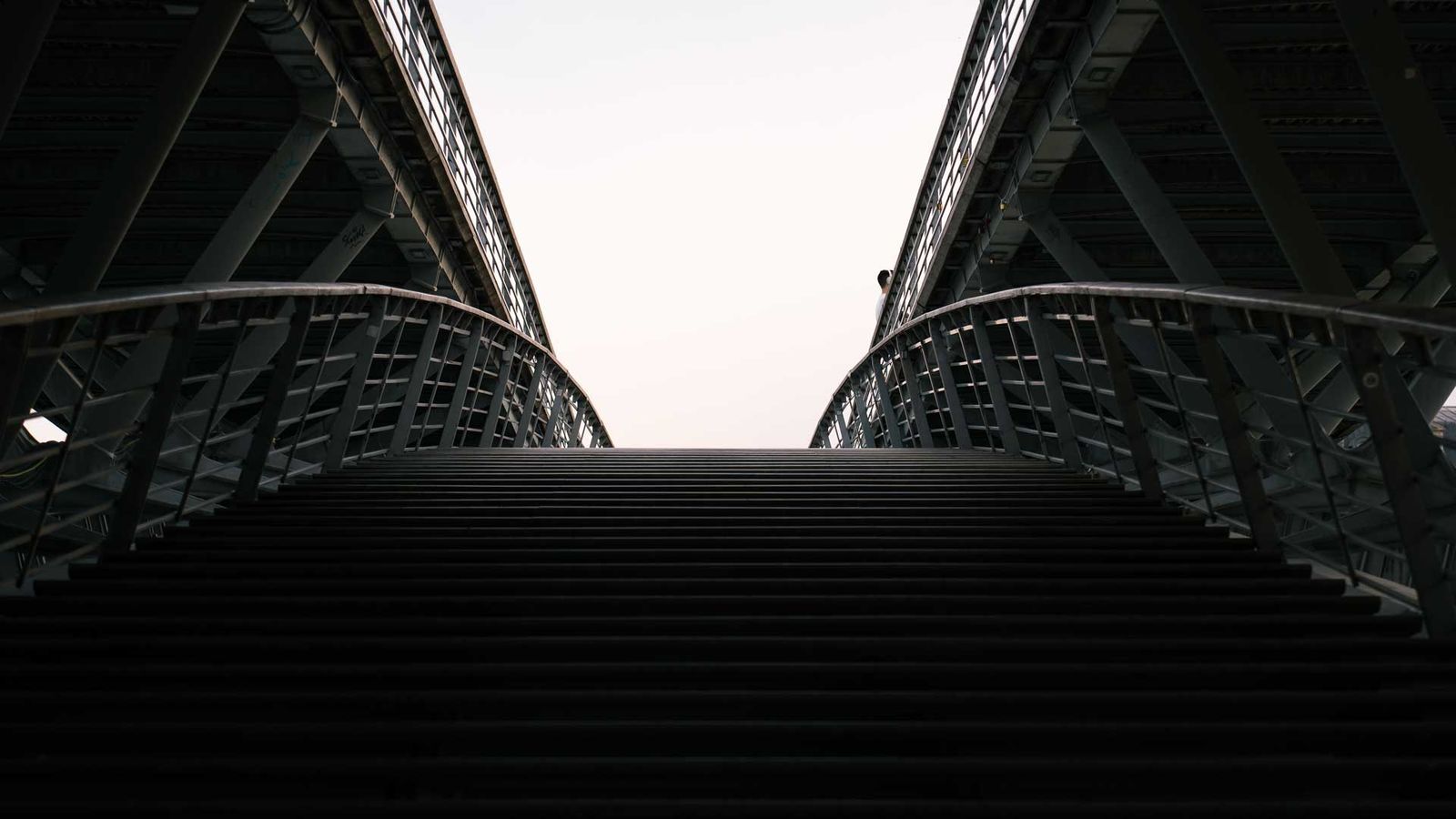
The bridge’s structure is composed of six steel elements, each weighing 150 tons, and is anchored by concrete pillars that plunge 15 meters underground. The choice of exotic azobé wood for the deck not only enhances its aesthetic appeal but also ensures durability against the elements.
Navigating the Challenges
Upon its opening, the bridge experienced stability issues due to oscillations caused by foot traffic, leading to temporary closures for enhancements. Engineers addressed these concerns by installing shock absorbers and counterweights, while also adding a non-slip surface to the wooden decking to prevent accidents on rainy days.
Despite these challenges, the bridge’s architectural integrity was recognized with the prestigious Prix de l’Équerre d’Argent in 1999, a testament to its innovative design.
A Cultural Crossroads
Beyond its practical use, the Passerelle Léopold-Sédar-Senghor has made appearances in popular culture, capturing the imagination of artists and filmmakers alike. Claude Debussy found inspiration for his Nocturne Nuages while gazing at the Seine from the bridge.
More recently, the bridge served as a backdrop for music videos and television series, including Requiem pour un con in homage to Serge Gainsbourg and scenes from the series XIII and Baron noir. Its picturesque setting continues to attract artists and photographers, solidifying its place in the cultural fabric of Paris.