


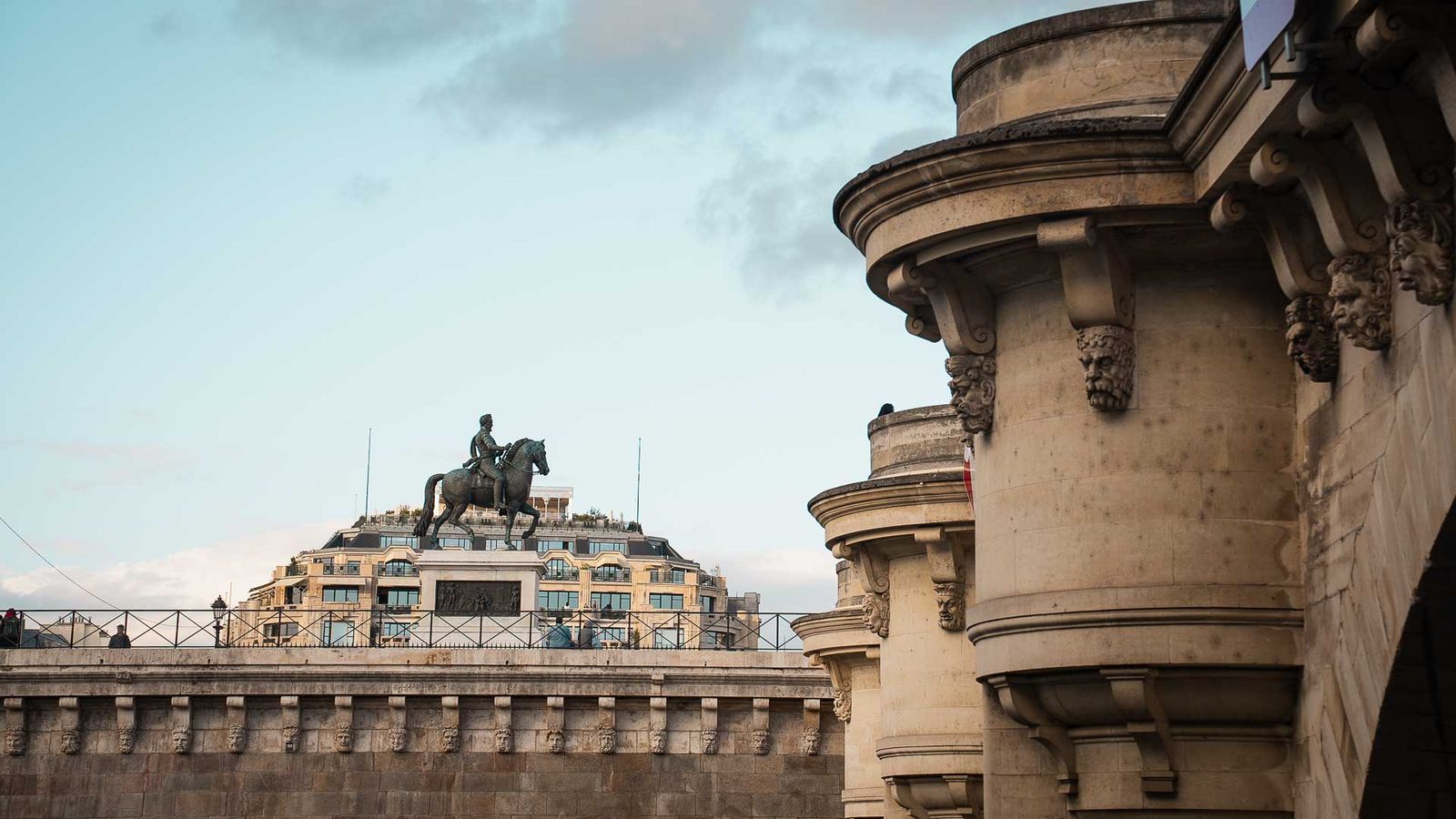

Standing proudly at the western tip of the Île de la Cité, the Equestrian Statue of Henri IV is a symbol of regal authority and historical resilience.
Located on the iconic Place du Pont Neuf, right at the entrance of the Square du Vert-Galant, this bronze statue of the French king was inaugurated in 1818, replacing an earlier statue from 1614 that was destroyed during the French Revolution.
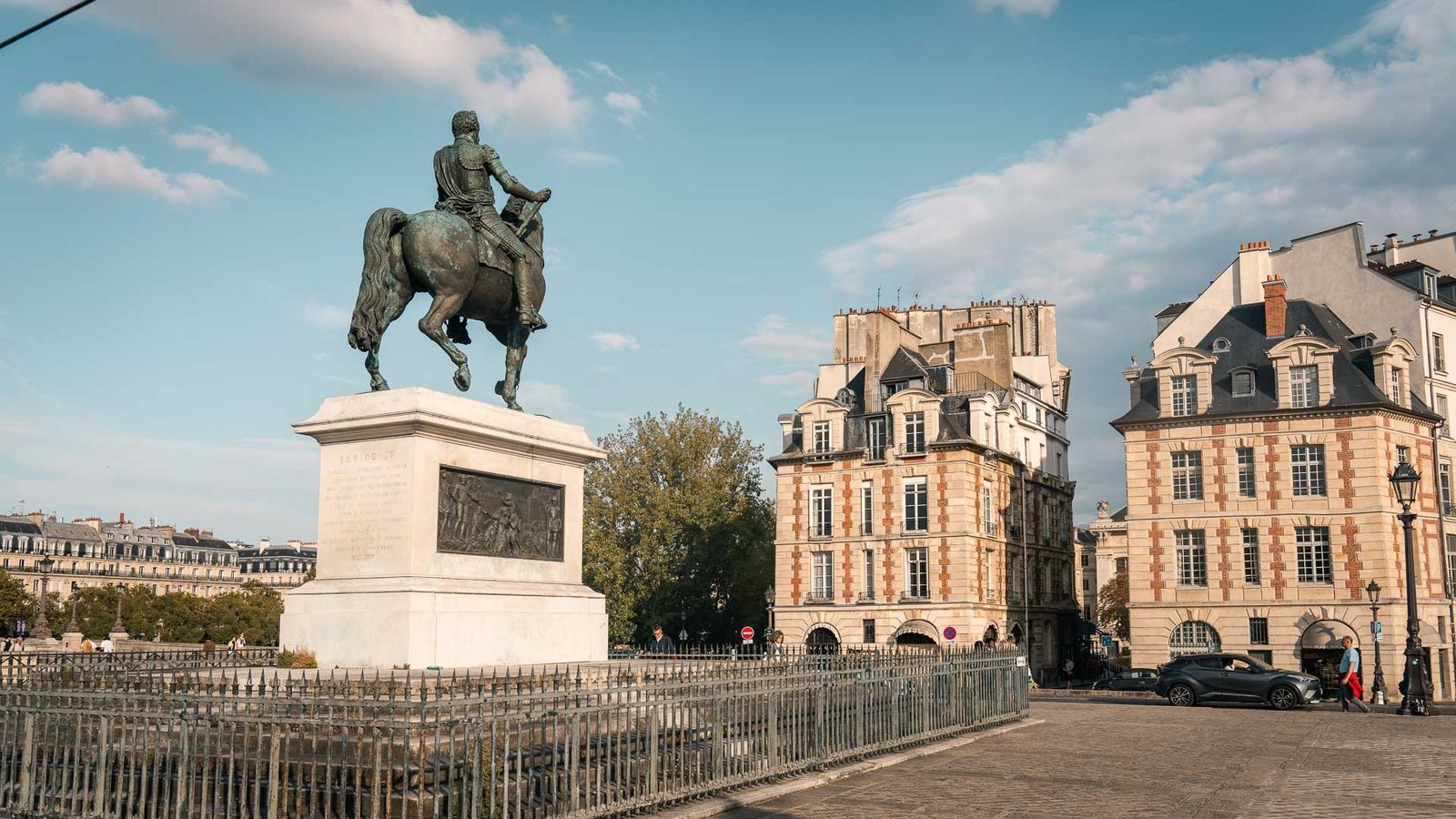
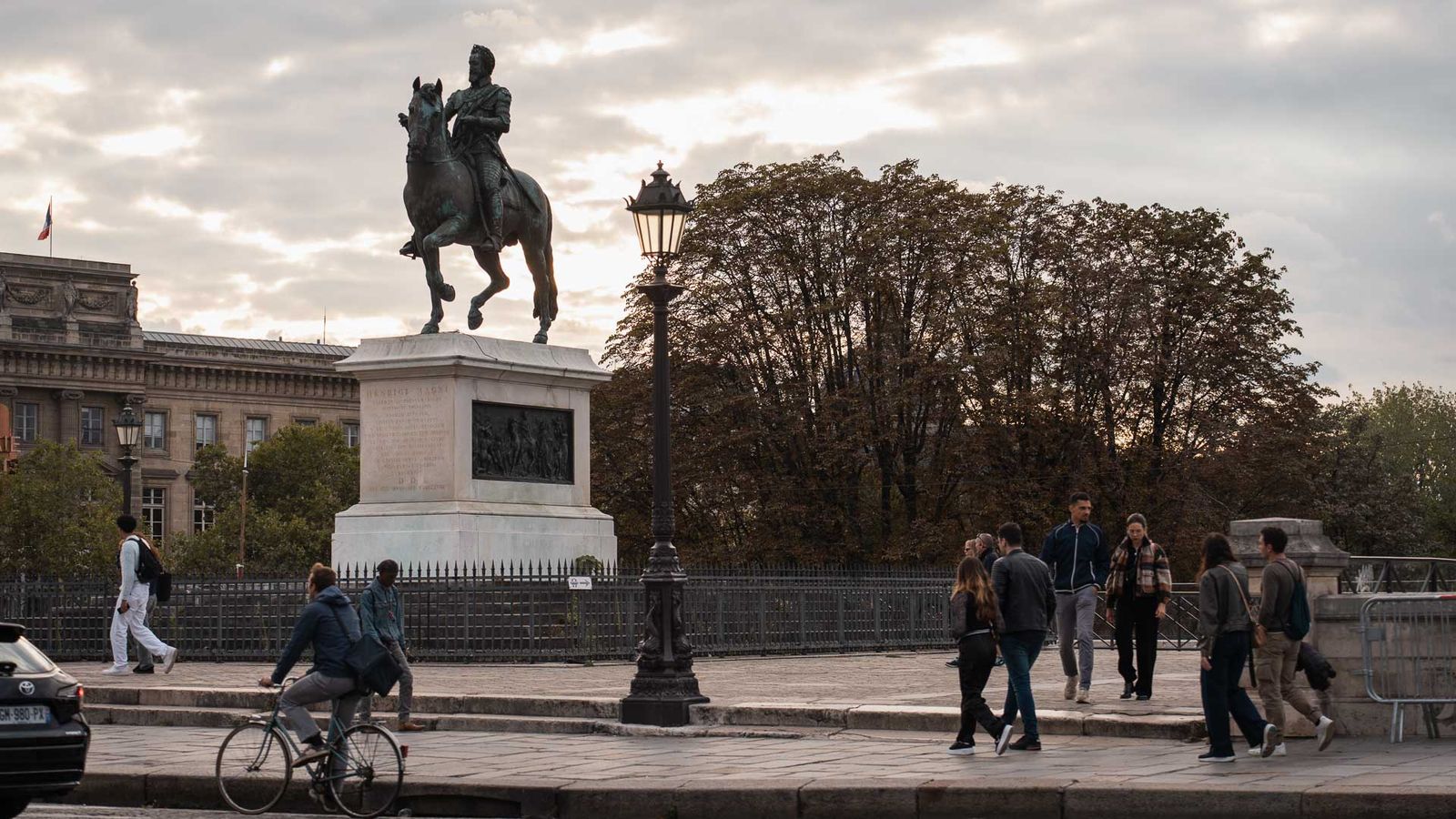
Designed by sculptor François-Frédéric Lemot, the statue portrays Henri IV on horseback, crowned with laurel, and holding a fleur-de-lis scepter, facing the Seine.
A Monument of Restoration
The statue we see today is not the original but a carefully crafted replacement commissioned after the fall of Napoleon.
The first statue, erected in 1614 by order of Marie de Médicis, was a tribute to her late husband. However, it was demolished in 1792 amidst the turbulence of the French Revolution.
The restoration of the monument in 1818 was seen as a symbolic gesture marking the return of the monarchy, with citizens contributing to the statue’s funding.
Several historical objects, including parchments and medals, were placed inside the statue as time capsules, now preserved in the National Archives.
A Regal Image in Bronze
Henri IV is depicted in full armor, astride his horse with a commanding presence. His eyes gaze toward the Quai des Orfèvres, while his horse faces the Quai de l’Horloge.
The statue rests on a detailed pedestal, featuring Latin inscriptions that commemorate the king’s leadership and the citizens’ efforts to restore the monument. These inscriptions honor Henri IV’s paternal care for his people and reflect the enduring admiration for the “Good King Henry.”
Historical and Artistic Details
The pedestal is adorned with bas-reliefs that capture key moments of Henri IV’s reign, including his entry into Paris in 1594 and the lifting of the siege of the city.
These scenes highlight the king’s role in uniting France after years of civil war. The surrounding area, including the square of the Vert-Galant and Place Dauphine, is intrinsically linked to Henri IV’s urban vision for Paris, making this statue not only a tribute to the man but also to his legacy in shaping the city.
Site of a Photographic First
An intriguing historical footnote: the statue of Henri IV may have been the backdrop for one of the earliest photographs of a human being.
In 1837, Louis Daguerre captured an image of the Pont Neuf and, in its lower part, two figures—likely workers maintaining the statue—became some of the first people to be immortalized in a photograph. This moment, though incidental, adds to the statue’s storied connection to Parisian history.
The Legacy of Henri IV
Today, the statue stands as a focal point for visitors crossing the Pont Neuf, the oldest standing bridge in Paris.
Henri IV’s reputation as a beloved king endures, celebrated for his efforts to bring peace to France and improve the lives of his subjects. His equestrian monument is more than just a work of art—it is a symbol of resilience, memory, and continuity that links the past with the present in one of Paris’s most picturesque locations.