


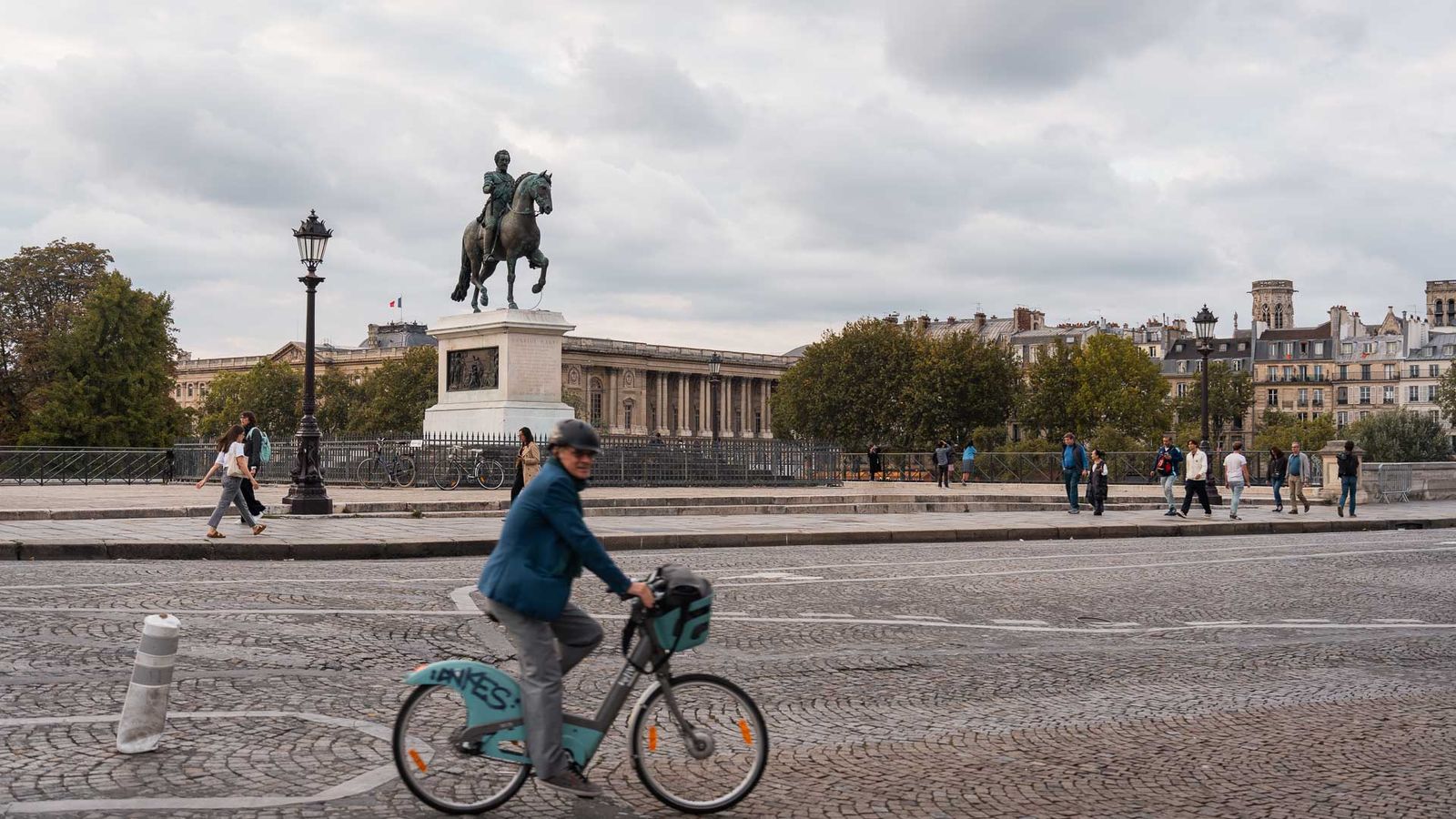
Located between Place Dauphine and the Square du Vert Galant, and straddling the Pont Neuf, Place du Pont-Neuf stands as a focal point of Parisian history, offering visitors a glimpse into France’s artistic and architectural grandeur.
The Heart of the Île de la Cité
Place du Pont-Neuf occupies a unique position at the western tip of the Île de la Cité, providing panoramic views of the Seine and the city beyond. This square, though compact, is imbued with centuries of Parisian life, bridging historical landmarks and lush green spaces. It connects key locations like Place Dauphine and the lively Square du Vert Galant, offering a harmonious blend of nature and cityscape.
An Equestrian Icon of Henri IV
The most iconic feature of Place du Pont-Neuf is its statue of Henri IV, originally crafted by Jean Bologne in 1613. The bronze statue was erected in honor of King Henri IV after his death in 1610, with his son, Louis XIII, commissioning the piece in his memory.
This historic equestrian statue, however, was destroyed during the French Revolution in 1792. In 1818, the monarch Louis XVIII ordered its recreation, entrusting the renowned sculptor François-Frédéric Lemot to design a new bronze representation, based on remnants of the original. This current statue stands proudly, overlooking the Seine and symbolizing the resilience of the Bourbon line.
Architectural Details and Sculptural Artistry
The marble pedestal that supports Henri IV’s statue is adorned with intricate bas-reliefs celebrating key moments in the king’s life, including Henri IV Bringing Supplies into Paris and The Entry of Henri IV into Paris.
These details bring an artistic narrative to the square, telling stories of the king’s contributions and values. Surrounding the square are stunning mascarons, carved faces that embellish the base of the Pont Neuf bridge. These historical faces, emblematic of French architecture, add to the unique charm of Place du Pont-Neuf.
Legacy of the Captive Statues
At the base of the original Henri IV statue stood statues of captives sculpted by Franqueville and Bordoni. These statues, now housed in the Louvre, were meticulously preserved post-Revolution, a testament to their enduring cultural value. Visitors can still admire these works, which serve as reminders of the square’s historical significance and the city’s dedication to preserving its artistic heritage.