


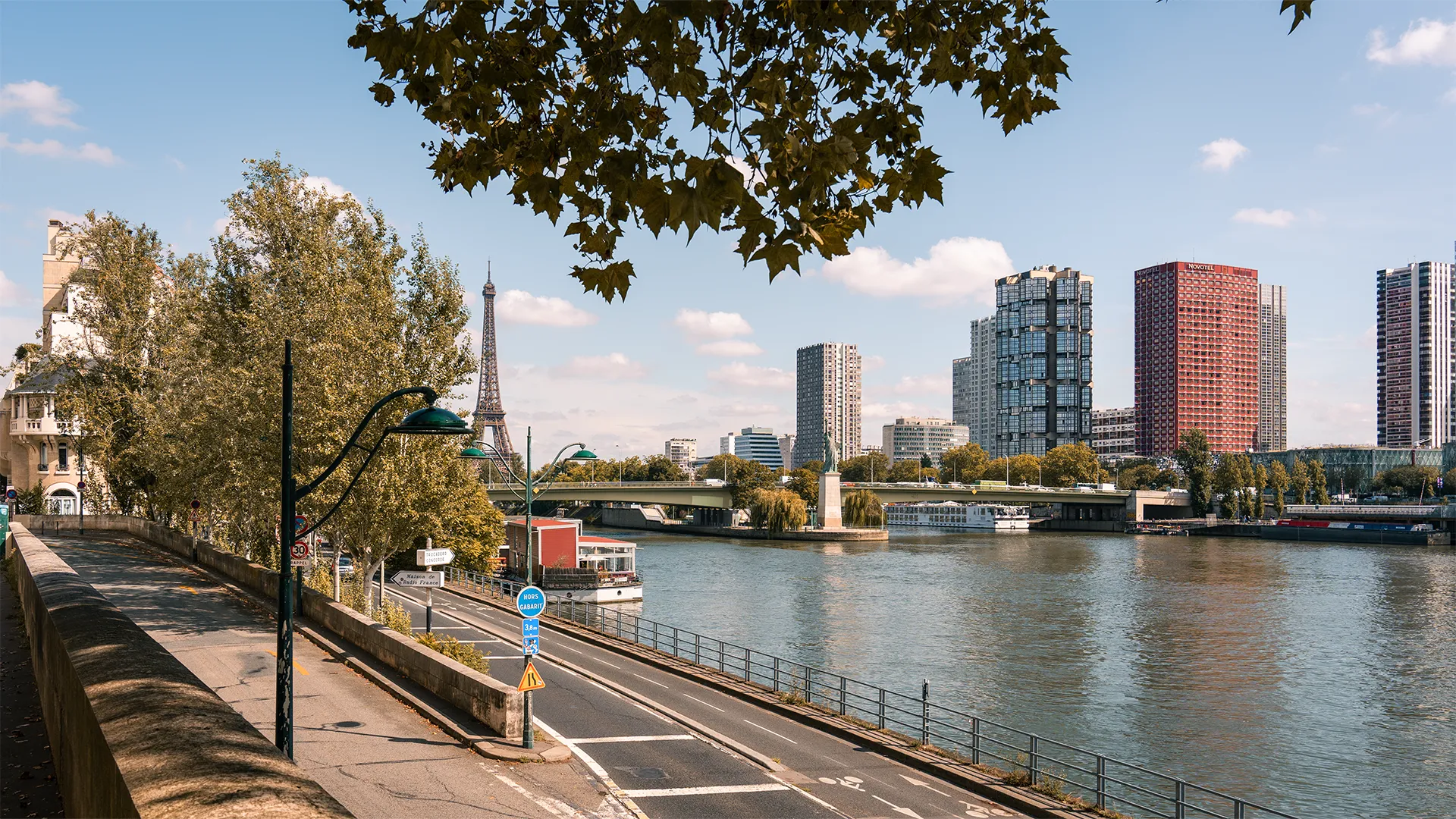
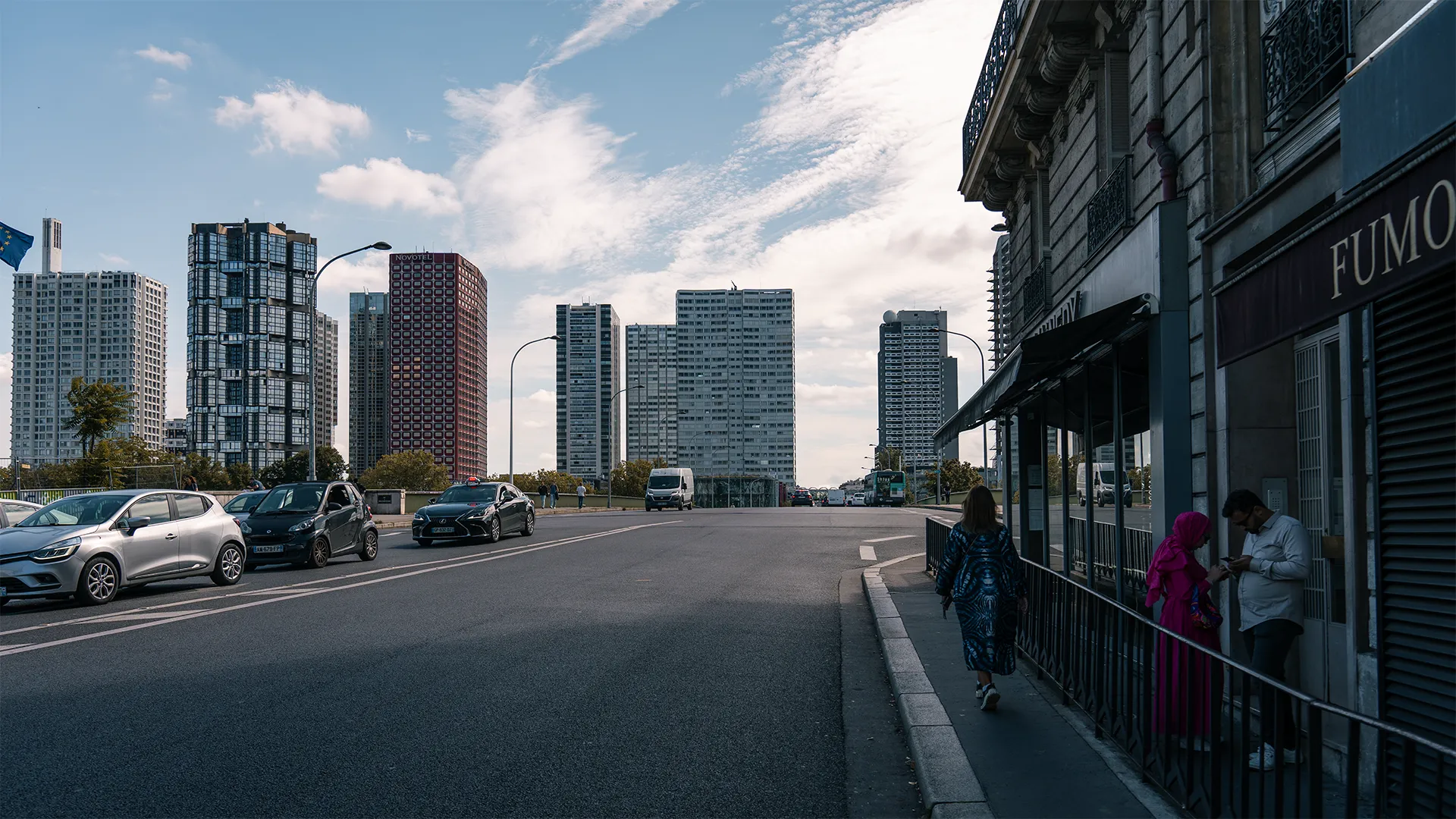

Stretching gracefully across the Seine, the Pont de Grenelle-Cadets-de-Saumur connects Paris’s 15th and 16th arrondissements while offering more than just a means of transport. As the third bridge to occupy this site, built between 1966 and 1968, it replaced two previous structures, each with their own unique stories.
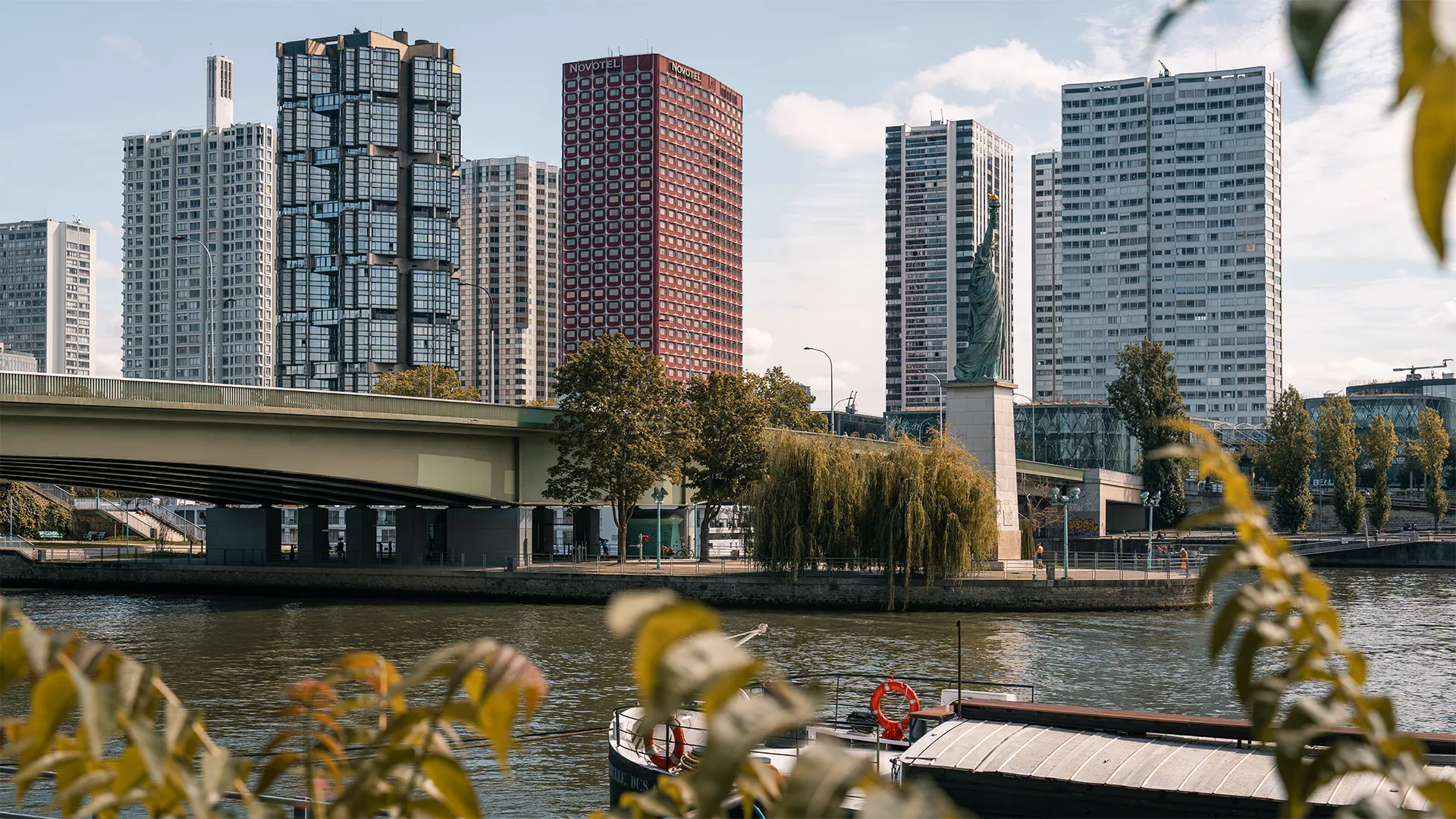
Today, this steel-and-concrete marvel stands out not only for its impressive length of 220 meters but also for the iconic replica of the Statue of Liberty that sits on the Île aux Cygnes beneath it, a symbol of the enduring Franco-American friendship.
Three Bridges, One Iconic Site
The history of the Pont de Grenelle begins in 1827 with a wooden toll bridge, complete with six arches, which unfortunately proved too fragile to handle the growing traffic demands.
After its collapse in 1873, the city replaced it with an iron bridge the following year. This second bridge survived until the mid-20th century but eventually gave way to the modern structure we see today, designed by the architects Chauvel, Creuzot, and Jabouille, alongside engineers Thenault, Grattesat, and Pilon.
The current bridge, with two 85-meter-long spans and a 20-meter section crossing Île aux Cygnes, exemplifies the resilience and functionality of post-war engineering.
The Statue of Liberty’s Parisian Home
At the southern tip of Île aux Cygnes, directly beneath the Pont de Grenelle, stands a smaller but no less significant replica of the Statue of Liberty, created by Frédéric Auguste Bartholdi. This bronze figure, standing at 9 meters tall, was gifted to Paris by American expatriates in 1885 to commemorate U.S. Independence Day.
Initially facing the city, it was reoriented in 1937 to look toward the United States, fulfilling Bartholdi’s original vision. Today, it remains a beloved symbol, offering a striking view as you cross the bridge.
The Bridge in Art and Popular Culture
Pont de Grenelle has not only inspired engineers and architects but artists as well. Painters like Paul Gauguin and Henri Rousseau immortalized the bridge in their works, capturing its elegance against the backdrop of the Seine.
In more recent times, the bridge has appeared in films such as Charlie Chaplin’s Monsieur Verdoux and Roman Polanski’s Frantic, embedding it in the world of cinema. Despite its utilitarian purpose, Pont de Grenelle continues to evoke a sense of beauty and history in the Parisian landscape.