


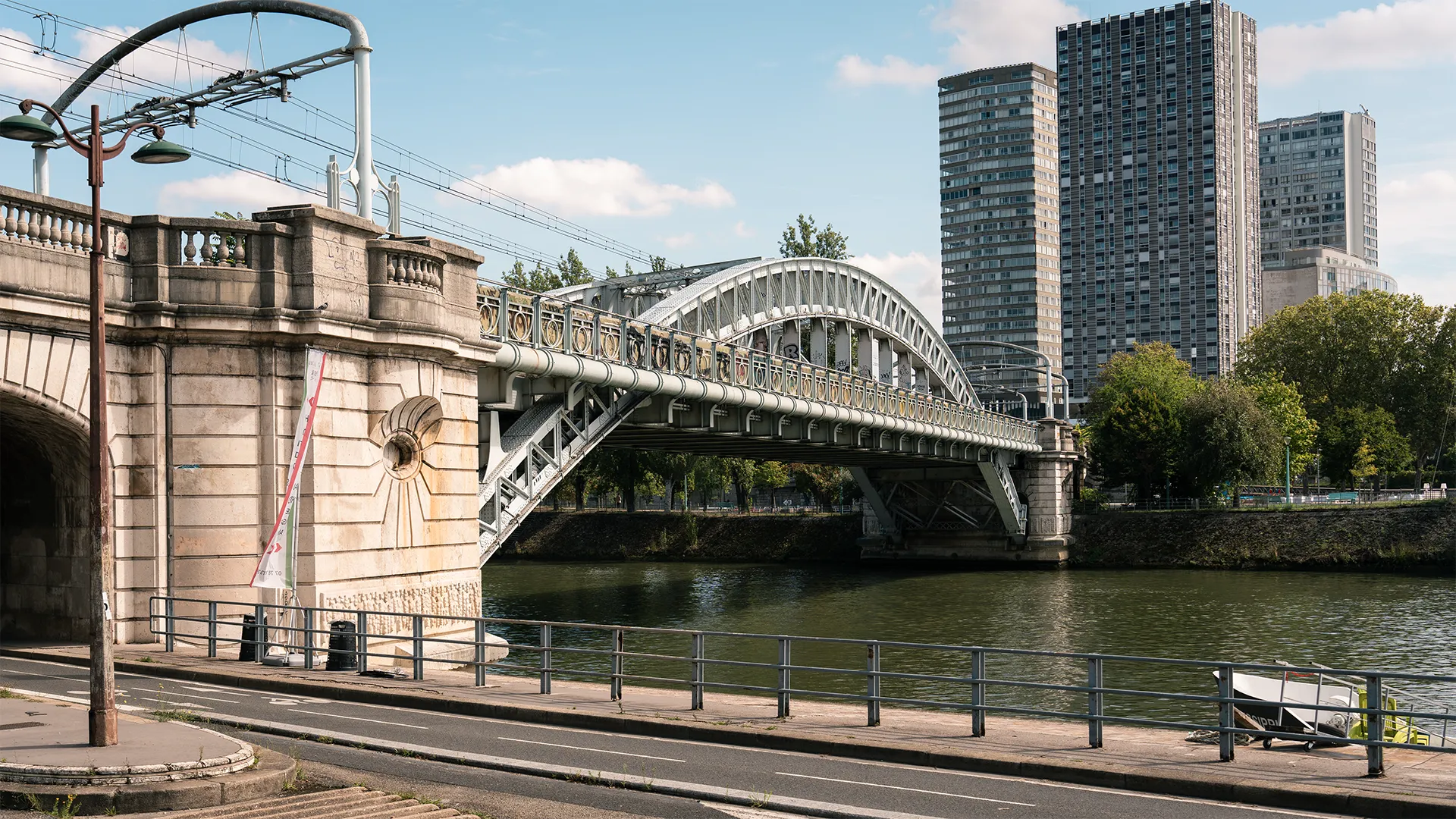
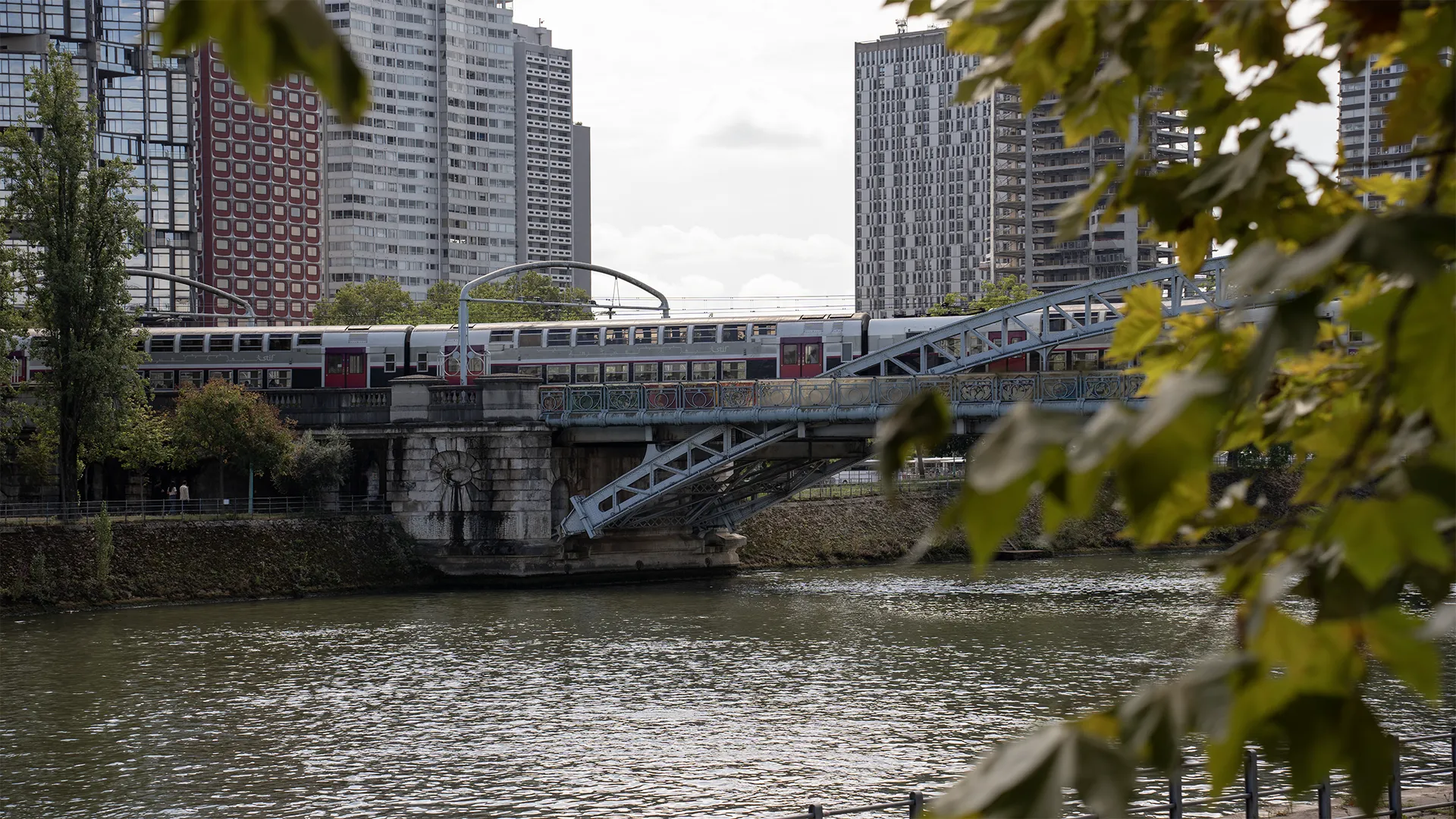
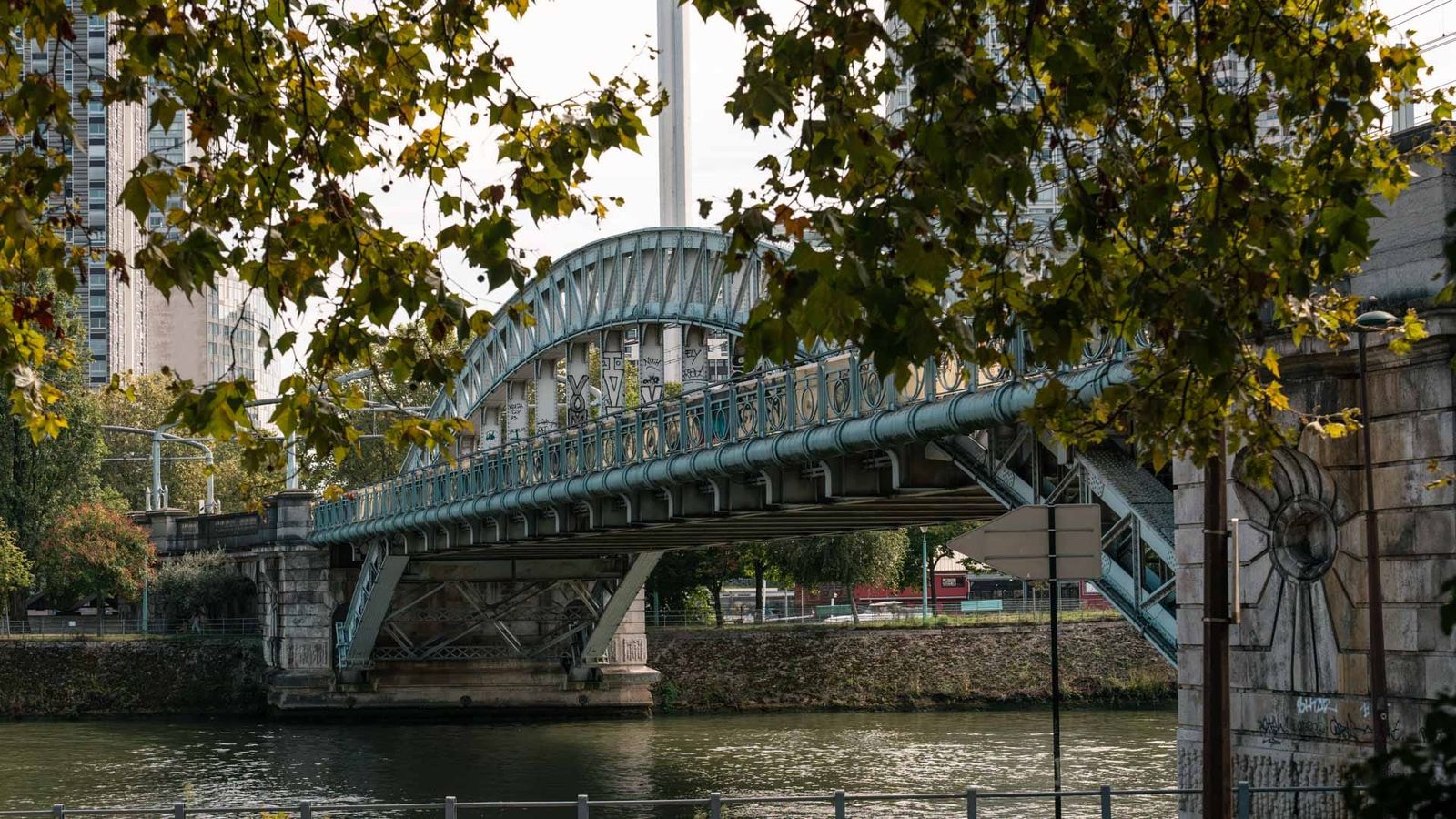
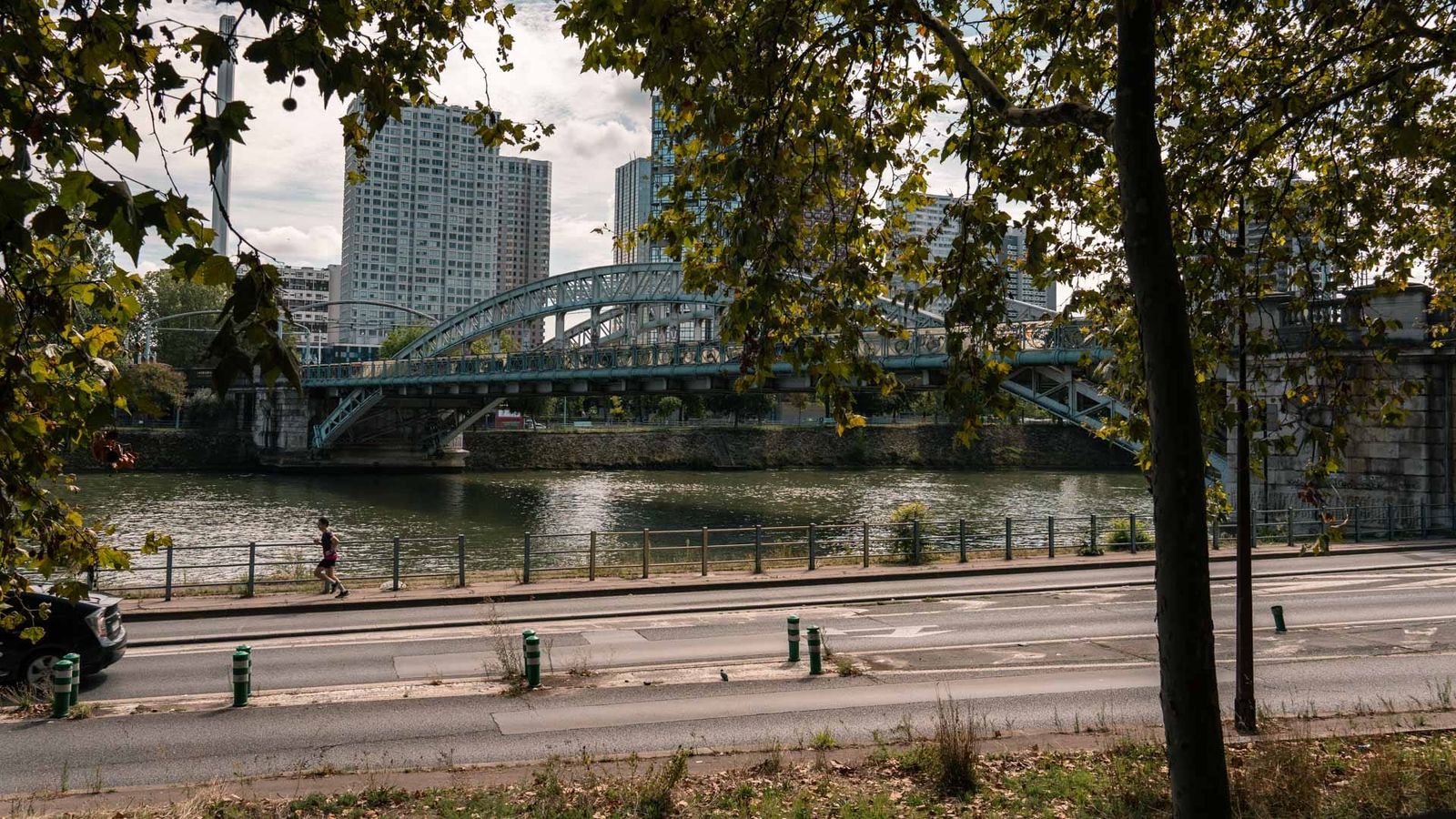
Nestled between the 15th and 16th arrondissements of Paris, the Pont Rouelle spans the Seine River, gracefully connecting the vibrant Île aux Cygnes. This exclusively railway bridge not only serves as a vital transportation link for the C branch of the RER but also stands as a testament to the city’s architectural heritage, echoing the ambitions of the Belle Époque.
A Historical Landmark
The construction of the Pont Rouelle began in November 1899 and was completed in March 1900, just in time for the Universal Exposition of that year. The bridge was designed by architect A. Bonnet, with engineering expertise provided by Moïse and Widmer. Opened to rail traffic on April 12, 1900, the bridge welcomed over eight million visitors during the exposition, showcasing the city’s innovative spirit. Despite its initial success, the bridge’s use as a passenger route dwindled, leading to its closure for passenger trains in 1924, while freight services continued until 1936.
Architectural Marvel
The Pont Rouelle is an architectural gem comprising several distinct sections. The main span features a large arch, measuring 85.7 meters, allowing ample clearance for river traffic. On the Île aux Cygnes, a smaller masonry arch accommodates pedestrian movement, while the approach to the left bank includes a viaduct supported by three metal arches, varying from 28 to 38 meters. With a total length of approximately 370 meters, the bridge exemplifies the engineering prowess of its time.
Legacy of the Exposition Universelle
The Pont Rouelle not only serves a functional role in Paris’s transportation network but also stands as a historical monument that reflects the city’s growth and transformation. Built for the 1900 Universal Exposition, the bridge symbolizes a pivotal moment in Parisian history, linking visitors to the innovations and cultural milestones of the time. Today, while it remains off-limits to pedestrians, the bridge continues to be a crucial element of the city’s railway system, echoing the legacy of the Belle Époque.
Rehabilitation and Modern Use
In the early 1980s, as the SNCF planned to extend the C line of the RER, the Pont Rouelle underwent significant rehabilitation. Inspections revealed corrosion issues, prompting a restoration project from 1984 to 1985, which was undertaken by Eiffel Constructions Métalliques. The restoration preserved the bridge’s historical integrity while reinforcing its structure, allowing it to resume service for passenger trains in 1988.