


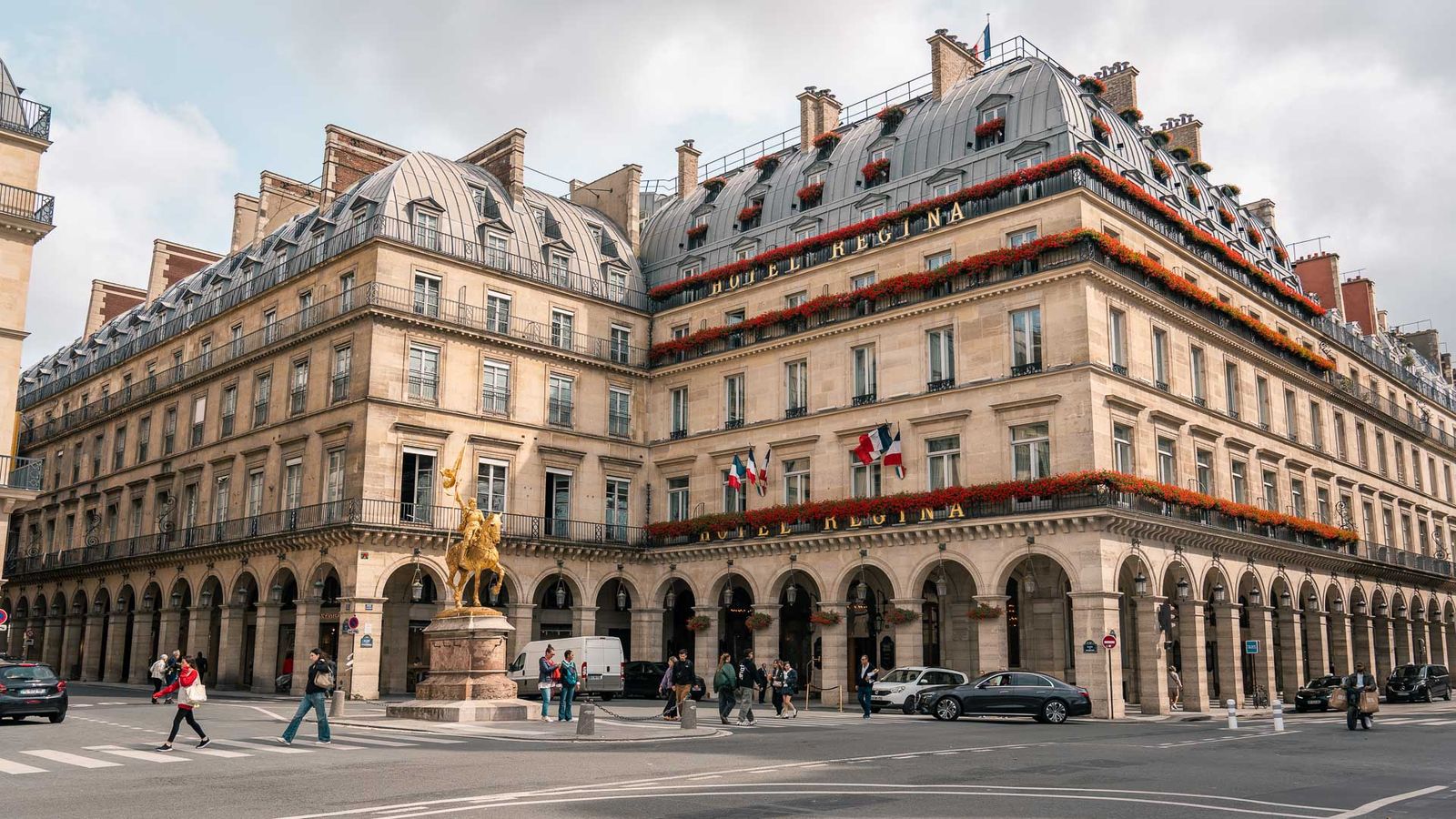

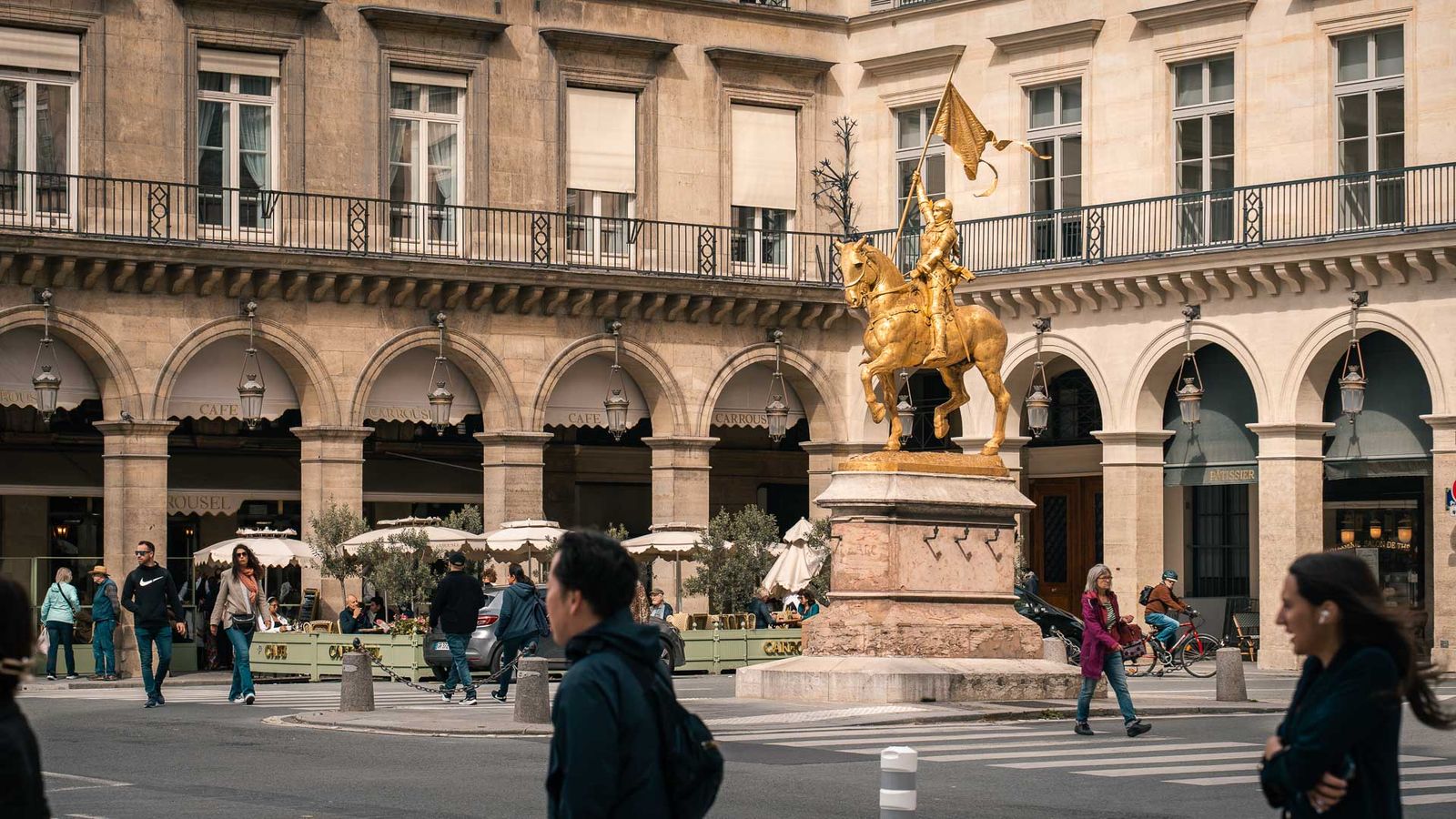
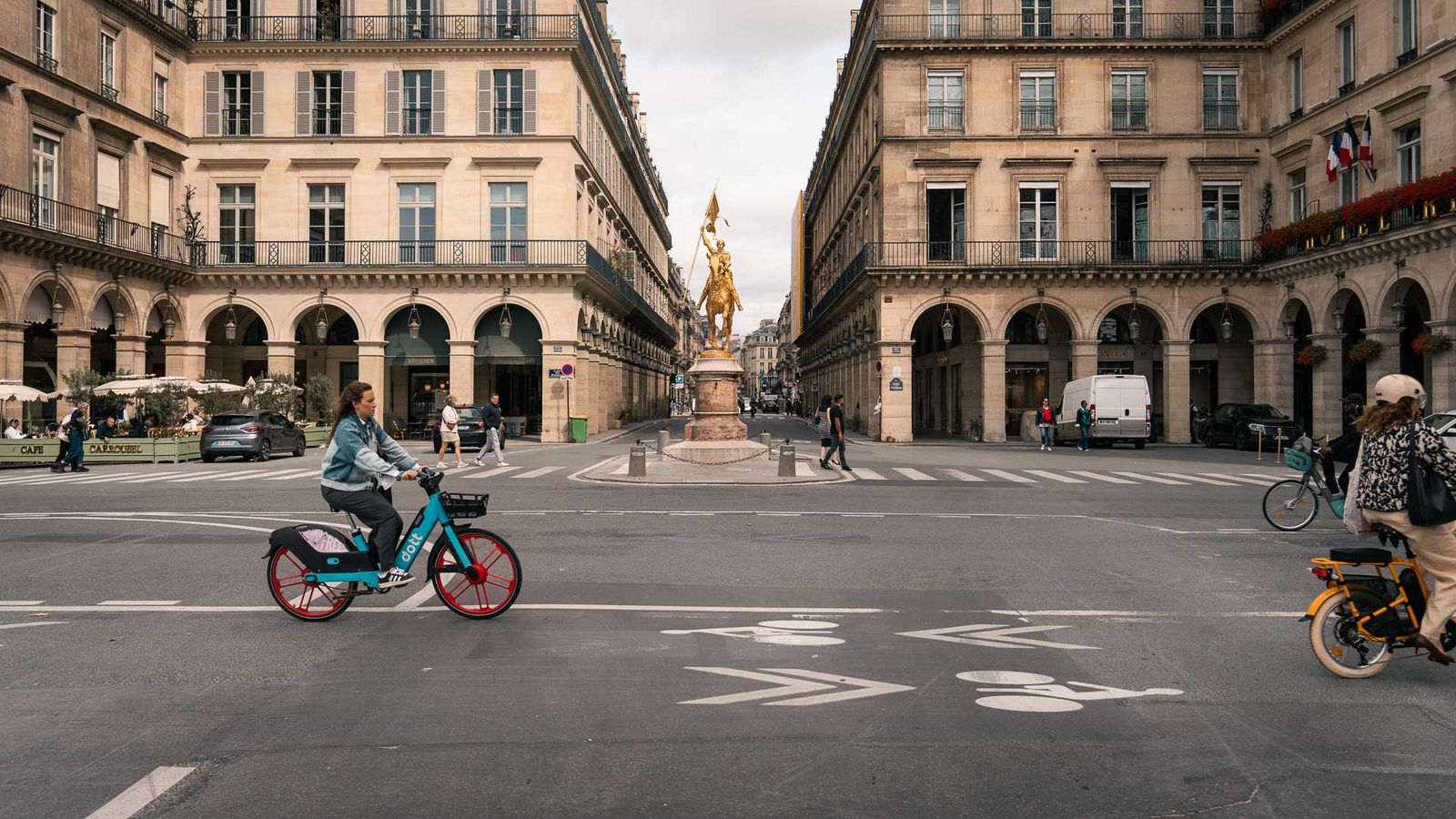
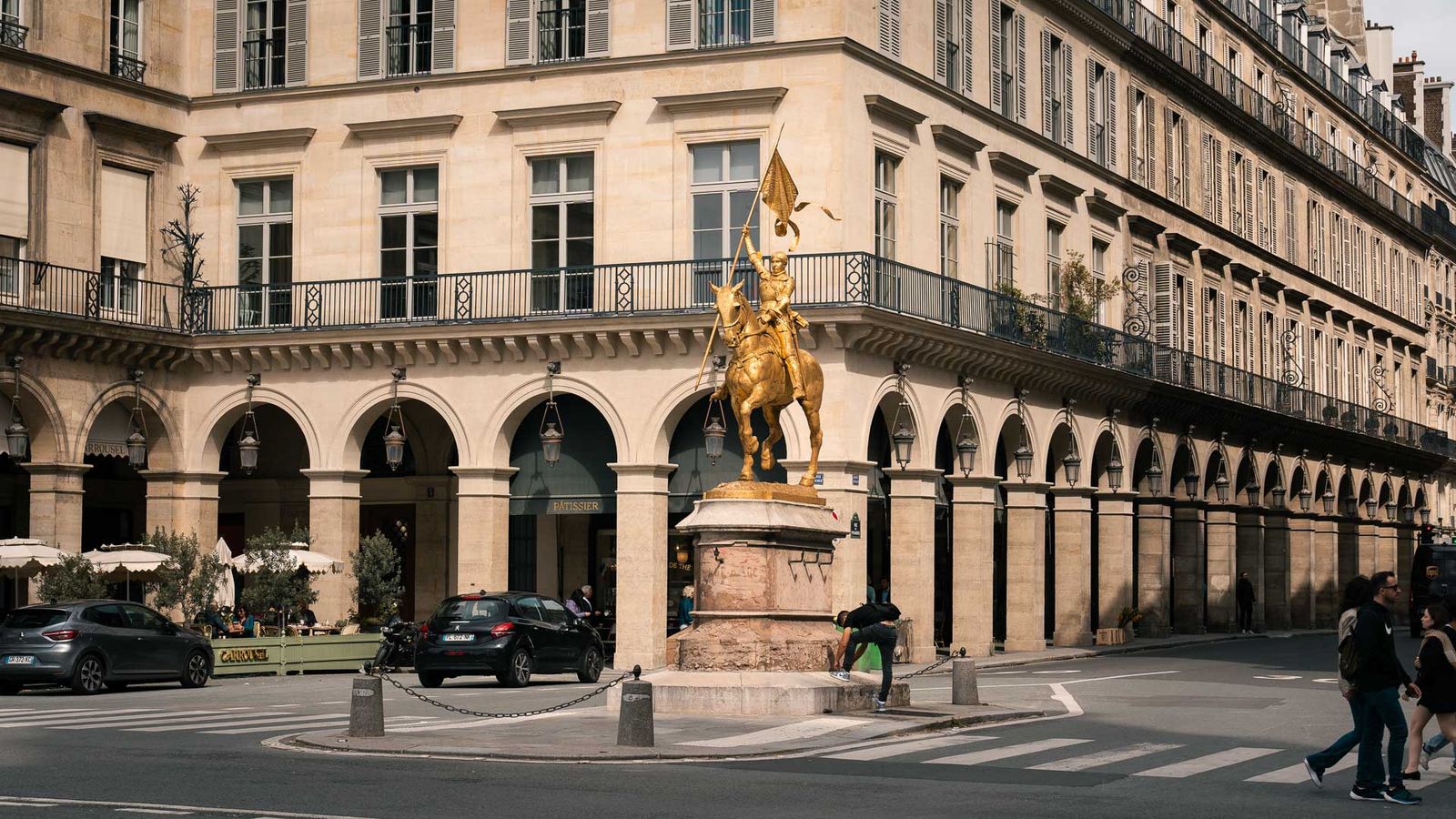
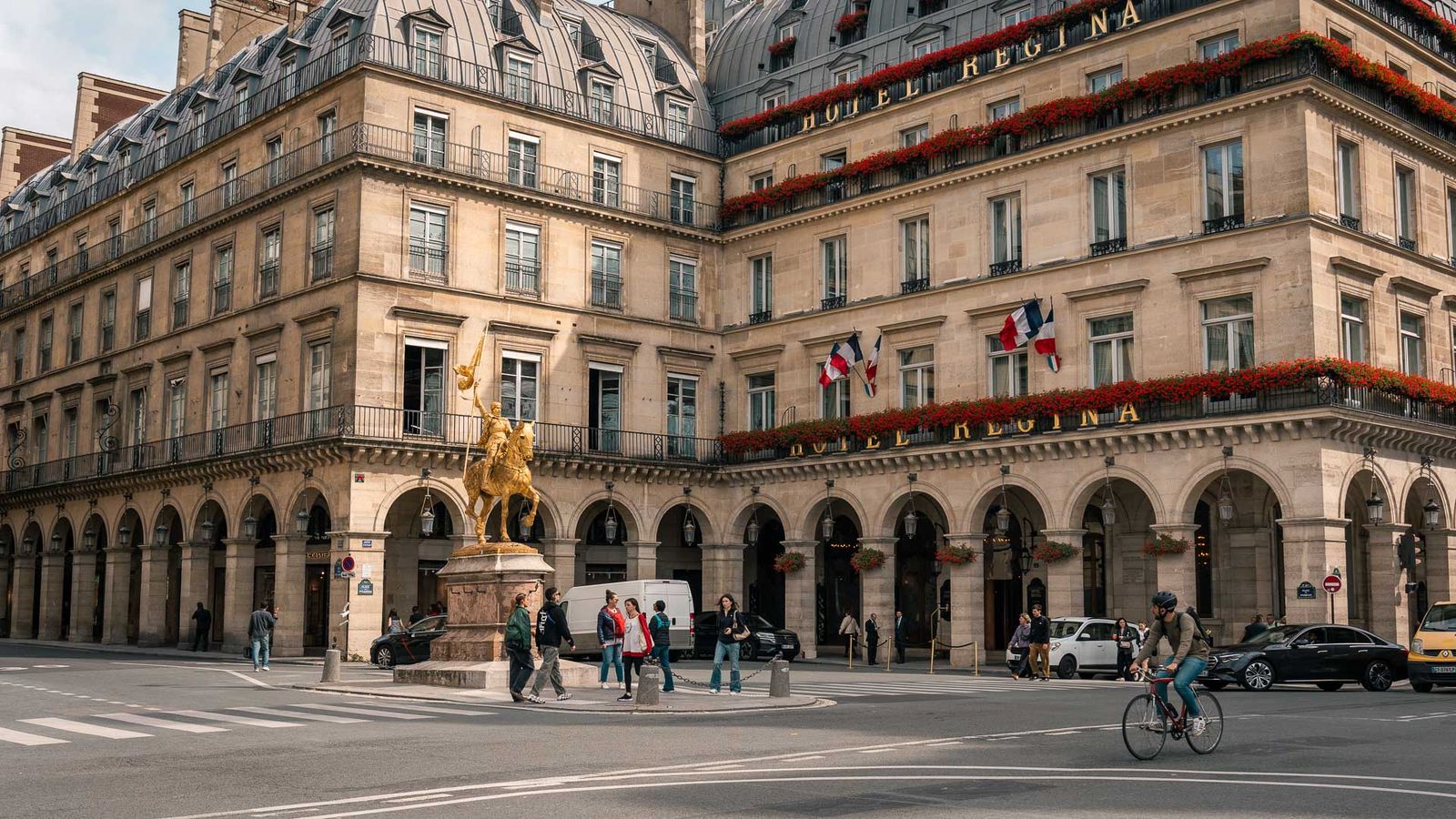
At the heart of the bustling Place des Pyramides in Paris, the gilded bronze equestrian statue of Joan of Arc, created by Emmanuel Frémiet, stands as a powerful symbol of national pride and resilience.
Inaugurated in 1874, this striking monument captures the spirit of France’s beloved heroine, immortalizing her role in the nation’s tumultuous history.
A Beacon of National Identity
Commissioned by the French government following the crushing defeat in the Franco-Prussian War of 1870, the statue of Joan of Arc is a singular public commission from the state during what is often called the Golden Age of statuary in Paris (1870-1914).
In a time when many works were funded through private subscriptions, this equestrian statue was intended to restore hope and national pride, reflecting a desire to draw parallels between Joan’s struggle against the English in the 15th century and France’s contemporary fight against the Prussian invaders.
The statue is meticulously crafted, depicting Joan bareheaded and armored, resolutely riding a powerful horse while brandishing her banner with determination. Frémiet based his model on Aimée Girod, a young woman from Domrémy—the same village where Joan was born, adding a poignant connection to the piece.
The elegant design features soft contours beneath the armor, a representation of the feminine virtues of grace and purity often associated with Joan, which contrasts with her martial stature.
A Controversial Legacy
Upon its unveiling, the statue received mixed reviews, with critics noting the apparent coldness of its military depiction. In a clever move, Frémiet sought to remedy this perception when, ten years later, he secretly replaced the original horse with a smaller version from his 1889 statue in Nancy.
The substitution occurred during the construction of the Paris Metro, allowing Frémiet to slip in the modified statue under the cover of the works, with a fresh golden patina to disguise the change. This stealthy switch only added to the statue’s rich tapestry of history, intertwining it with the ongoing narrative of Joan of Arc’s legacy.
The monument’s pedestal, designed by architect Paul Abadie, complements the statue, while a protective grille by Gabriel Davioud adds to its elegance. Together, they create a setting that enhances the statue’s visual impact against the backdrop of the Parisian landscape.
A Symbol of Political and Cultural Importance
Throughout the years, the statue has become a focal point for various political movements, particularly on May Day, when the Front National (now Rassemblement National) holds ceremonies in her honor.
This tradition harks back to the late 19th century when far-right leagues began celebrating Joan as a national icon. The statue has even made appearances in contemporary media, serving as a backdrop in Bertrand Bonello’s film Nocturama and a setting for productions like the opera La Traviata at the Opéra Garnier.
In recognition of its historical significance, the Joan of Arc statue was classified as a historic monument on March 31, 1992. Today, it stands not only as a remarkable work of art but also as a testament to the enduring fascination with Joan of Arc—a symbol of courage, faith, and unwavering resolve.