


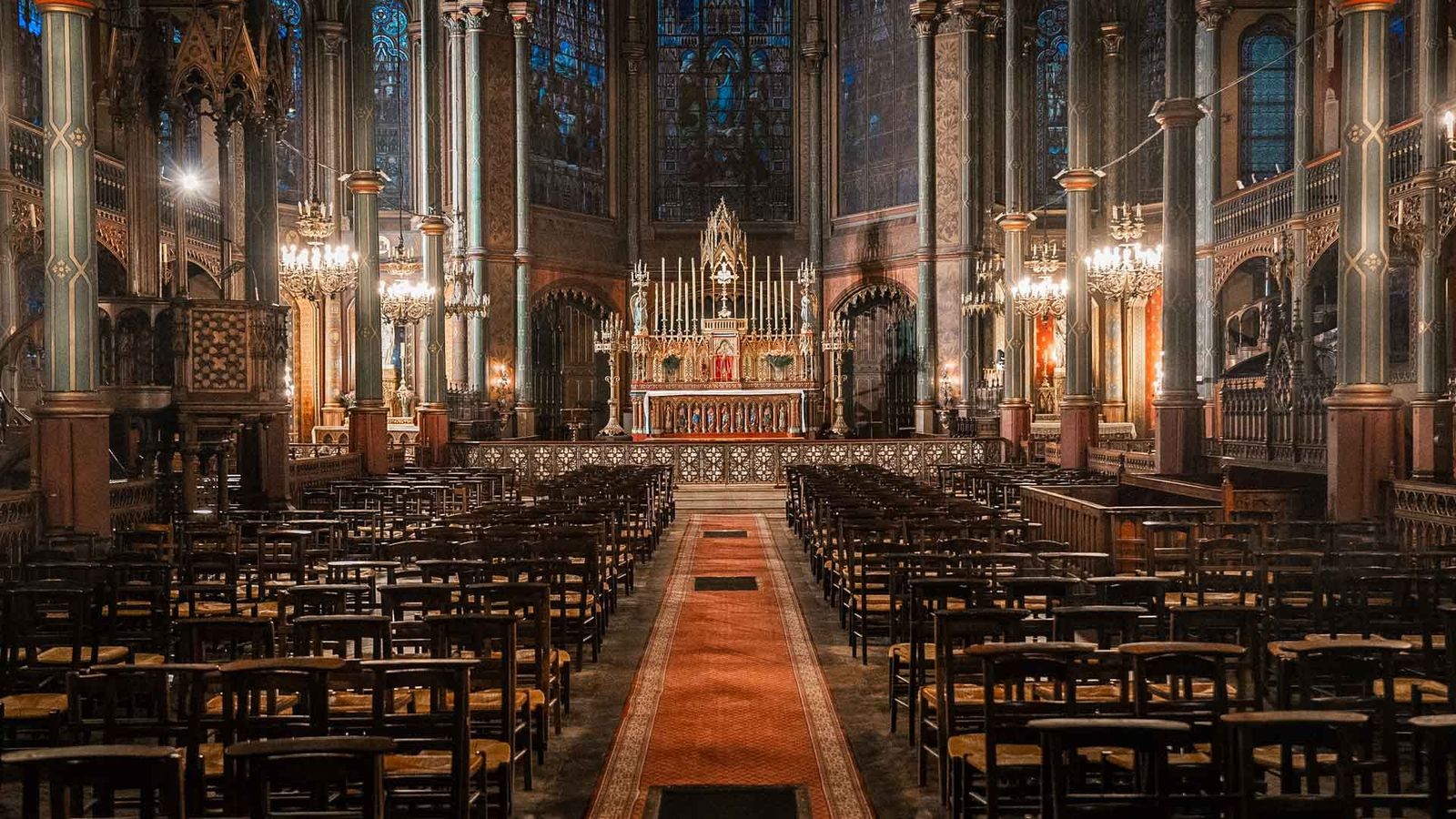
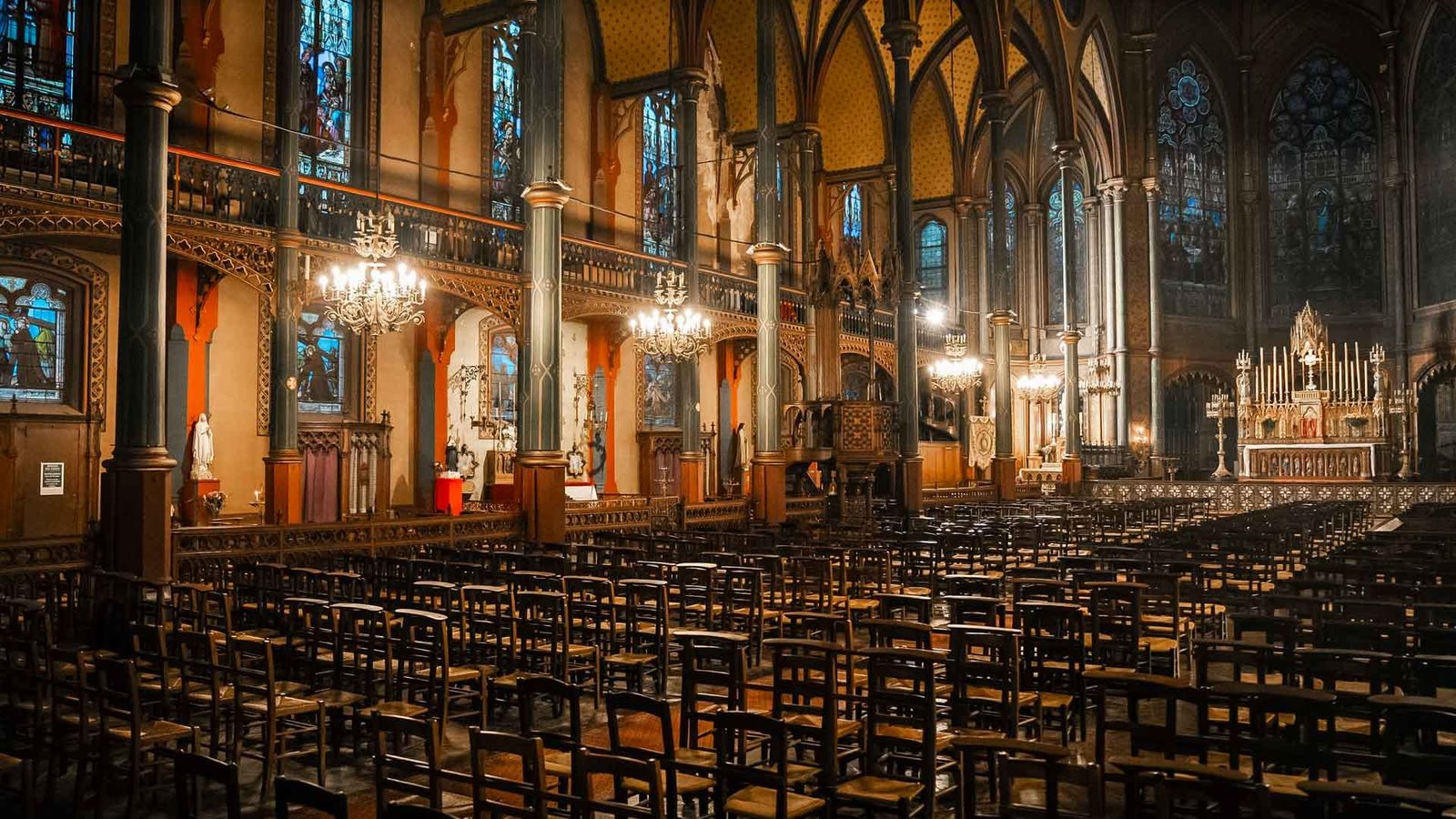





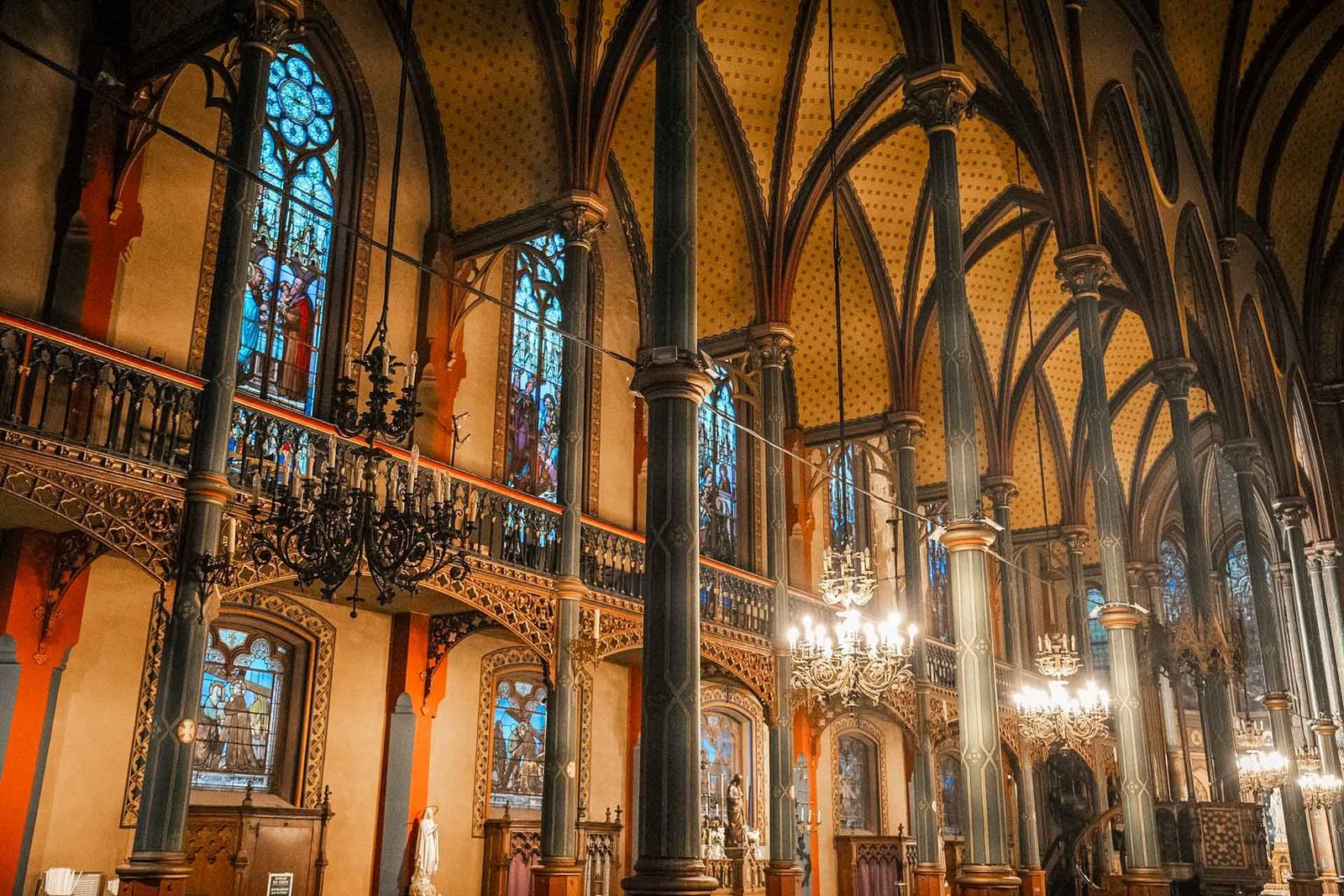

Saint-Eugène Sainte-Cécile Church stands as a remarkable example of 19th-century Neo-Gothic architecture with its innovative iron framework. Its vibrant interior, rich history, and significant role in the Parisian Catholic community make it a vital part of the city’s religious and cultural heritage.
Location and Overview
Saint-Eugène Sainte-Cécile Church, commonly referred to as Saint-Eugène, is a Roman Catholic church situated in the 9th arrondissement of Paris. The church has been classified as a historical monument since March 21, 1983. It is notable for its daily celebration of Mass in both forms of the Roman Rite.
Historical Background
The church was constructed between 1854 and 1856 at the behest of Napoleon III, in memory of his uncle Eugène de Beauharnais. The architects Louis-Auguste Boileau and Adrien-Louis Lusson designed the church, which was completed in just twenty months on the site of the former Hôtel des Menus-Plaisirs. The parish priest, Abbé Coquant, who was an art enthusiast and historian, heavily influenced the architectural design. He also financed the construction, owning the land himself.
On January 10, 1857, the famous author Jules Verne married Honorine Viane in this church. The total cost of construction was approximately 500,000 francs, significantly lower than other contemporary church constructions due to the innovative use of iron framing.
The Dual Dedication
Originally dedicated solely to Saint Eugène, a companion of Saint Denis who was martyred in the 3rd century, the church received a second dedication to Saint Cecilia, the patron saint of musicians, in 1952. This was due to its proximity to the Paris Conservatory of Music and Declamation.
Architectural Details
Exterior
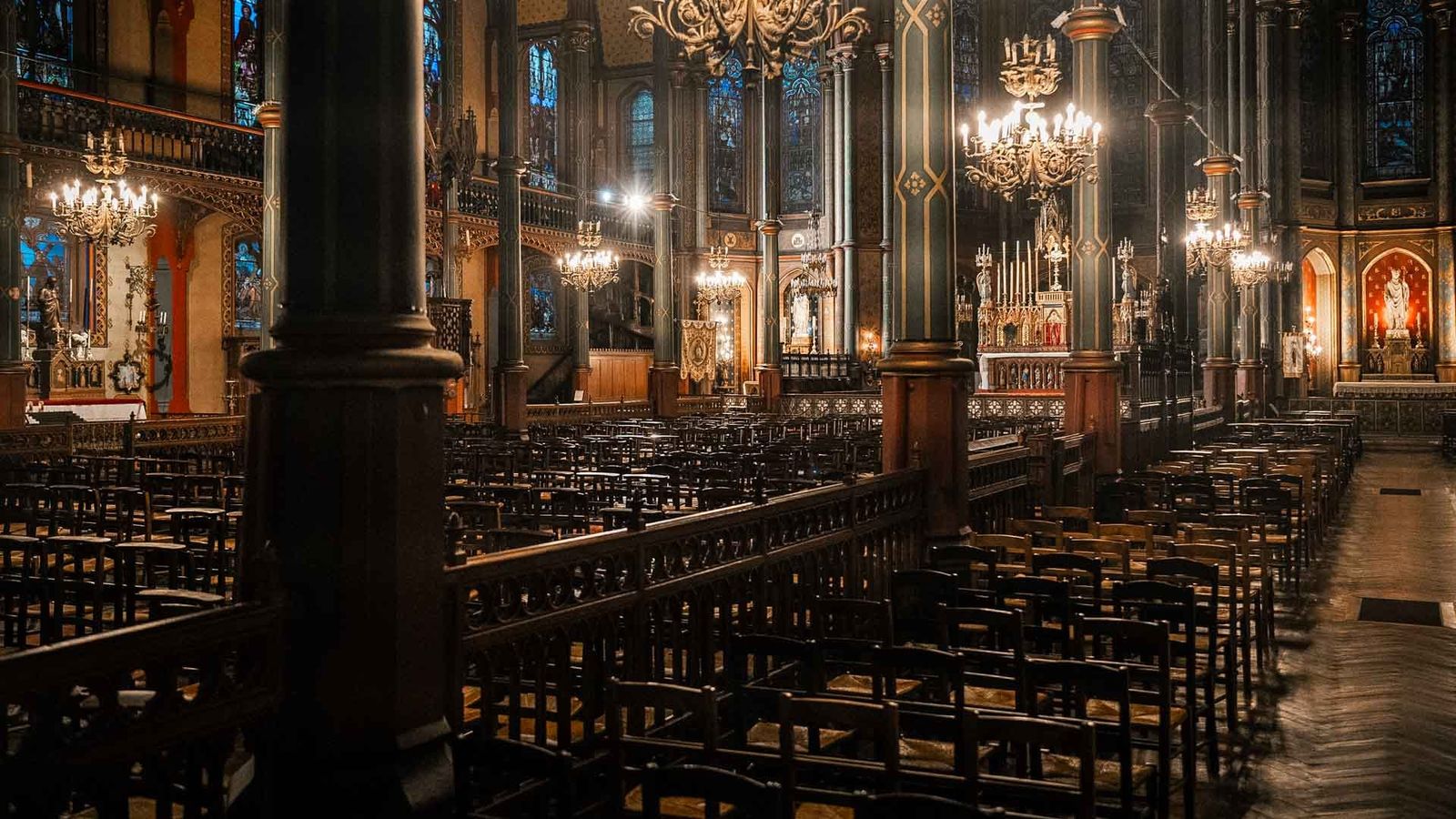
The façade of Saint-Eugène Sainte-Cécile is a pastiche of 13th-century architecture, but the interior represents a Neo-Gothic style with a metal framework, a pioneering approach in church construction at the time. This method, inspired by the rationalist theories of Eugène Viollet-le-Duc, allowed for significant cost and time savings. Despite Viollet-le-Duc’s criticism of the church as an “architectural lie,” it stands as the first church in Paris with an entirely iron structure.
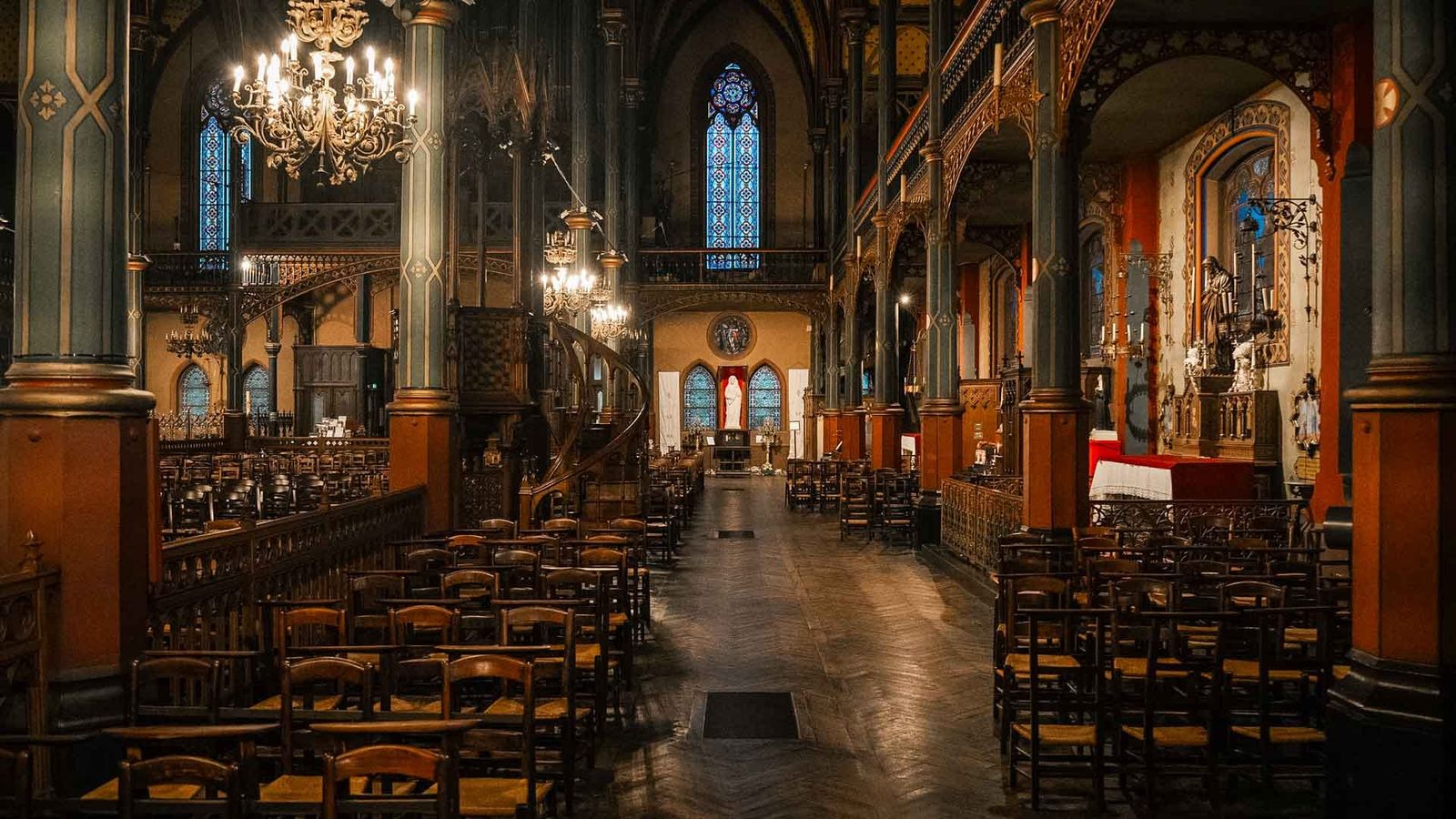
The church lacks a transept, and its side chapels provide the necessary support for the ribbed vaults of the nave and aisles. This design eliminates the need for flying buttresses, maximizing the use of the limited space.
Interior
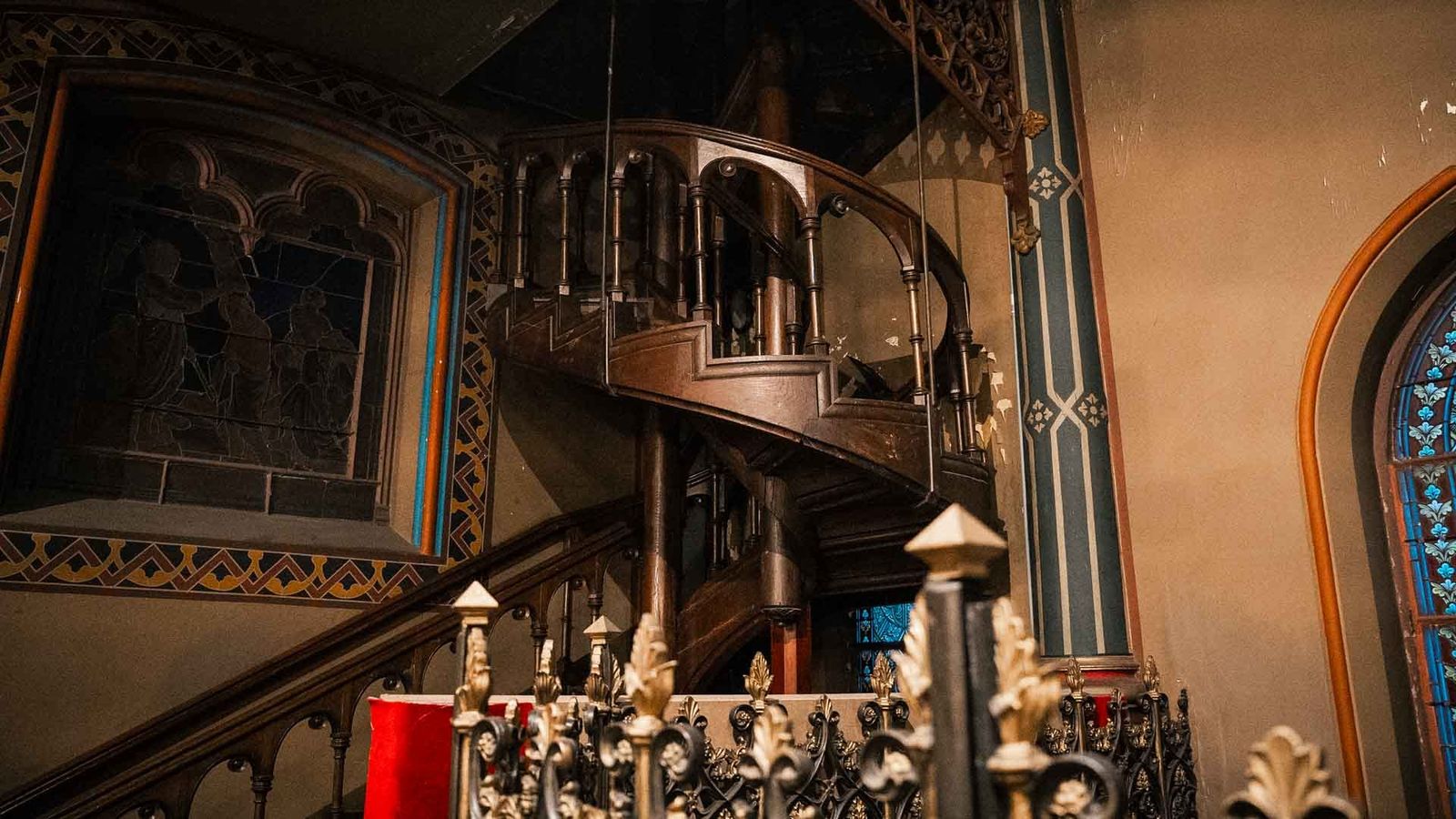
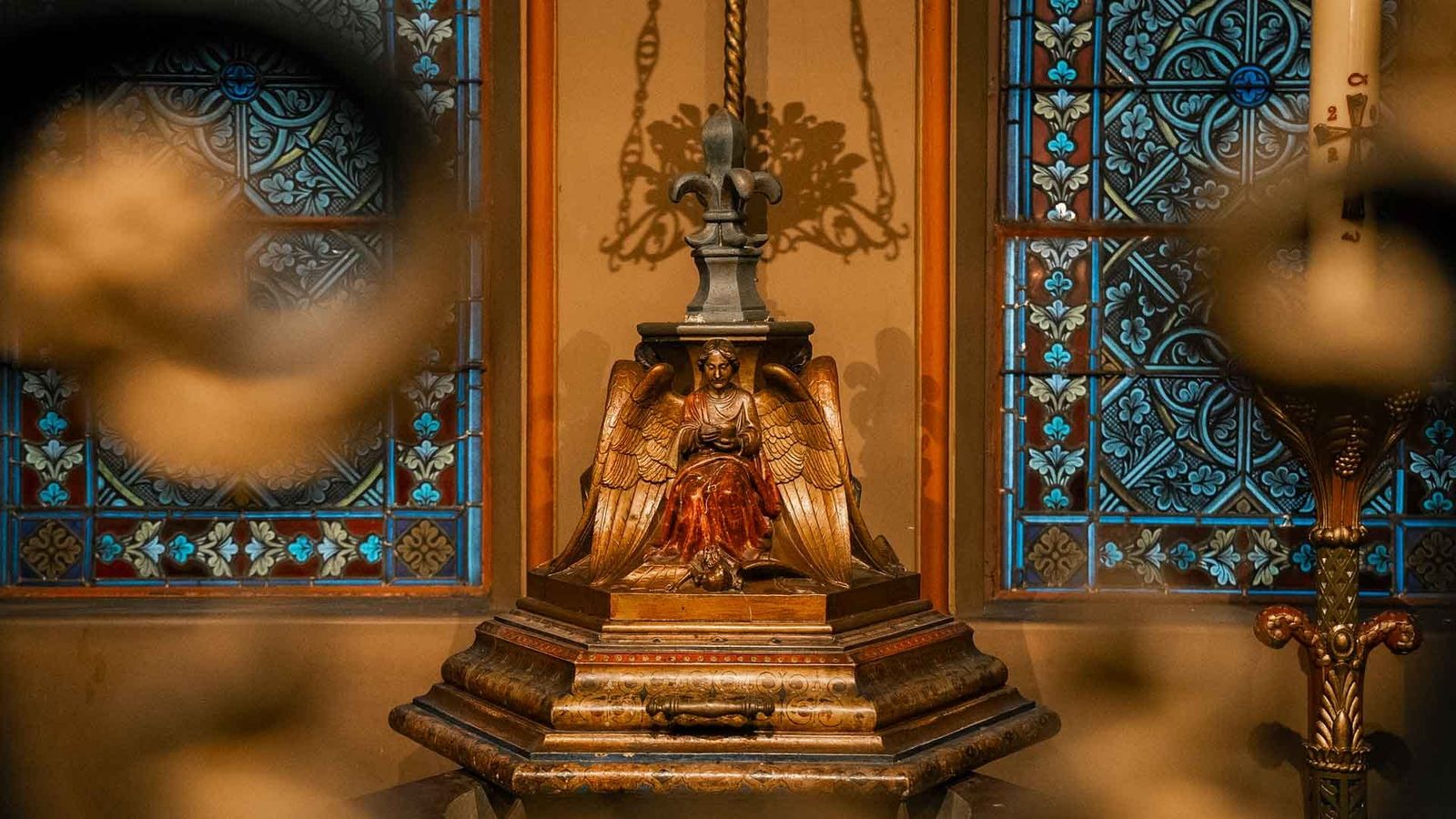
The interior of Saint-Eugène Sainte-Cécile is vibrant and filled with light, thanks to its 48 stained glass windows created by master glassmakers such as Laurent and Gaspard Gsell, Antoine Lusson, Eugène Oudinot, and Pierre Petit-Gérard. The nave is lined with slender cast-iron columns painted in vivid colors, creating a striking visual effect. The decorative vaults, supported by the iron frame, feature intricate designs that enhance the church’s acoustics and visual appeal.
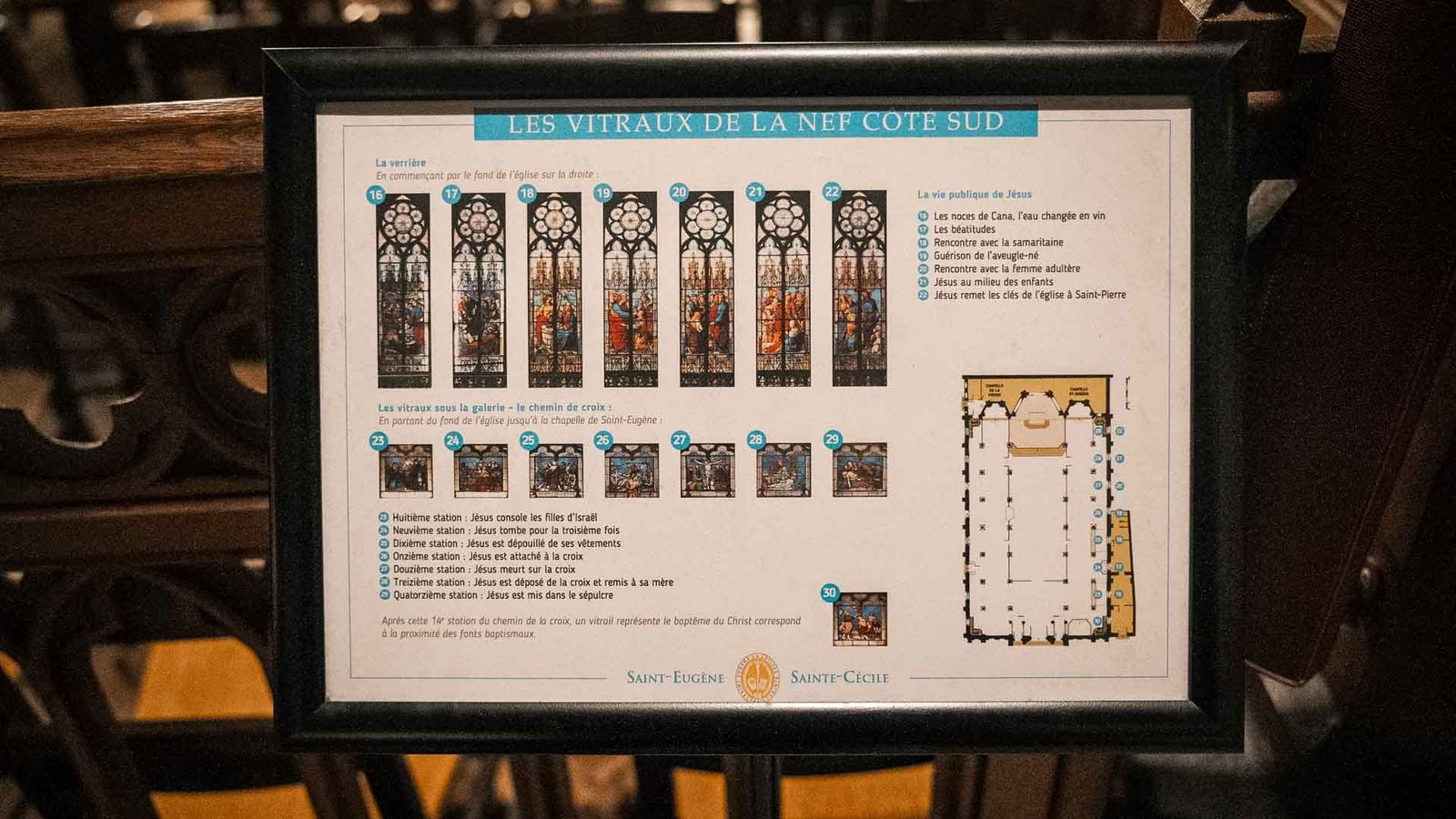
The church’s furniture and artwork include a grand oak organ case, a light and elegant pulpit, and intricately carved wooden confessionals and choir stalls. The lower windows depict the Stations of the Cross, while the upper windows illustrate scenes from the life of Christ.
Organ
The grand pipe organ, built by Joseph Merklin and Friedrich Schütze, was initially exhibited at the 1855 Exposition Universelle in Paris before being installed in the church. The organ has been restored multiple times, most recently by Olaf Dalsbaek in 1995 and 2005. Notable organists include Raoul Pugno (1872-1892) and Pierre Pincemaille (1982-1987).
Liturgical Practices
Saint-Eugène Sainte-Cécile is known for its biritualism, celebrating Mass in both the post-Vatican II Roman Rite and the traditional Tridentine Rite. The traditional Mass was reintroduced in 1985, and the church hosts a solemn Tridentine Requiem Mass annually on January 21 in memory of Louis XVI, featuring Gregorian chants and baroque music performed by the Schola Sainte Cécile.
Notable Events and Figures
- Jules Verne: Married Honorine Viane in the church on January 10, 1857.
- Theodor Herzl: Visited the church multiple times during his stay in Paris.
- Albert Le Nordez: Gave conferences for Christian women in the 1890s.
- Jean-Pierre Batut: Served as the church’s pastor from 2007 to 2009.
- Raoul Pugno: Served as the church’s organist from 1871 to 1892.
- Pierre Pincemaille: Served as the titular organist between 1982 and 1987.
The church has also hosted funerals for notable figures such as Léon Battu, Louis Clapisson, Camille Corot, and Clairville.