


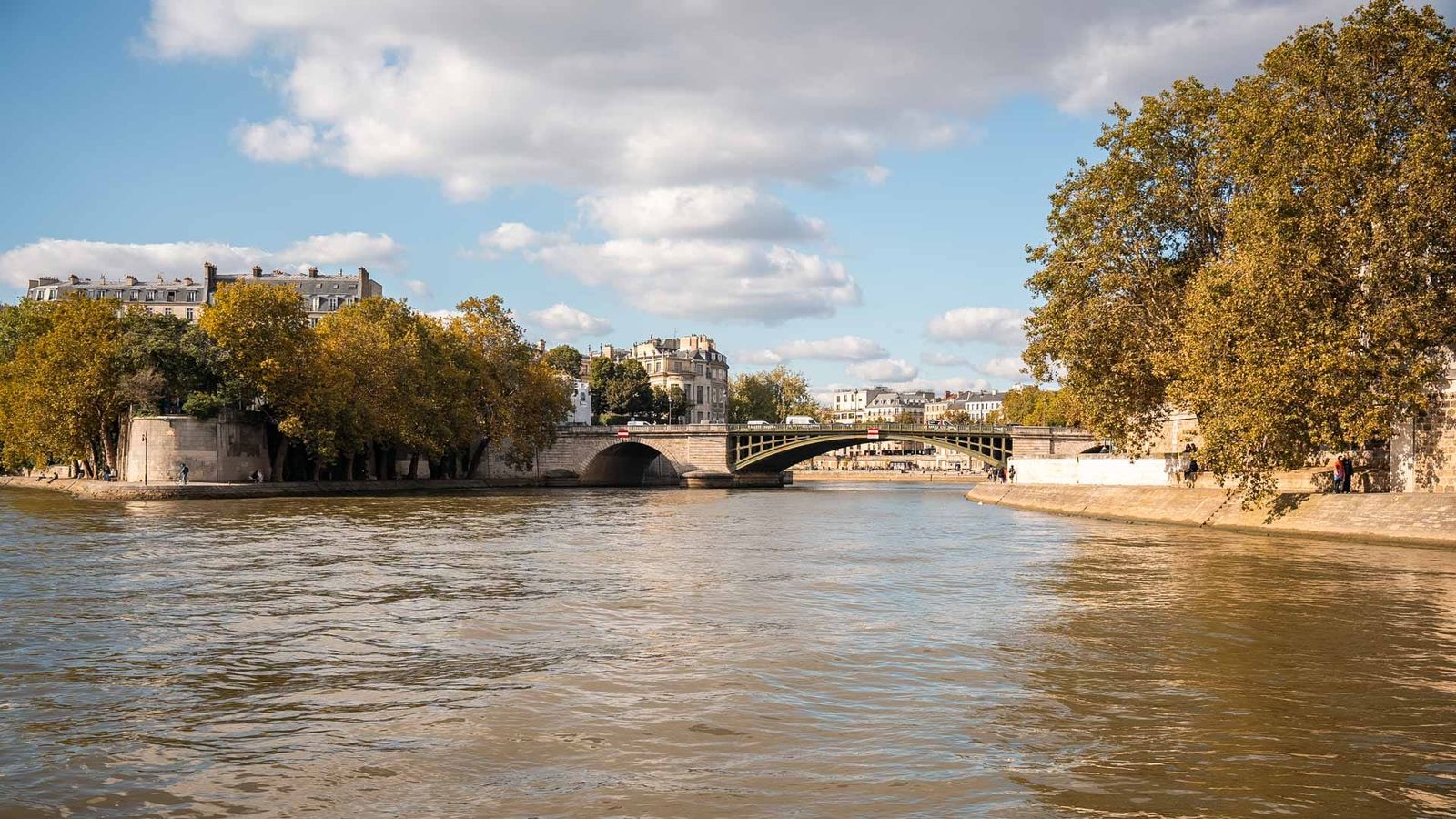
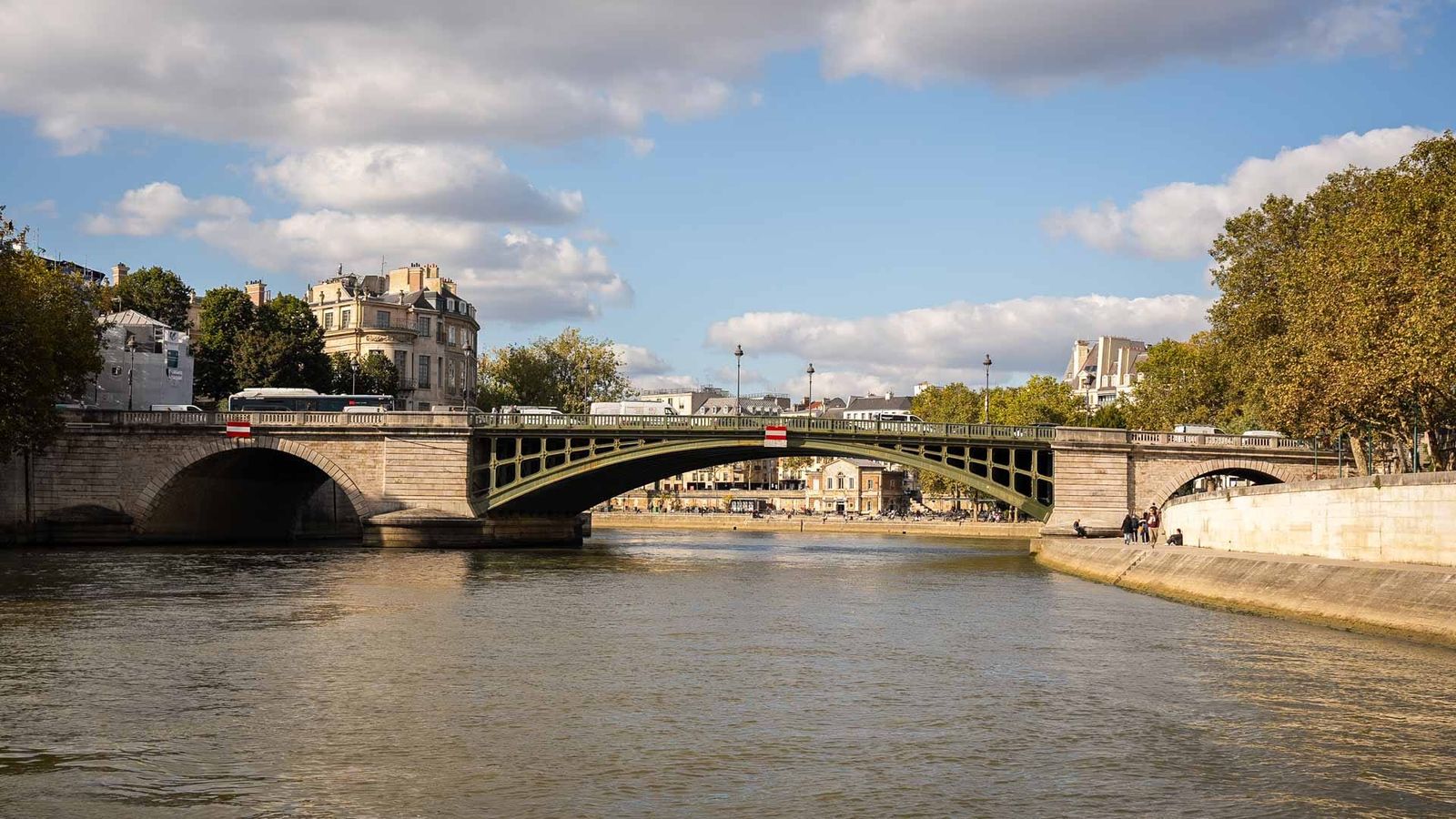


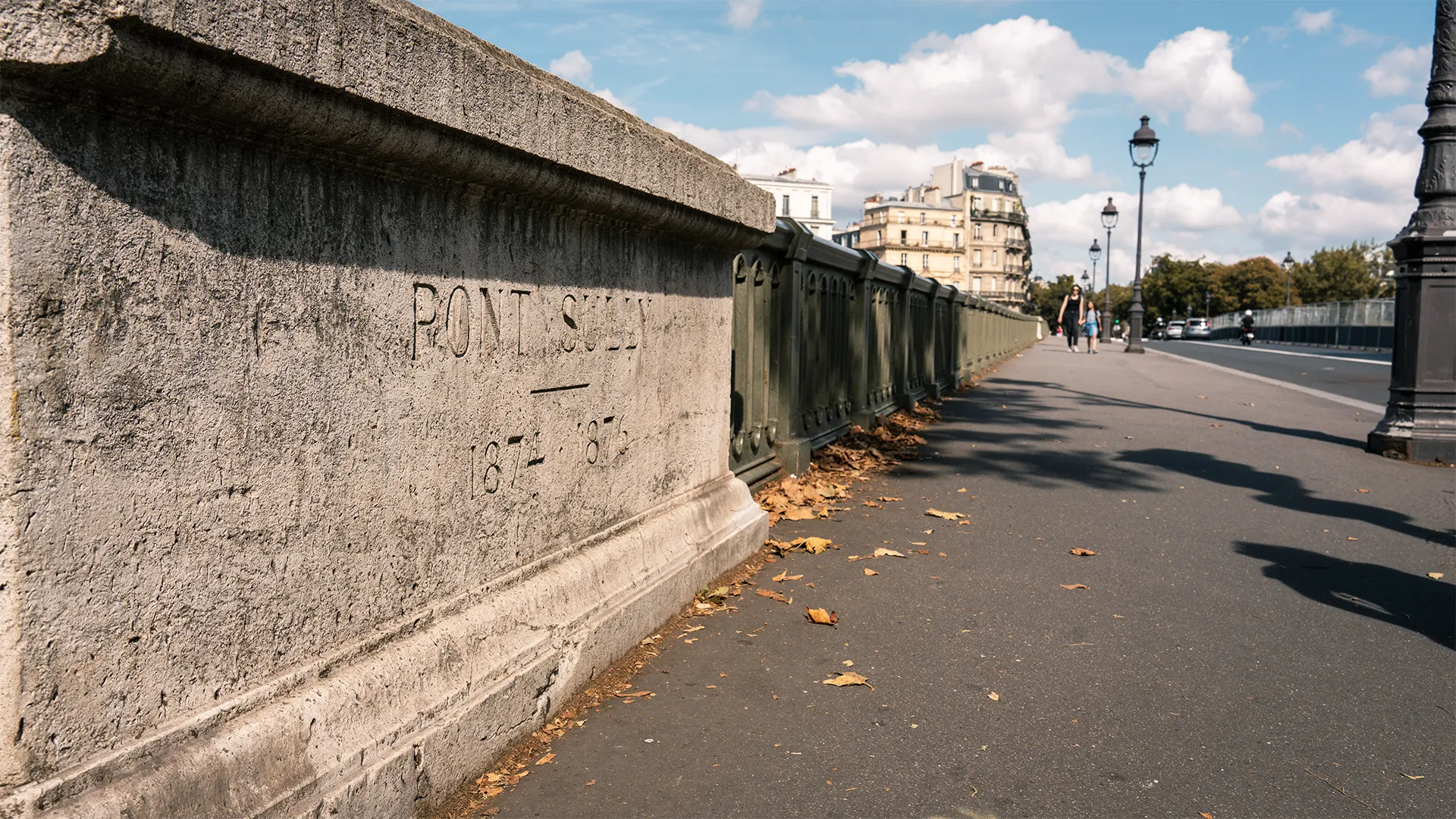
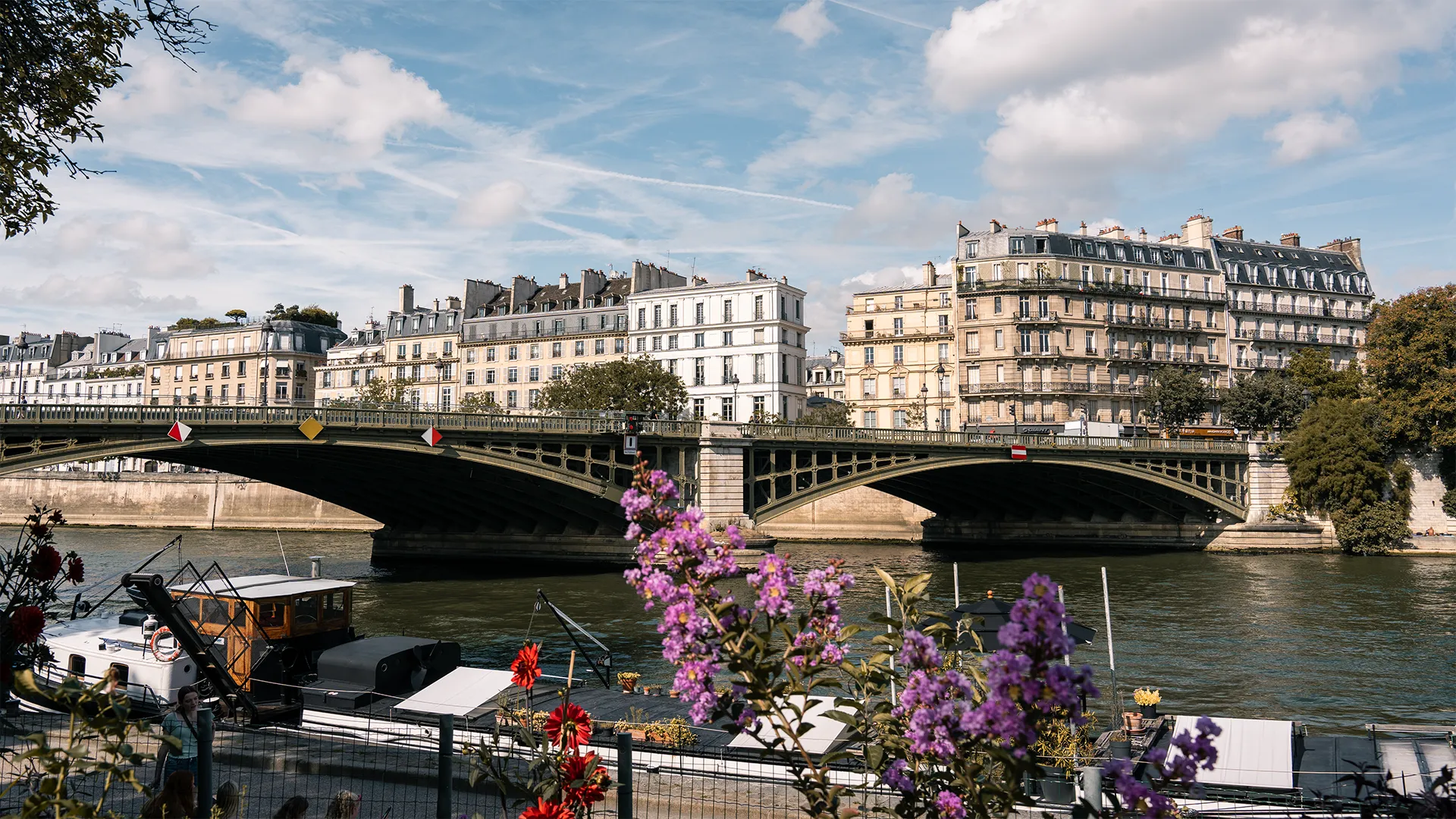
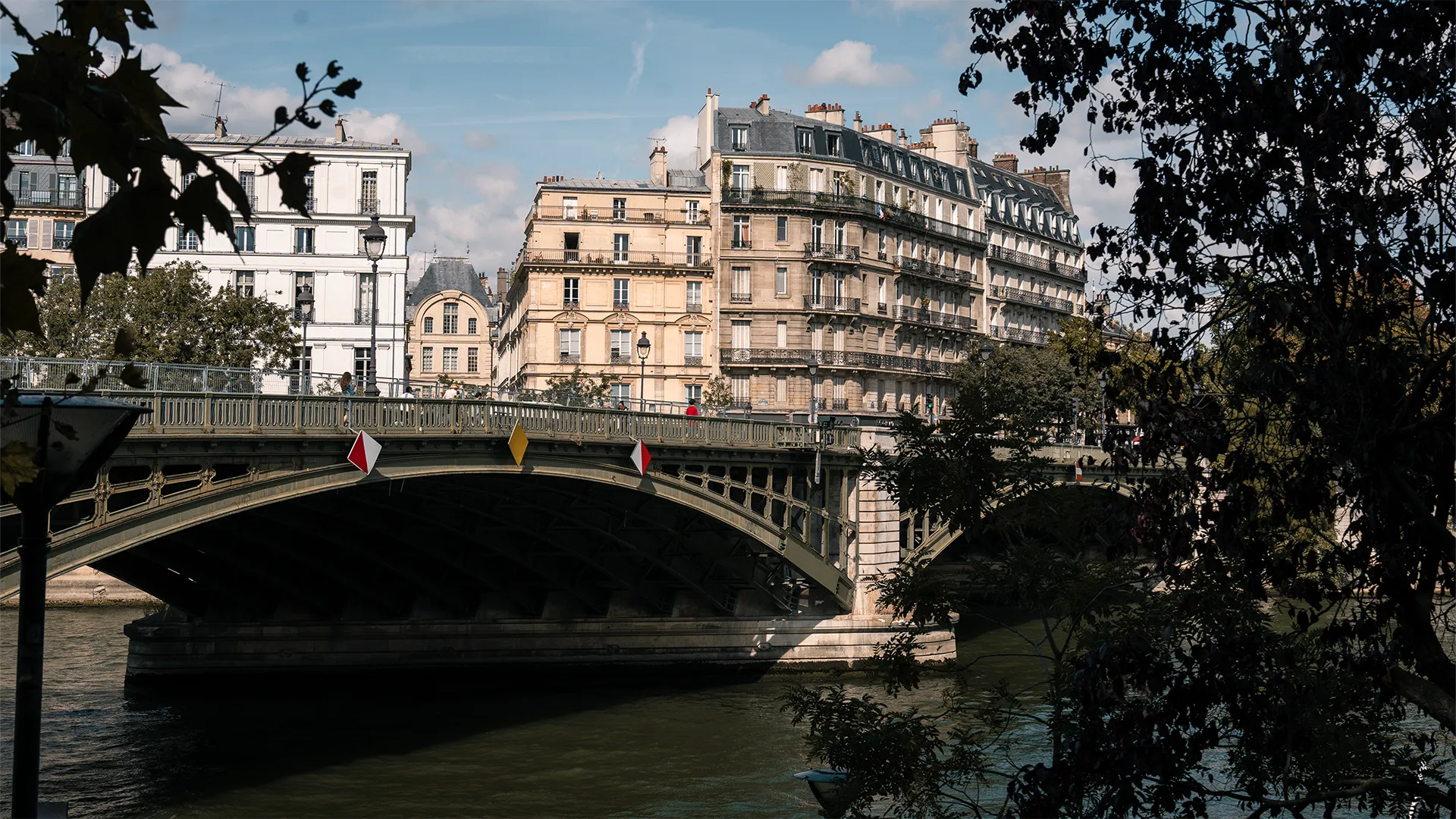
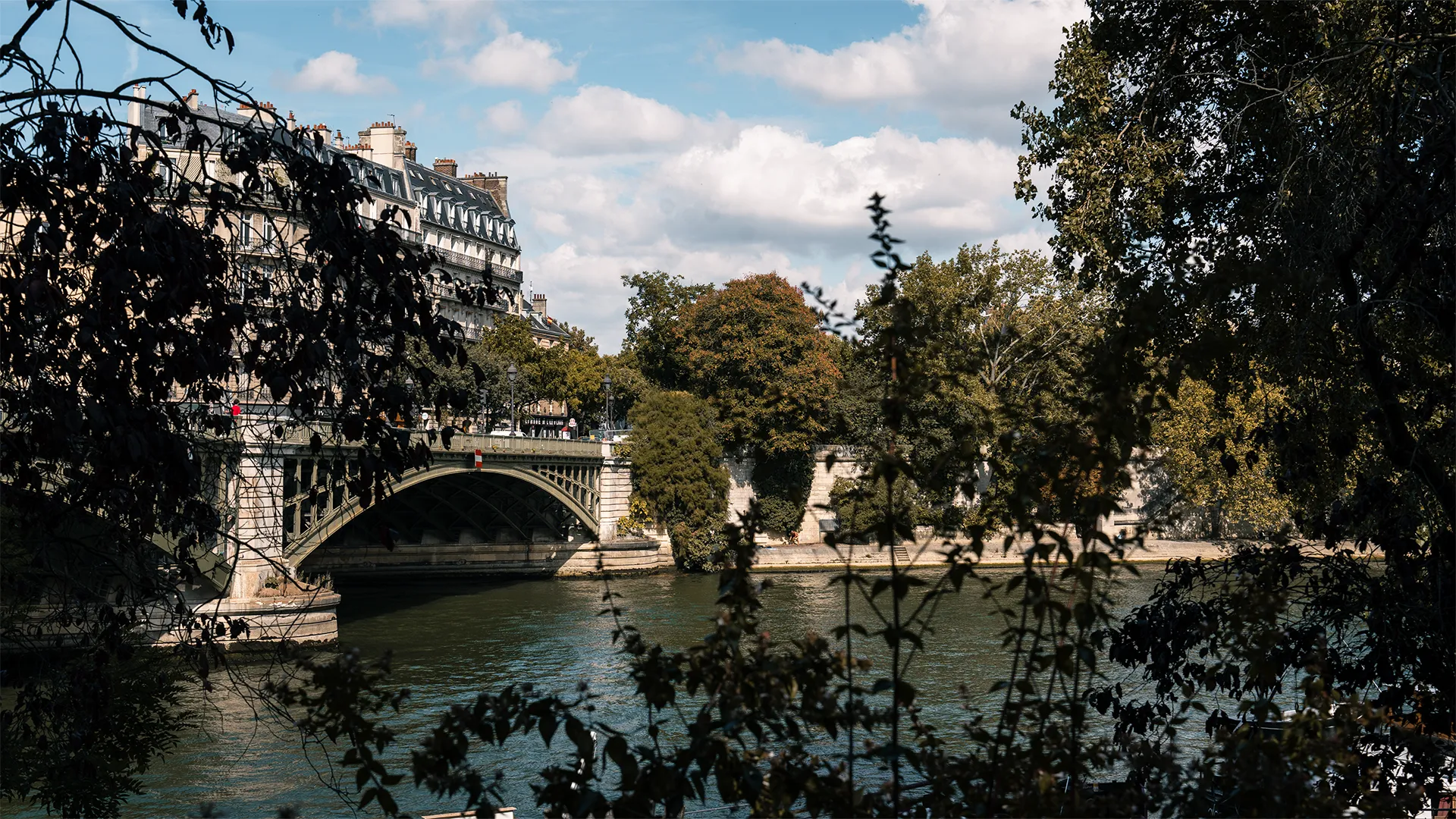
Straddling the Seine with a unique architectural design, the Pont de Sully isn’t just one bridge but two, seamlessly connected at the tip of Île Saint-Louis. Built between 1873 and 1876 as part of Haussmann’s grand redesign of Paris, this iron-and-stone bridge offers some of the most spectacular views of Notre-Dame and the Parisian riverbanks.
Named after Maximilien de Béthune, the Duke of Sully, who served under King Henri IV, the bridge not only holds historical significance but also carries the legacy of its predecessors—suspended footbridges that once linked the island to both riverbanks.
The Duality of Pont de Sully
Pont de Sully is a rare example of two bridges connected by an island. The north section, spanning the smaller branch of the Seine, features a central cast-iron arch flanked by two stone arches, while the longer southern section rests on three iron arches. This dual nature provides a sweeping panorama of the riverbanks and nearby landmarks, including the chevet of Notre-Dame, offering photographers a perfect shot at any time of day.
Replacing the Passerelles
Before Pont de Sully, two suspended footbridges—Damiette on the right bank and Constantine on the left—offered pedestrian access to Île Saint-Louis. Both were ill-fated: Damiette was destroyed during the Revolution of 1848, and Constantine collapsed due to corrosion in 1872. The construction of Pont de Sully marked a more permanent solution, reflecting the Paris of the future envisioned by Baron Haussmann.
A Tribute to Sully and French Engineering
Maximilien de Béthune, the Duke of Sully, for whom the bridge is named, was a pivotal figure in French history, known for his contributions to agriculture and his close advisement to Henri IV. The bridge’s robust construction by engineers Paul Vaudrey and Gustave Brosselin features cast-iron work from the renowned Joret foundries, blending functionality with a graceful silhouette. Its angled design—cutting through the Seine at 45 degrees—was a bold choice, enhancing both structural integrity and aesthetic appeal.