


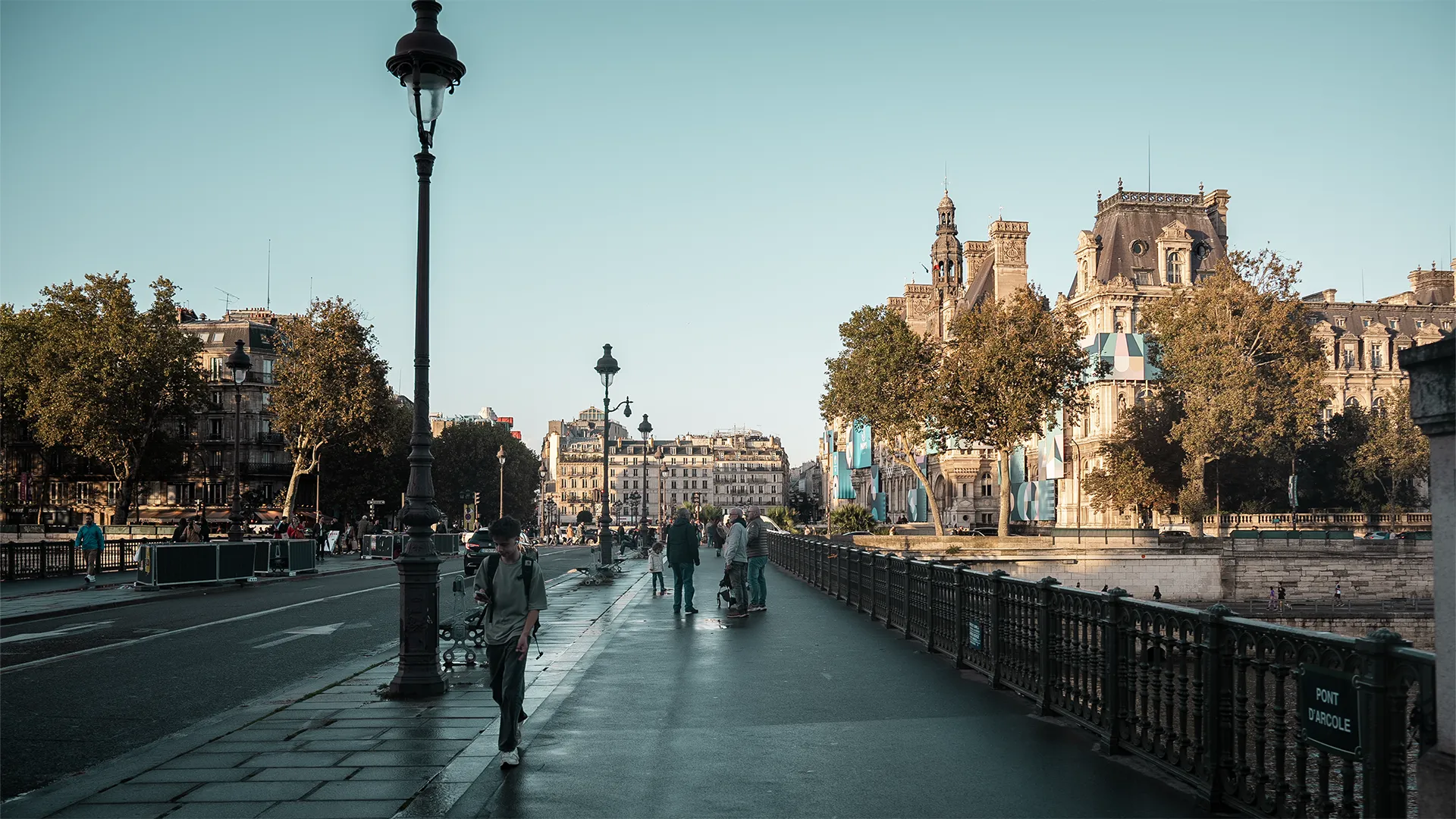
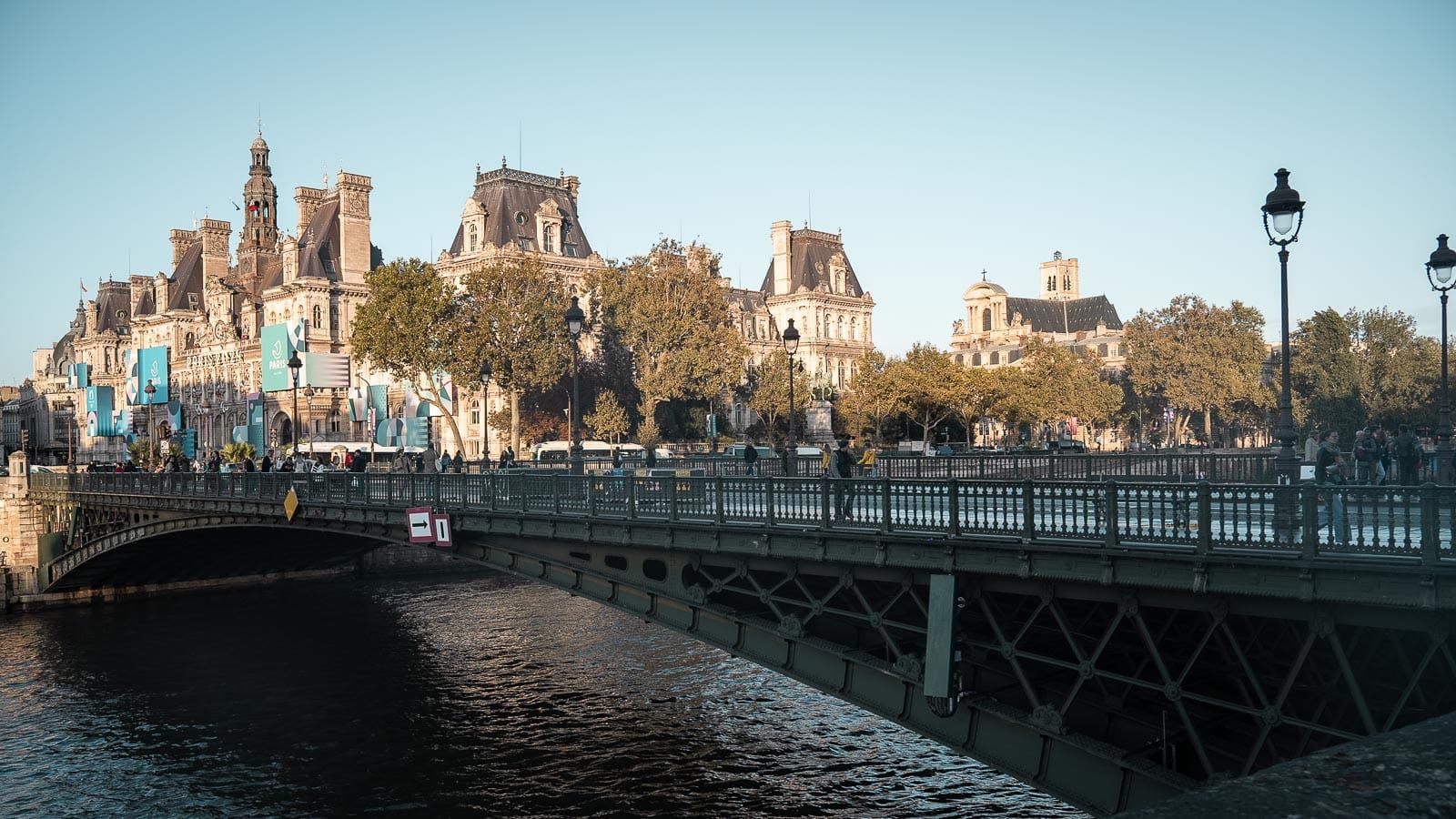
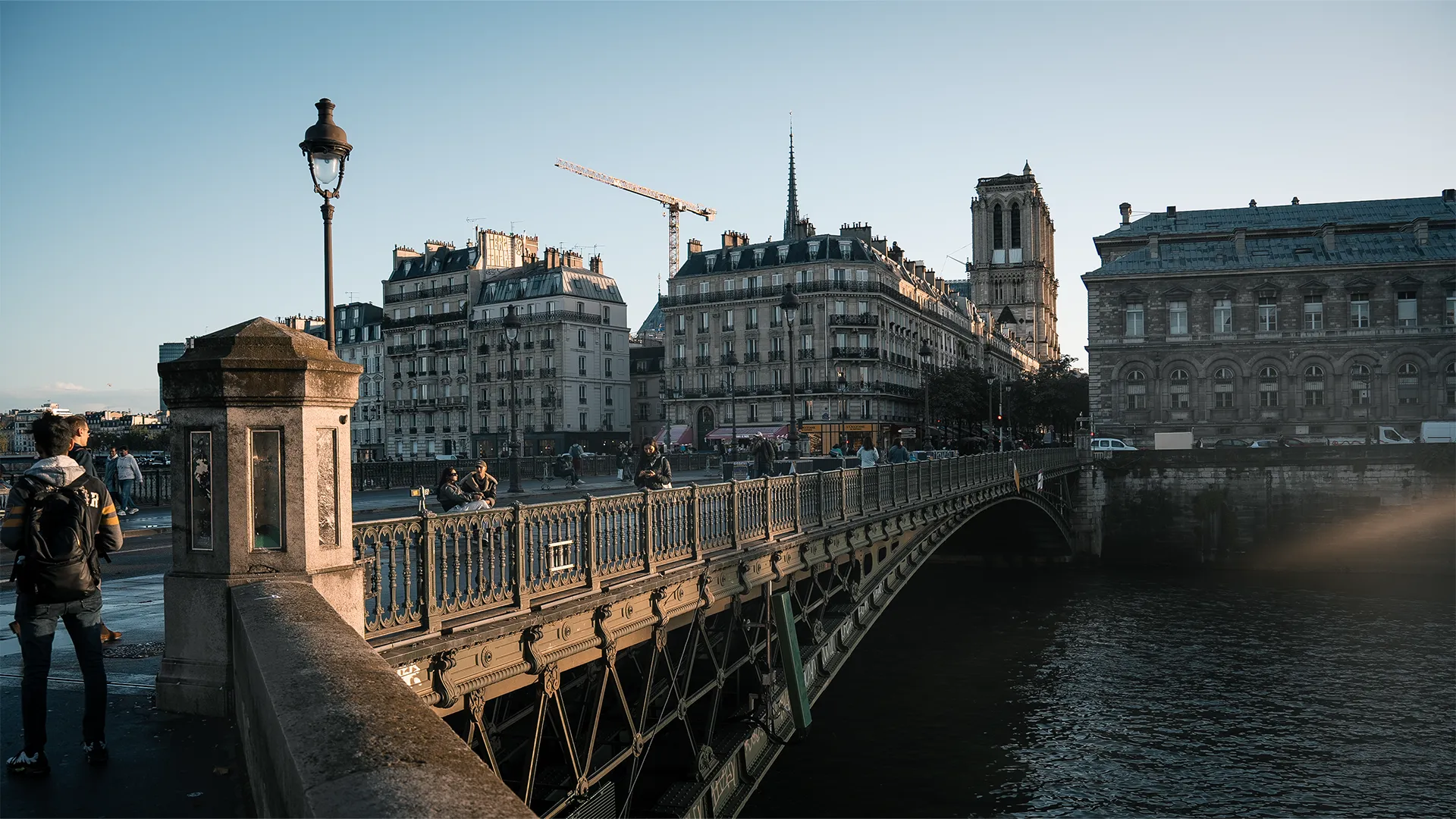

The Pont d’Arcole, a remarkable iron bridge communicating between Place de l’Hôtel-de-Ville and the île de la Cité, stands as a testament to Paris’s rich history. Constructed in the 19th century, its story is woven with legends, innovations, and transformations that reflect the city’s evolving identity.
First Iron Bridge in Paris: The Pont d’Arcole, completed in 1856, was the first bridge in Paris made entirely of iron. Its innovative design, spanning 80 meters without any supports in the river, was a groundbreaking feat of engineering at the time.
A Bridge with a Name Shrouded in Mystery
The bridge, authorized for construction in 1827 and opened in 1828, was initially a pedestrian walkway designed by engineer Marc Seguin. Named “Pont de la Grève” for its first two years, it later adopted its current name—though its origins remain uncertain. One tale suggests it commemorates a young republican, a blacksmith’s apprentice, who perished during the July Revolution of 1830 while rallying fellow citizens. Another theory links the name to Napoleon’s victory at the Battle of Arcole in 1796. Regardless, the bridge became a symbol of the revolutionary spirit in Paris.
From Wood to Iron: A Structural Evolution
The original design proved inadequate for increasing urban traffic, prompting a significant transformation. By 1854, engineers Nicolas Cadiat and Alphonse Oudry began constructing a new iron bridge—an architectural breakthrough as the first of its kind in Paris to span the river without intermediate supports. Completed in 1856, the new structure boasted an 80-meter central arch, allowing for unobstructed navigation along the Seine.
Aesthetically, the Pont d’Arcole was designed with simplicity in mind, reflecting the architectural trends of the era. Its clean lines and minimal ornamentation highlight the innovative use of iron, a precursor to future iconic structures like the Eiffel Tower.
A Witness to History
Over the decades, the Pont d’Arcole has weathered many storms—both literal and metaphorical. It has survived structural challenges, including a significant subsidence in 1888 and damage from wartime artillery during World War I. It also played a notable role in history; in August 1944, it was the route taken by General Leclerc’s tanks as they entered Paris during its liberation.
Recent Renovations
Despite its storied past, the Pont d’Arcole continues to stand strong. Major renovations in the 1990s enhanced its structural integrity and aesthetics, while a 2012 lighting upgrade reduced energy consumption significantly. Today, it remains a popular vantage point for visitors, especially during events like the Notre-Dame fire in 2019.