


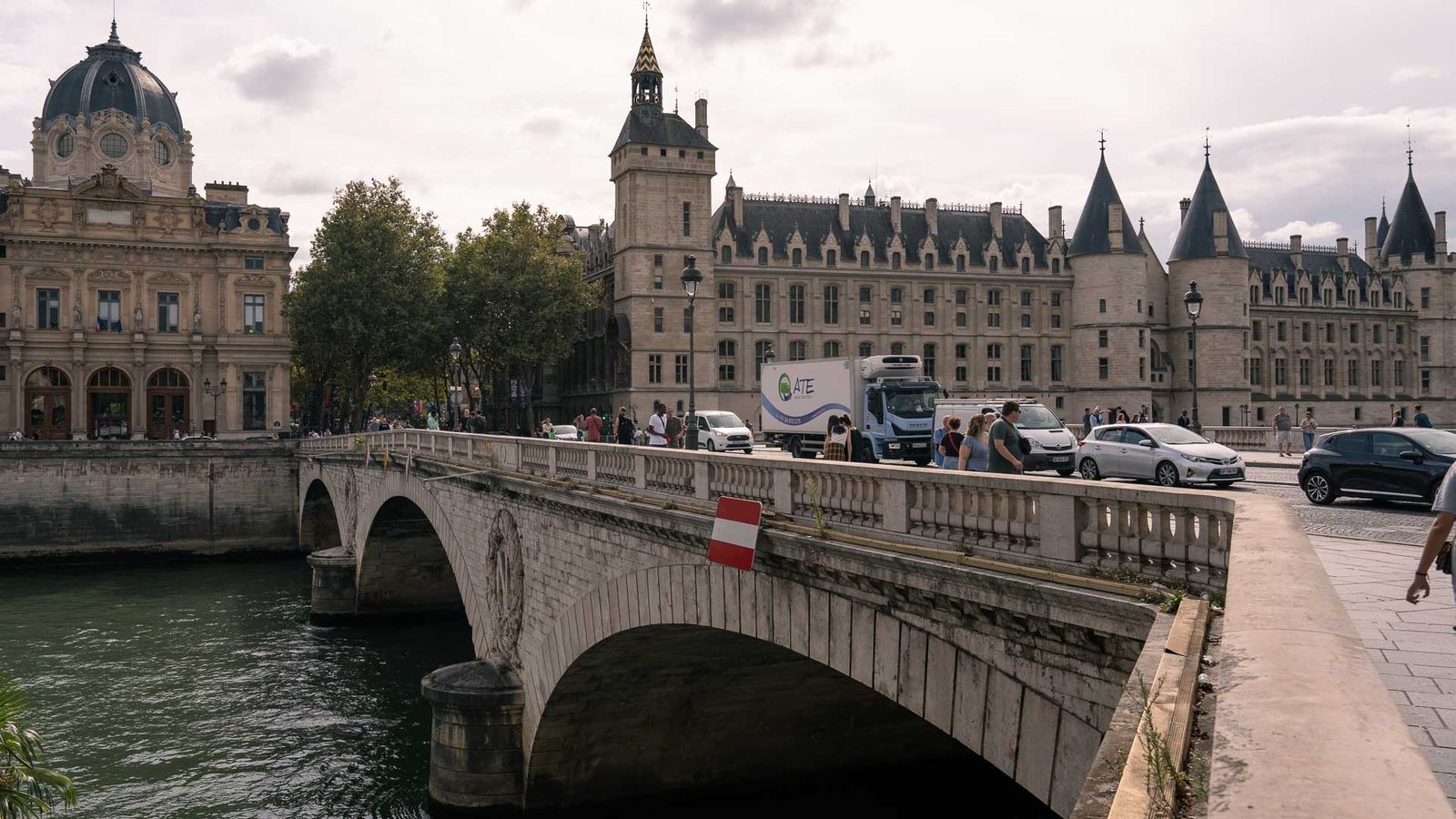
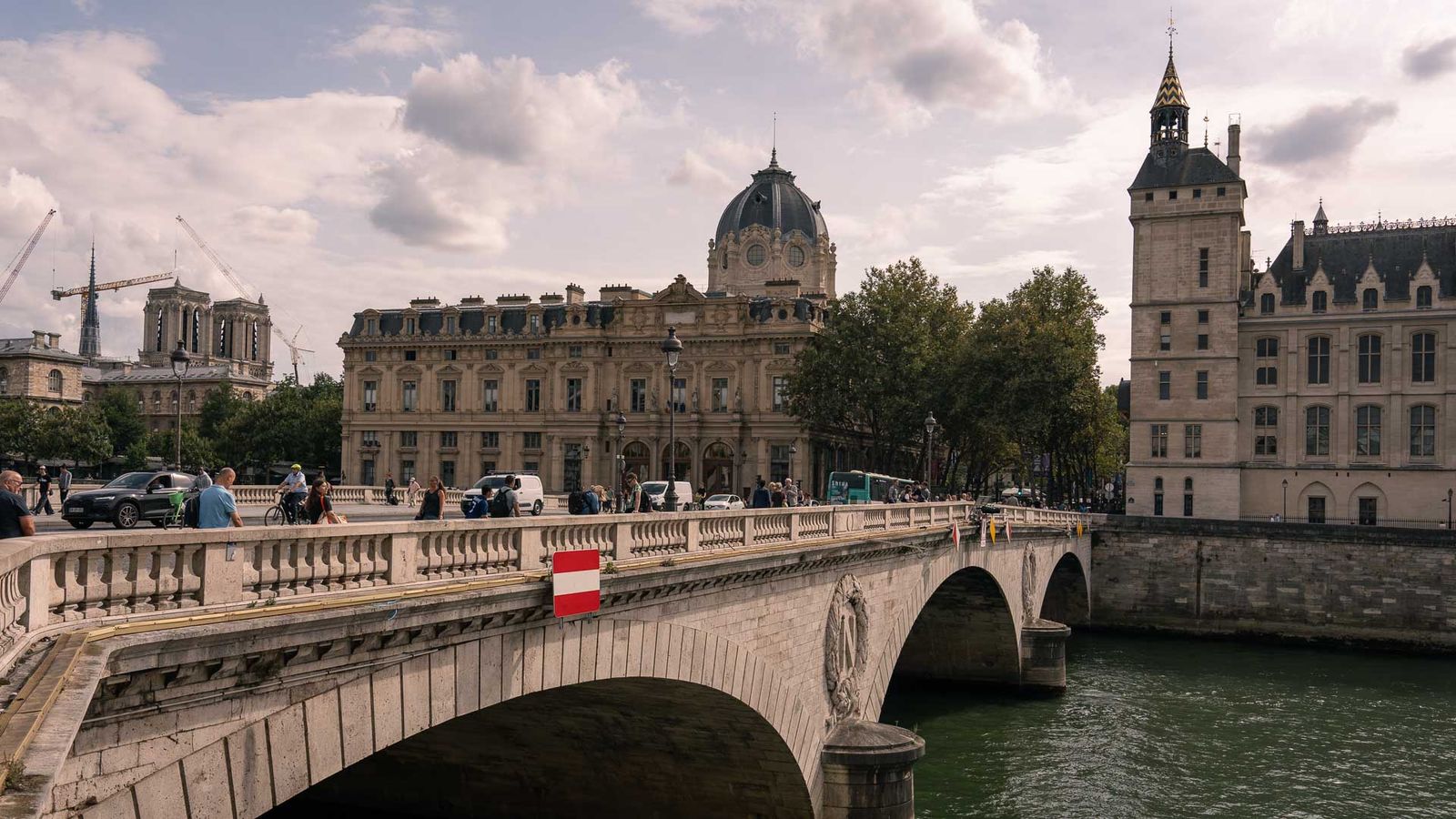

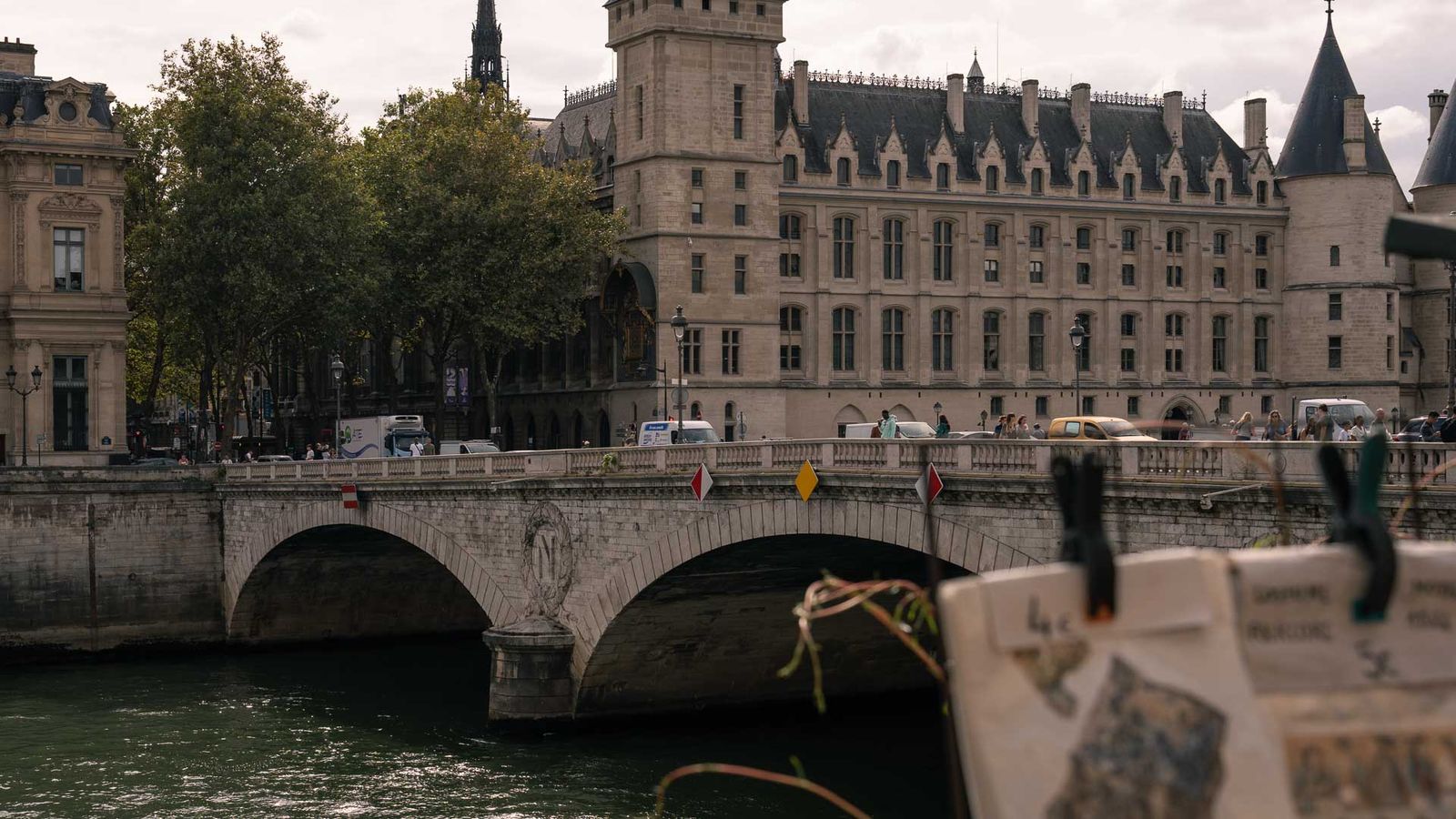
The Pont au Change connects the Île de la Cité to the right bank of the Seine, linking the Palais de Justice, the Conciergerie, and the tribunal de commerce to the Théâtre du Châtelet. Located on the border of the 1st and 4th arrondissements of Paris, this historic bridge facilitates both pedestrian and vehicle traffic. Just south lies the Pont Saint-Michel, which connects the boulevard du Palais to the lively Place Saint-Michel on the left bank.
Originally a wooden structure, the Pont au Change has played a vital role in the economic and social life of Paris, especially as a center for currency exchange and trade. Today, it stands as a testament to the city’s evolution, seamlessly blending historical significance with contemporary urban life.
A Bridge of Commerce
The origins of the Pont au Change trace back to the 9th century when it was first constructed under the reign of Charles the Bald. Initially known as the “Grand-Pont,” the bridge served as a critical crossing over the Seine.
In 1141, Louis VII mandated that all currency exchange activities be conducted here, leading to the bridge’s renaming.
This decree established the Pont au Change as a bustling hub for goldsmiths and moneychangers, solidifying its importance in Parisian commerce and laying the groundwork for its enduring legacy.
Architectural Beauty and Functional Design
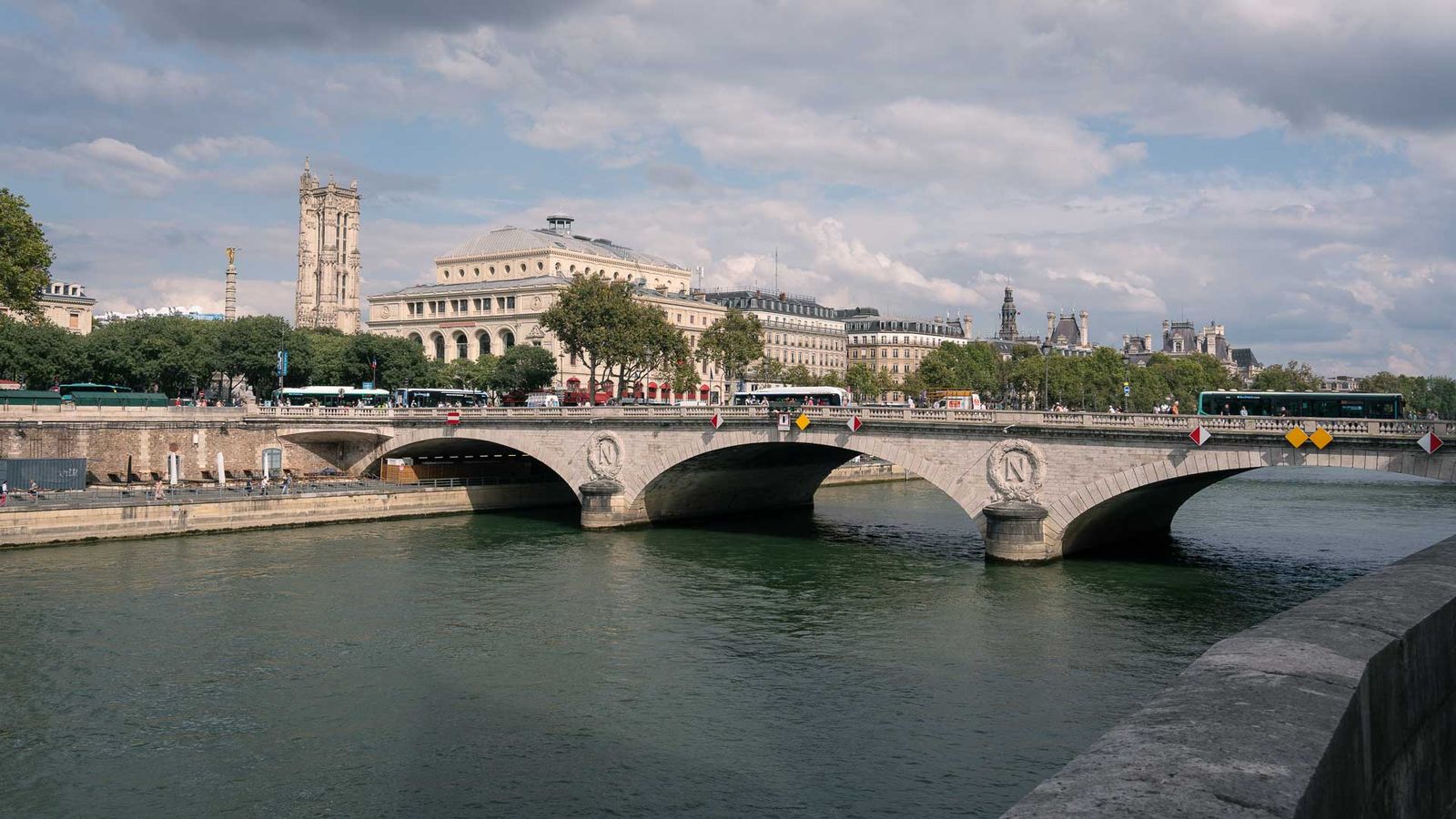
The current incarnation of the Pont au Change was completed between 1858 and 1860 during the reign of Napoleon III. Designed by architects P.-M. G. de Lagalisserie and P. Vaudrey, the bridge features three elegant elliptical arches spanning 31 meters each, constructed from robust masonry.
With a total length of 103 meters and a width of 30 meters, the Pont au Change is an architectural marvel of its time, boasting significant enhancements that reflect the urban planning ideals of the 19th century. The ornate “N” of Napoleon III, adorned in laurel wreaths, graces each of its piers, a nod to its imperial patronage.
The Bridge That Saw Revolutions
Over the centuries, the Pont au Change has witnessed numerous historical events that have shaped Paris. In the 17th century, a devastating fire destroyed a previous iteration of the bridge, prompting the reconstruction funded by local goldsmiths and the royal family.
The bridge also played a pivotal role during the tumultuous periods of the French Revolution and the subsequent uprisings of the 19th century, serving as a strategic point for protests and demonstrations. The surrounding area, rich in cultural and historical landmarks, further underscores the bridge’s significance as a central thoroughfare.
Cultural Significance Through the Ages
Today, the Pont au Change remains a vital connection between the Île de la Cité and the vibrant Right Bank, linking the Palais de Justice and the Conciergerie to the lively Place du Châtelet.
It is conveniently accessible via several metro lines, including Lines 1, 4, 7, 11, and 14, making it a popular destination for both locals and tourists alike.
The picturesque views of the Seine and the historic architecture surrounding the bridge create a captivating backdrop for leisurely strolls and photography.
The Bridge’s Role in Parisian Culture and Events
The Pont au Change is not only an architectural and historical gem but also a cultural landmark. It has inspired various artists and writers throughout the centuries, including Victor Hugo in “Les Misérables.”
dditionally, the nearby quays have long been home to the beloved bouquinistes, booksellers whose green boxes have become synonymous with the Parisian experience. This unique blend of commerce, culture, and history makes the Pont au Change an essential part of the Parisian landscape, inviting exploration and appreciation from all who cross its path.