


A Timeless Intersection of Politics and Parisian Elegance
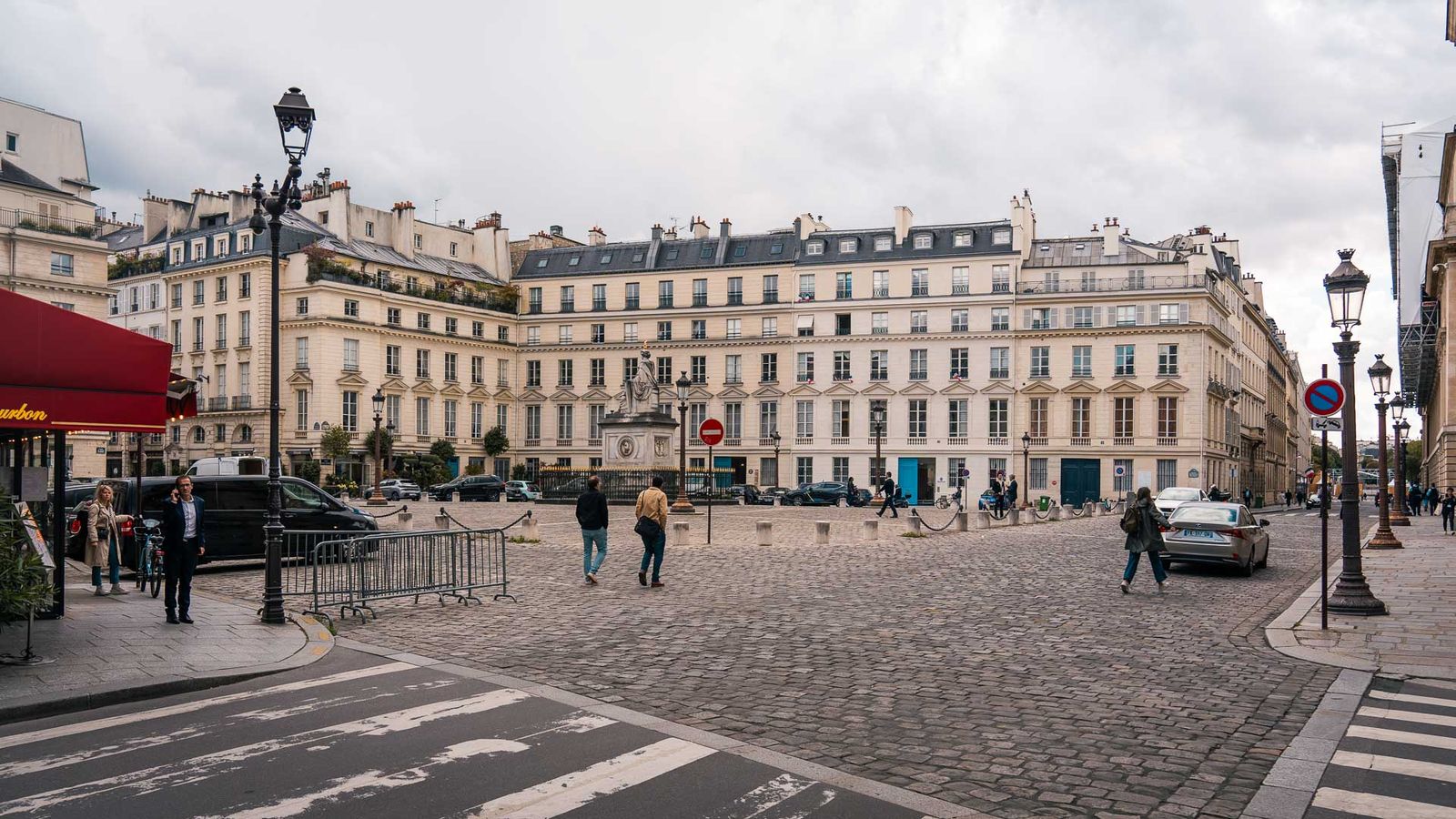
Steeped in the historical essence of Paris, Place du Palais-Bourbon is more than a mere city square; it is a political and architectural emblem of France. Created in 1778 and officially named in 1814, this semi-circular square honors the nearby Palais Bourbon, now home to the French National Assembly.
Designed by the architect Antoine-Charles Aubert, the square’s current trapezoidal shape evolved from its original half-circle form, adjusted in the late 18th century to accommodate new construction.
Revolution and Renaming: A Square with Many Titles
Originally called “Place de la Maison-de-la-Révolution” during the turbulent Revolutionary period, Place du Palais-Bourbon has undergone various name changes reflecting France’s shifting governments and ideals.
Under the Council of Five Hundred in 1798, the square adopted the title “Place du Conseil-des-Cinq-Cents.” Later, during Napoleon’s Empire, it became the “Place du Palais-du-Corps-Législatif.” In 1814, it finally secured the name Place du Palais-Bourbon that endures today.
An Iconic Statue Presiding Over the Square
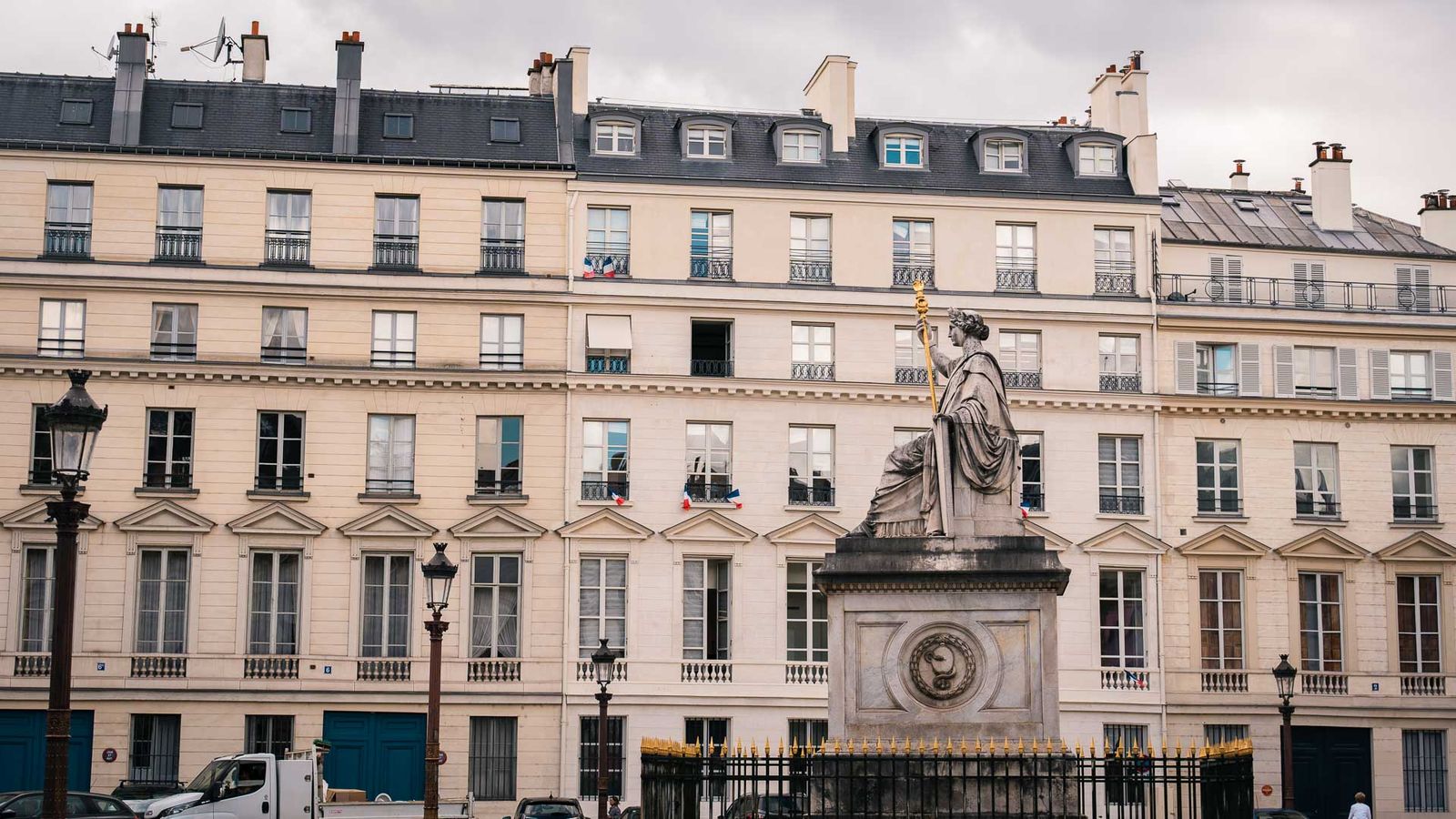
At the heart of Place du Palais-Bourbon stands the statue “La Loi” by Jean-Jacques Feuchère. Originally commissioned during the Second Republic in 1848 as an allegory of the French Republic, the marble statue symbolizes law and order.
Its powerful presence dominates the square, having endured even when Napoleon III’s regime briefly sought to rename it, confirming its symbolic authority.
Historic Buildings and Noteworthy Occupants
The square is also famed for its historic buildings, many registered as Monuments Historiques.
Notable addresses, such as 7 bis—known as “Le 7 bis” and former headquarters for the Socialist Party—have seen major political figures, including François Mitterrand and Jacques Chirac. The café Le Bourbon at No. 3, a favorite among politicians, remains a hub of political conversation. At No. 2, Boni de Castellane, a prominent dandy and politician, once entertained Sarah Bernhardt in lavish gatherings.
Many buildings were constructed using stone from the Bastille, further anchoring the square’s connection to French history.