


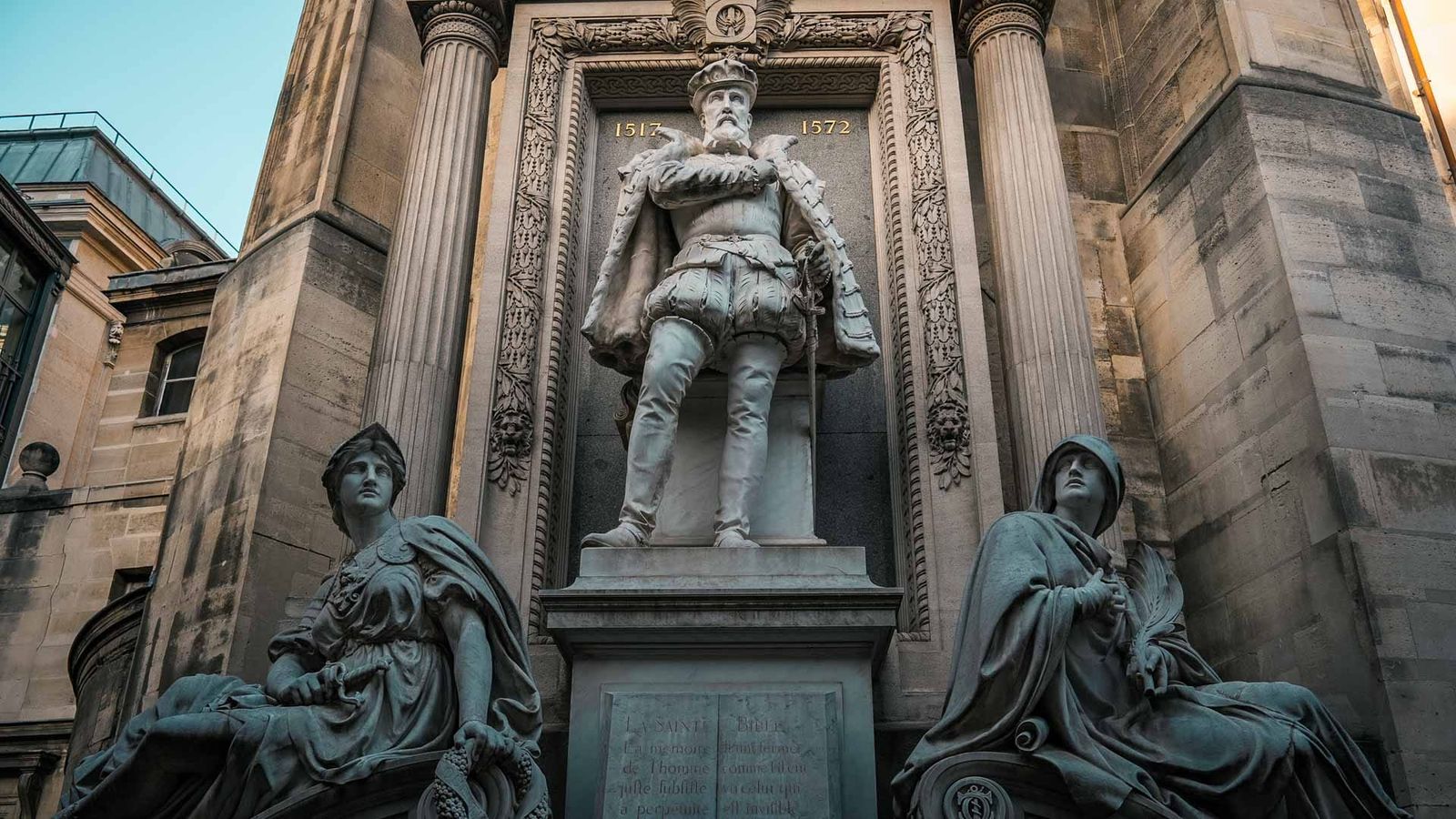
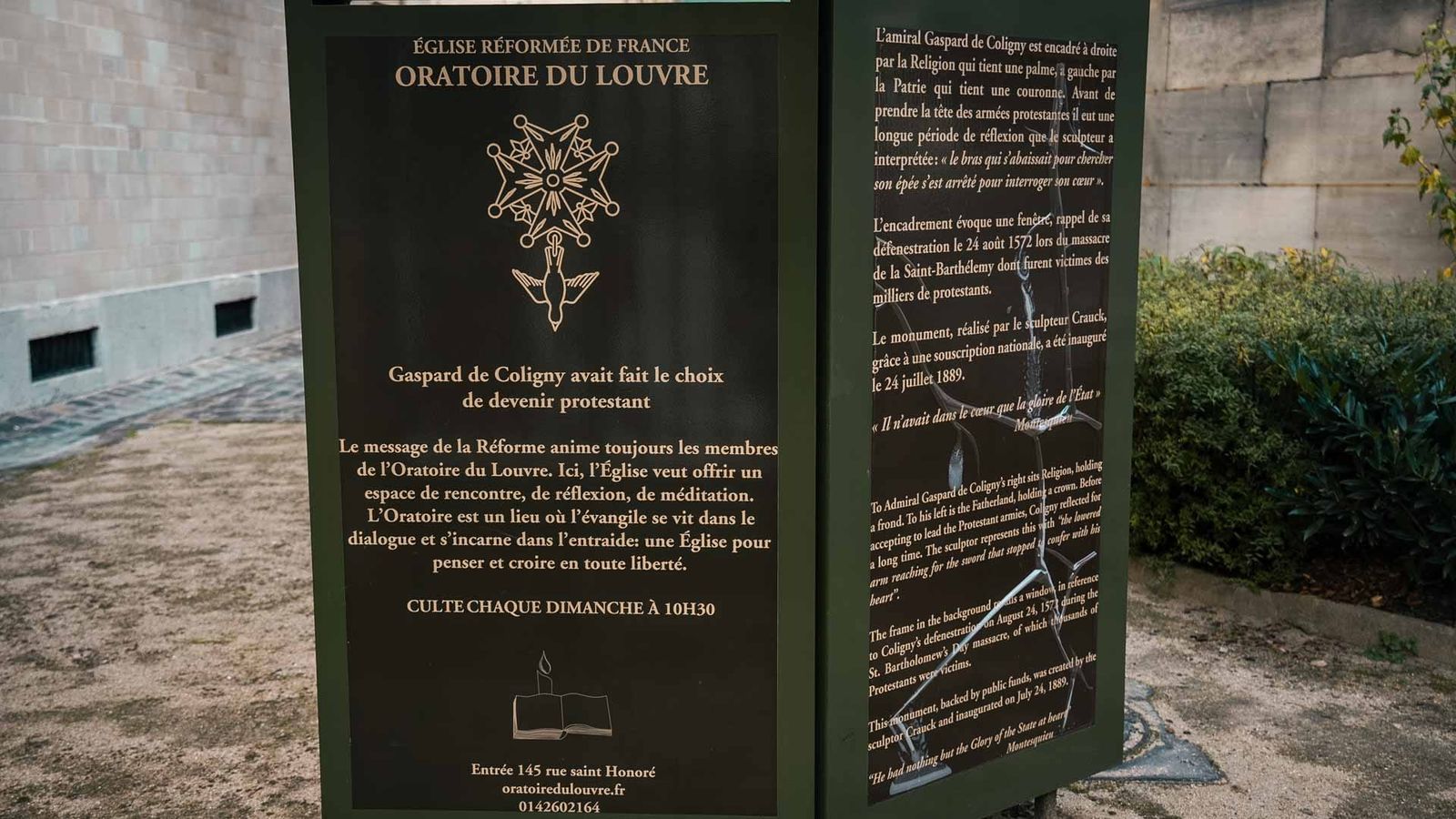
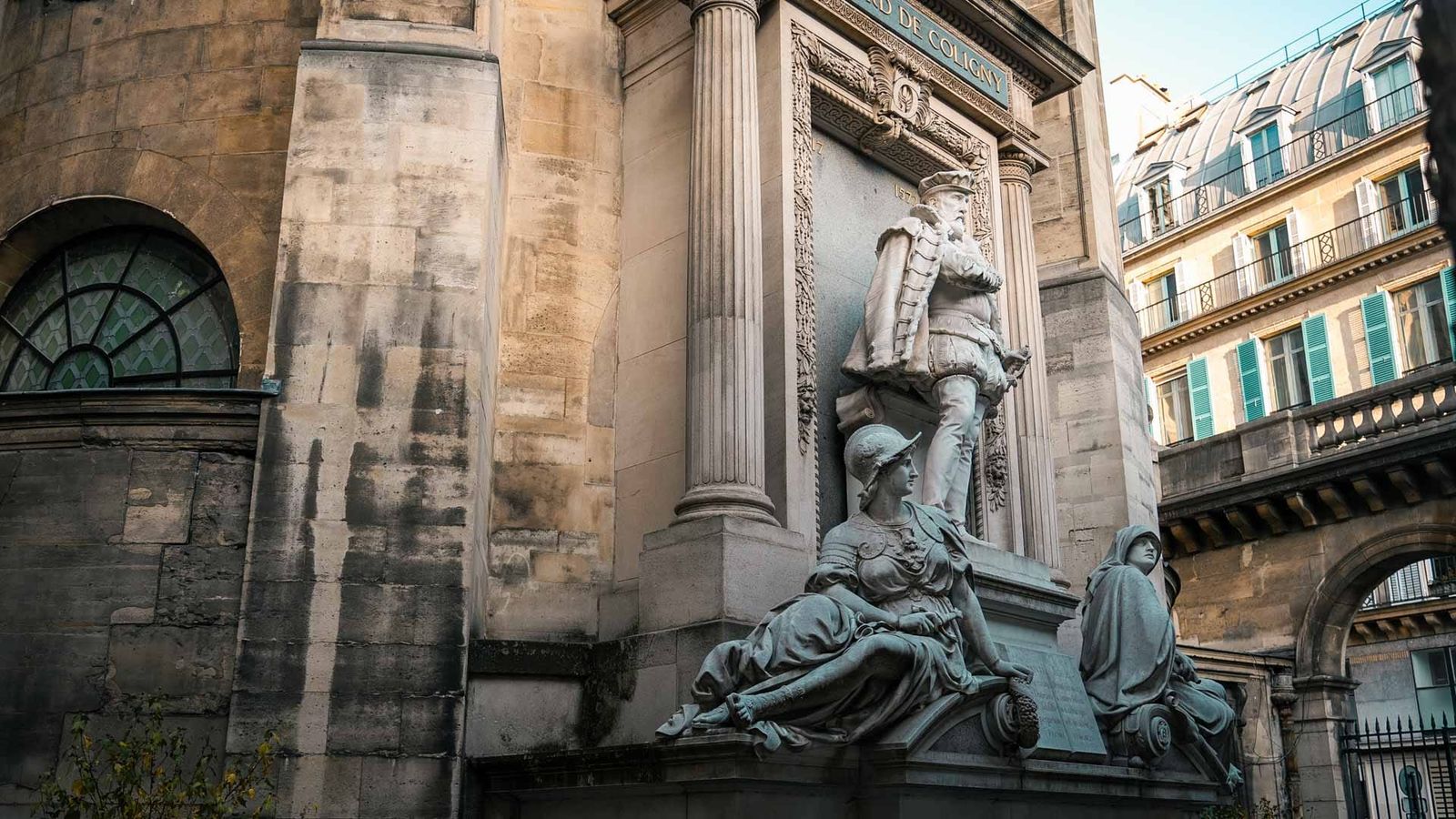
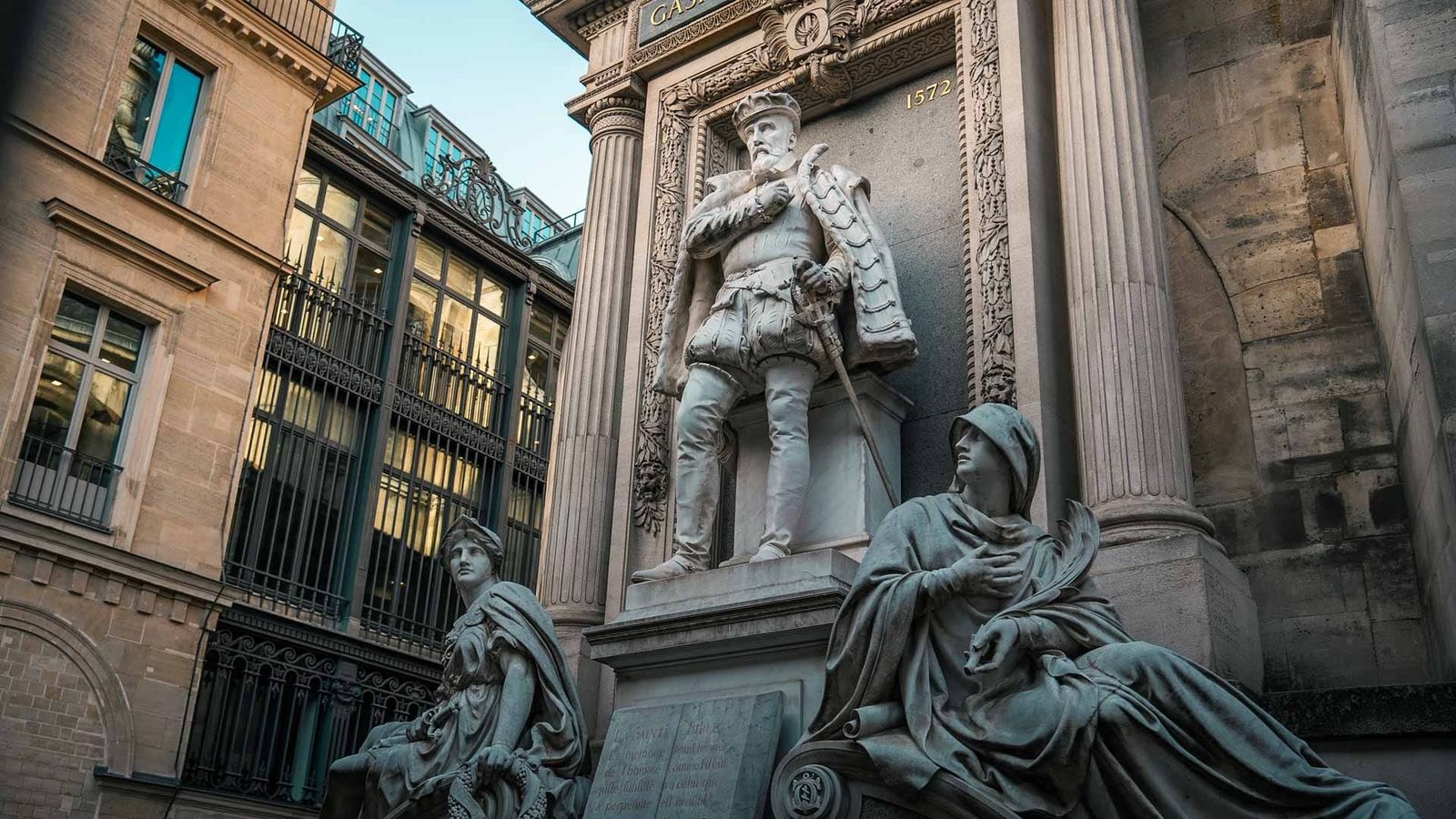
Nestled at the rue de Rivoli end of the Temple Protestant de l’Oratoire du Louvre, the Monument of Gaspard de Coligny serves as a poignant tribute to one of France’s most significant figures of the 16th century.
Erected in 1889, this statue commemorates Admiral Coligny, a prominent Huguenot leader who played a crucial role during the tumultuous Wars of Religion in France.
A Legacy of Leadership
Gaspard de Coligny was born on February 16, 1519, in Châtillon-sur-Loing, a town that now bears his name. As a nobleman and Admiral of France, he emerged as a central figure advocating for the rights and safety of Huguenots amid increasing tensions with Catholic factions. Coligny’s commitment to religious tolerance and governance for the good of the public made him a beloved leader among the Protestant community.
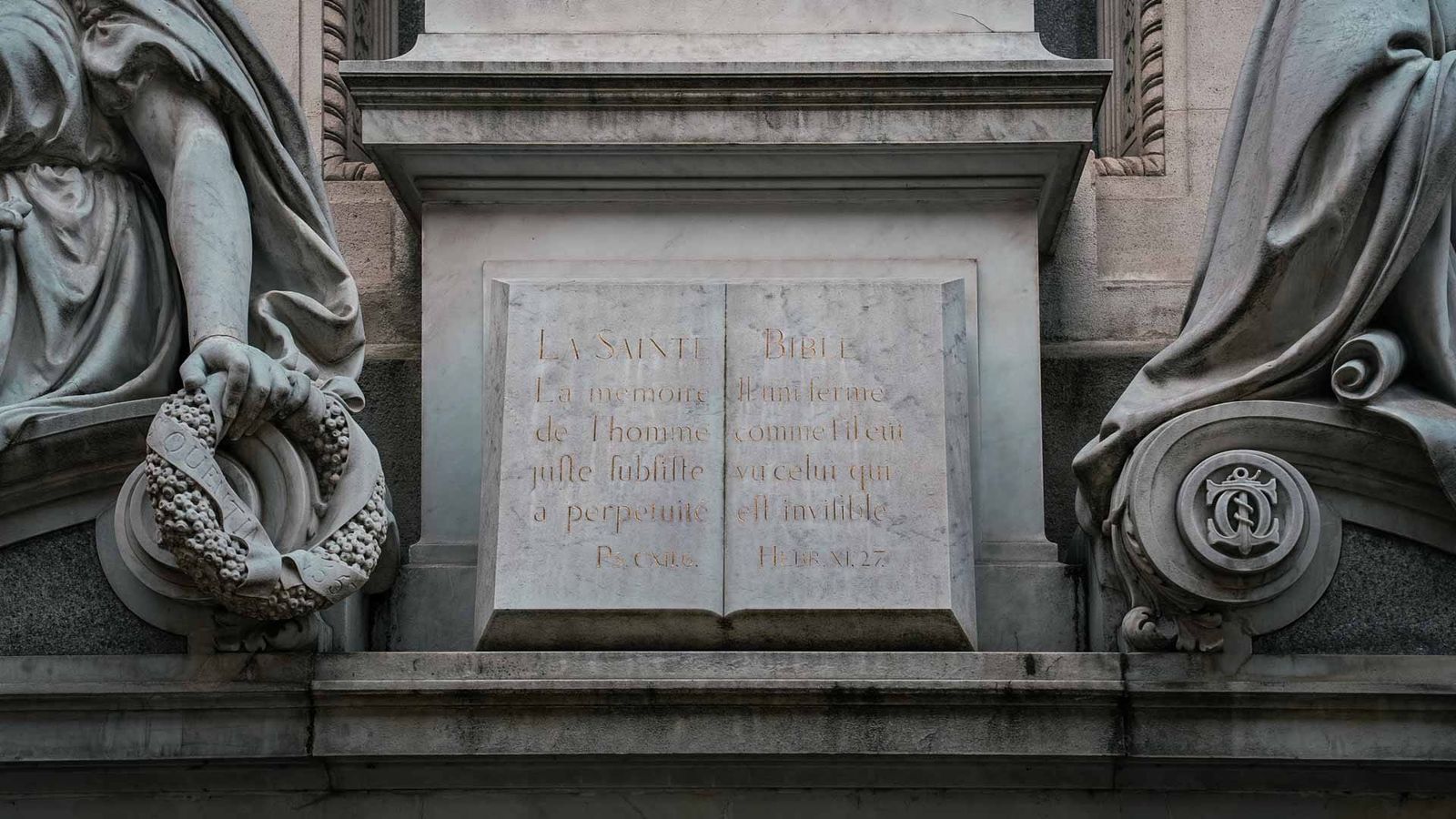
The statue’s inscription, a powerful quotation from Coligny’s Testament, reflects his selflessness: “I would gladly forget all that concerns me personally—injuries, insults, outrages, confiscation of my estates—provided the glory of God and public tranquility are assured.” This sentiment encapsulates the spirit of his life’s work, dedicated to the welfare of his people and the divine.
A Tragic End and Commemoration
Coligny’s life was tragically cut short during the Massacre of Saint Bartholomew’s Day on August 24, 1572, when he was assassinated. His death marked a turning point in the French Wars of Religion, leading to a darker chapter of violence and division.
The monument stands not only as a testament to his leadership but also as a reminder of the turbulent history of religious strife in France.
The placement of Coligny’s statue at the Temple Protestant highlights the resilience of the Huguenot community. It stands in defiance of the persecution they faced, representing hope for religious freedom and peace in a divided society.