



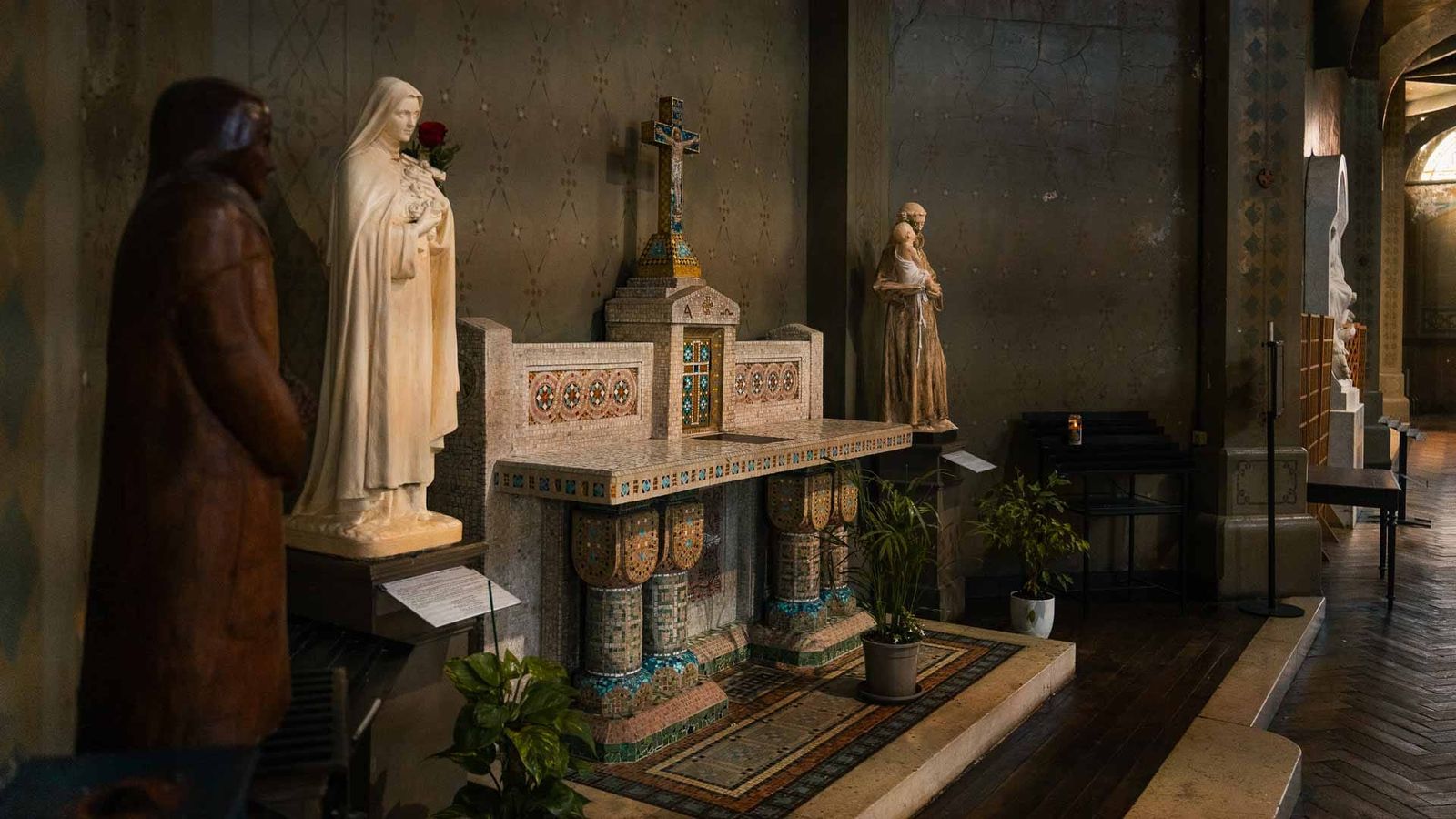
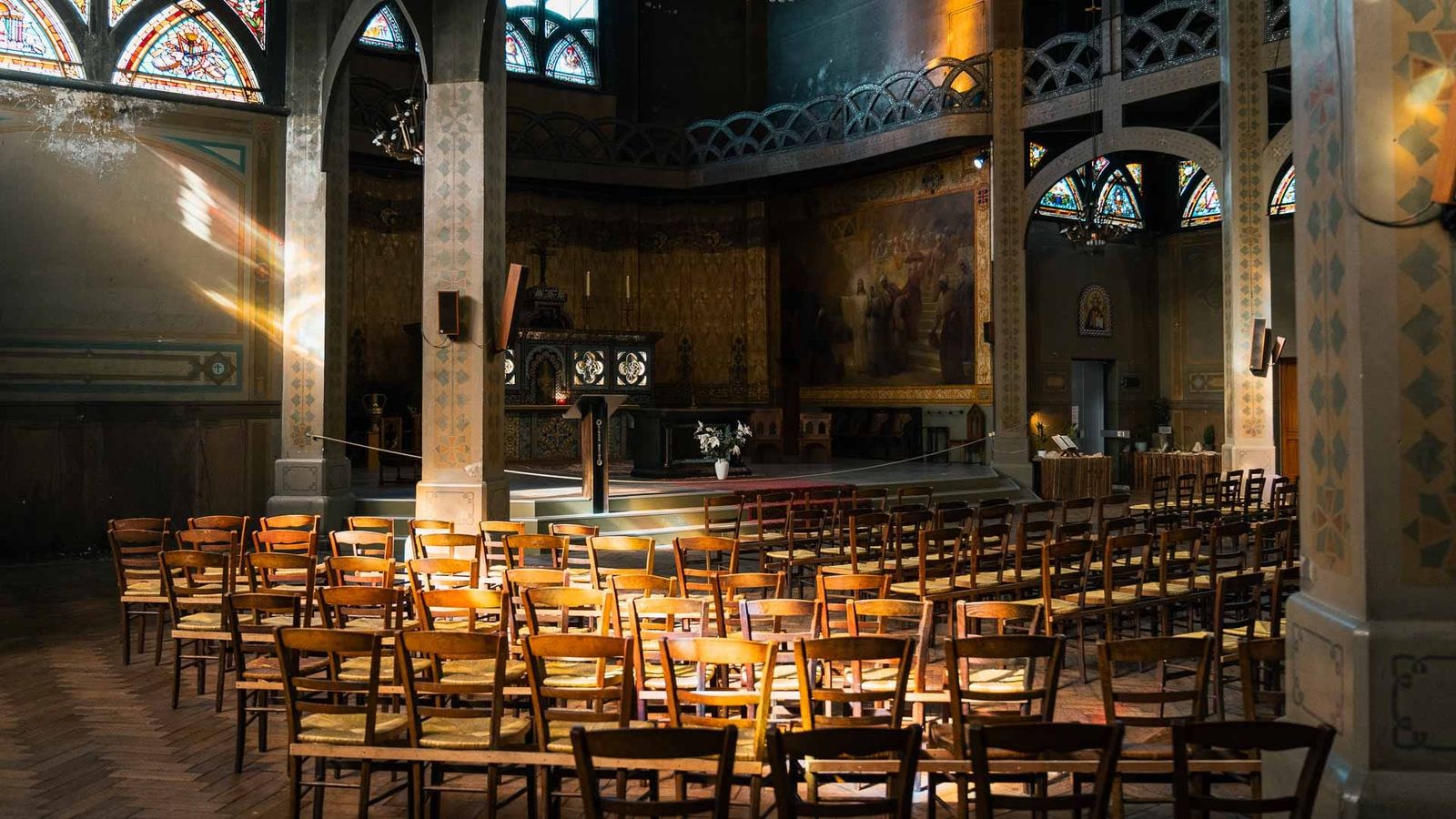
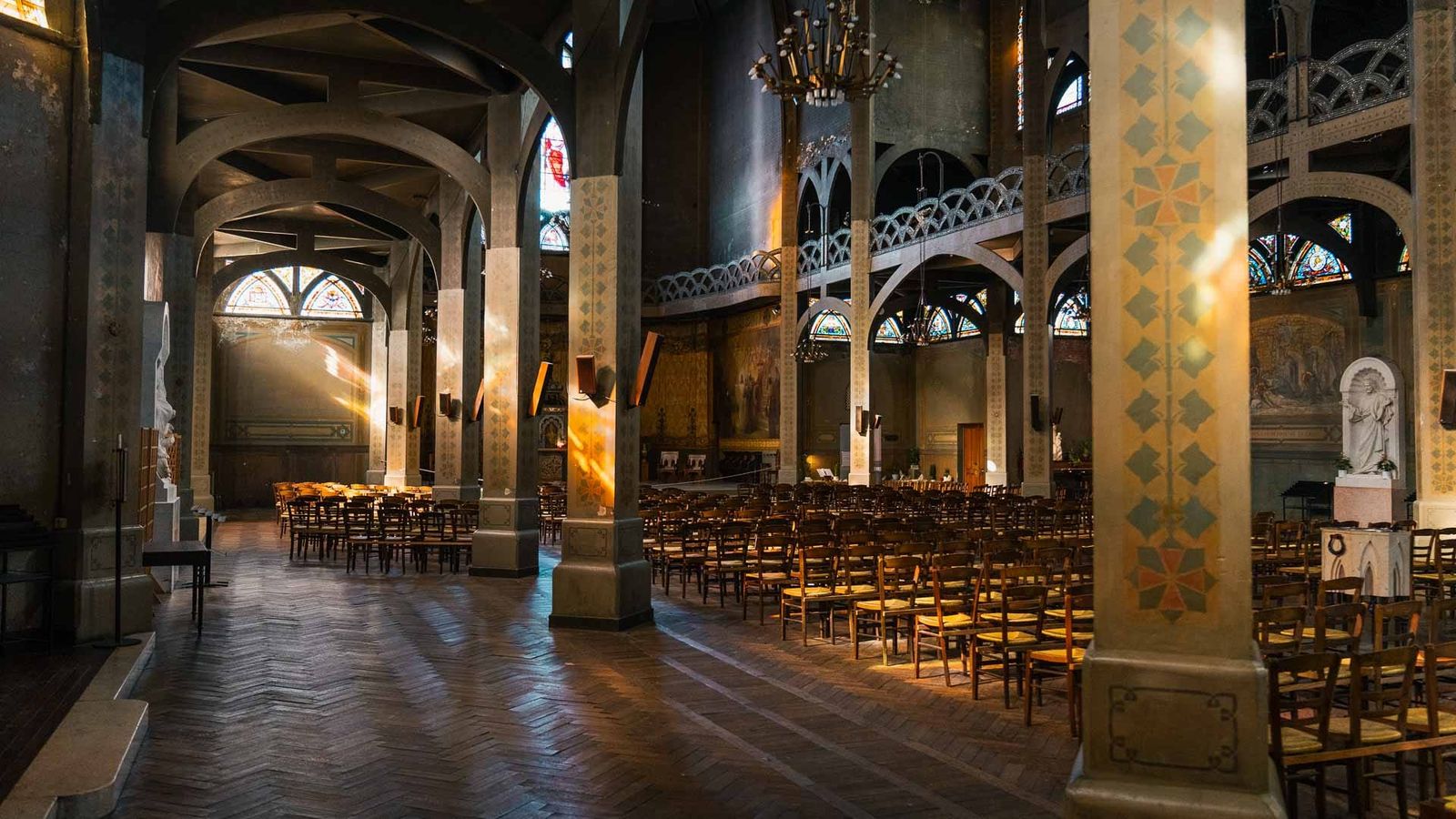

Church of Saint-Jean de Montmartre, also known as L’église Saint-Jean l’Évangéliste, is an architectural marvel of the 18th arrondissement in Paris. Located on 19 Rue des Abbesses, this remarkable structure combines rich history and innovative design, with easy access via the Abbesses metro station. With roots dating back to the late 19th century, this church is not just a place of worship but a testament to groundbreaking architectural advancements and the tenacity of its creators. Let’s explore the unique elements that make this church a must-visit destination.
A Groundbreaking Church Built to Meet Growing Demands
Church of Saint-Jean de Montmartre, the main church serving the Montmartre area, could no longer accommodate the growing population, leading to the construction of Saint-Jean de Montmartre from 1894 to 1904. Designed by architect Anatole de Baudot, a follower of the famed restorer Viollet-le-Duc, Saint-Jean de Montmartre was a departure from traditional building methods, using an advanced structural approach with reinforced cement—an early precursor to reinforced concrete. The innovative use of materials and building techniques ensured that this church could withstand the test of time, both structurally and aesthetically.
Cement and Bricks: The Cutting-Edge Construction Technique
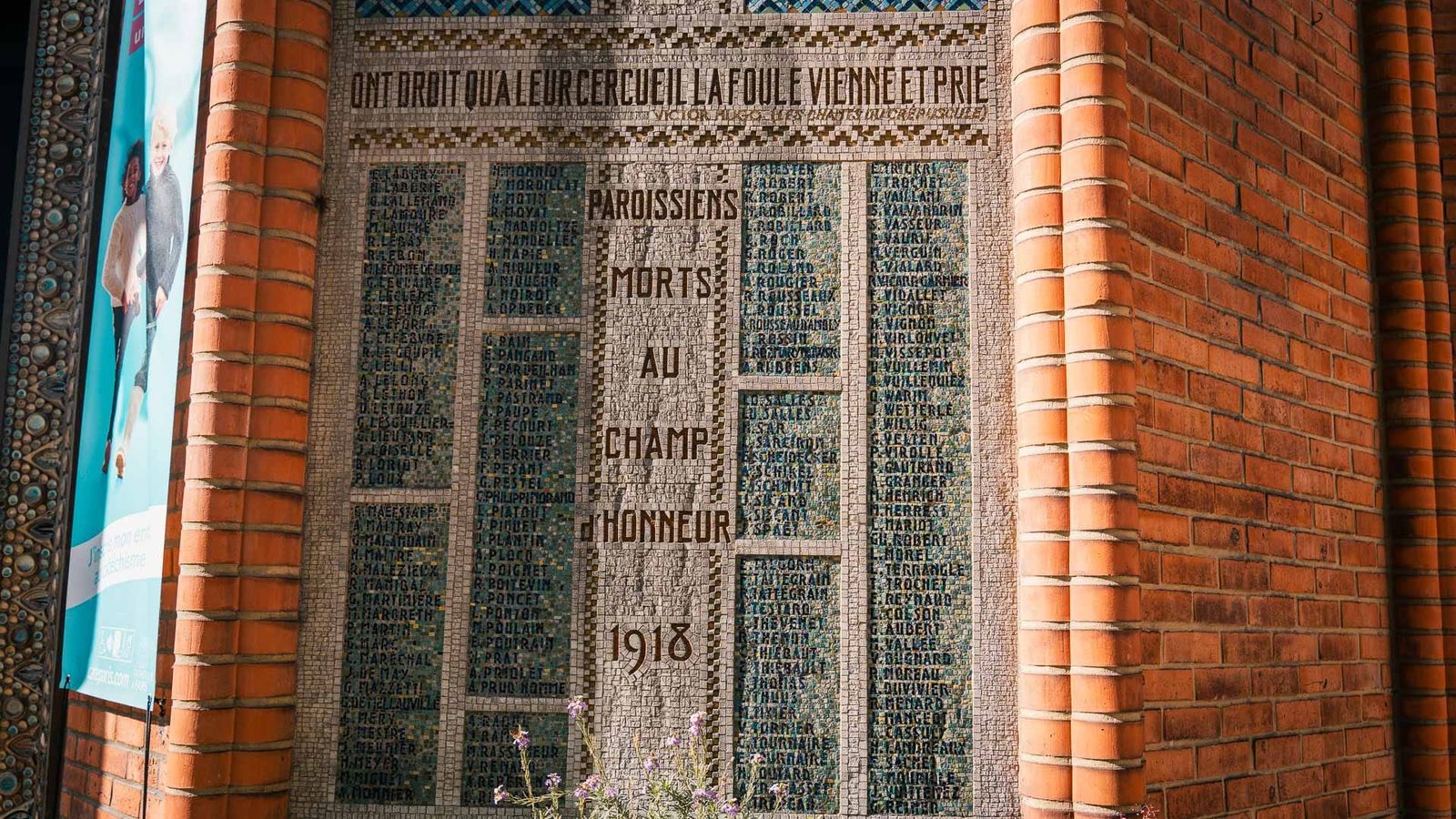
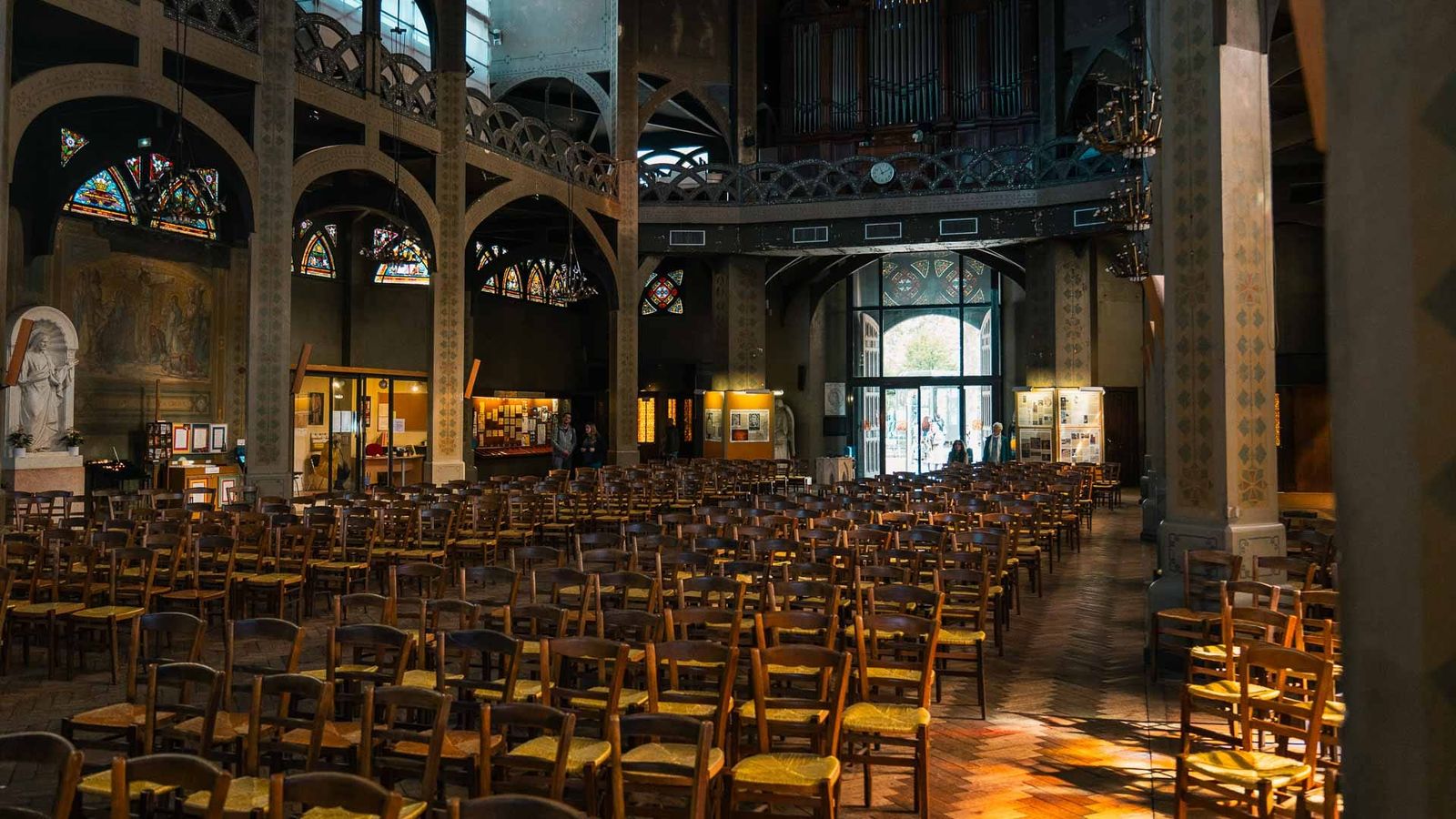
Baudot employed a pioneering technique devised by engineer Paul Cottancin, which utilized hollow concrete blocks reinforced with metal rods and later filled with cement. Externally, the church presents a façade of bricks and colorful ceramics, lending a striking, polychromatic look to the structure. Inside, however, the true brilliance of its construction shines. Thin, reinforced cement walls and columns create an impression of openness and height, supporting the church’s lofty ceilings. The revolutionary construction faced scrutiny, with skeptics initially challenging its structural integrity. Yet through technical demonstrations, Baudot and church authorities proved its soundness, ultimately securing approval to complete the church.
Art Nouveau Meets Gothic: A Style Unmatched in Parisian Churches
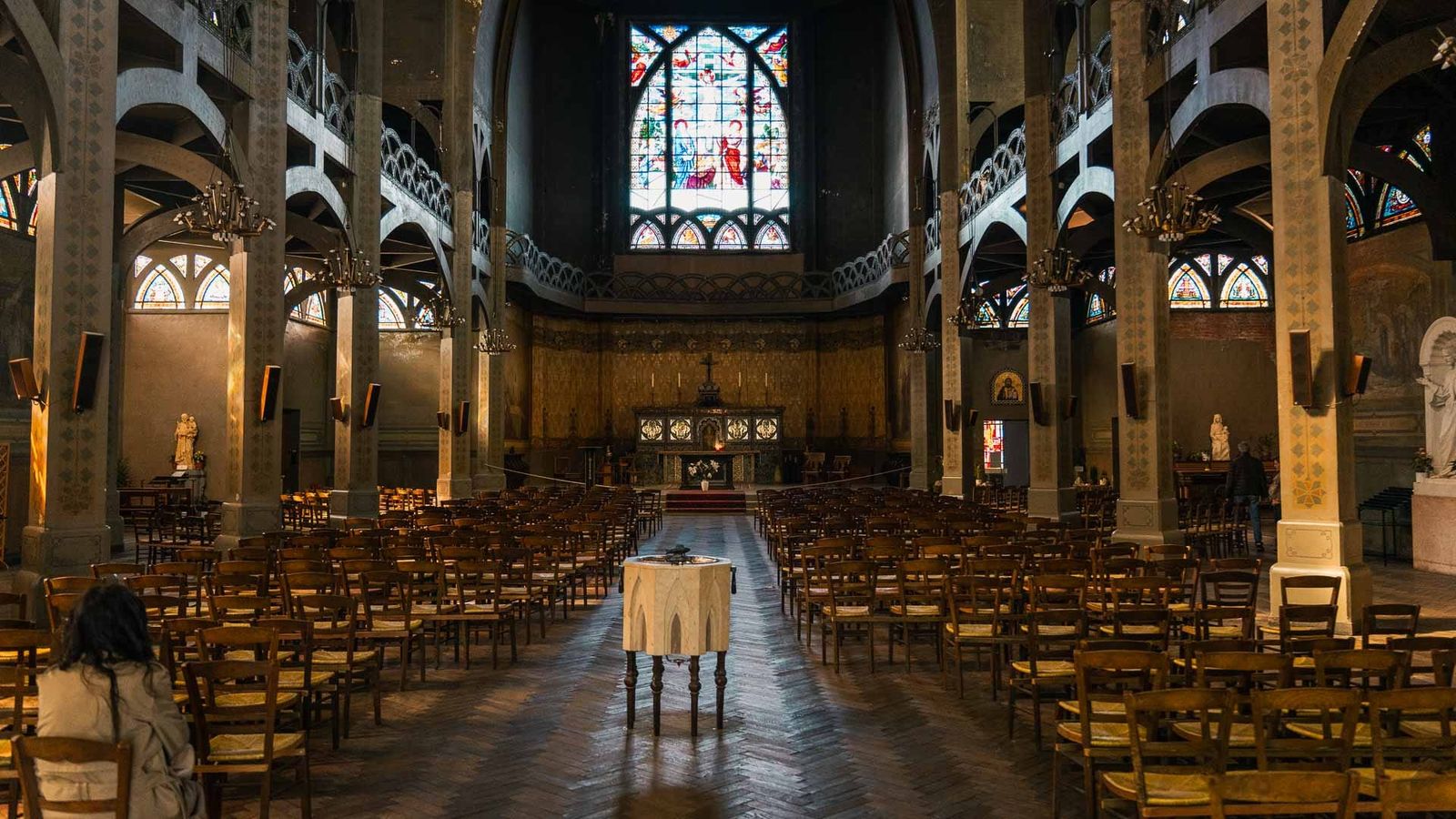
Saint-Jean de Montmartre is a unique fusion of the Art Nouveau style and Gothic-inspired structural elements. Its reinforced concrete vaults echo the ribbed arches of medieval cathedrals, while large stained-glass windows by master glassmaker Jac Galland flood the space with natural light. Three large upper stained glass panels in the nave, designed by artist Ernest-Pascal Blanchard, and the central apse windows depicting the Crucifixion by the Tournel brothers, showcase the craftsmanship and artistry embedded in every inch of this church.
A Vibrant Tribute to the Virgin Mary
An exceptional feature of this church is its series of 48 small rectangular stained-glass windows dedicated to the Litanies of the Virgin. Displayed throughout the church, they contain scenes that honor the Virgin Mary and offer a contemplative, reverent atmosphere within the space. Commissioned as a gesture of faith and unity during the turbulent World War I years, these stained-glass pieces stand as symbols of devotion.