


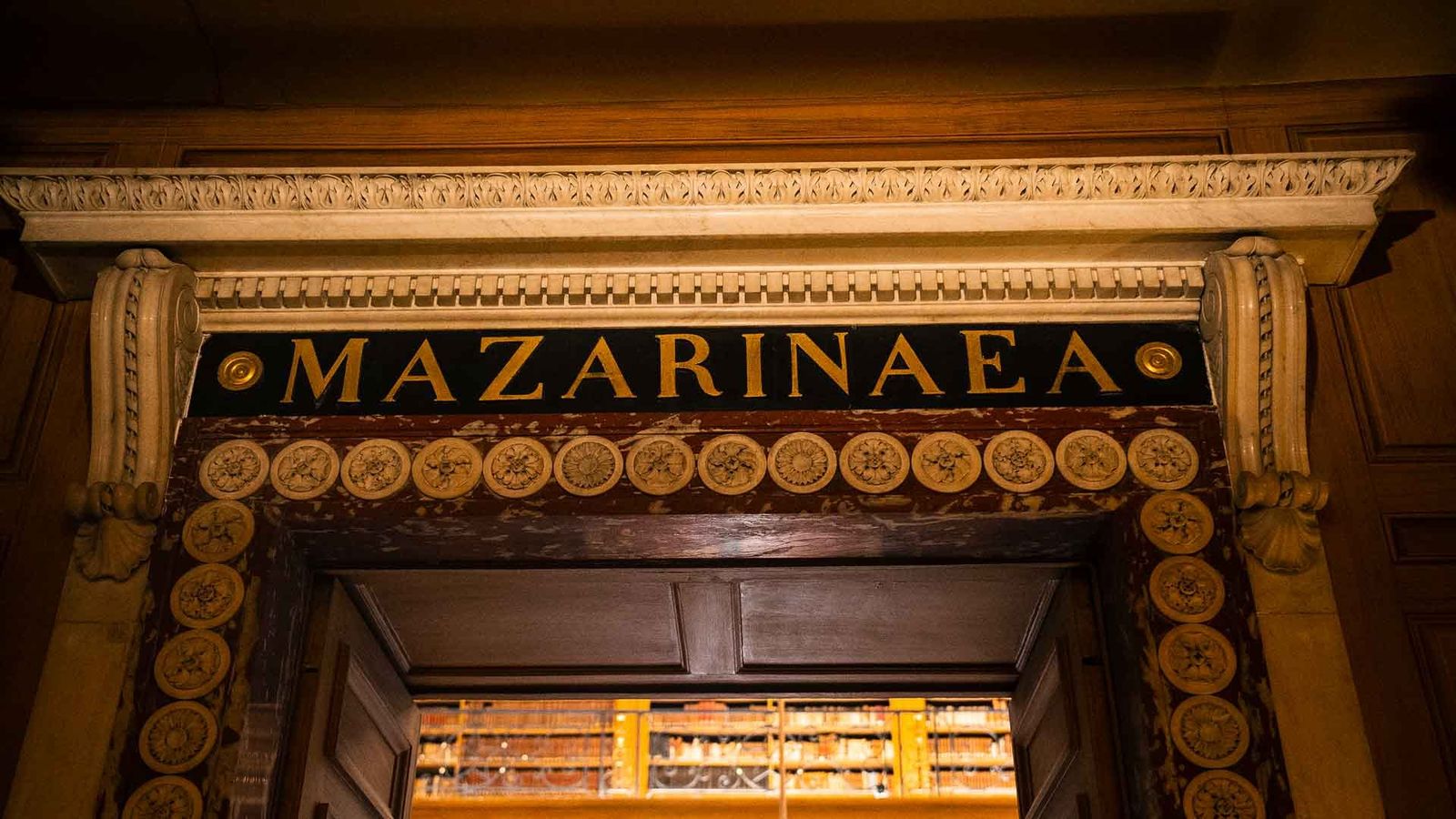

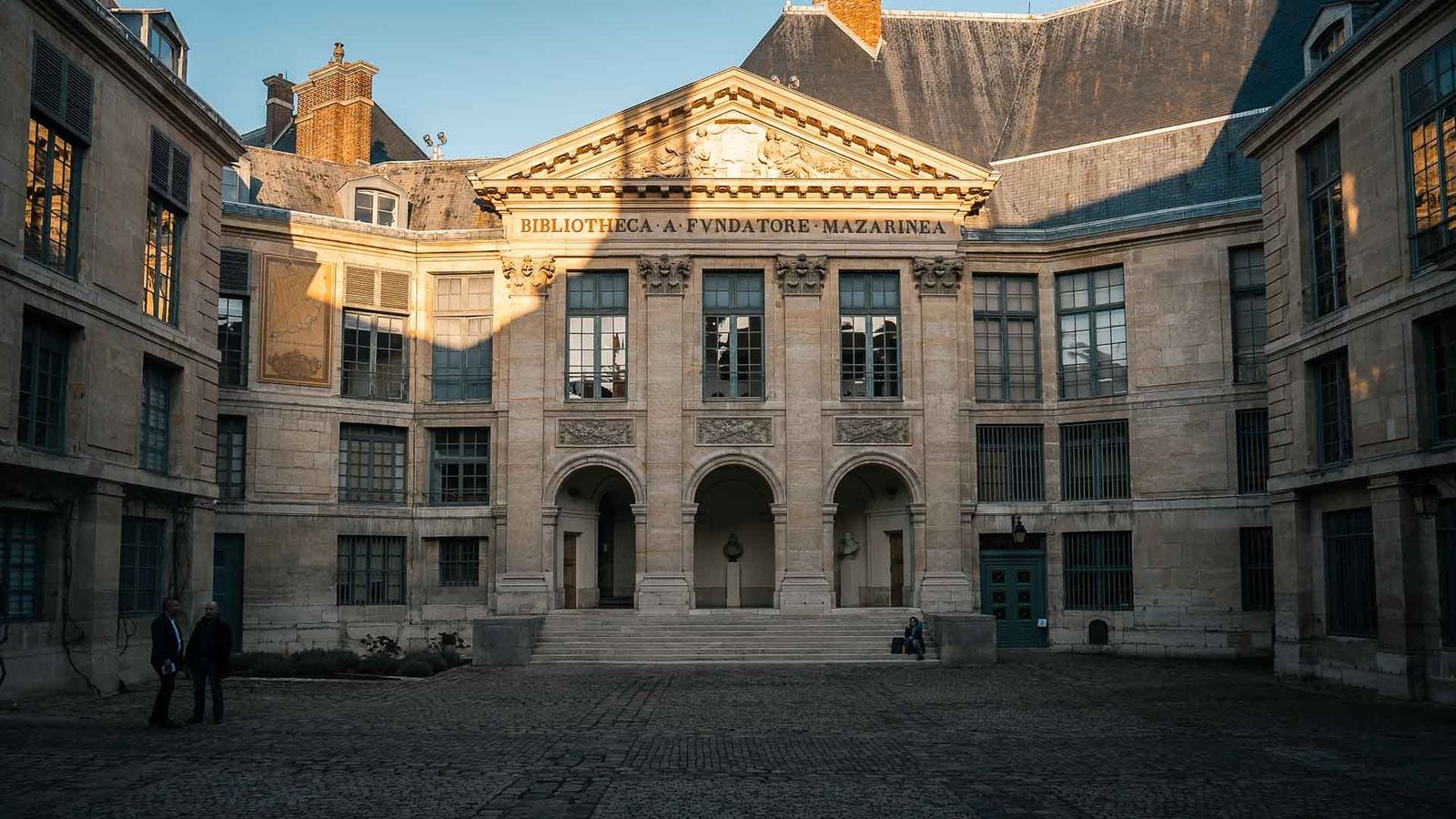
Tucked inside the Institut de France on the Left Bank of the Seine, the Bibliothèque Mazarine is more than a library—it’s a living monument to knowledge. Founded in the 17th century by Cardinal Jules Mazarin, it is the oldest public library in France, with origins dating back to 1643. Open to the public ever since, the Mazarine is a remarkable blend of historical depth, architectural elegance, and scholarly ambition.
A Library Born of Power and Vision
Cardinal Mazarin—Richelieu’s successor and de facto ruler of France during Louis XIV’s minority—was not only a statesman but also a passionate bibliophile. He began collecting books in the 1640s, determined to rival the great libraries of Europe. Under the guidance of Gabriel Naudé, the first modern theorist of library science, Mazarin amassed a collection of nearly 40,000 volumes by mid-century. This first library, housed in his mansion near the Palais Royal, was organized with unprecedented care and made accessible to scholars—an innovation at the time.
During the Fronde, a period of civil unrest, Mazarin fled Paris and his collection was auctioned off in 1652. But he returned, rebuilt it, and laid plans to make it permanent. In his will, Mazarin attached the library to a new school he founded, the Collège des Quatre-Nations, and ordered that it remain open to the public.
Architecture: A Monument to Knowledge
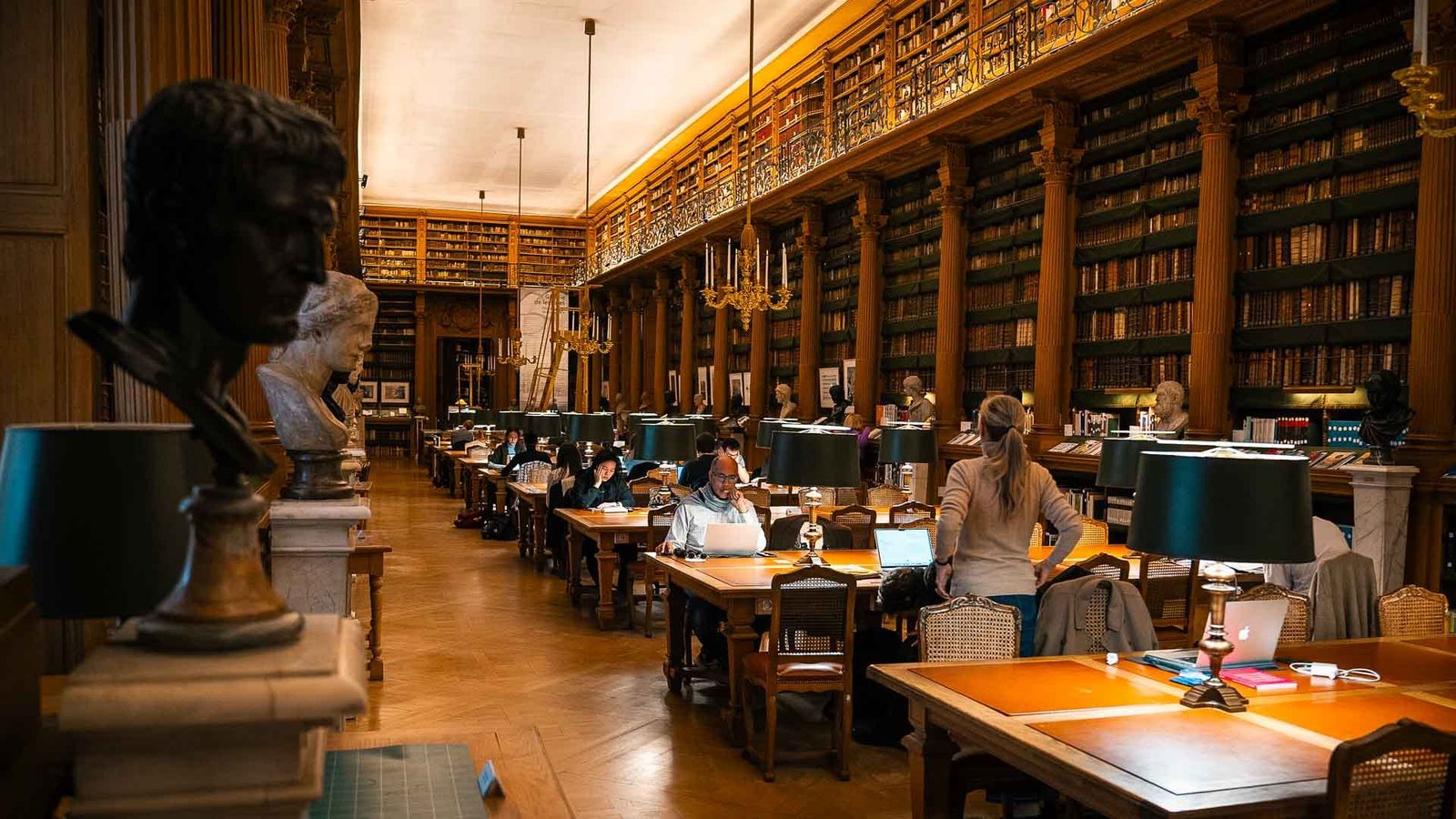
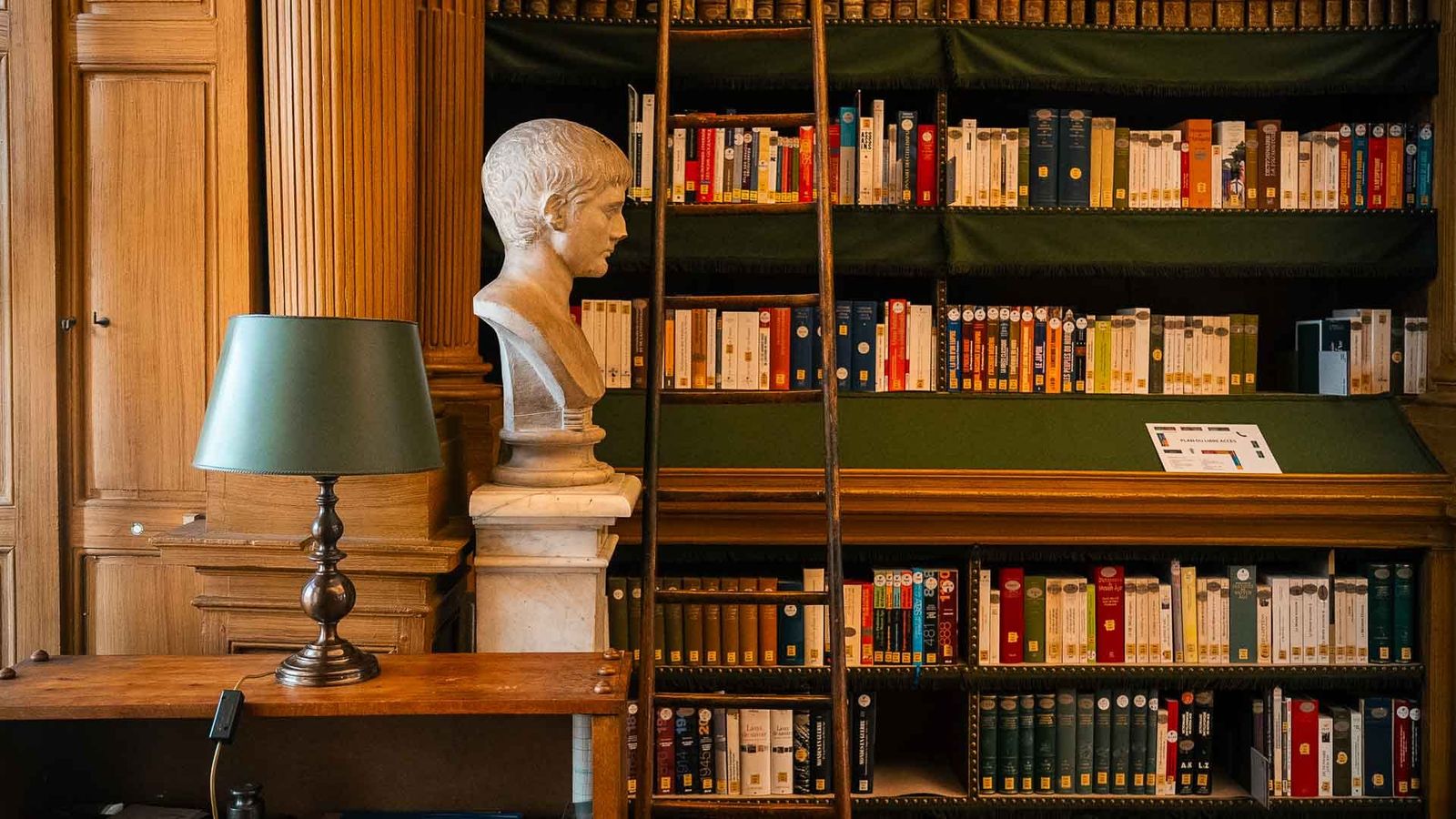
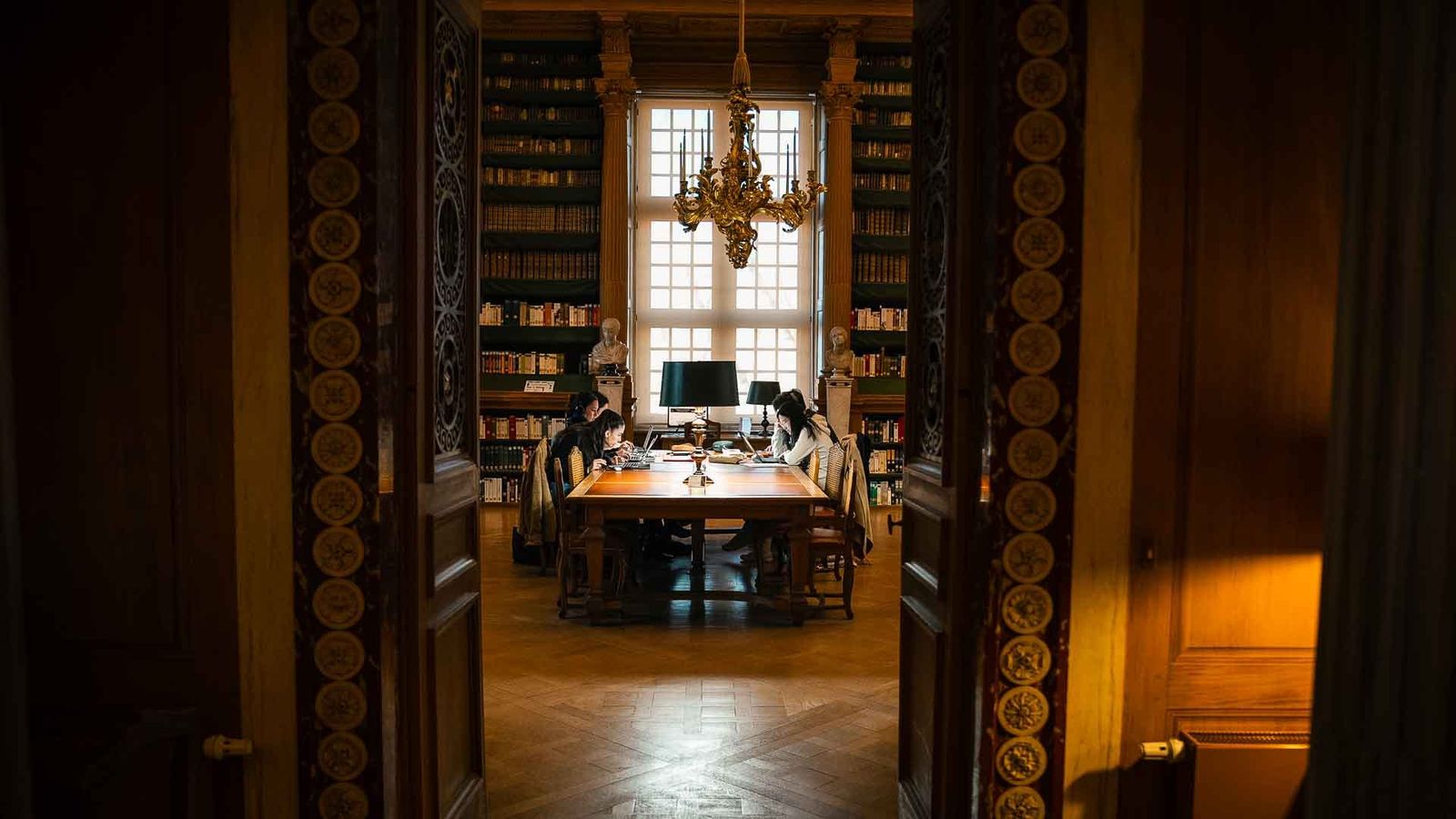
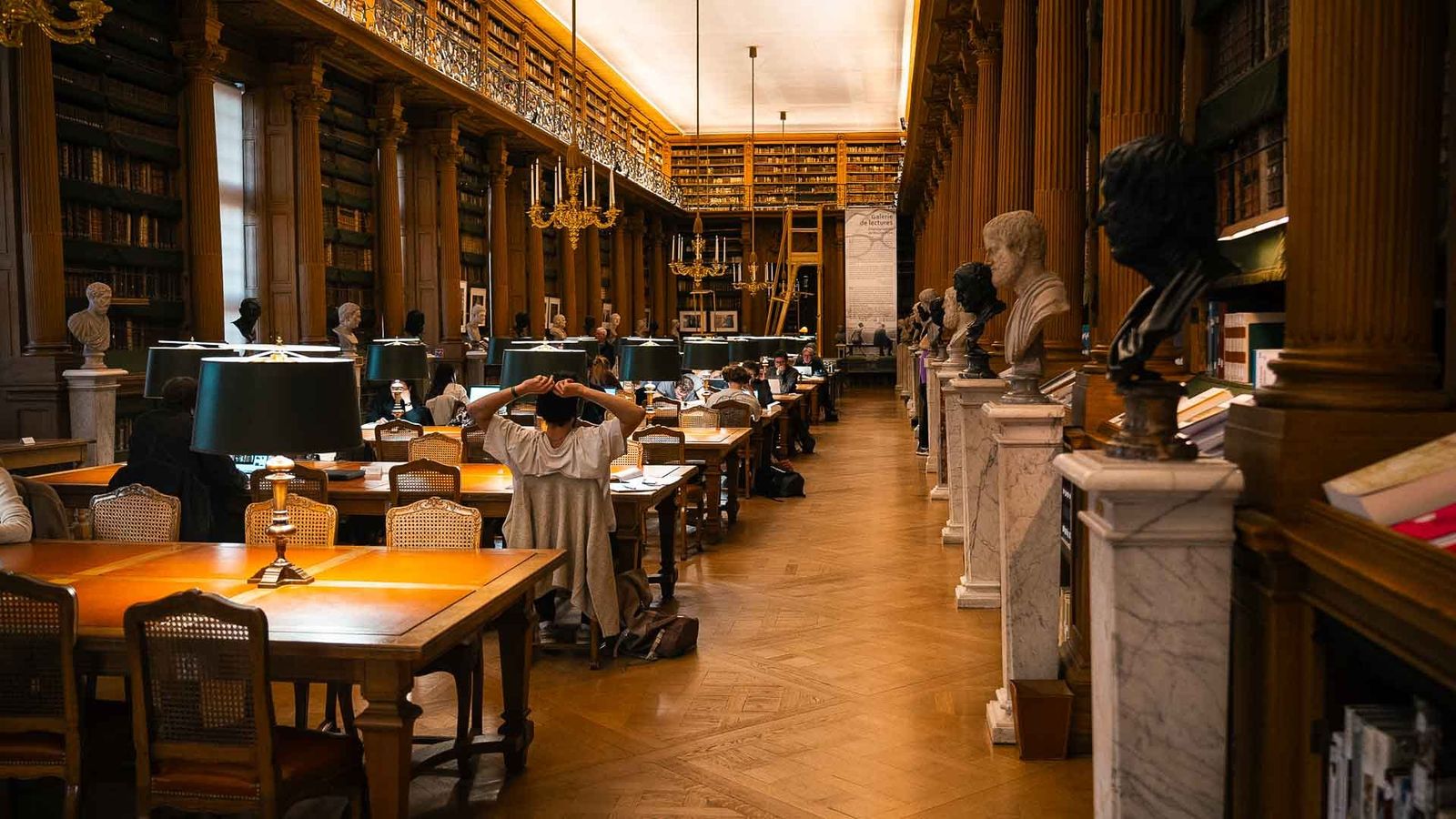
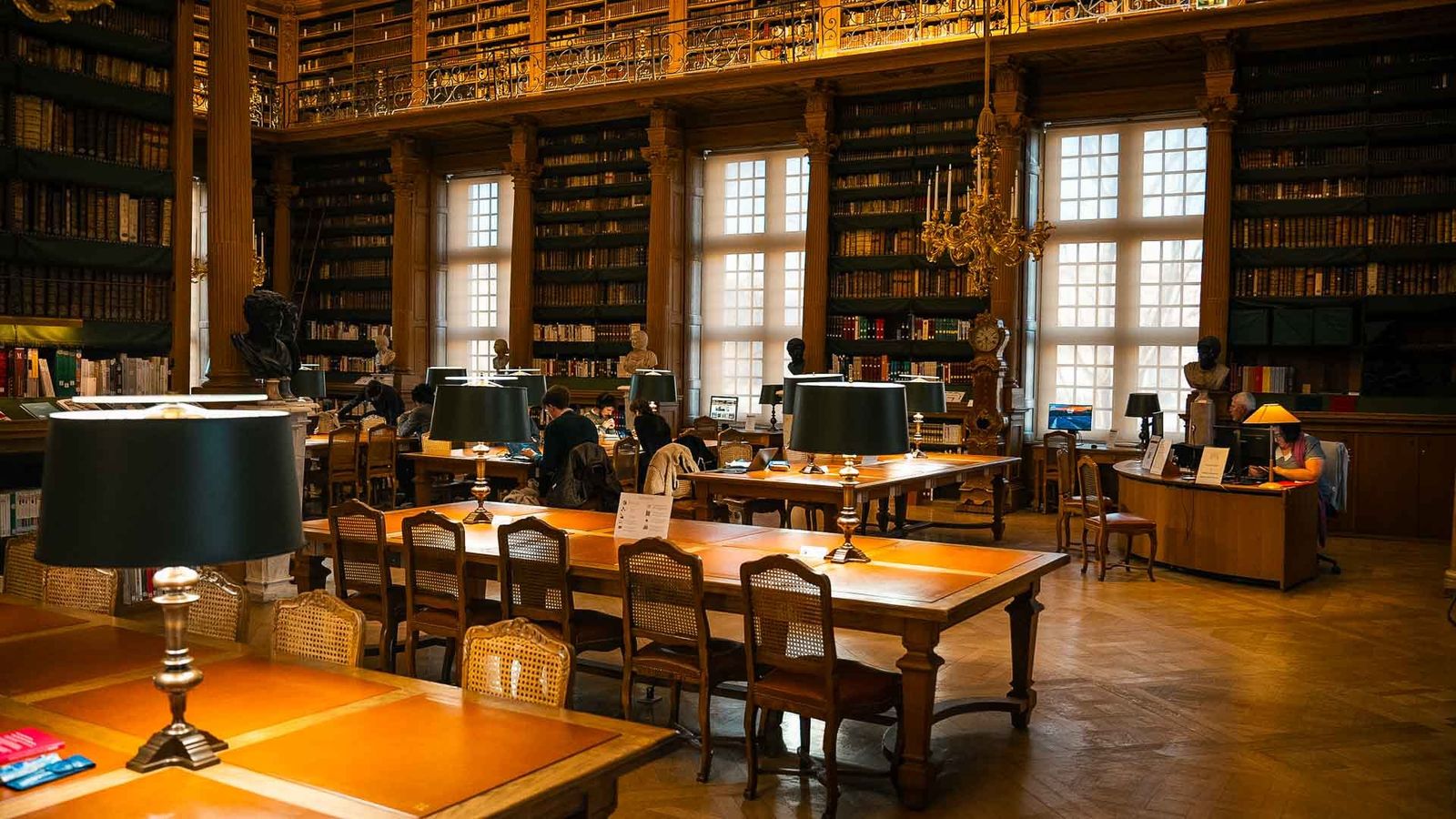
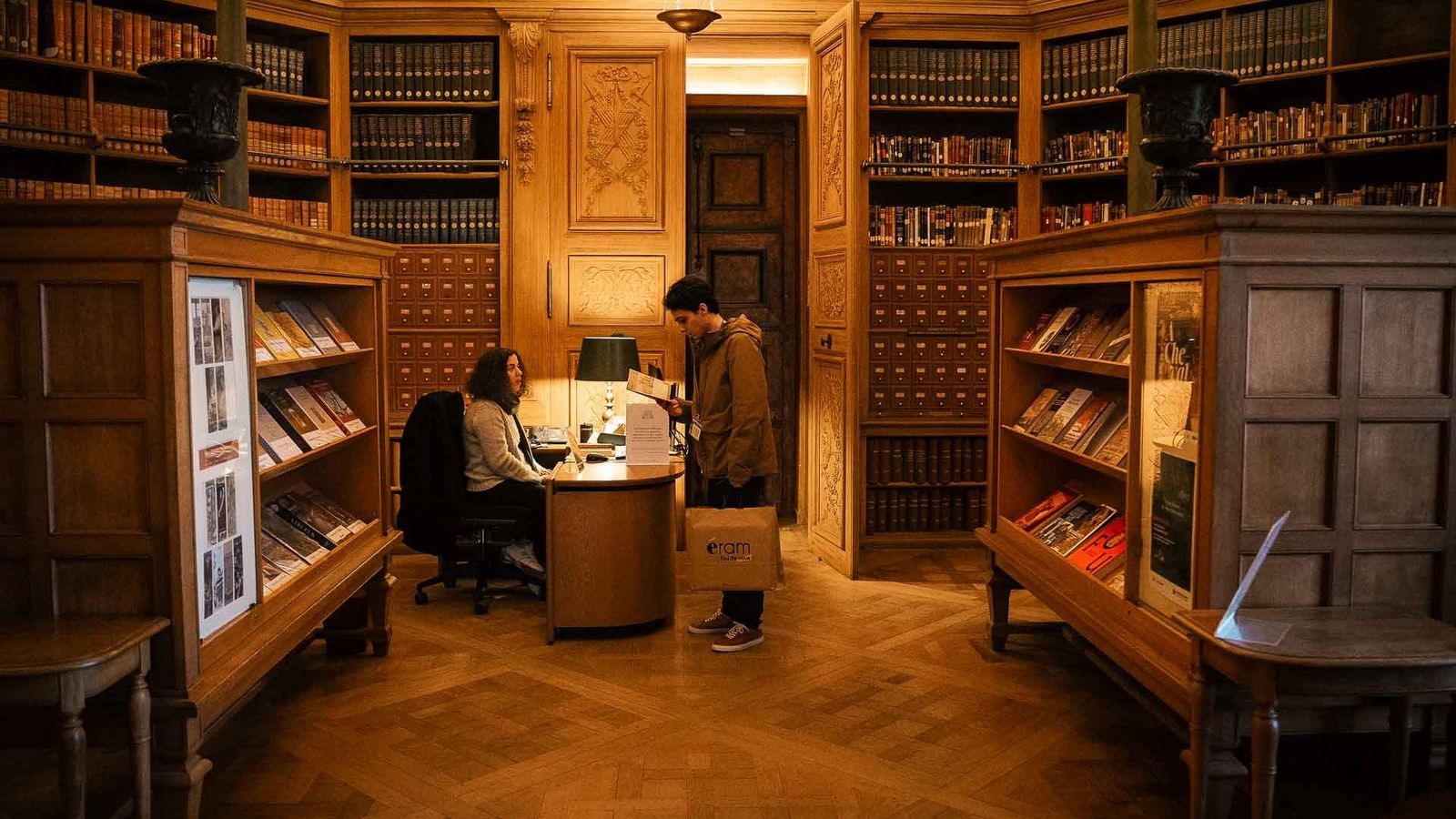
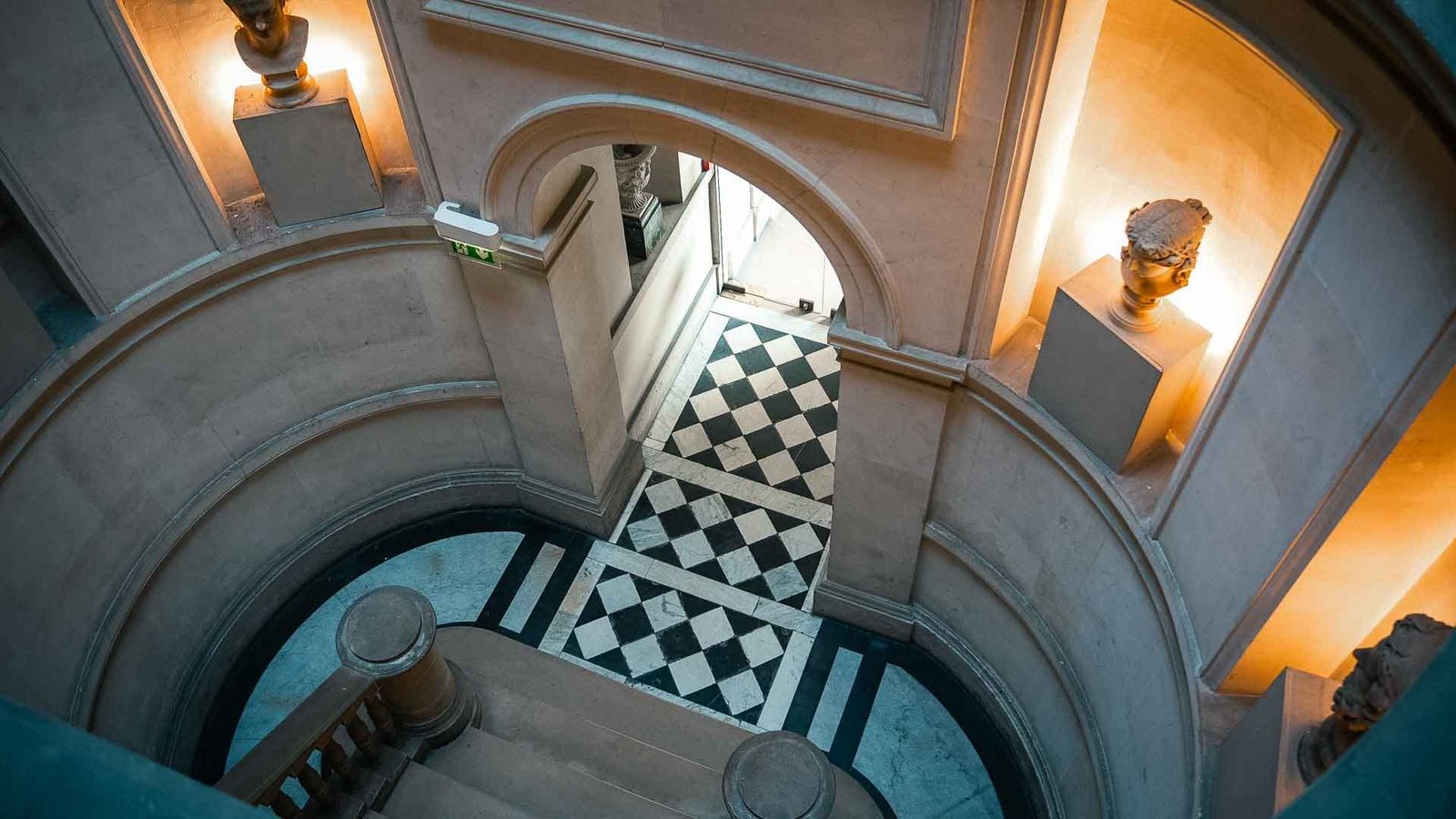
The library moved into its current home in 1689—a baroque-classical building designed by Louis Le Vau and later completed by François d’Orbay. The original gallery, modeled after Italian examples like the Barberini Library, was reconstructed within this new space. Even today, the library retains the grandeur of the 17th century: towering bookshelves, wood paneling, gilded busts, and the iconic reading room lined with nine terra-cotta domes.
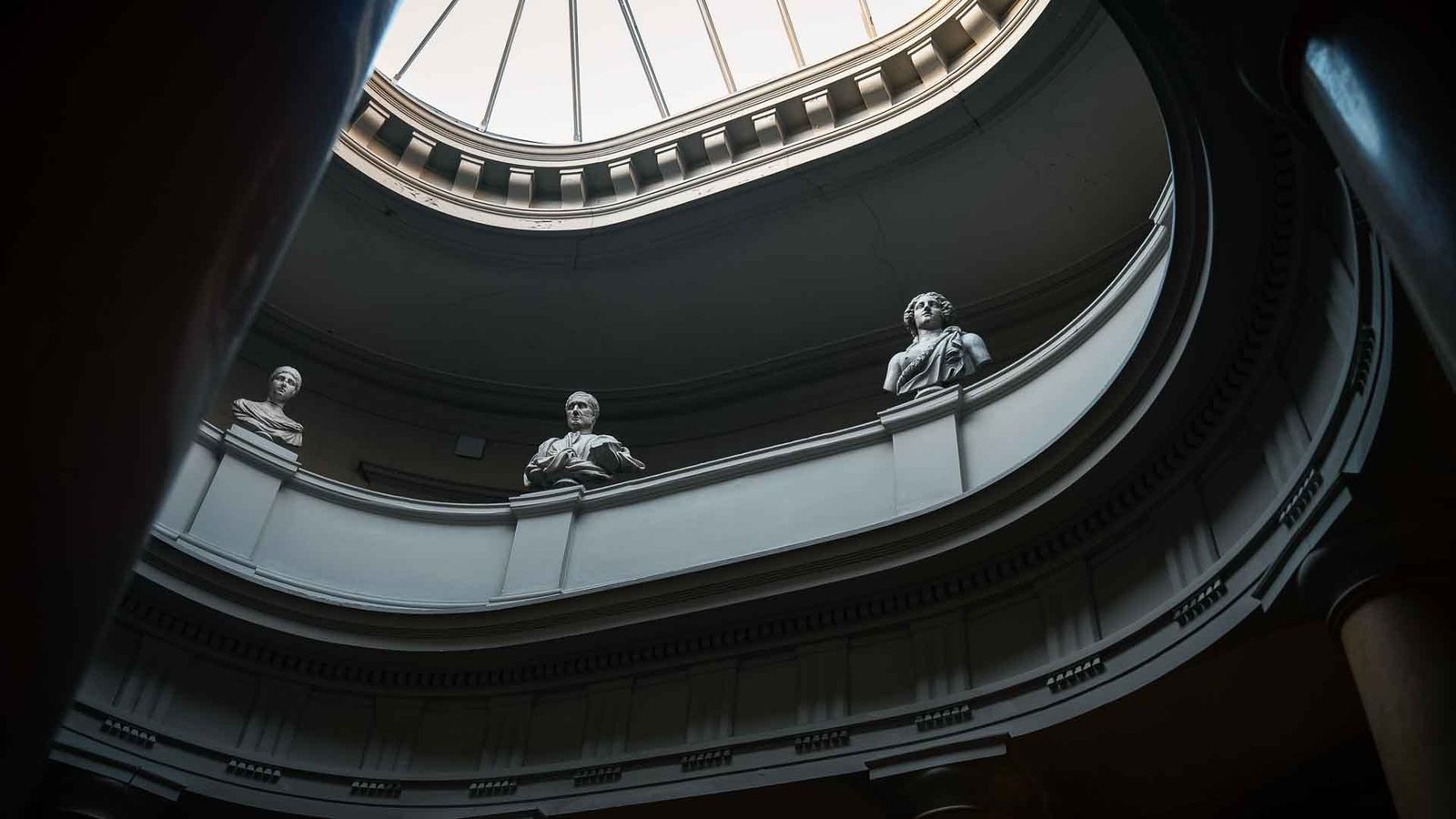
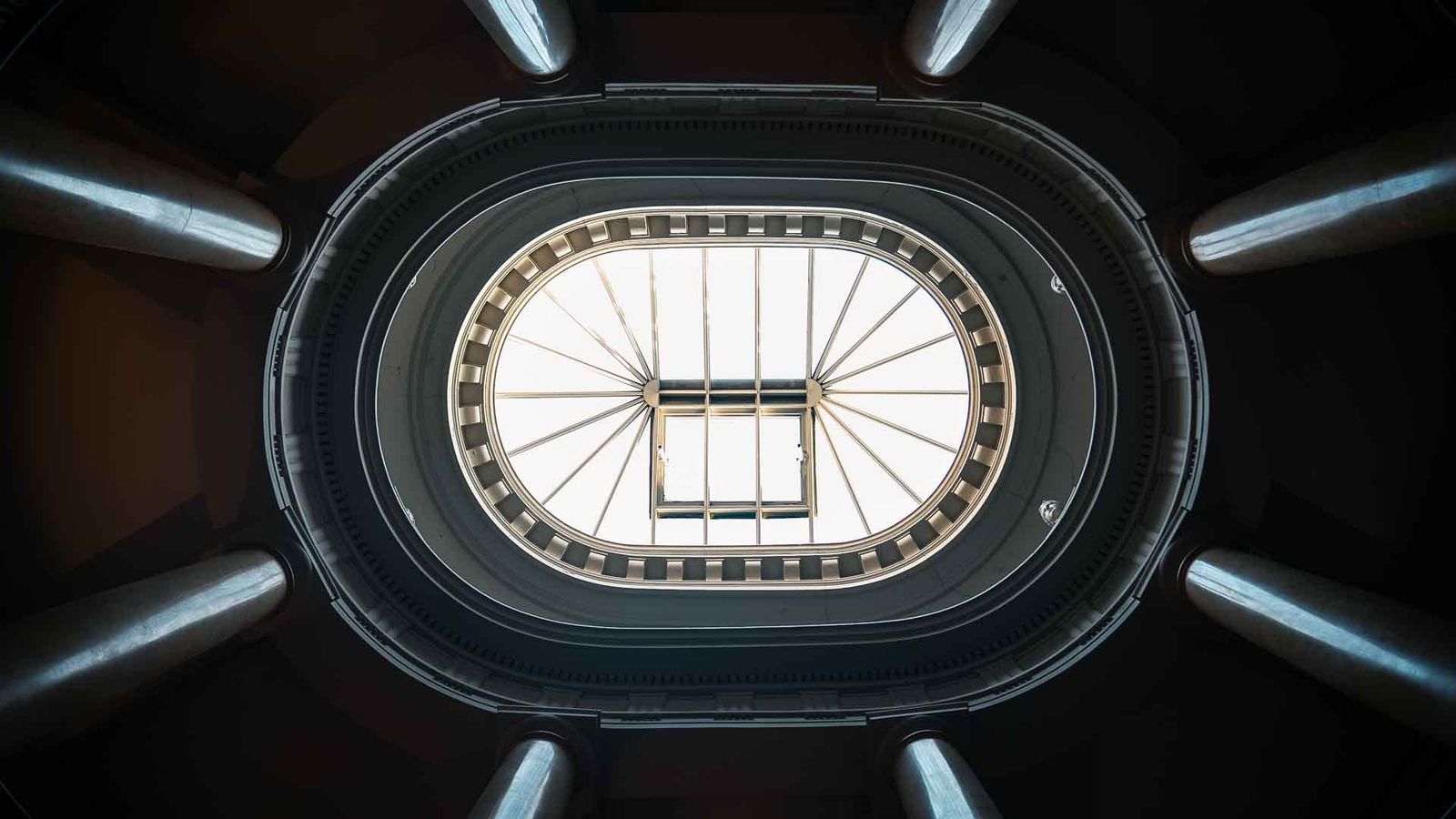
Renovations in the 18th and 19th centuries introduced new architectural elements: a vaulted ceiling in 1740, a neoclassical staircase in 1824, and galleries adorned with antique busts, clocks, and chandeliers once owned by the Marquise de Pompadour.
The Collections: Rare, Rich, and Vast
Today, the Bibliothèque Mazarine holds over 600,000 volumes, including 2,400 incunabula, 4,700 manuscripts, and 180,000 early printed books. The library’s core collection stems from Mazarin’s original holdings, but it was greatly expanded during the French Revolution when thousands of works from monasteries, aristocratic estates, and even conquered territories were transferred to public libraries. Abbé Leblond, the librarian at the time, played a key role in enriching the Mazarine’s holdings with these rare acquisitions.
The manuscript collection includes texts from as early as the 10th century and has continued to grow through donations, bequests, and acquisitions. Papers from historians, scientists, and notable families sit alongside medieval manuscripts, many of which are accessible through the Calames online catalogue. Over 16,000 manuscript illuminations have been digitized for public access.
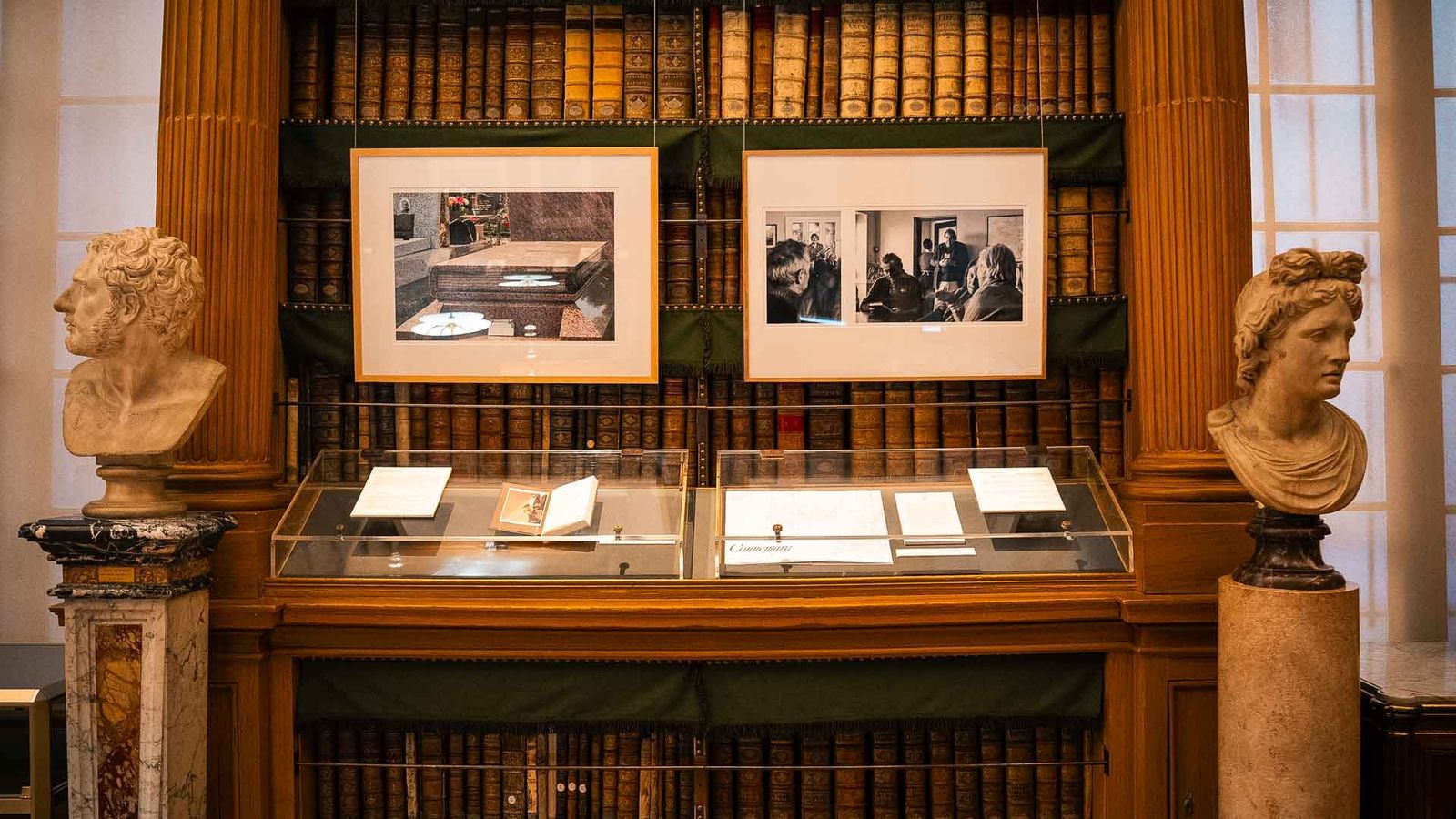
The rare book collection covers theology, philosophy, science, medicine, literature, and law, including rare publications from the Imprimerie du Louvre and works in oriental and heretical languages. It also features a trove of Mazarinades—satirical pamphlets printed during the Fronde targeting Mazarin himself, now ironically preserved in his library.
Art and Atmosphere
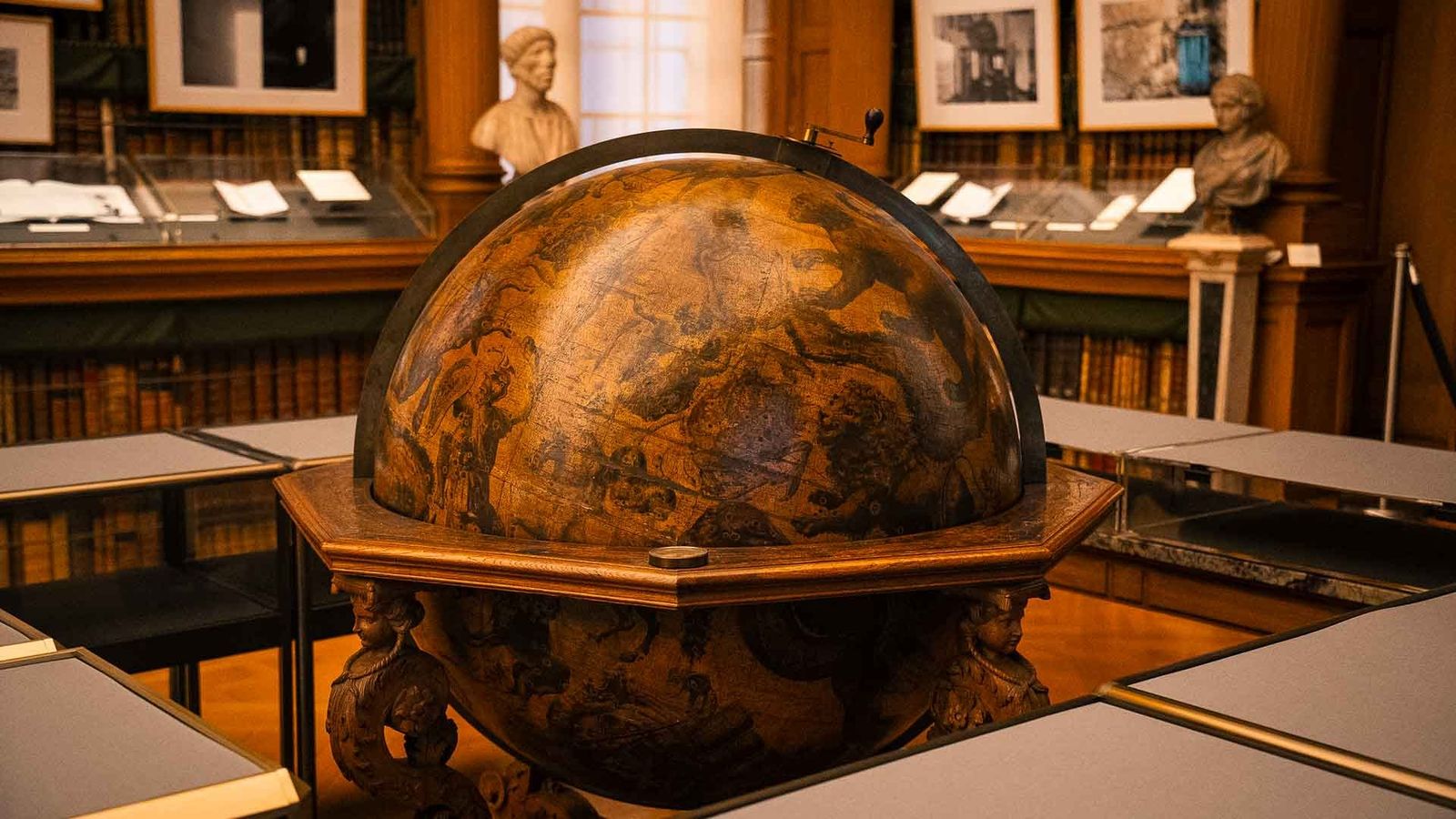
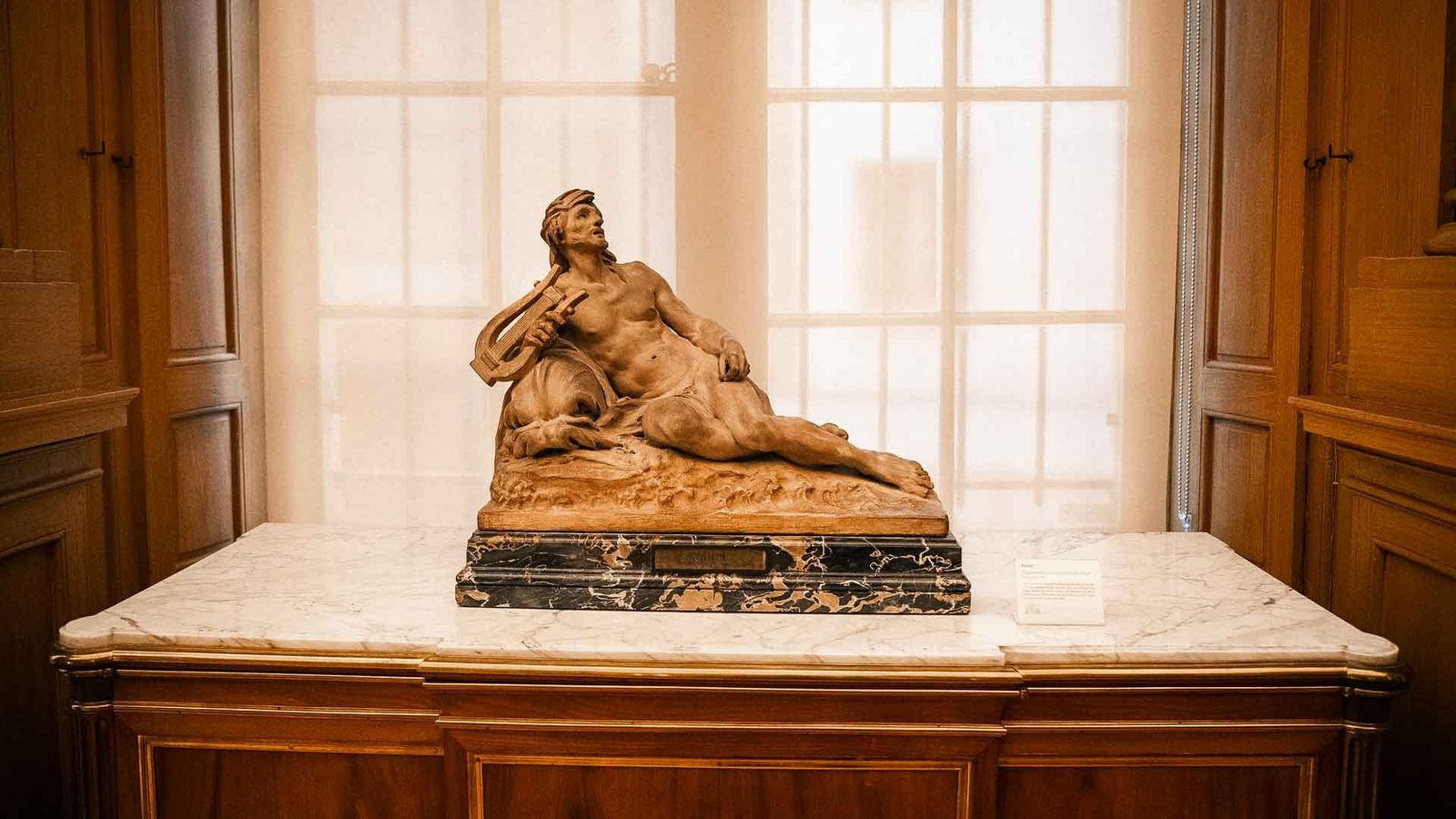
Beyond books, the Mazarine houses over 200 artworks, many integrated into the library’s furnishings. Highlights include sculptures by Clodion, busts of Benjamin Franklin and Buffon, and a monumental celestial globe by Vincenzo Coronelli (1693). Gilt chandeliers, antique vases, clocks, and furniture from revolutionary confiscations add to the atmosphere, making the library as much a museum as a place of study.
A Modern Research Library with a Historical Soul
While steeped in history, the Mazarine is a functioning research library focused on historical disciplines—French history, art history, genealogy, and the history of the book. It continues to receive publications through legal deposit and supports scholars with open-access reference works, periodicals, and modern monographs.
Since 1945, the library has been part of the Institut de France, and its reading room—restored between 1968 and 1974—remains open to all. Researchers, students, and curious visitors are welcome to explore its treasures, many of which are freely accessible online.
A Hidden Gem in the Heart of Paris
Despite its central location and monumental importance, the Bibliothèque Mazarine remains relatively unknown to many visitors. Those who step inside find not just a library but a place where centuries of intellectual ambition are preserved in wood, paper, and stone. Whether you’re researching 17th-century pamphlets or simply looking for a quiet moment under the gaze of marble philosophers, the Mazarine offers a rare, contemplative experience—where the past isn’t just remembered, but still alive on the shelves.