


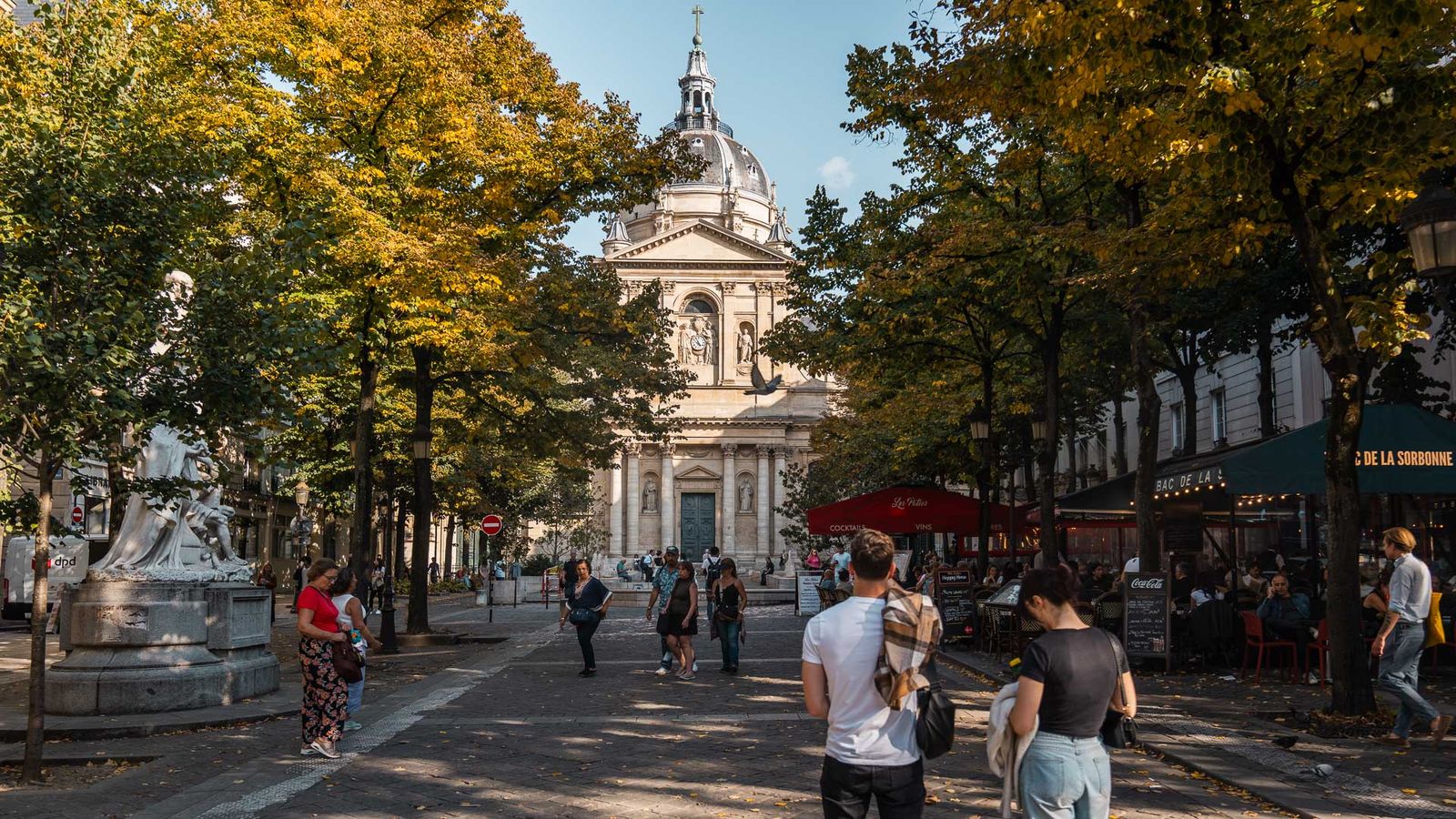
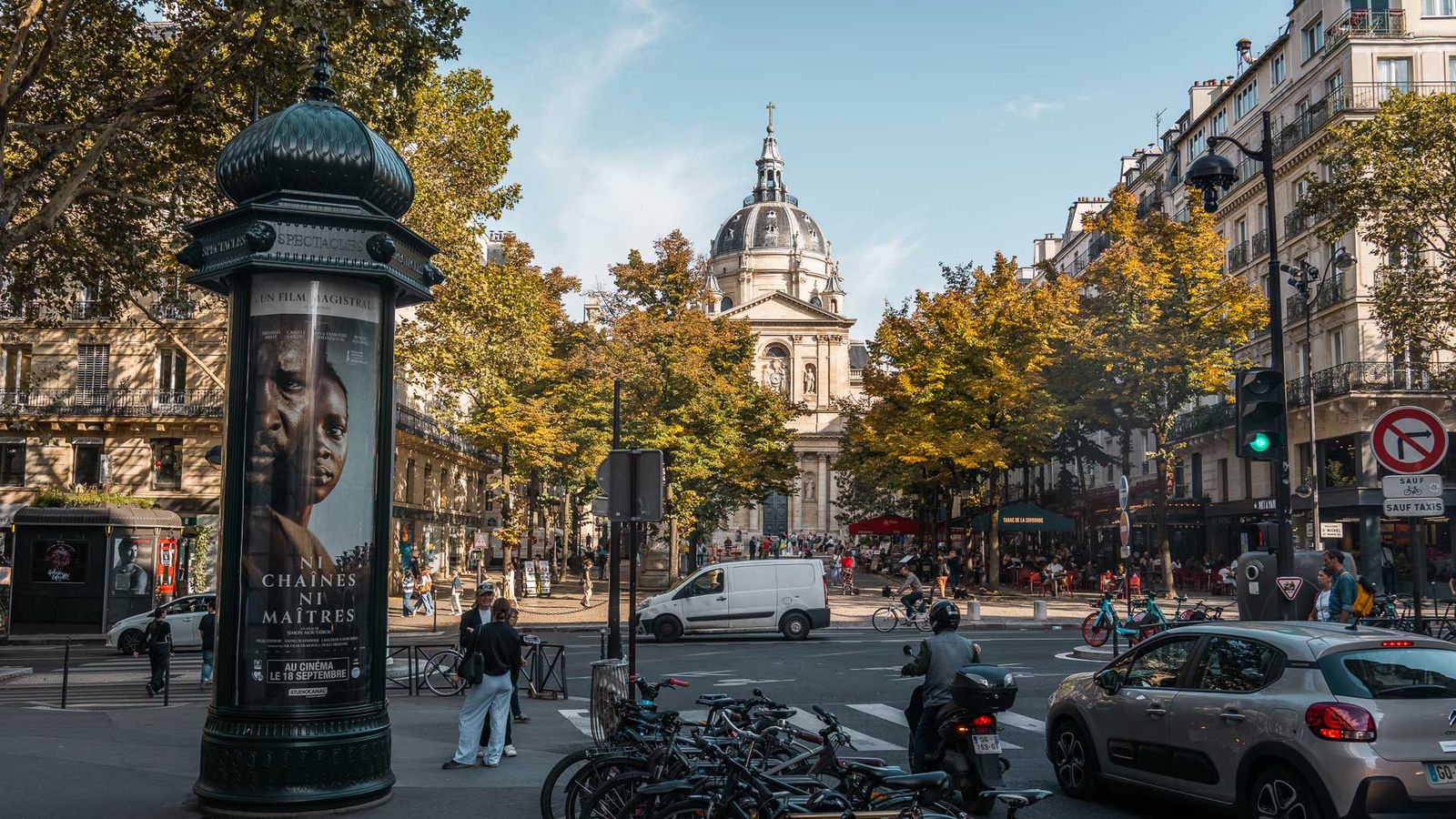
Place de la Sorbonne owes its name to the University of La Sorbonne, established by Robert de Sorbon in 1253. This square, located in the 5th arrondissement, near the vibrant Boulevard Saint-Michel, was officially opened in 1639 as Rue Neuve-de-Richelieu and later transformed into a hub of academic and cultural influence.
Over centuries, this modest square has witnessed Parisian history unfold, from its founding under Cardinal Richelieu to its revolutionary moments, including a short-lived renaming as Place Chalier during the French Revolution.
An Oasis of Academic and Artistic Atmosphere
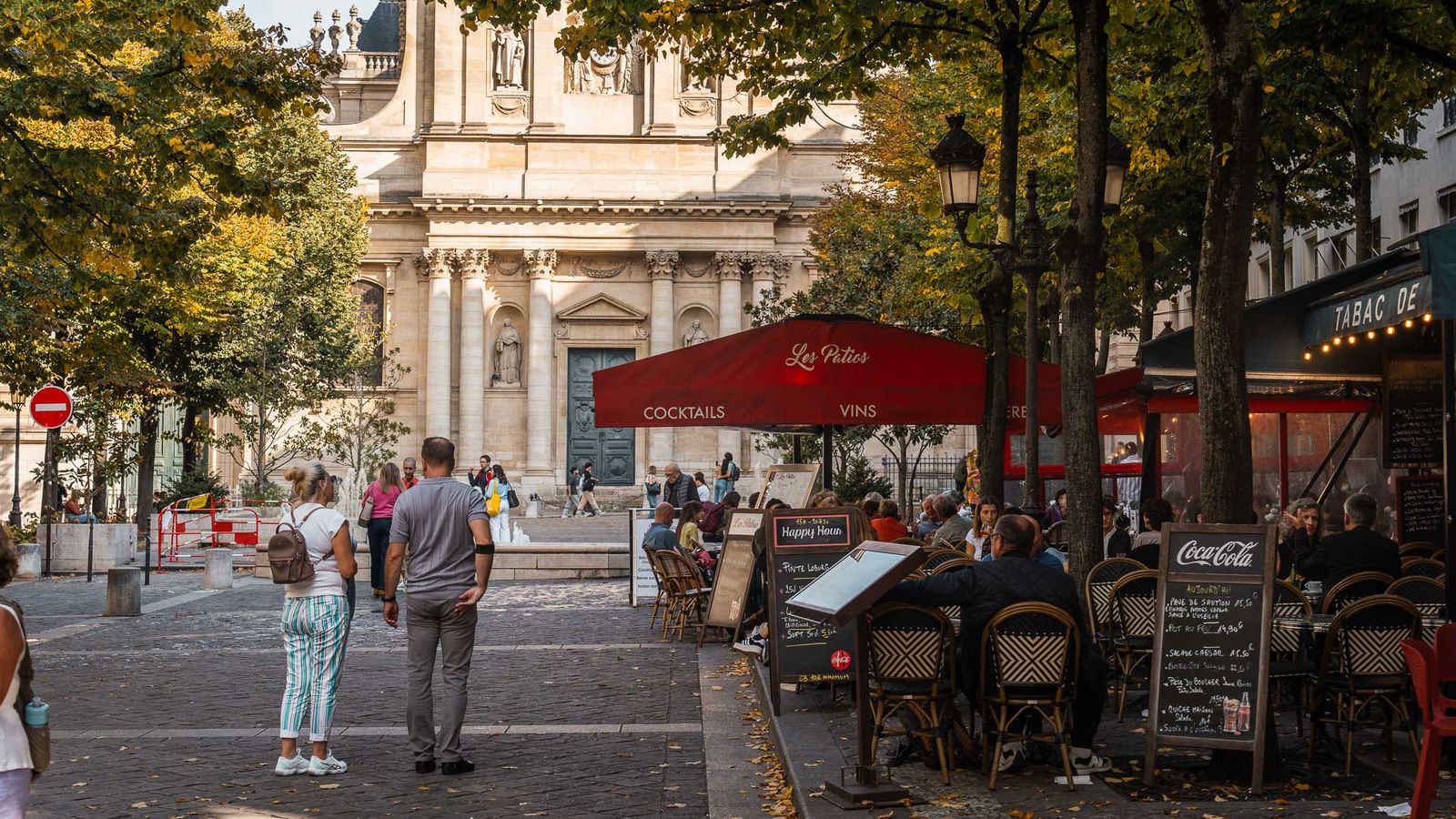
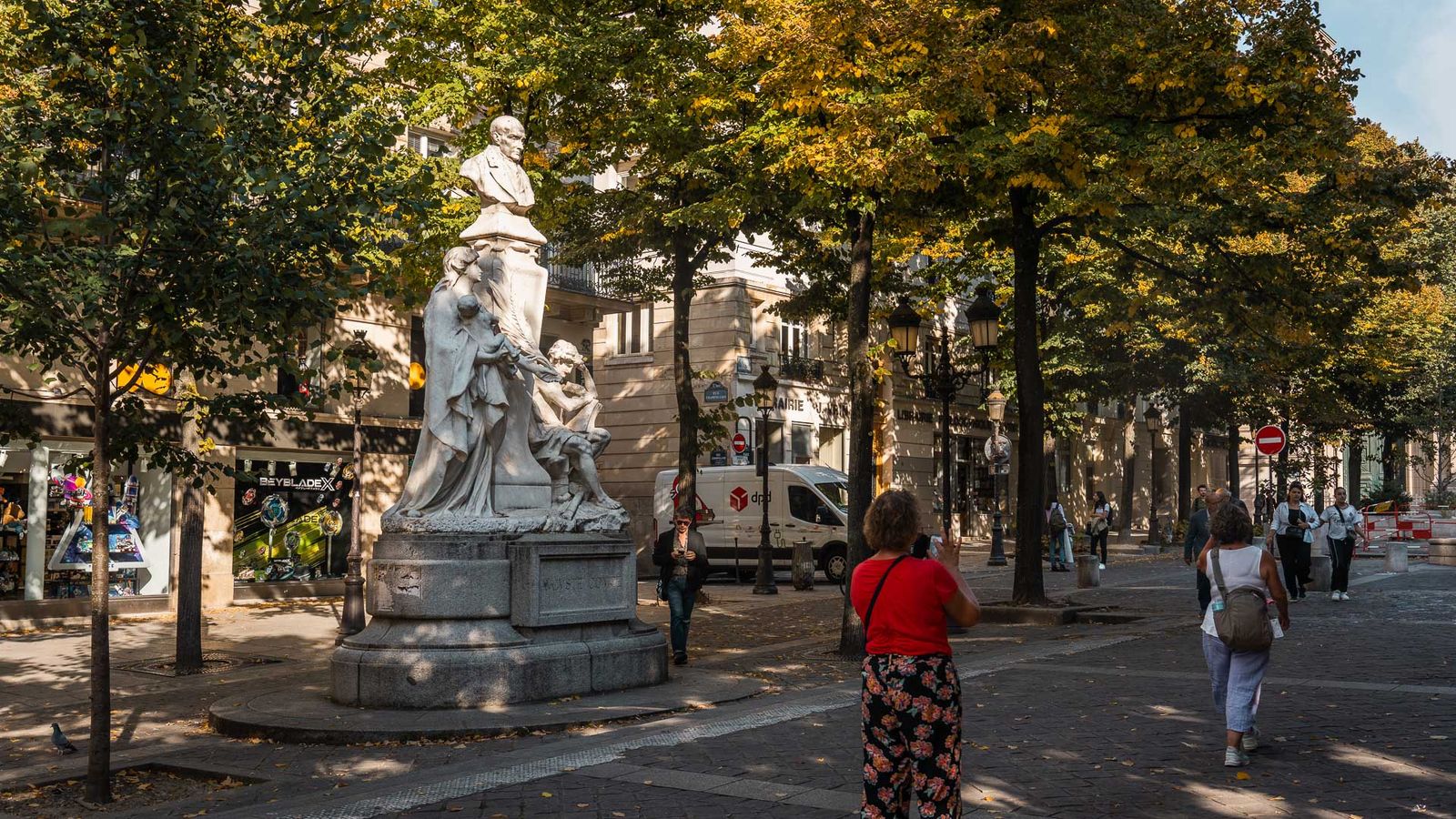
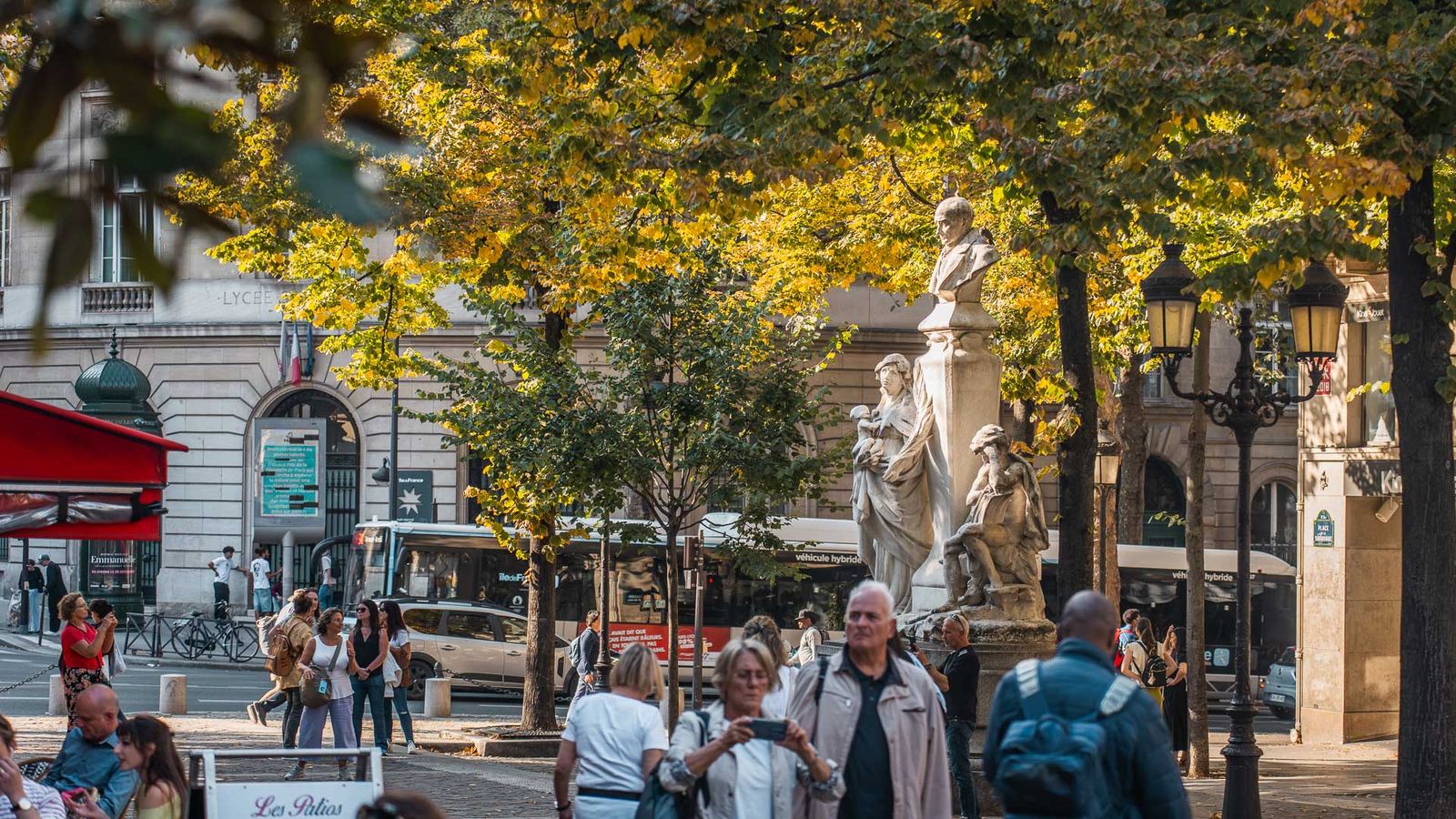
This charming pedestrianized area hosts a fountain with a flowing basin, surrounded by the tangle of academic bookstores, cafés, and terraces. The square is dominated by a statue of Auguste Comte, a prominent philosopher who helped shape the intellectual fabric of France.
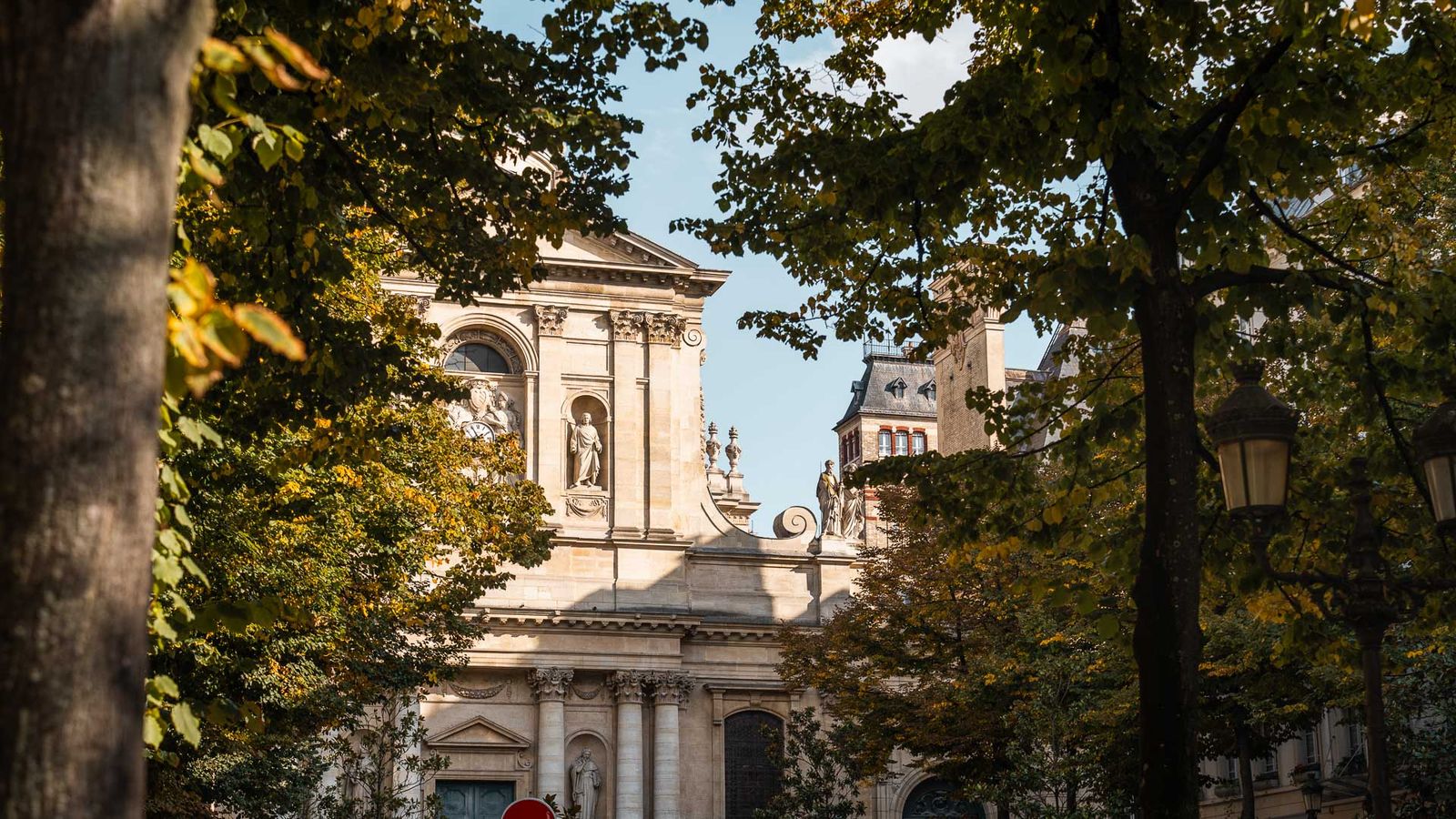
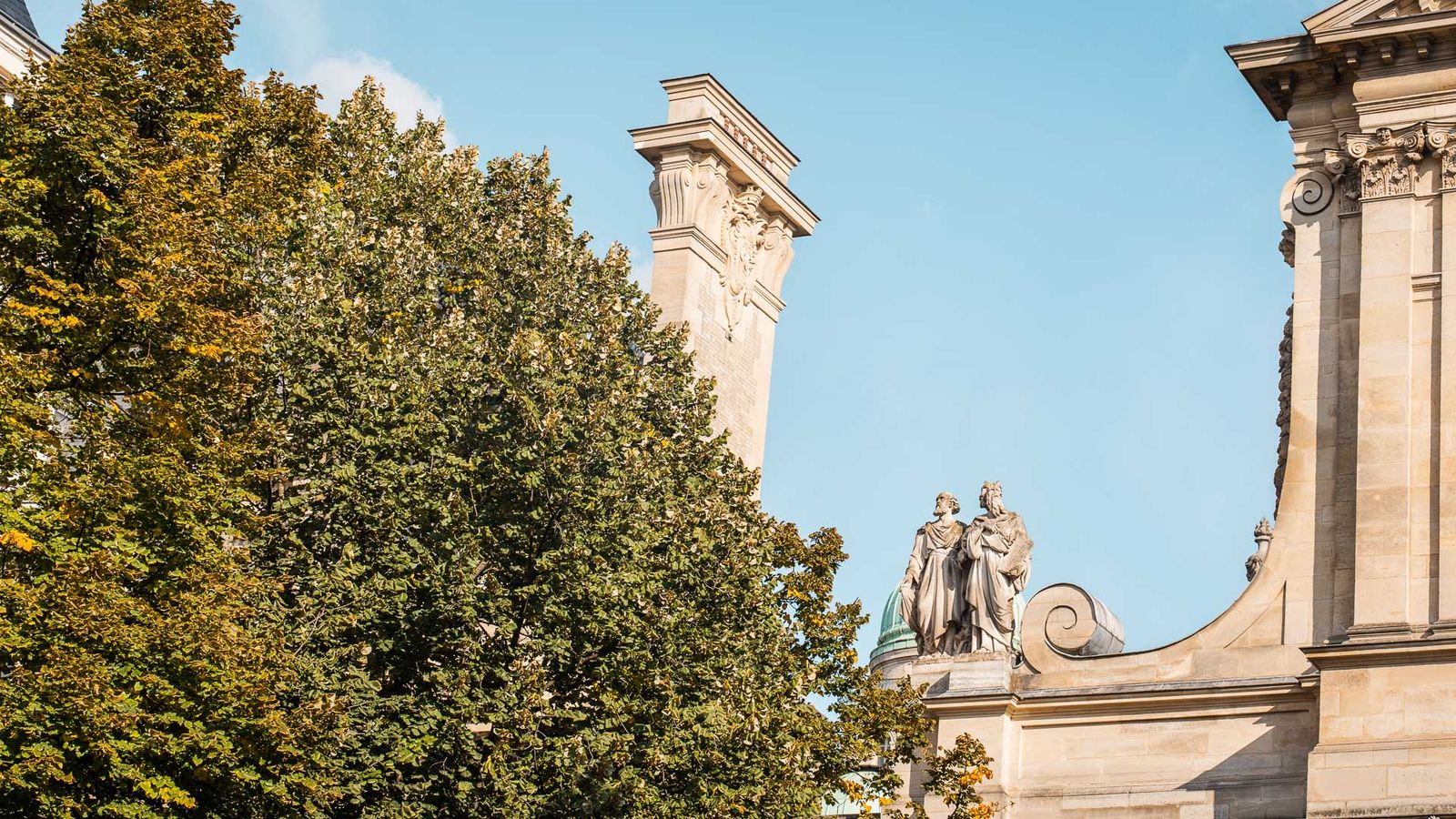
One can pause for a café au lait in the shade of the linden trees and gaze at the Sainte-Ursule Chapel of the university, an enduring symbol of academia that dates back to Cardinal Richelieu’s original vision.
An Anchor in Revolutionary Movements
As a historically symbolic space for student protests, Place de la Sorbonne played a key role during May 1968, when it became a center of student demonstrations. This tradition of activism was revived in 2006 during protests against labor policies, when the square was cordoned off as students gathered in solidarity.
Today, it still serves as a reminder of the spirit of resistance and activism embedded in the area.
Unique Bookstores and Memorable Cafés
Place de la Sorbonne is surrounded by specialized bookshops and literary cafés that cater to students, intellectuals, and curious travelers alike. Highlights include the J. Vrin Bookstore, a philosophical institution since 1911, and the renowned café L’Écritoire, where artists and intellectuals like Julien Clerc and Étienne Roda-Gil once mingled.
These locations, alongside a collection of academic publishers, reflect the square’s literary and philosophical ambiance.
Archaeological Treasures Beneath the Cobblestones
In a fascinating excavation in 2000, archaeologists uncovered Roman-era ruins beneath Place de la Sorbonne, including remnants of first-century houses and a third-century cellar. These findings are a testament to the square’s layered history, connecting it to the earliest roots of Paris. The presence of a short section of ancient Roman road discovered here reveals the enduring foundation beneath this beloved site.