


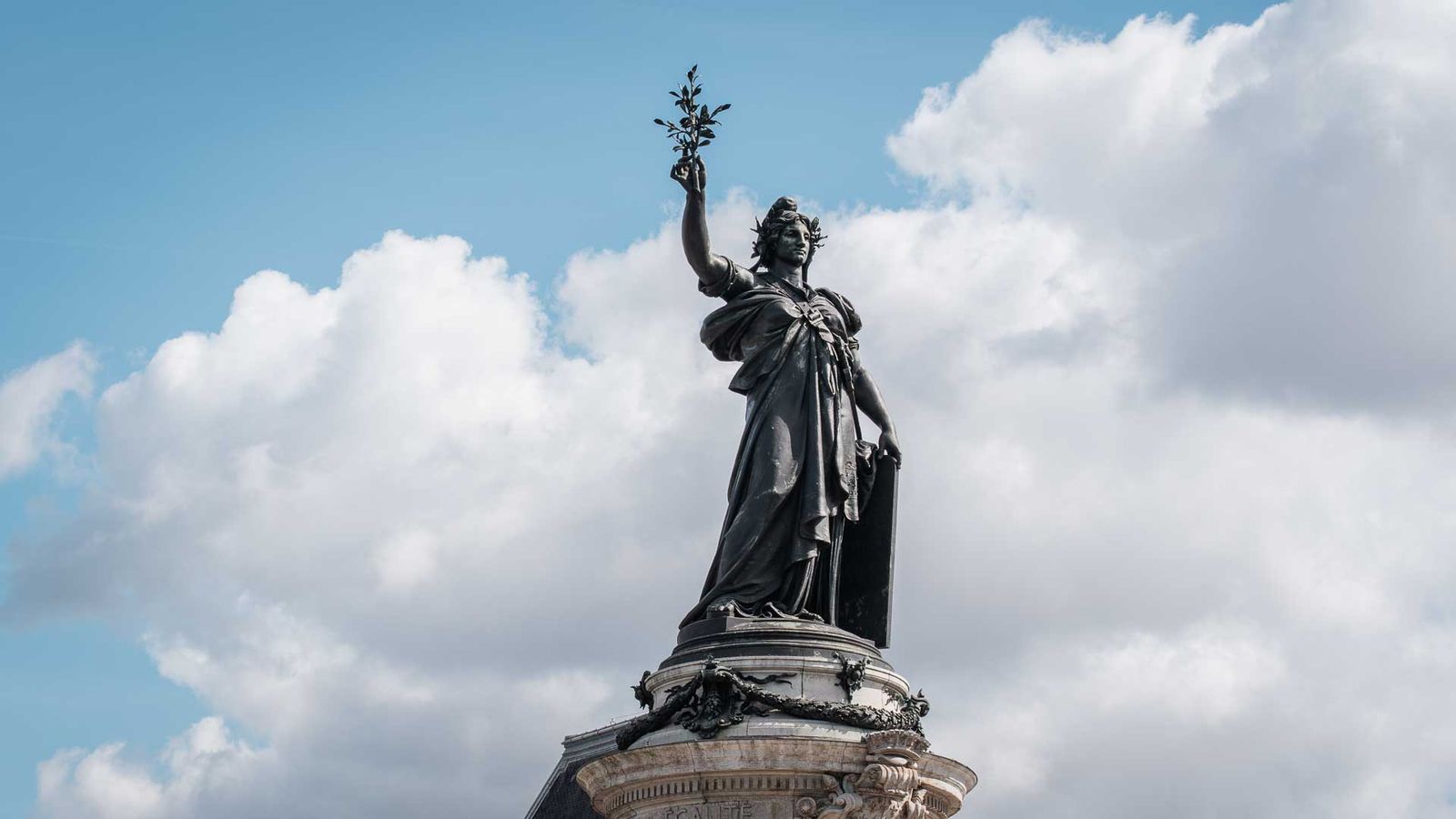


Located at the convergence of Paris’s 3rd, 10th, and 11th arrondissements, Place de la République spans over 33,000 square meters, making it one of the city’s largest public squares.
Originally called Place du Château-d’Eau, it was designed in 1854 during the reign of Napoleon III, under the visionary urban planning of Baron Haussmann. Central to its current identity is the monumental Statue of the Republic, a 9.5-meter-tall bronze representation of Marianne, symbolizing the French Republic. Created by Léopold and Charles Morice in the late 19th century, this statue has witnessed pivotal historical events and serves as a revered symbol of French values—Liberté, Égalité, Fraternité.
Historic Milestones and Evolution of the Square
Originally adorned with the Fountain of Nubian Lions, the square’s layout has transformed over centuries, reflecting the city’s changing priorities. In 2013, the square underwent a significant redesign led by the architectural firm Trevelo & Viger-Kohler (TVK), creating a grand pedestrian space that places emphasis on social gatherings and community events.
Today, its central esplanade offers Paris residents and tourists alike a welcoming environment, complete with expansive walking paths, seating areas, and green spaces.
A Monument to Civic Values and Public Memory
The Statue of the Republic rests upon a stone pedestal, adorned with twelve bronze bas-reliefs, each commemorating critical moments in the French Republic’s history from 1789 to 1880. Surrounding the statue are three allegorical figures representing France’s guiding principles: Liberté, Égalité, and Fraternité.
Additionally, a symbolic bronze lion stands guard at its base, symbolizing resilience and strength. After the tragic events of 2015, Place de la République became a place of remembrance and solidarity, marked by a commemorative plaque near the Boulevard Magenta, honoring victims and renewing hope.
An Urban Hub of Parisian Life
In a district known for its lively streets, Place de la République is surrounded by bustling boulevards such as the Boulevard du Temple and Boulevard Saint-Martin. Once the site of prominent theaters and cultural spaces like Daguerre’s Diorama, the square now boasts a dynamic atmosphere where modernity meets history.
The recent redesign has encouraged pedestrian activities, reducing car traffic while enhancing access to cafes, outdoor seating, and pedestrian walkways, promoting a renewed sense of community in the heart of Paris.