






The Heart of Historical Drama
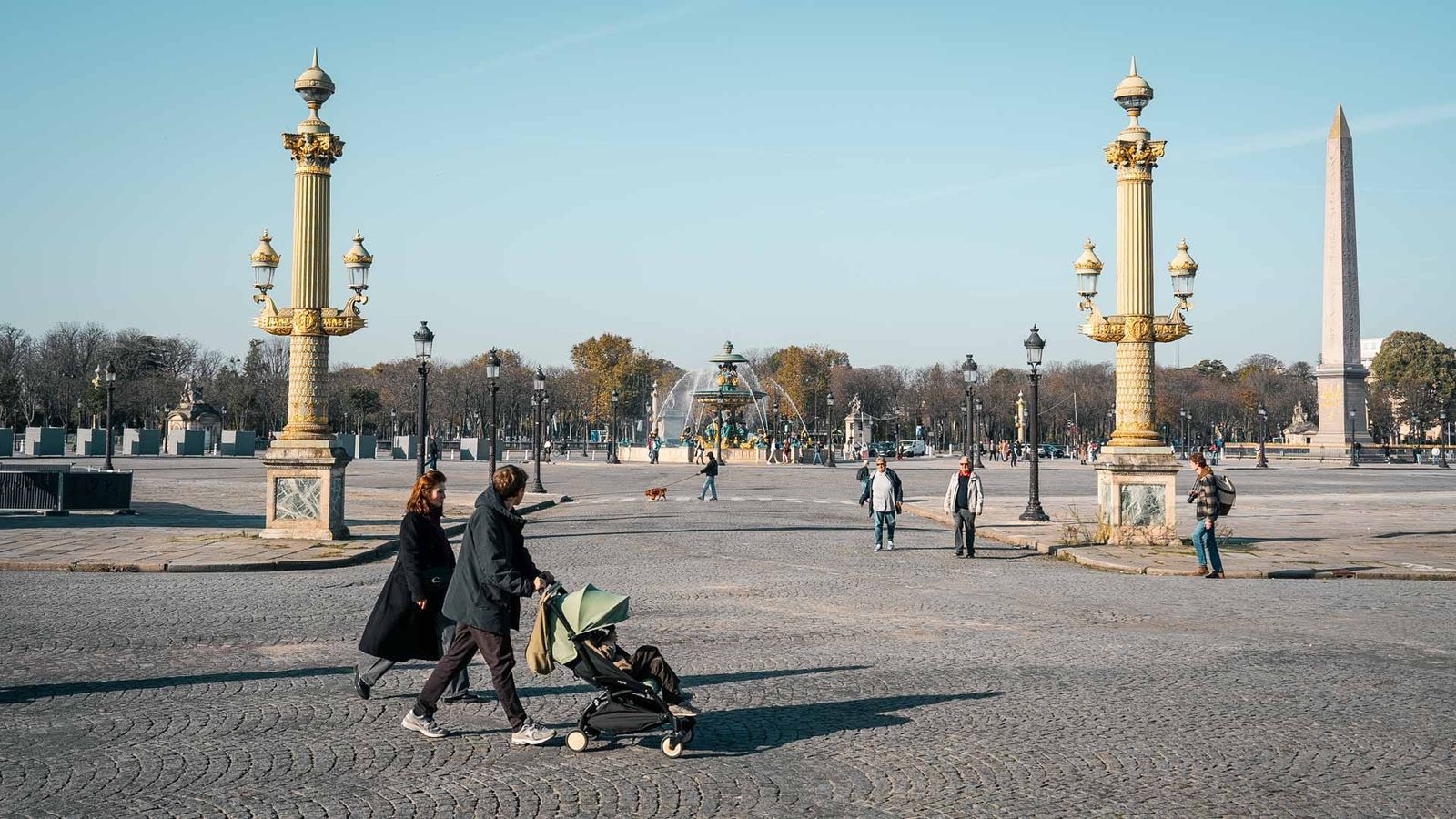
Situated between the Champs-Élysées and the Tuileries Garden, Place de la Concorde is a vast octagonal square that represents both the majesty and the turbulent history of France.
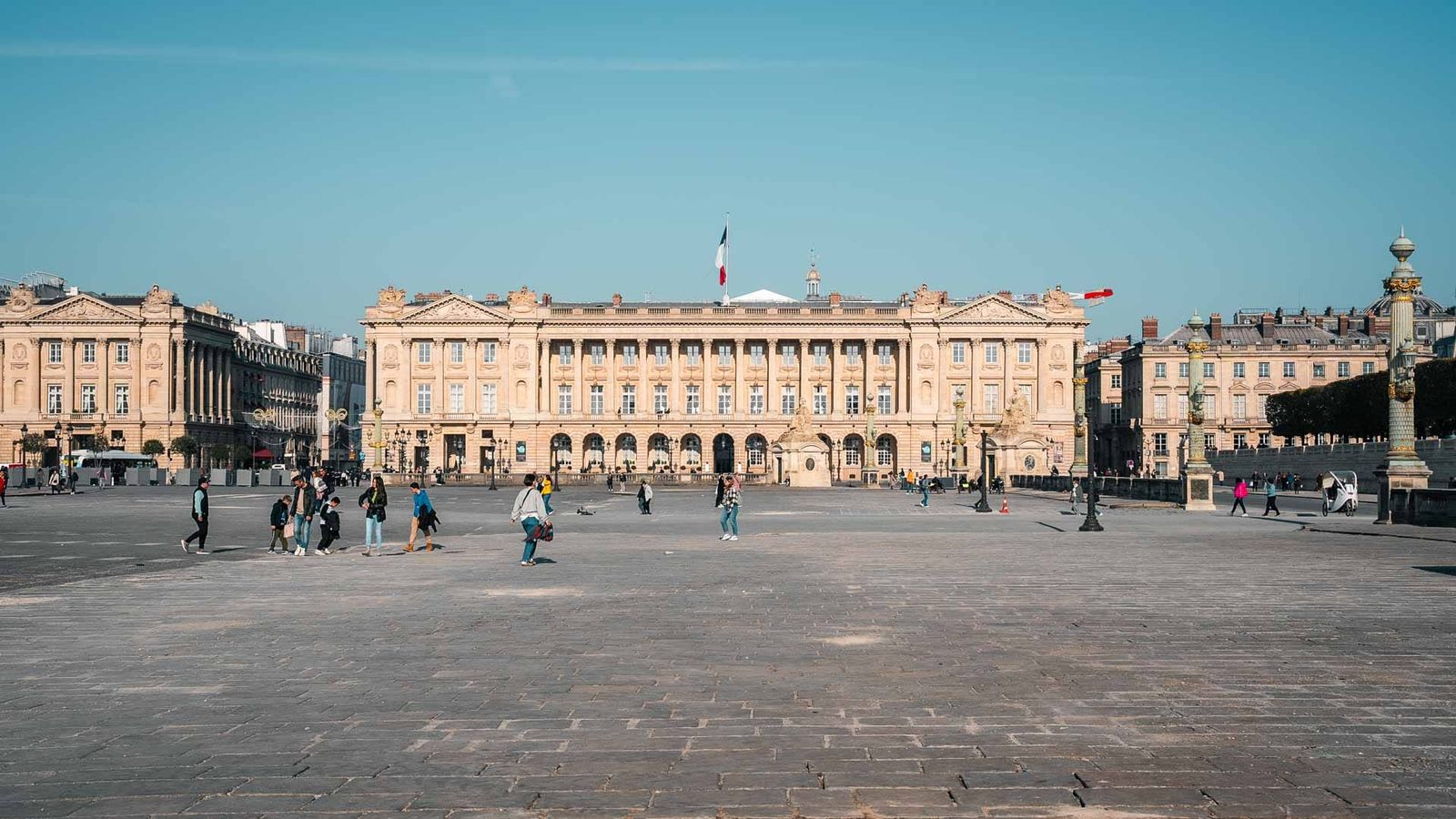
Created between 1755 and 1775 to honor King Louis XV, the square was designed by Jacques-Ange Gabriel in a grand octagonal layout, complete with monumental buildings on its periphery. However, during the French Revolution, this square was renamed Place de la Révolution and became the site of many public executions, including those of Louis XVI and Marie-Antoinette.
A Symbol of Reconciliation and Peace
After the Revolution, the square was renamed Place de la Concorde in 1795, marking a moment of peace in France’s fractured past. This square’s most celebrated monument, the Luxor Obelisk, was gifted to France in 1833 by the Viceroy of Egypt, Mehemet Ali. Erected in 1836, this pink granite obelisk stands 23 meters tall and is covered in intricate hieroglyphs that narrate the reign of Ramses II.
Monumental Fountains Inspired by the Sea
Two majestic fountains, designed by Jacques-Ignace Hittorff, the Fontaine des Mers and Fontaine des Fleuves, were installed to represent the might of France’s maritime influence and river navigation. These fountains, inspired by the grand fountains of Rome, are adorned with statues of gods, goddesses, and sea creatures, giving the square an ethereal charm.
A Panoramic View of Paris’s Icons
From the square, you can enjoy stunning perspectives: on one side, the sweeping Champs-Élysées extends toward the Arc de Triomphe, while on the other, the serene Tuileries Gardens lead the eye to the Louvre Museum. Nearby, the imposing Hôtel de la Marine and the historic Hôtel de Crillon add an extra layer of elegance to this already opulent location.