





The Palais-Royal Garden is a peaceful haven, inviting visitors to unwind in a blend of history, nature, and art. Part of the Domaine National du Palais-Royal and spanning over 20,850 m², this stunning garden, located in the 1st arrondissement, dates back to 1633 and holds the distinction of being a “remarkable garden.”
A Garden Conceived by Richelieu: From Royal Gardens to Public Retreat
The garden was initially designed by Cardinal Richelieu to adorn the Palais-Royal, making it one of the earliest royal gardens in Paris. After Richelieu’s death, the Palais-Royal and its gardens were passed on to Louis XIII, transforming it into a royal residence.
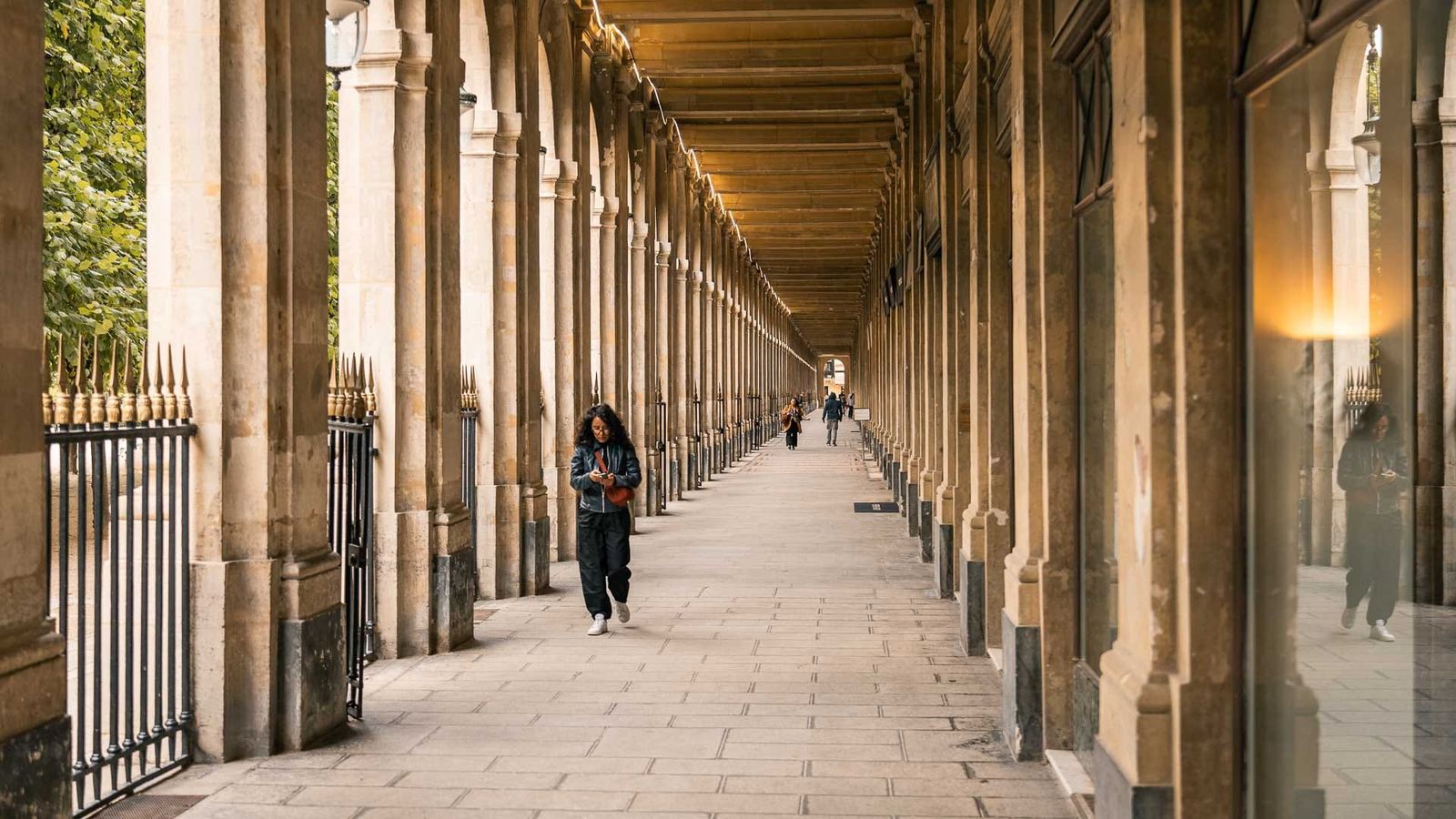
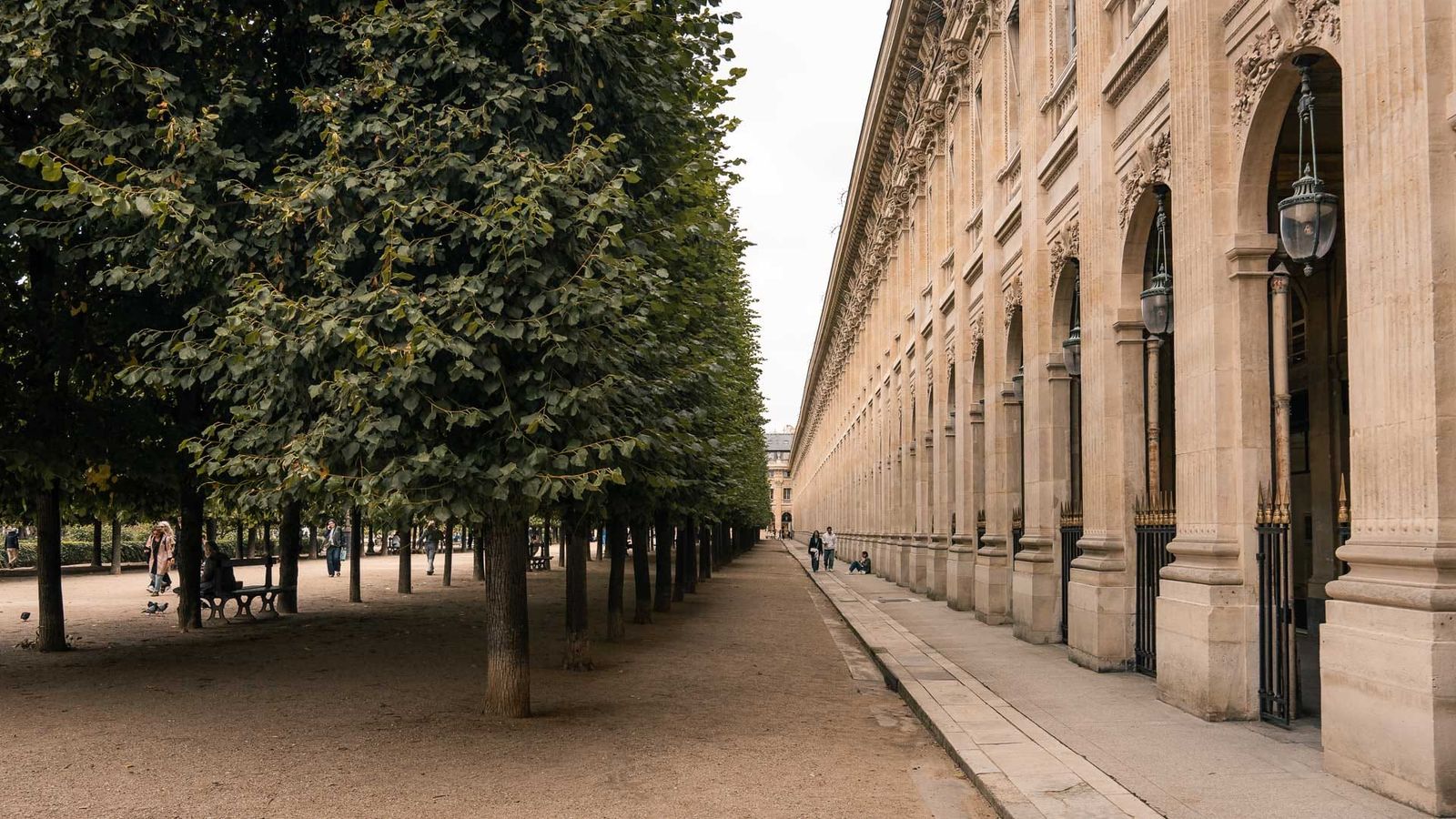
The garden underwent significant changes under Charles X, giving it its current layout, with the four arcades that define the garden’s boundaries. In 2019, the garden embraced modernity with the inauguration of the Allée Colette and Allée Cocteau, blending tradition with contemporary culture.
Iconic Artworks and Statues: The Sculptural Heart of the Garden
Among the highlights of the Palais-Royal Garden are its fascinating statues. Of particular note is the Charmeur de Serpent by Adolphe Thabard, dating back to 1875, and the Pâtre et la Chèvre by Paul Lemoyne from 1830, both standing gracefully along the garden’s stately paths. Though several statues once adorned the garden, only these two remain, adding a touch of classic beauty to the space.
In addition, the Deux Plateaux, or Colonnes de Buren, located at the entrance, is an iconic work of modern art that adds a striking contrast to the classical elements of the garden.
The Symbolic “Petit Canon” and Other Historical Features
One of the most unique elements of the garden is the Petit Canon, a historical cannon placed along the meridian of Paris. Originally installed in 1786, it was used to mark midday by firing a shot when the sun’s rays ignited a fuse. Over time, the cannon became an important symbol for Parisians, a method of synchronizing clocks across the city. Today, it still fires every Wednesday at noon, serving as a reminder of the garden’s rich past.
Another historical feature in the garden is the Wallace Fountain, one of the 105 public drinking fountains scattered throughout Paris. Installed in the late 19th century, it offers a refreshing stop for those exploring the garden.
Modern Art Meets Historic Tranquility: Bury’s Fountain and the Columns of Buren
As you wander through the garden, you will encounter Paul Bury’s steel balls fountain, a modern sculpture that reflects the sunlight and provides an interesting contrast to the historic atmosphere.
The famous Colonnes de Buren also stand at the entrance, with their alternating black-and-white stripes creating a modern, geometric statement. These works of contemporary art breathe life into the space, bridging the past with the present.
A Perfect Escape: The Lush Greenery and Serene Ambience
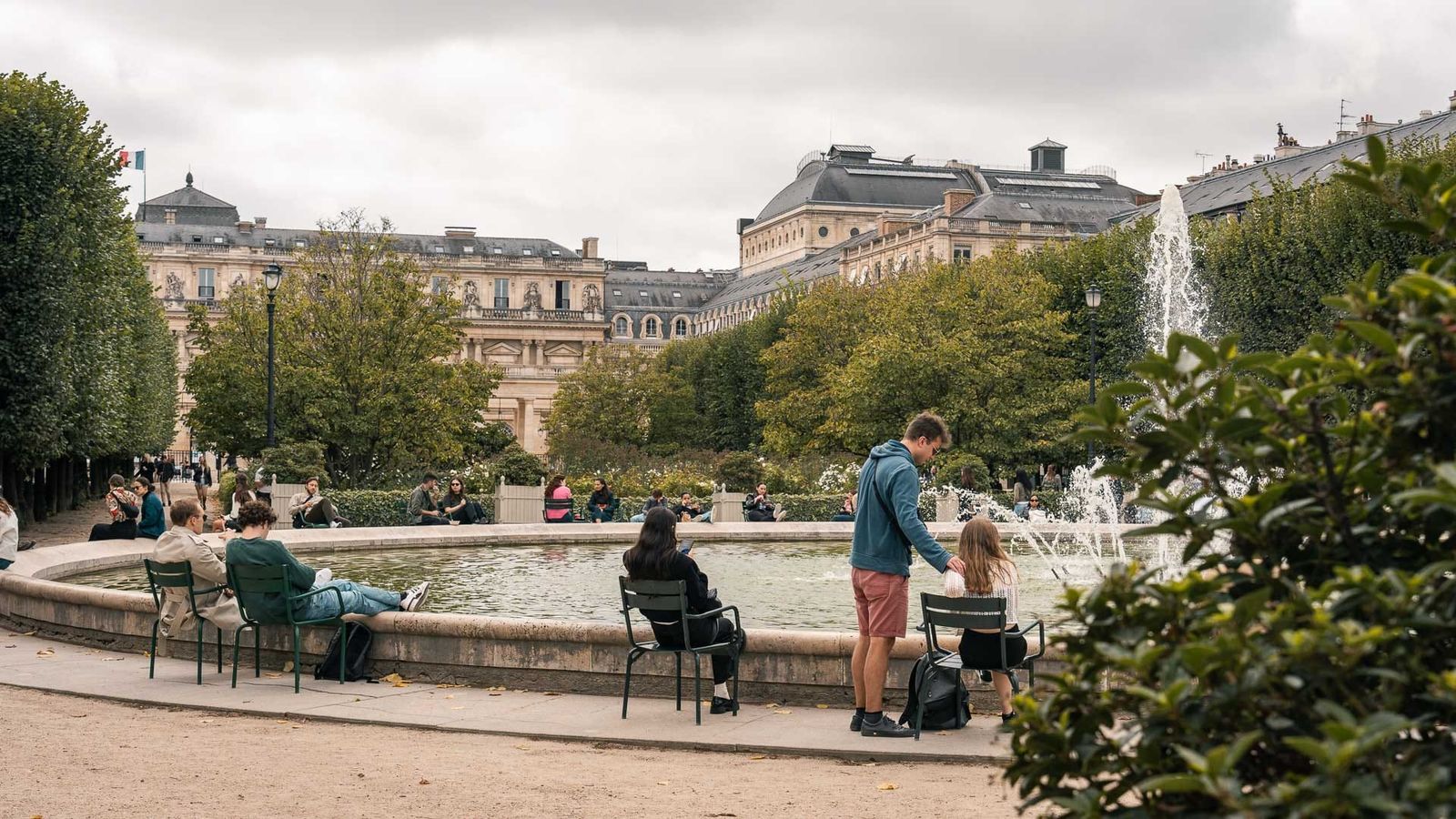
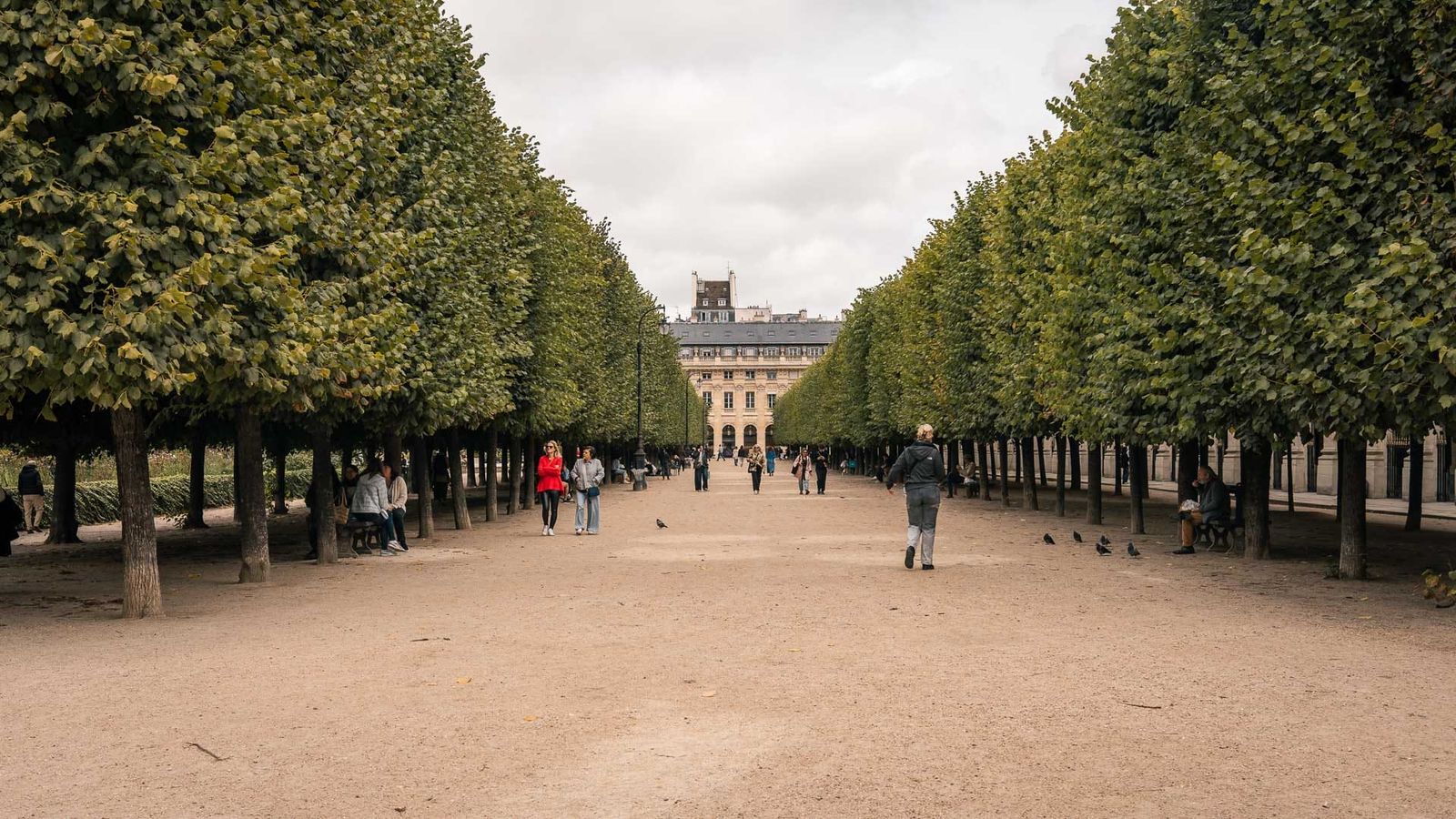
Surrounded by elegant galleries, the garden offers a peaceful escape with its perfectly manicured lawn, symmetrical alleys lined with tilleul trees, and historical marronniers. Whether you prefer reading near the central fountain or simply strolling beneath the shade of the trees, the garden provides a calm respite from the bustling city.