


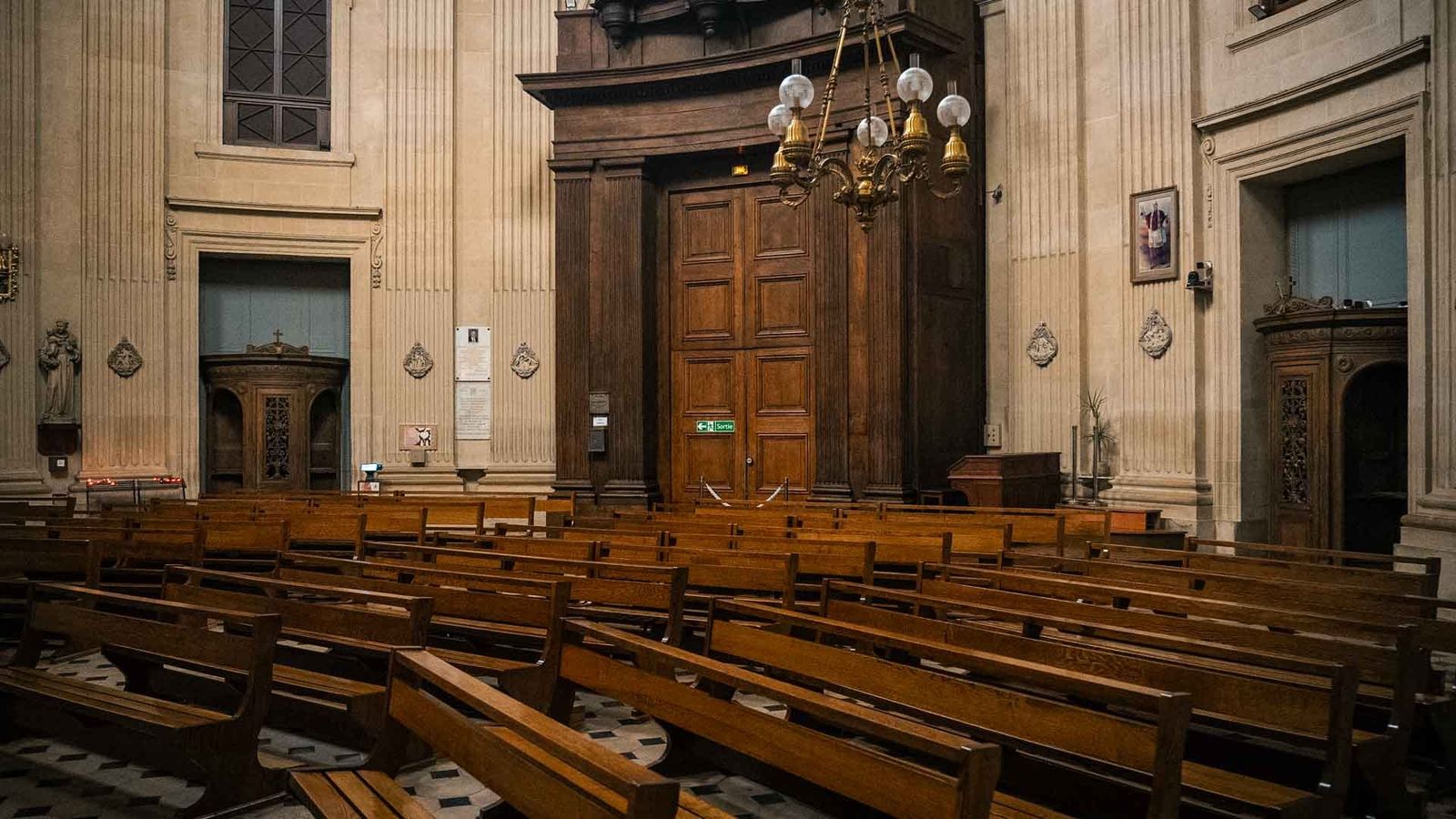
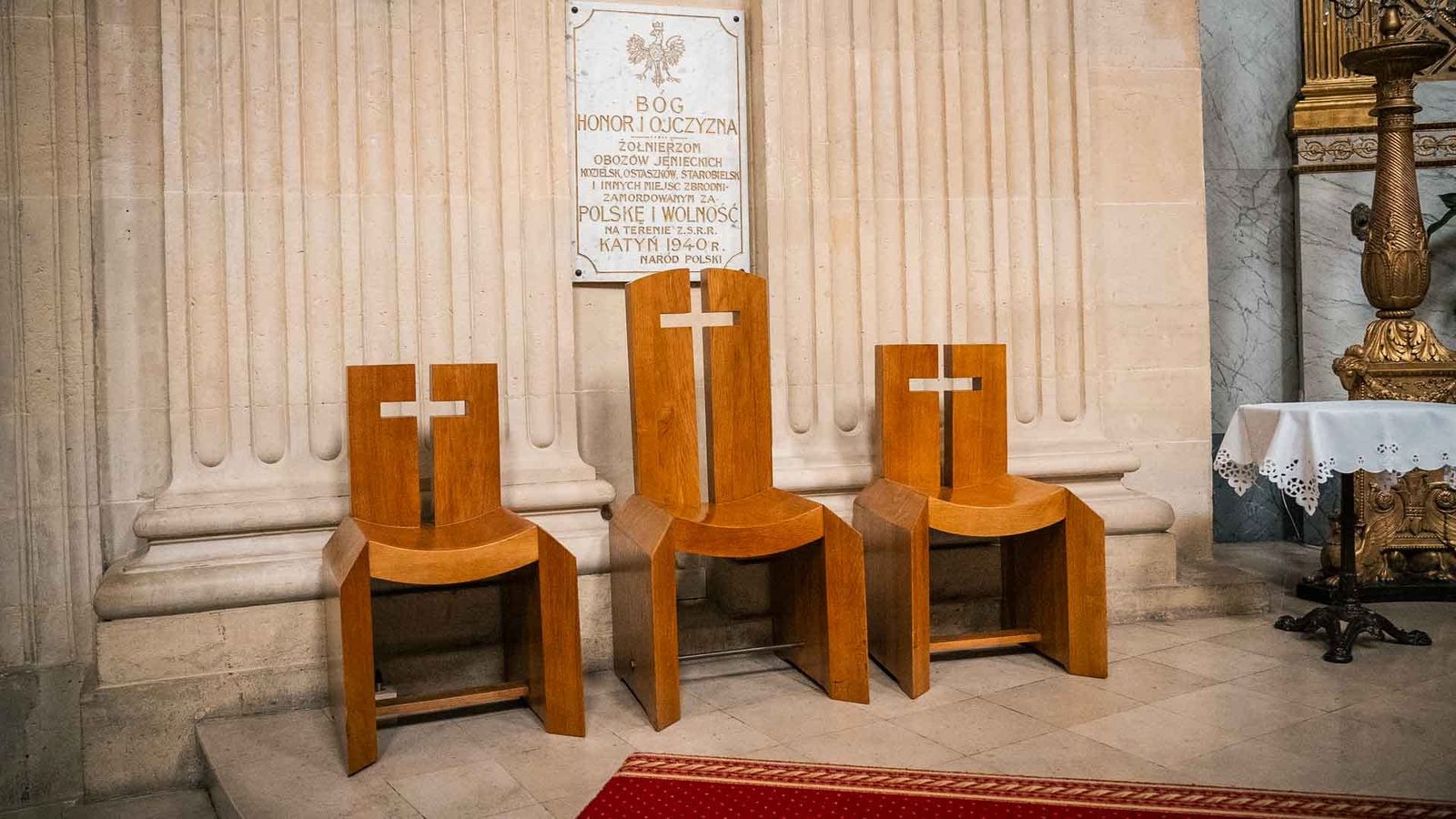
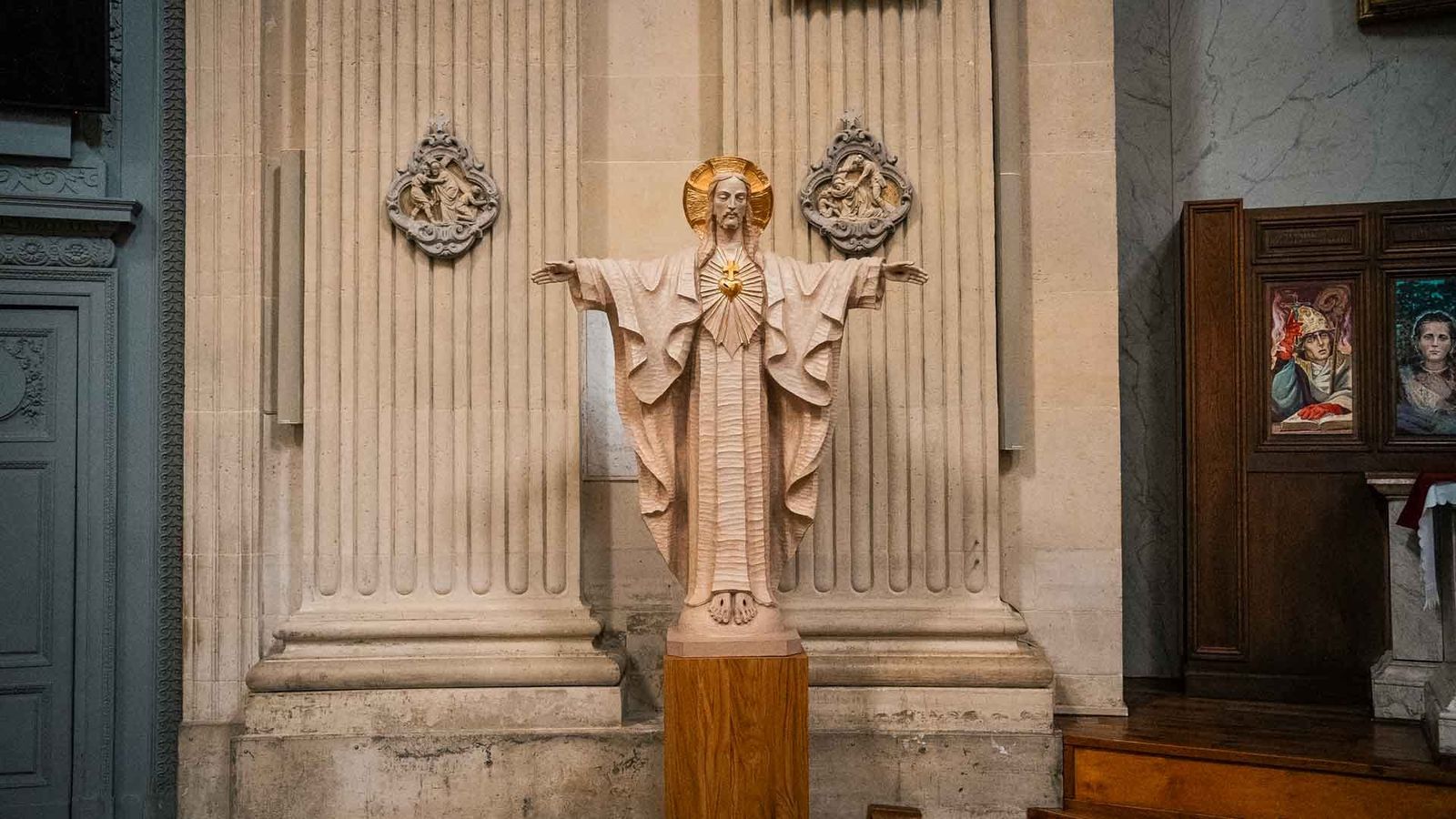
The Church of Notre-Dame-de-l’Assomption is a historical and architectural treasure in Paris, rich in heritage and art. Its unique architectural features, significant artworks, and storied history make it a notable site for both religious and cultural visitors.
Location and Overview
The Church of Notre-Dame-de-l’Assomption is a Polish Catholic place of worship located at Place Maurice-Barrès, at the corner of Rue Saint-Honoré and Rue Cambon in the 1st arrondissement of Paris. Built between 1670 and 1676, the church originally belonged to the Notre-Dame-de-l’Assomption convent, founded in 1622. Closed during the Revolution, it reopened for worship in 1802 as the parish church of La Madeleine. In 1844, Archbishop Denys Affre assigned it to the Polish Catholic Mission.
The Convent of the Ladies of the Assumption
The convent was established when Cardinal de La Rochefoucauld sought to reform the Haudriettes congregation, relocating them to a house on Rue Saint-Honoré. The Jesuits sold this house to the Haudriettes in 1623, who transformed it into a convent and renamed themselves the Ladies of the Assumption. Architect Charles Errard, inspired by his time in Rome, designed the new church, which was completed in 1676. The church was blessed on August 14, 1676, by Michel Poncet de La Rivière, Archbishop of Bourges.
Post-Revolution Secularization
In 1790, the convent was dissolved and its buildings became national property. By 1793, the convent buildings had been converted into barracks for the Swiss Guards. In 1802, the property was sold, leading to the creation of Rue de Rivoli, Rue Cambon, Rue de Mondovi, and Rue du Mont-Thabor. The western and southern wings of the convent buildings survived, becoming the Assumption Barracks, later used by the Ministry of Finance. The Cour des Comptes was eventually established on this site in the early 20th century.
Transition to the Polish Catholic Mission
Unlike the convent, the church itself was preserved. During the French Revolution, it served as a storage facility for theatrical scenery. Napoleon Bonaparte designated it as the parish church for the 1st arrondissement in 1803, replacing the old Church of La Madeleine. After the new La Madeleine church was completed in the 1840s, worship was transferred there. In 1844, Archbishop Denys Affre entrusted Notre-Dame-de-l’Assomption to the Polish Catholic Mission, with the Resurrectionist Fathers serving until 1903. The church was classified as a historical monument in 1907.
Architectural Features
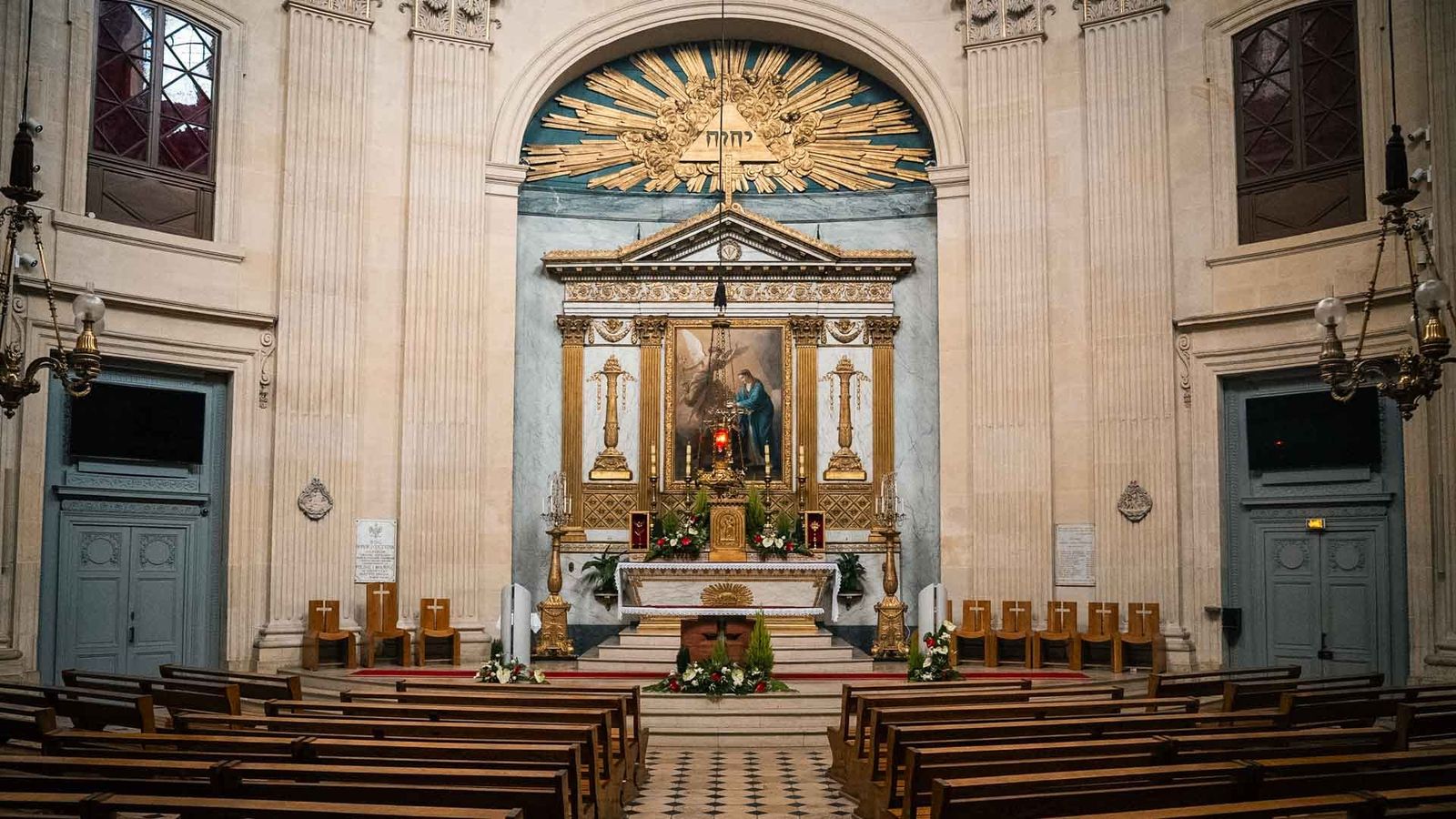
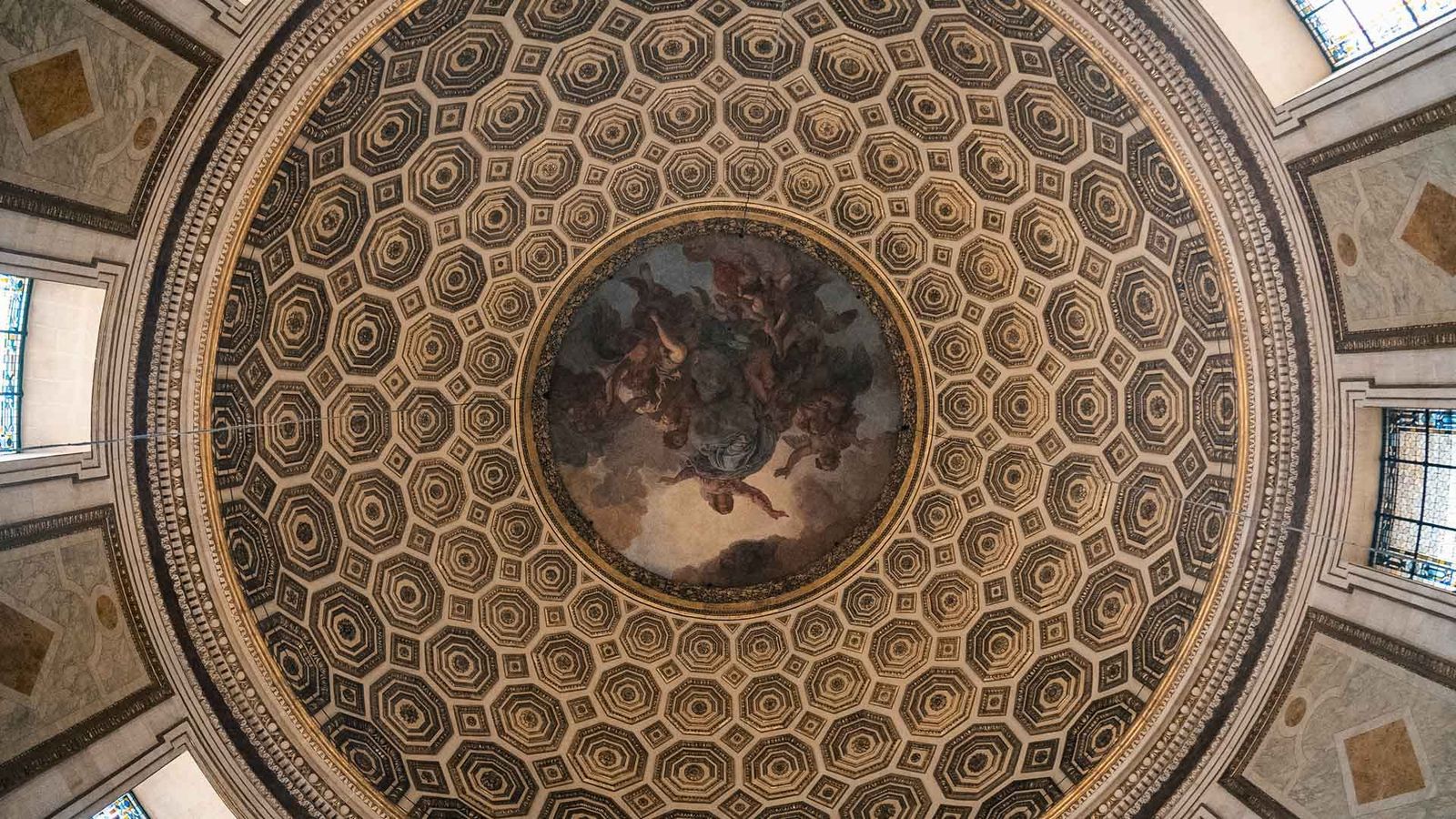
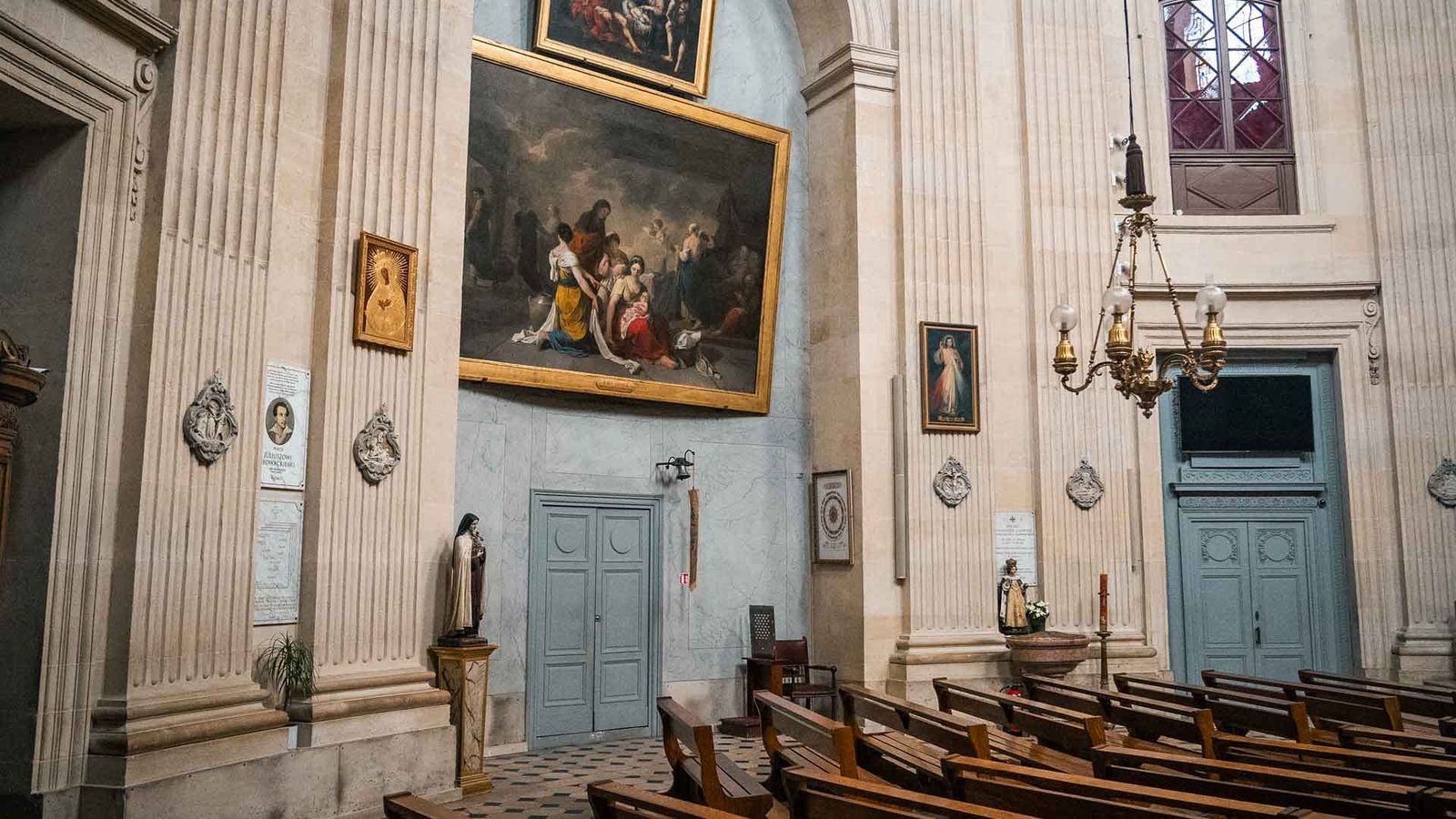
The church’s facade includes a portico with six Corinthian columns topped by a triangular pediment, reminiscent of the north facade of the Sorbonne. The church itself is a rotunda with a 24-meter diameter, featuring simple pilasters and a dome with eight windows and alternating statue niches. The facade is adorned with a bust of Pope John Paul II. A Polish restaurant operated by the Polish Catholic Mission is located in the church’s crypt.
Artworks and Furnishings
The church houses several notable artworks:
- “The Assumption” by Charles de La Fosse (1676), a mural on the dome.
- “The Birth of the Virgin” (1779) by Joseph-Benoît Suvée.
- “The Adoration of the Shepherds” (1648) by Dingeman van der Hagen.
- “The Annunciation” by Joseph-Marie Vien.
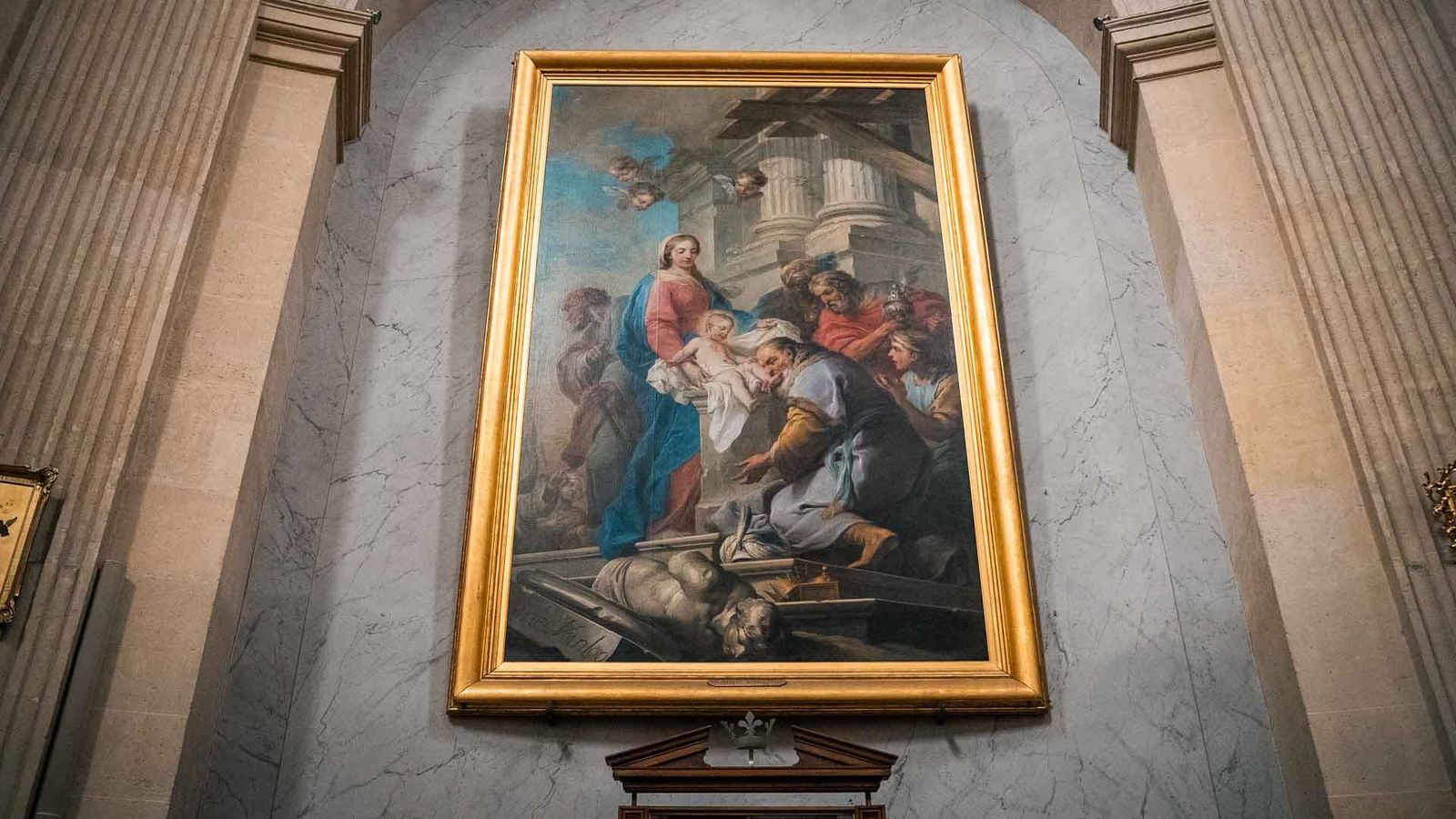
- “The Adoration of the Magi” by Carle Van Loo.
- A series of Stations of the Cross in enamelled copper by Frédéric de Courcy.
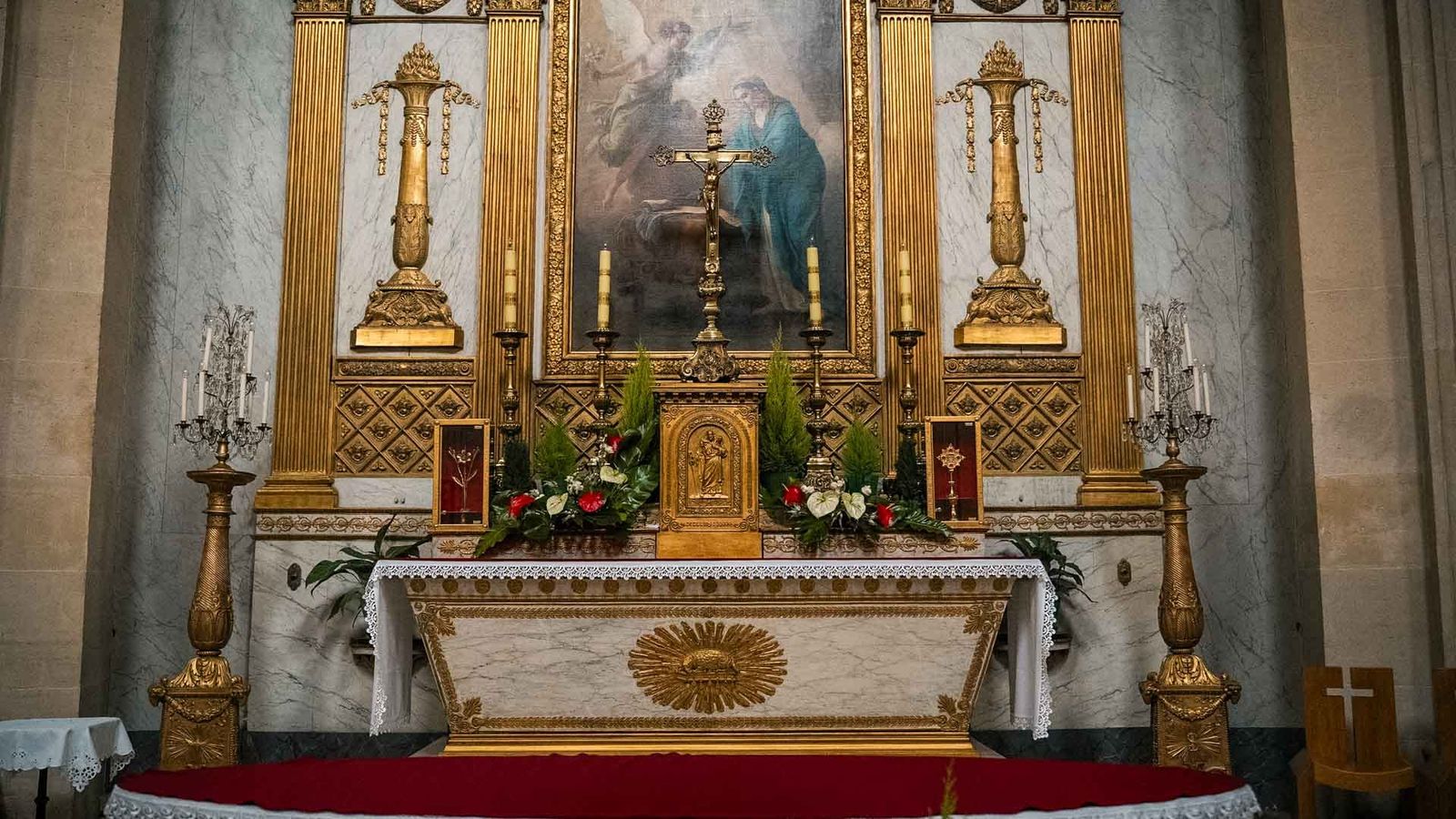
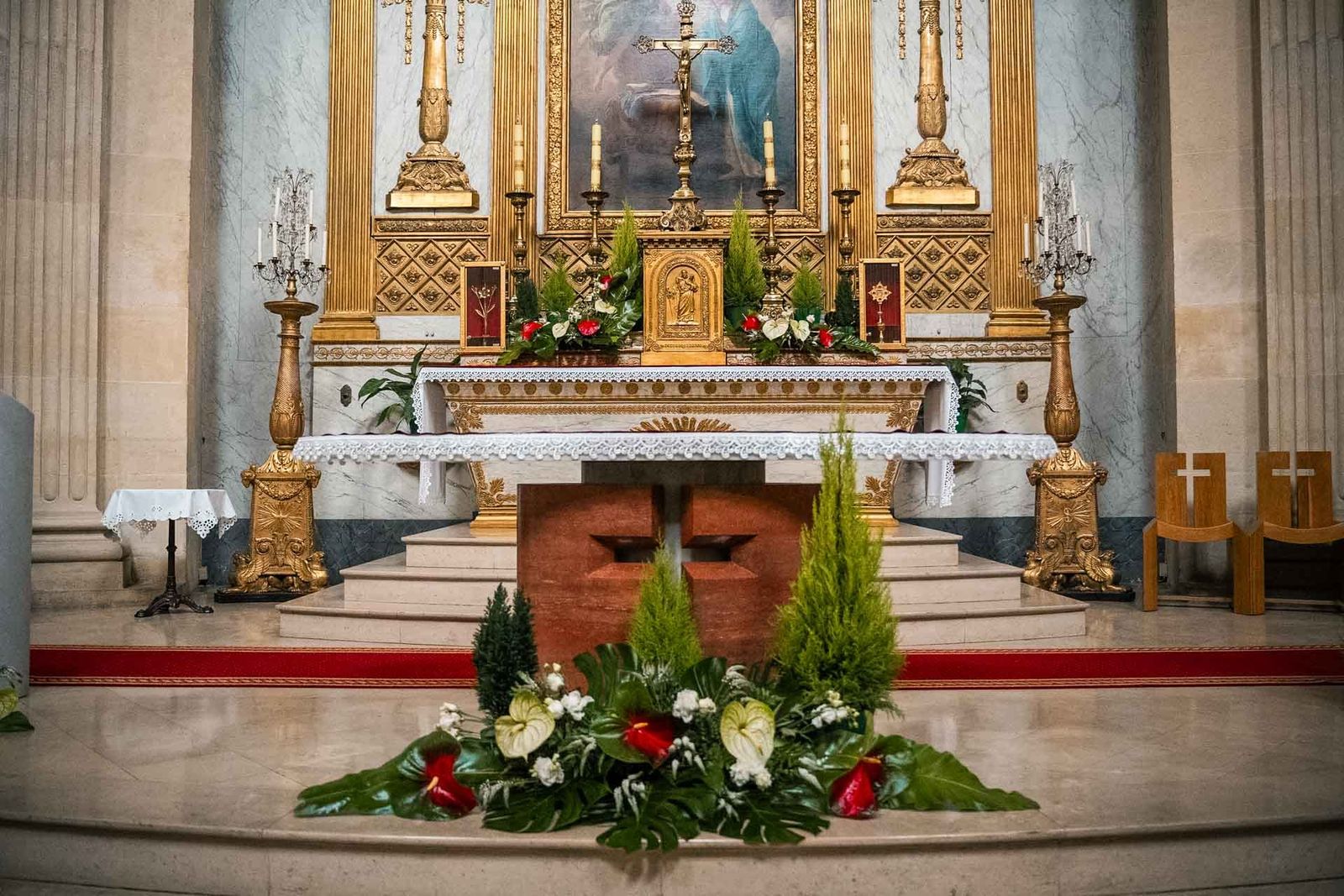
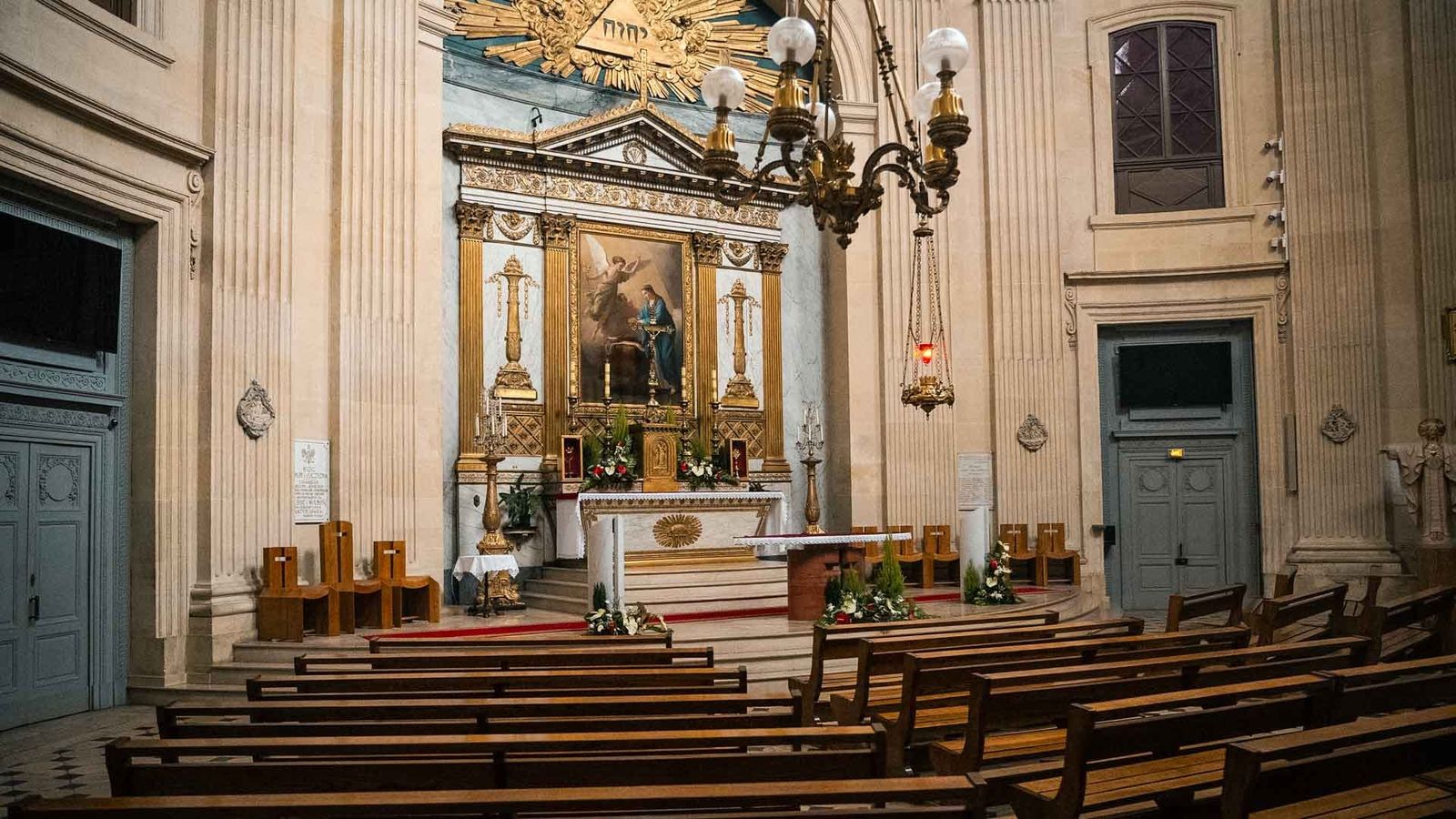
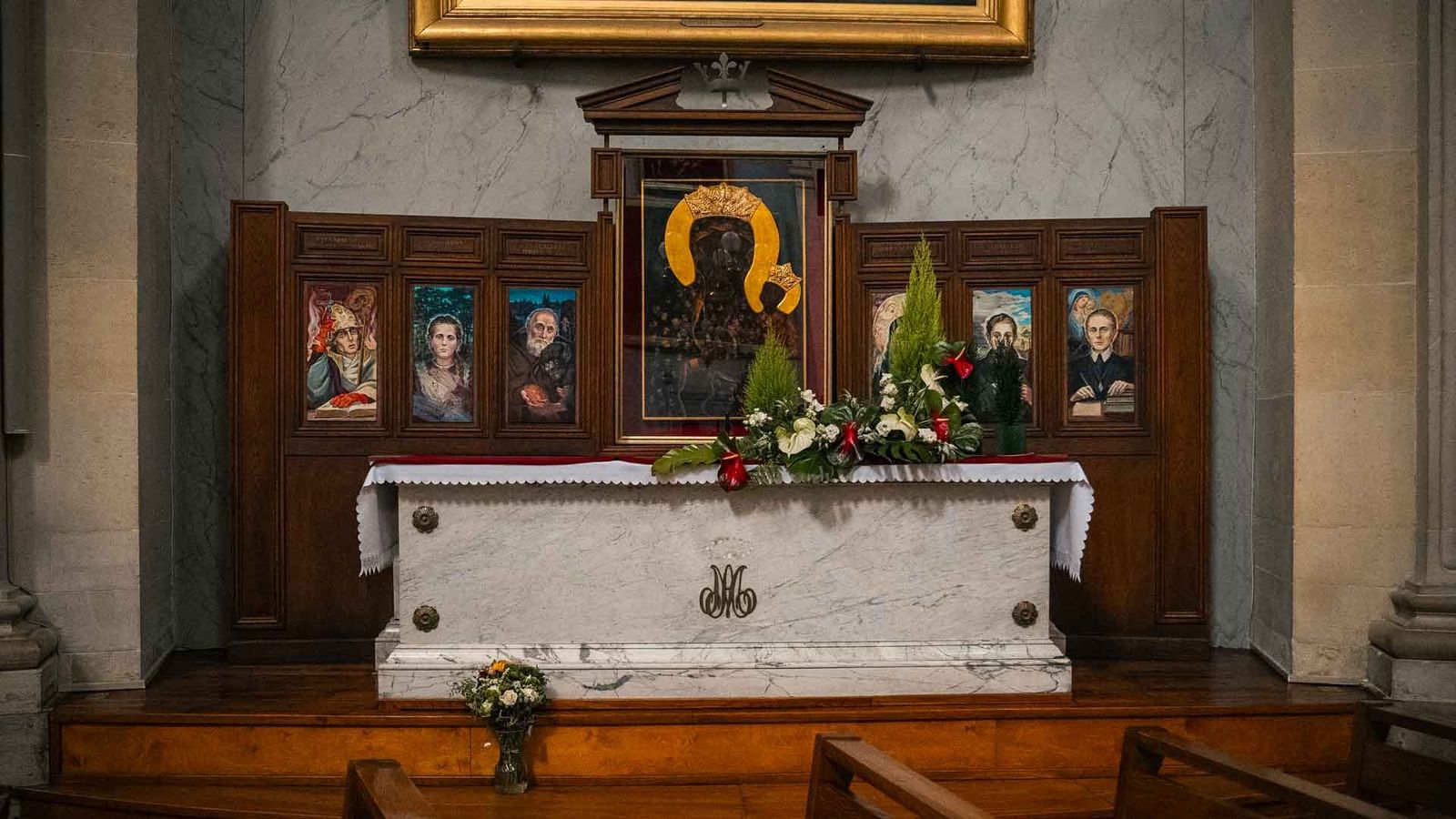
- The main altar and the altar of the Virgin.
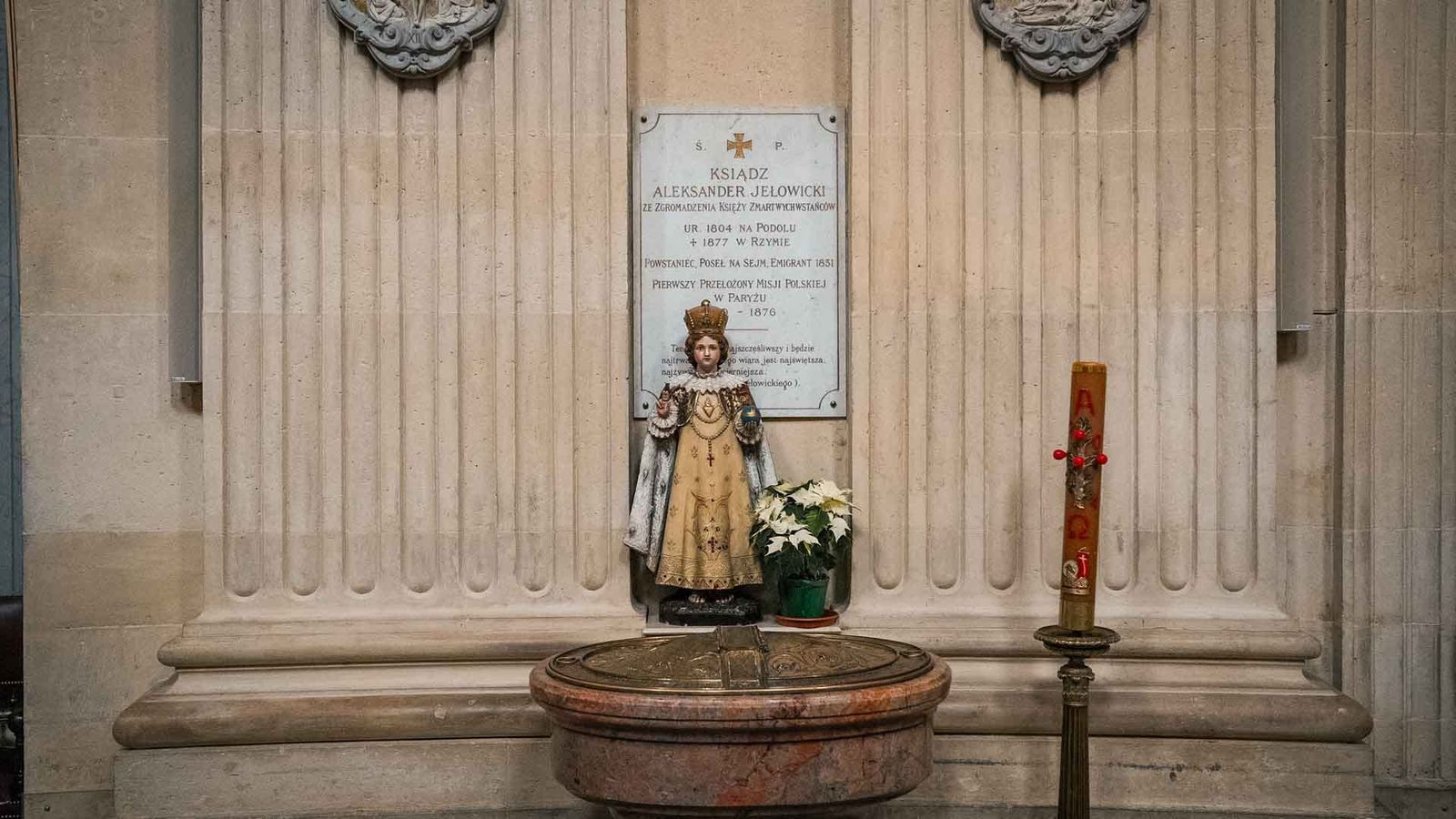
- Baptismal fonts featuring a statue of the Infant Jesus of Prague.
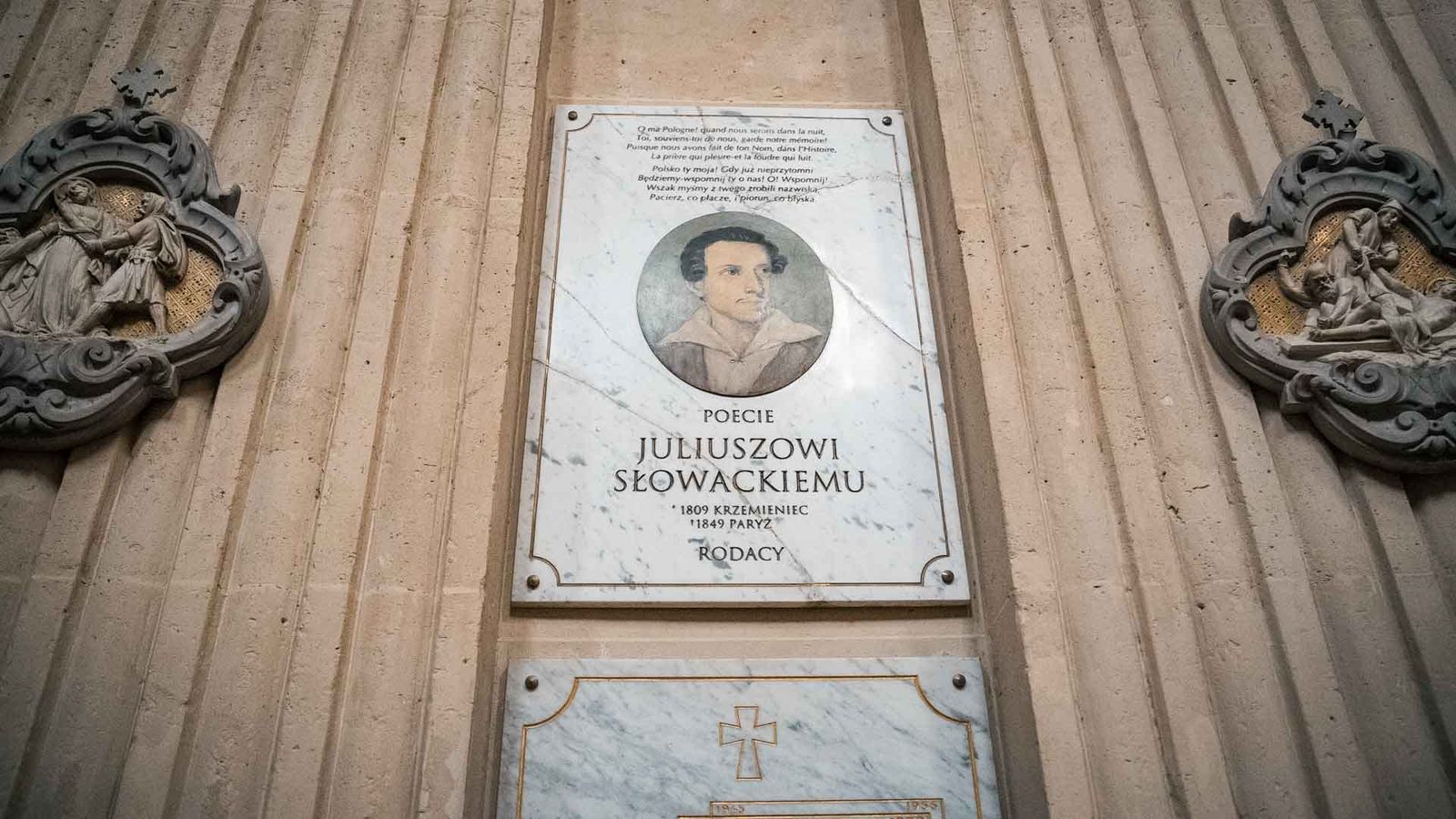
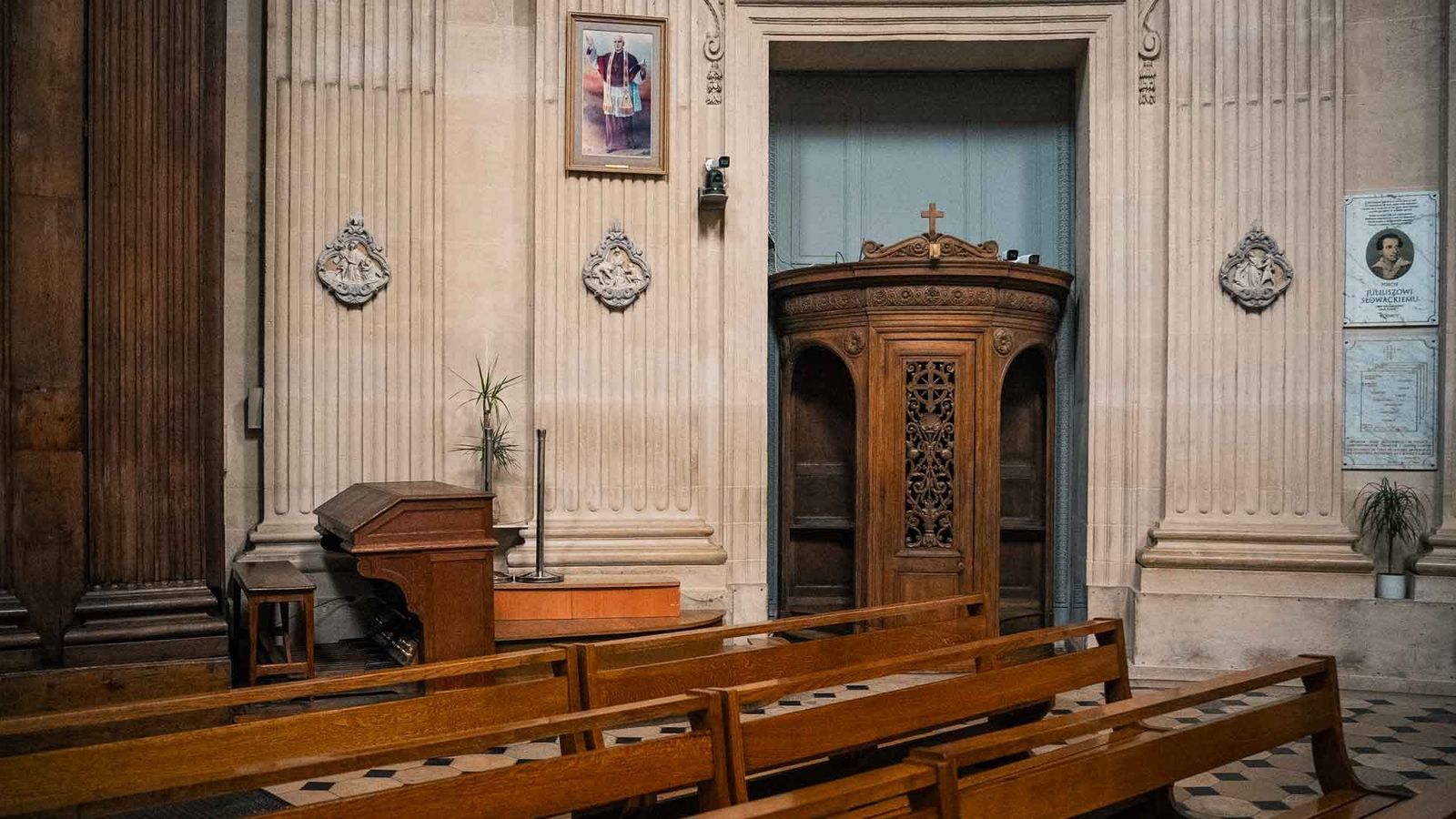
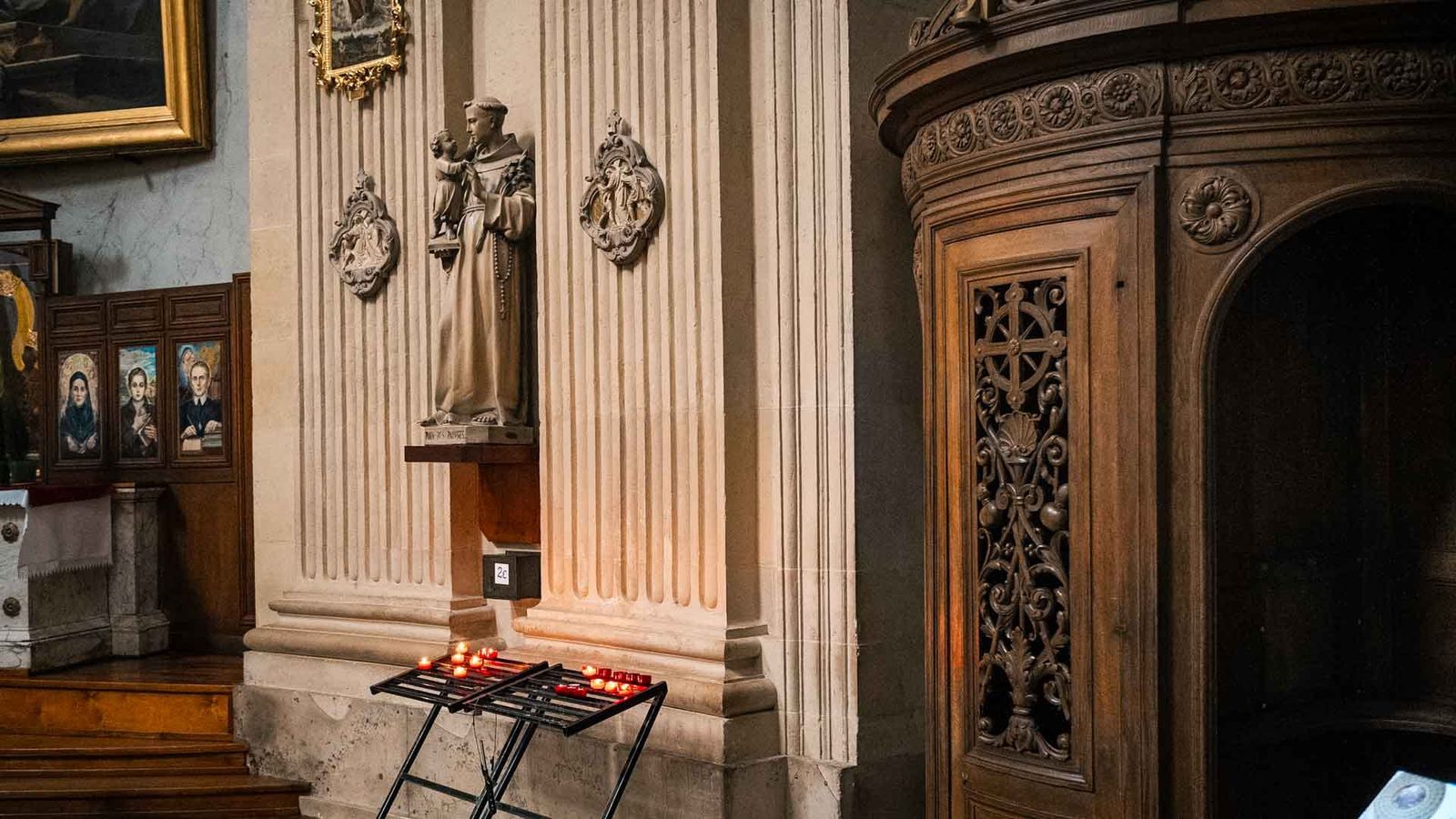
- A confessional and a plaque commemorating Juliusz Słowacki.
The Grand Organ by Cavaillé-Coll
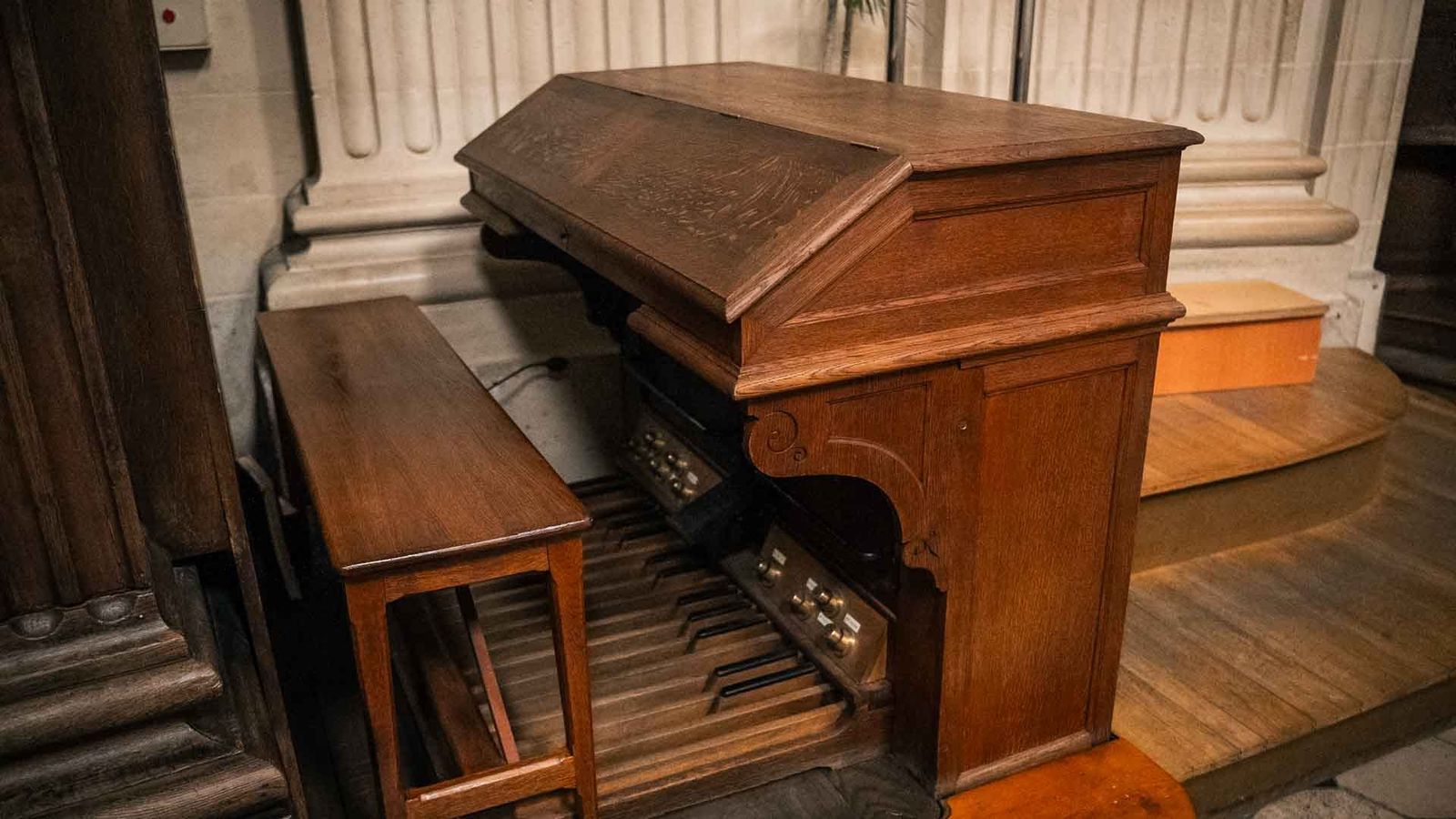
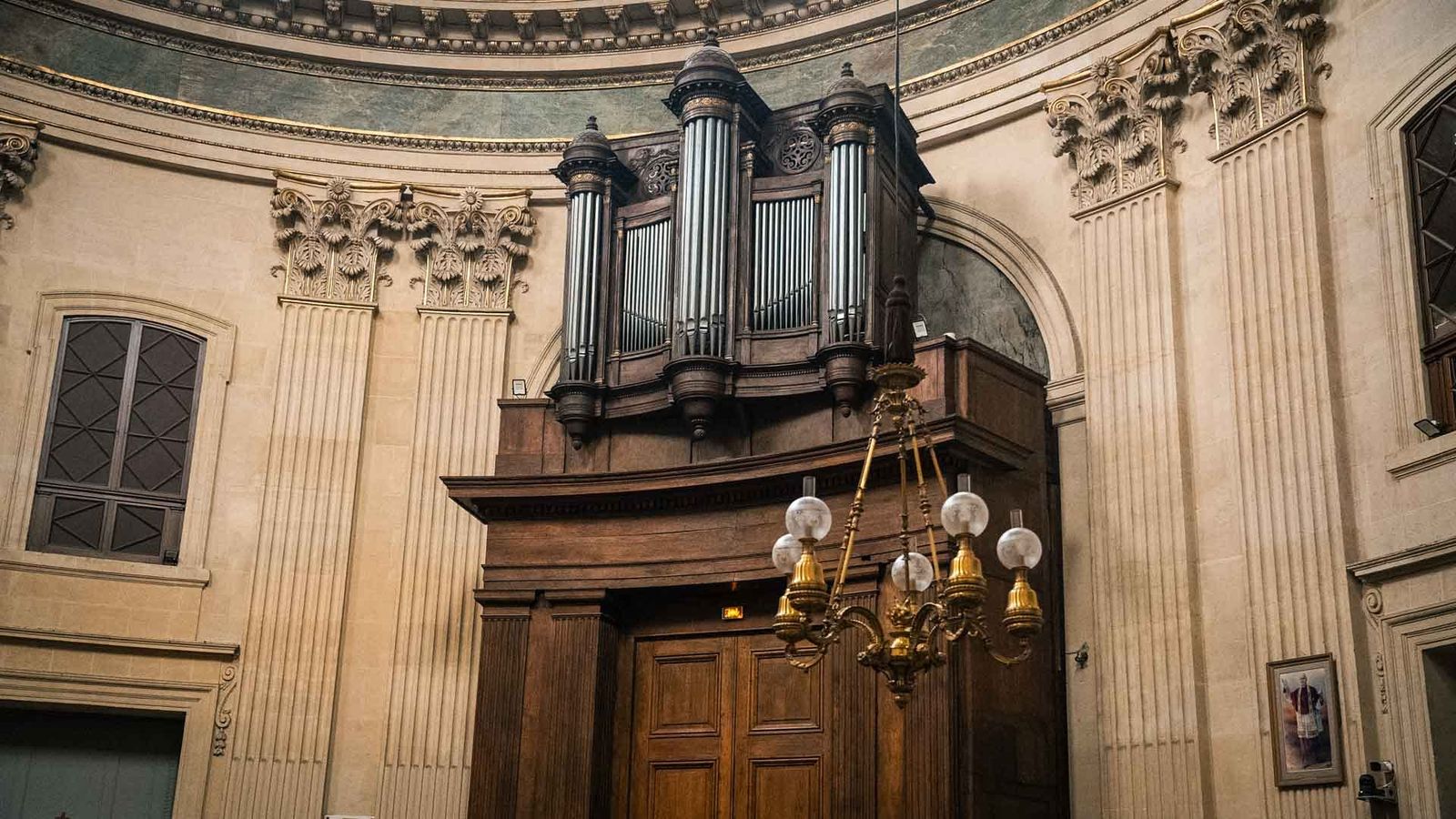
The church features a grand organ built by Aristide Cavaillé-Coll in the late 19th century, housed in a classic French buffet from the late 18th or early 19th century. The organ has undergone several restorations, including electrification and re-harmonization. The most recent restoration, completed in January 2018, addressed the instrument’s mechanical and acoustic needs.
Historical Events
The church has been the site of several significant events:
- The heart of François-Jean-Hyacinthe Feutrier, former curé of La Madeleine and later Bishop of Beauvais, was placed in an altar here in 1830.
- General Lafayette’s funeral was held here on May 22, 1834.
- Talleyrand was temporarily interred here in 1838.
- Stendhal’s funeral took place in March 1842.
- The church was frequented by poet Adam Mickiewicz and musician Frédéric Chopin upon his arrival in Paris.