





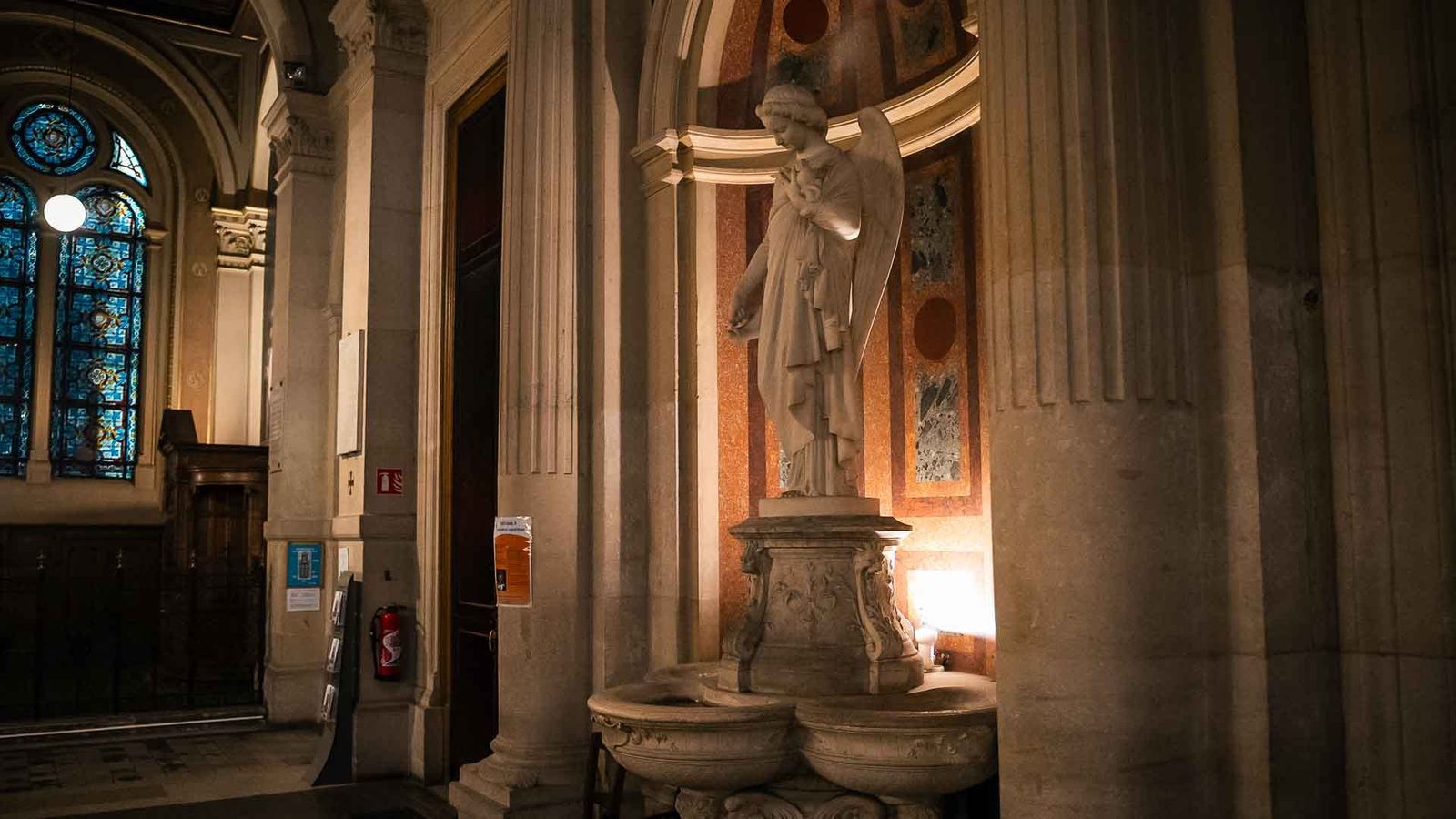

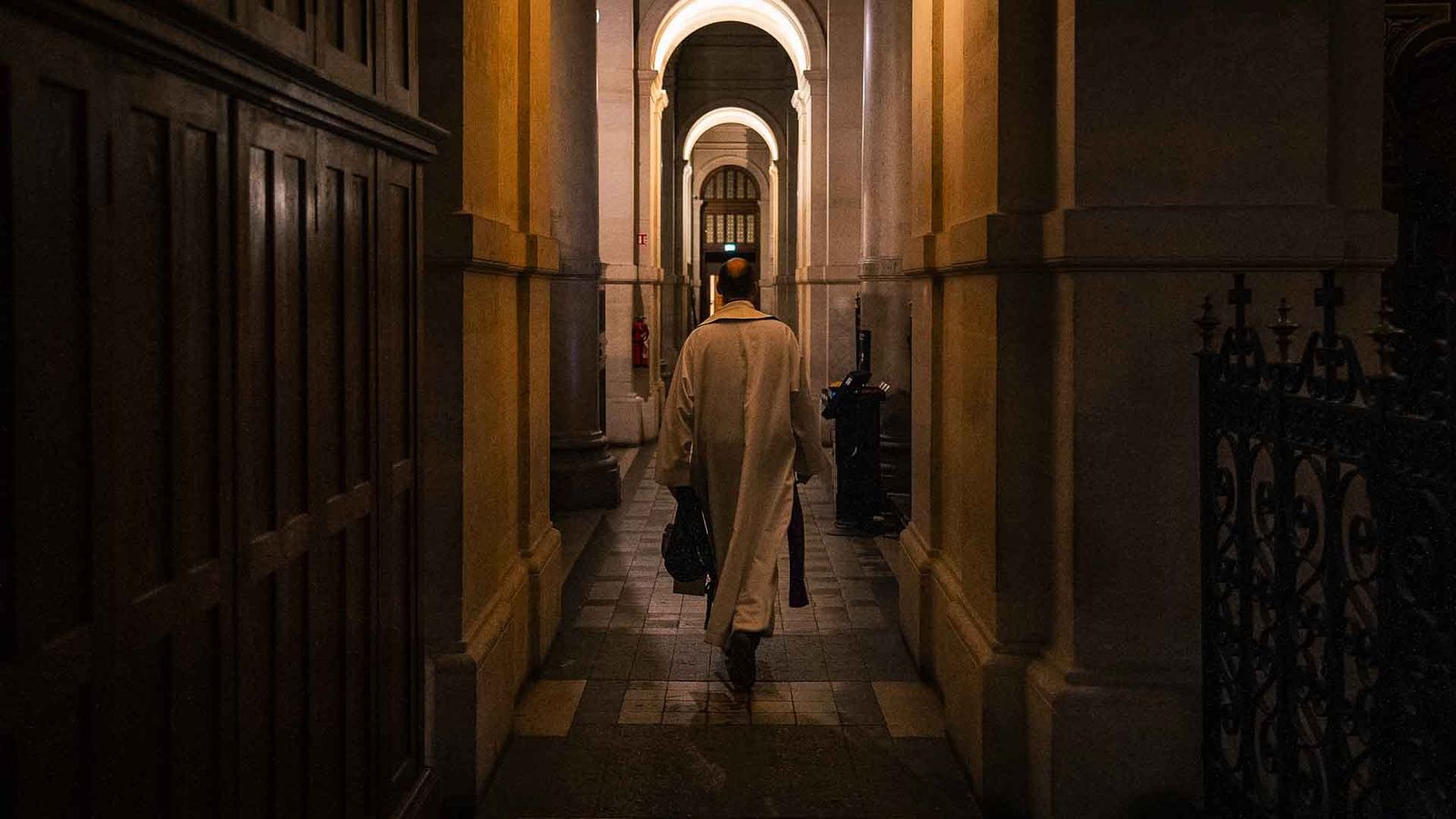
Standing at Place d’Estienne-d’Orves in the 9th arrondissement, the Église de la Sainte-Trinité is a striking example of neo-Renaissance architecture. Designed by Théodore Ballu and completed in 1867, this monumental church was built as part of Baron Haussmann’s grand transformation of Paris.
Positioned at the end of Rue de la Chaussée-d’Antin, its elevated foundation enhances its grandeur, making it a focal point of the district. The church was intended to be seen from the Opéra Garnier, and despite its opulent decor, it was considered economical, costing just 3.2 million francs.
Measuring 90 meters in length, with a 65-meter-high bell tower, Sainte-Trinité remains one of the most visually impressive churches in Paris.
A Church with a Storied Past
Originally, a wooden chapel stood on Rue de Clichy in 1852, at the site of the former Tivoli Gardens—now home to the Casino de Paris. However, as Napoleon III and Haussmann reshaped the city, a grander stone church was planned just a few hundred meters away.
The church has witnessed major historical moments, including the funerals of Gioachino Rossini, Hector Berlioz, and Georges Bizet. In 1986, it became the first church in France entrusted to the Community of Emmanuel, revitalizing its spiritual mission.
Recognized for its historical value, it was listed as a historical monument in 1977 and fully classified in 2016.
A Lost Connection to Notre-Dame
In May 2019, an inventory revealed a remarkable discovery—Sainte-Trinité’s clocks were built using the same mechanism as the one destroyed in the Notre-Dame fire. Both were crafted in 1867 by the Collin-Wagner workshops. While smaller in scale, these clocks may provide vital details for reconstructing Notre-Dame’s lost timepiece.
A Masterpiece of Architecture and Symbolism
The Église de la Sainte-Trinité features a striking neo-Renaissance facade, inspired by Saint John Lateran in Rome. Its richly decorated exterior includes niches, pilasters, and pediments, with statues of key Church figures such as Saint Gregory, Thomas Aquinas, and Augustine of Hippo. Above the entrance, sculptures represent the four cardinal virtues, while symbols of the four Evangelists adorn the bell tower.
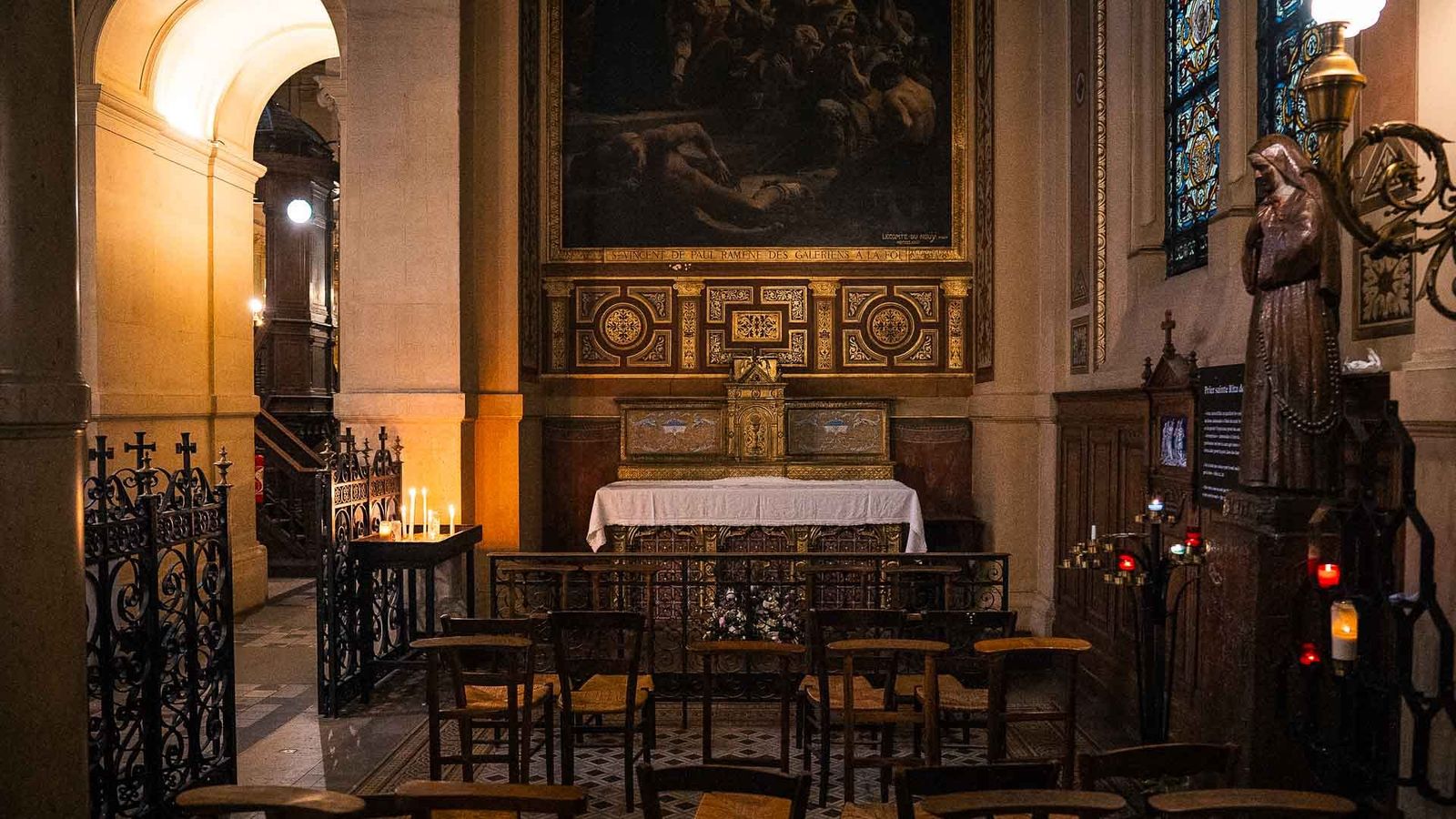
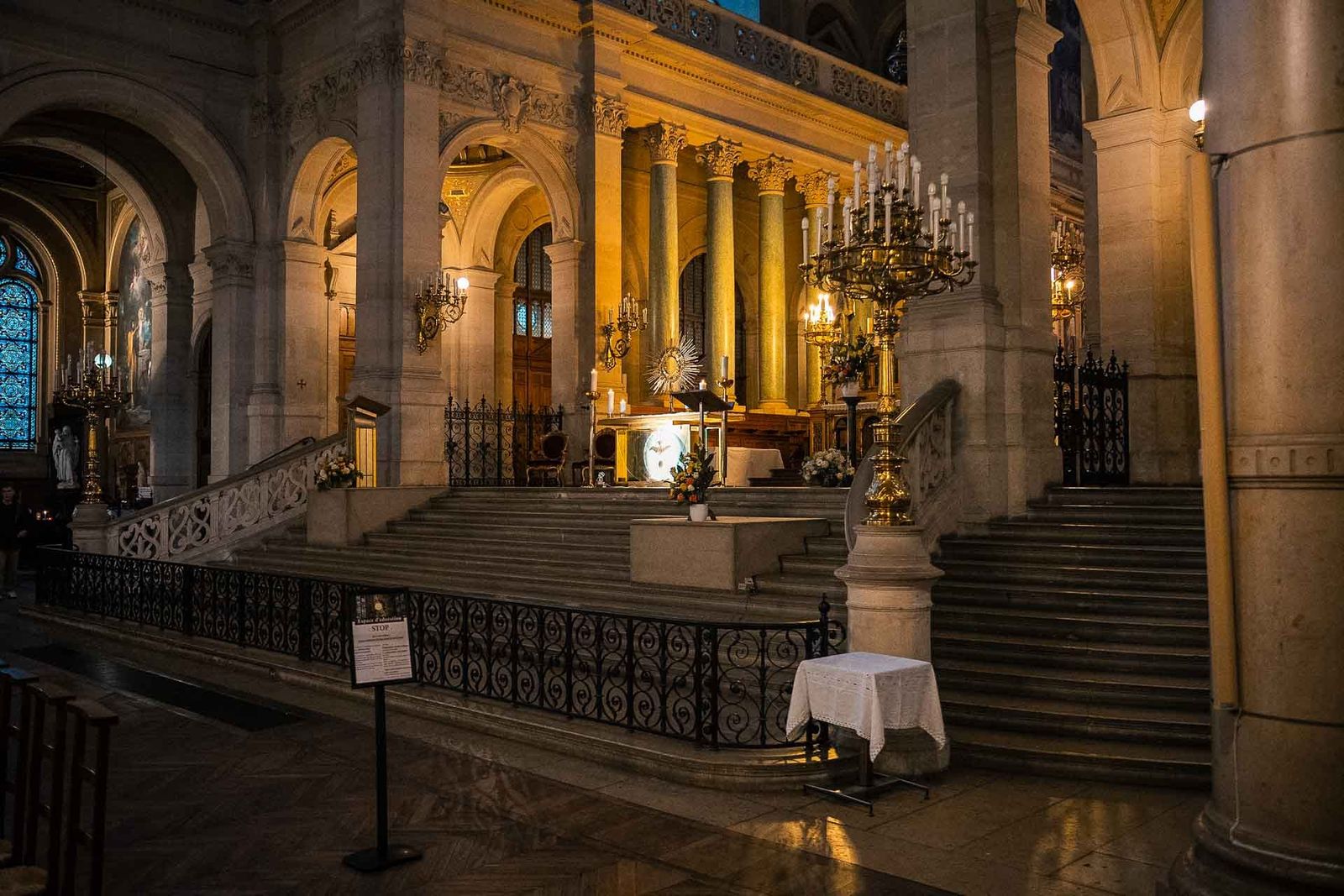
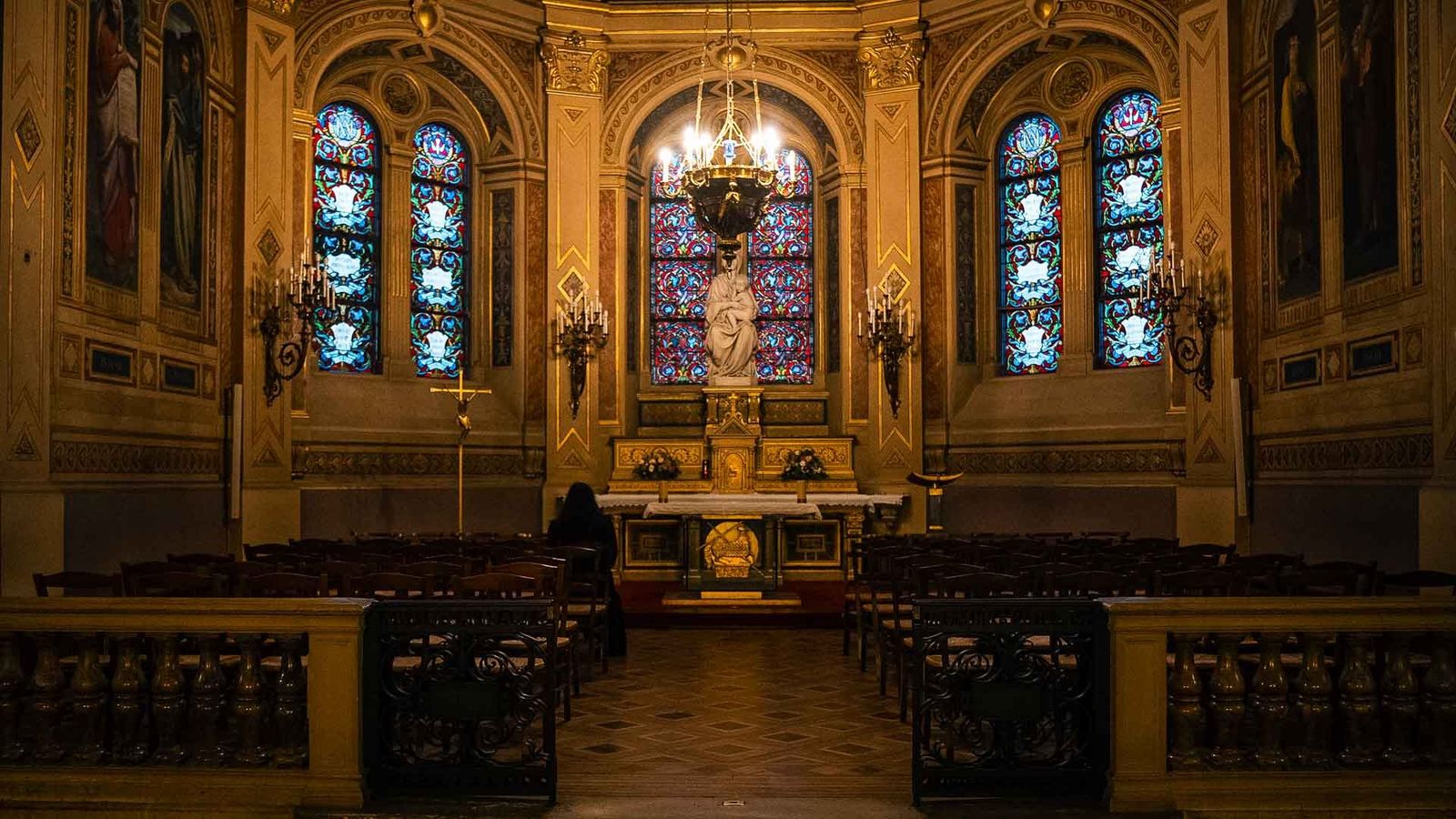
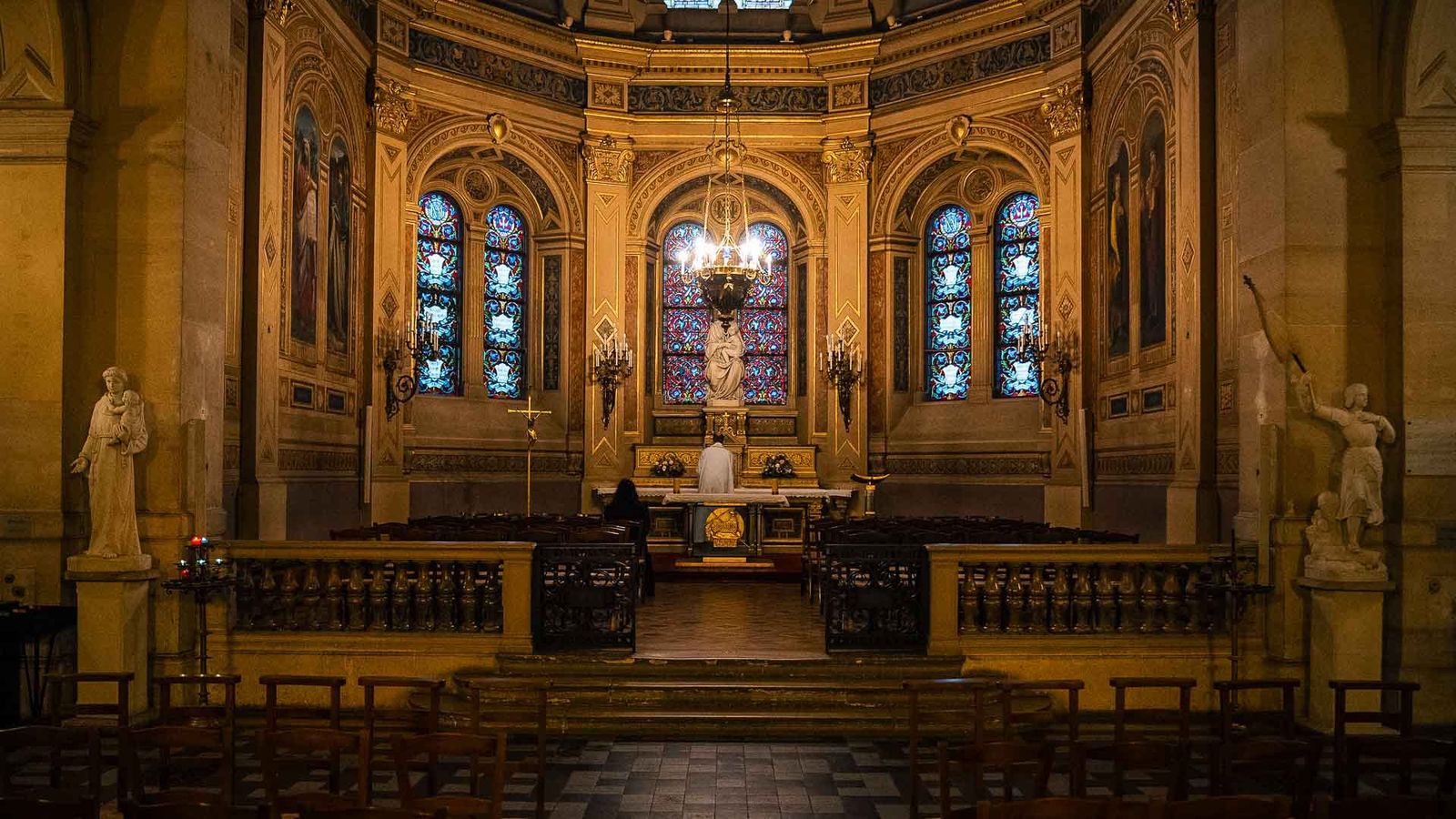
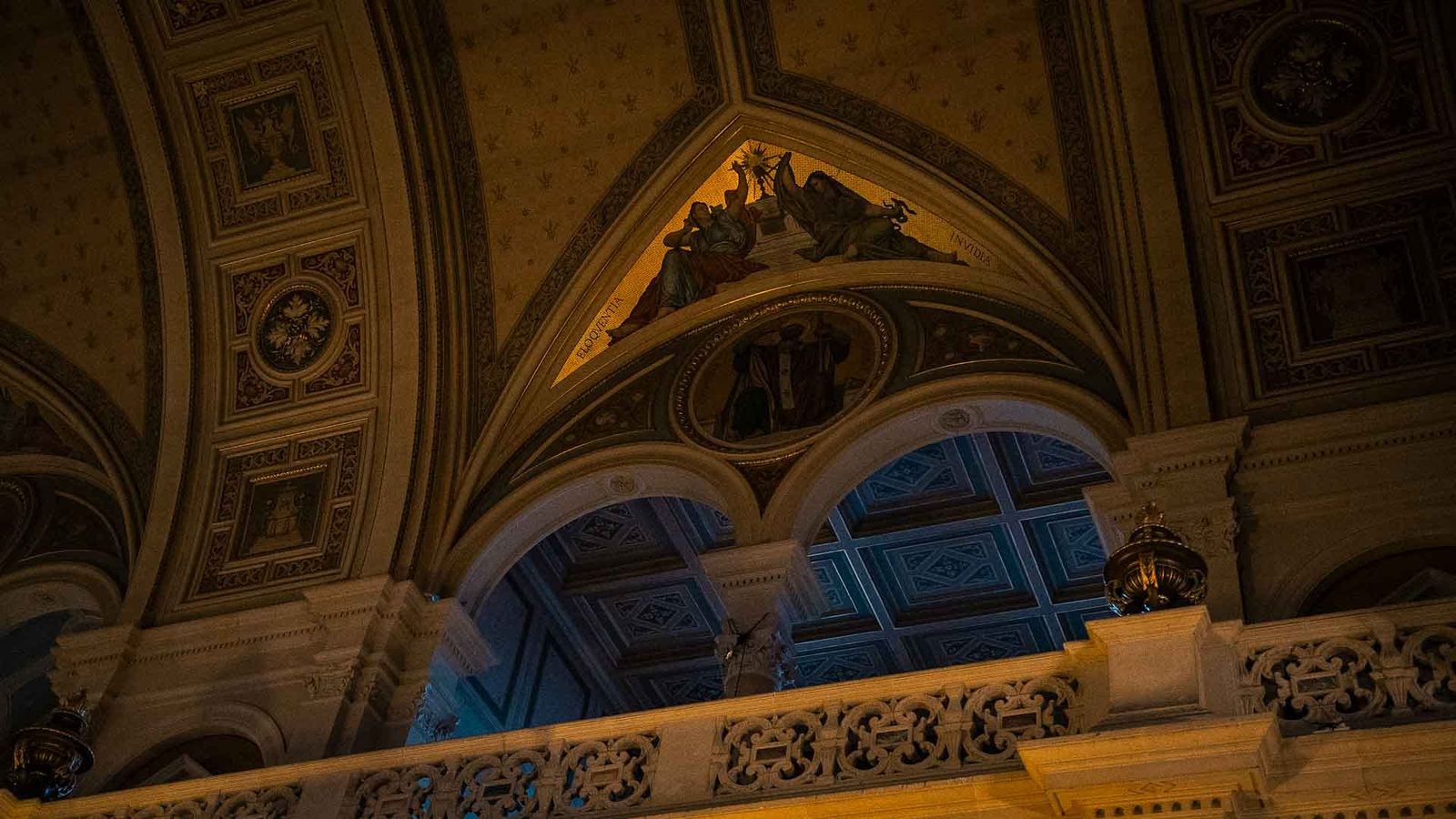
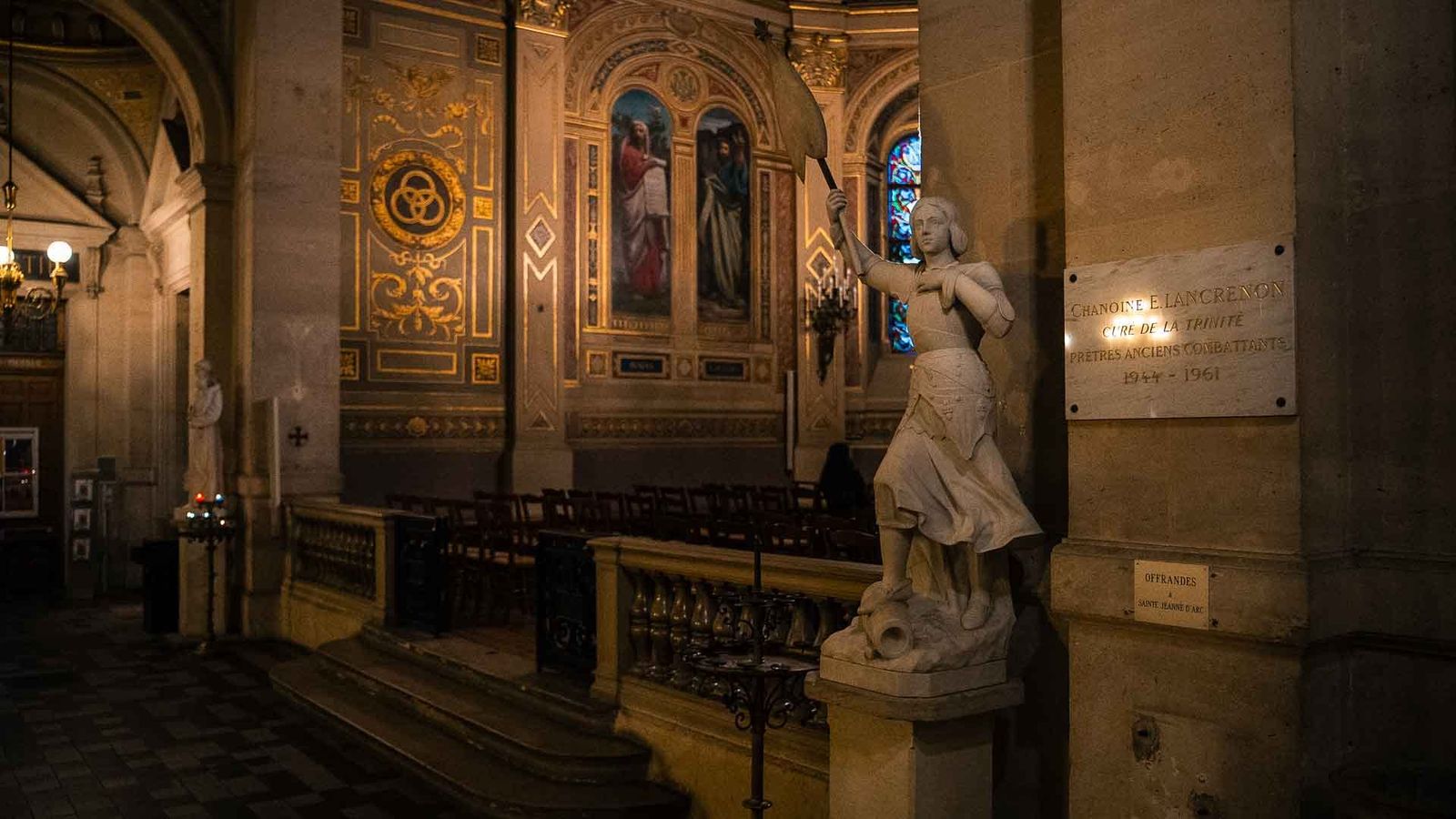
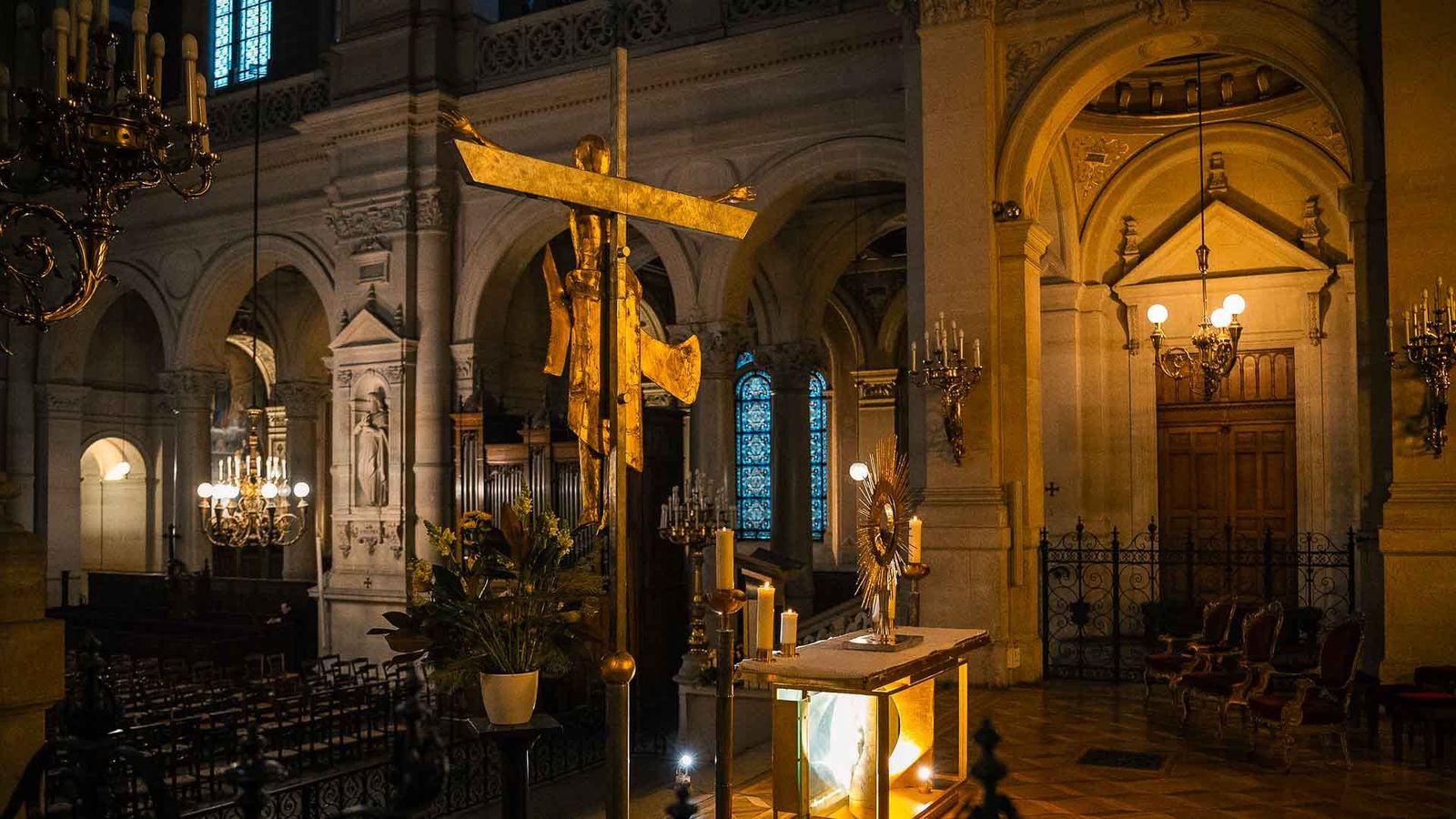
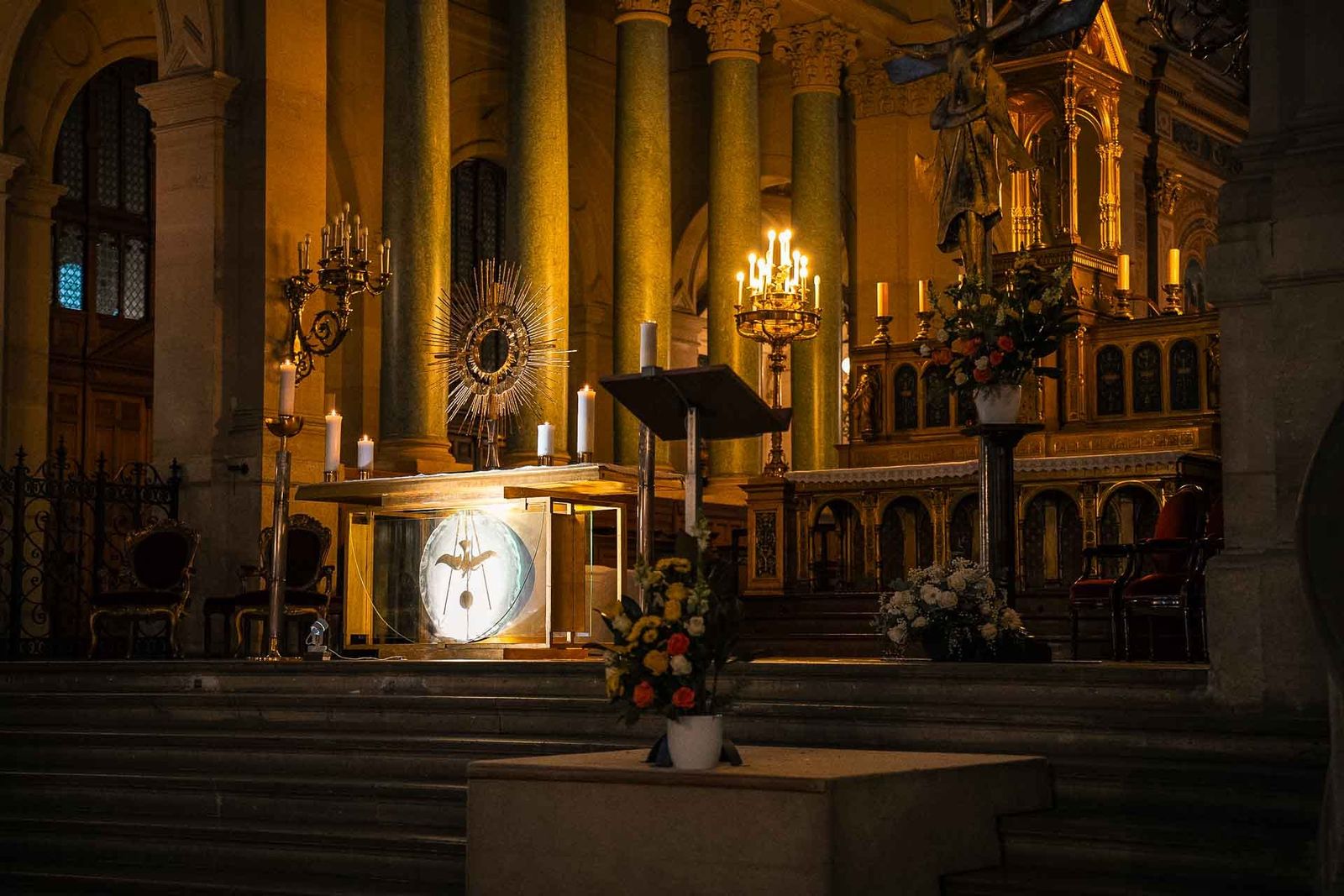
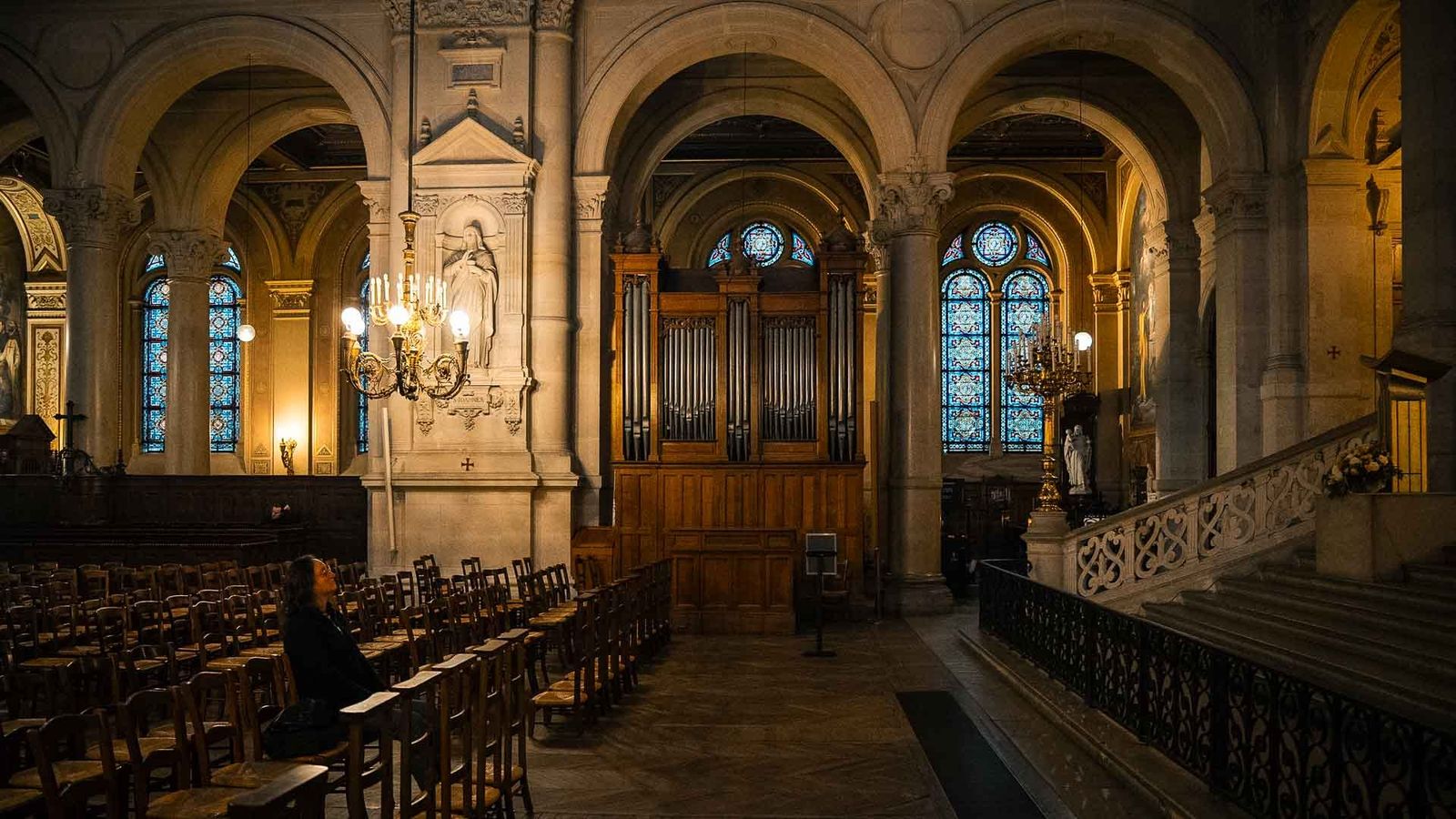
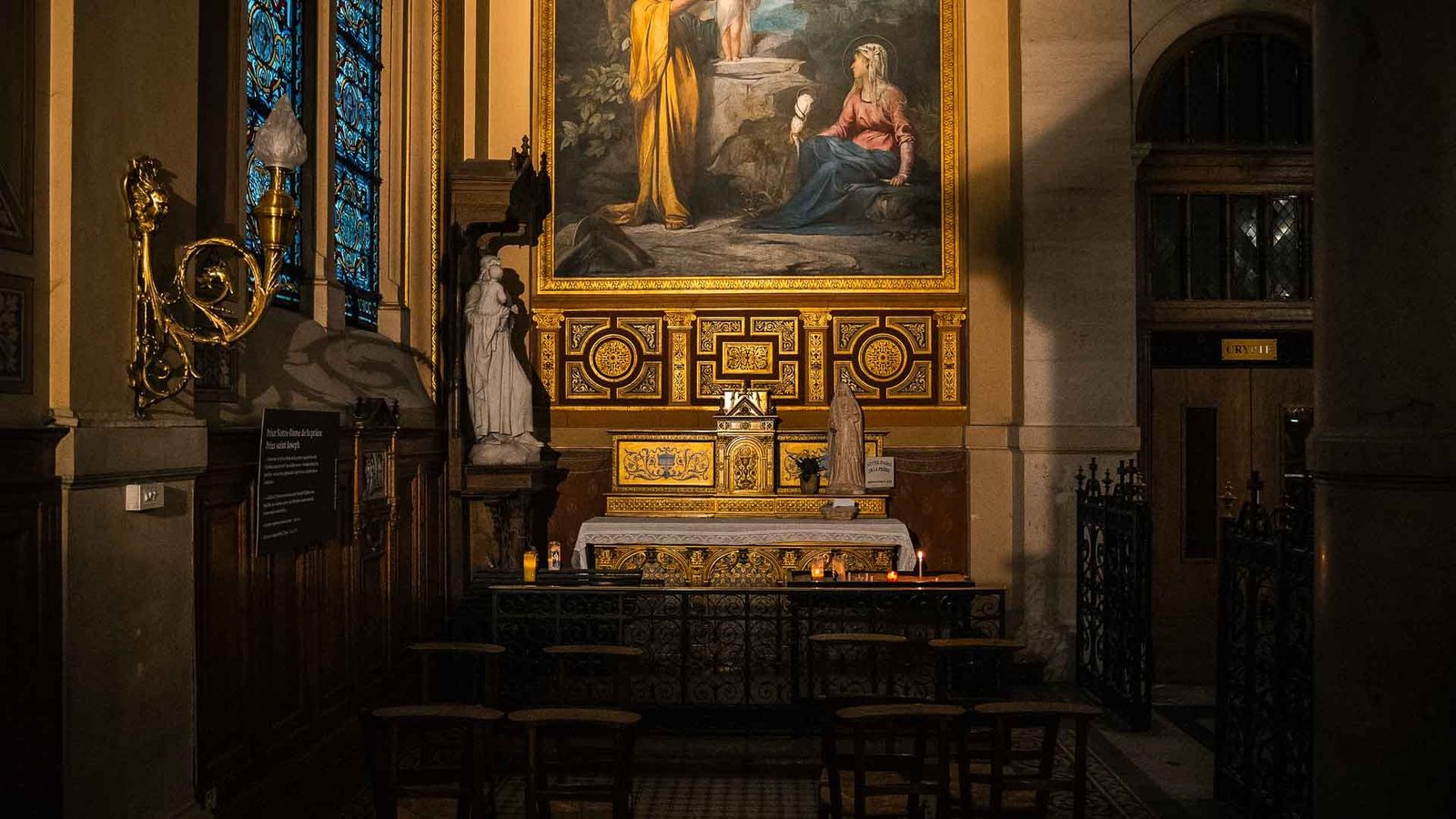
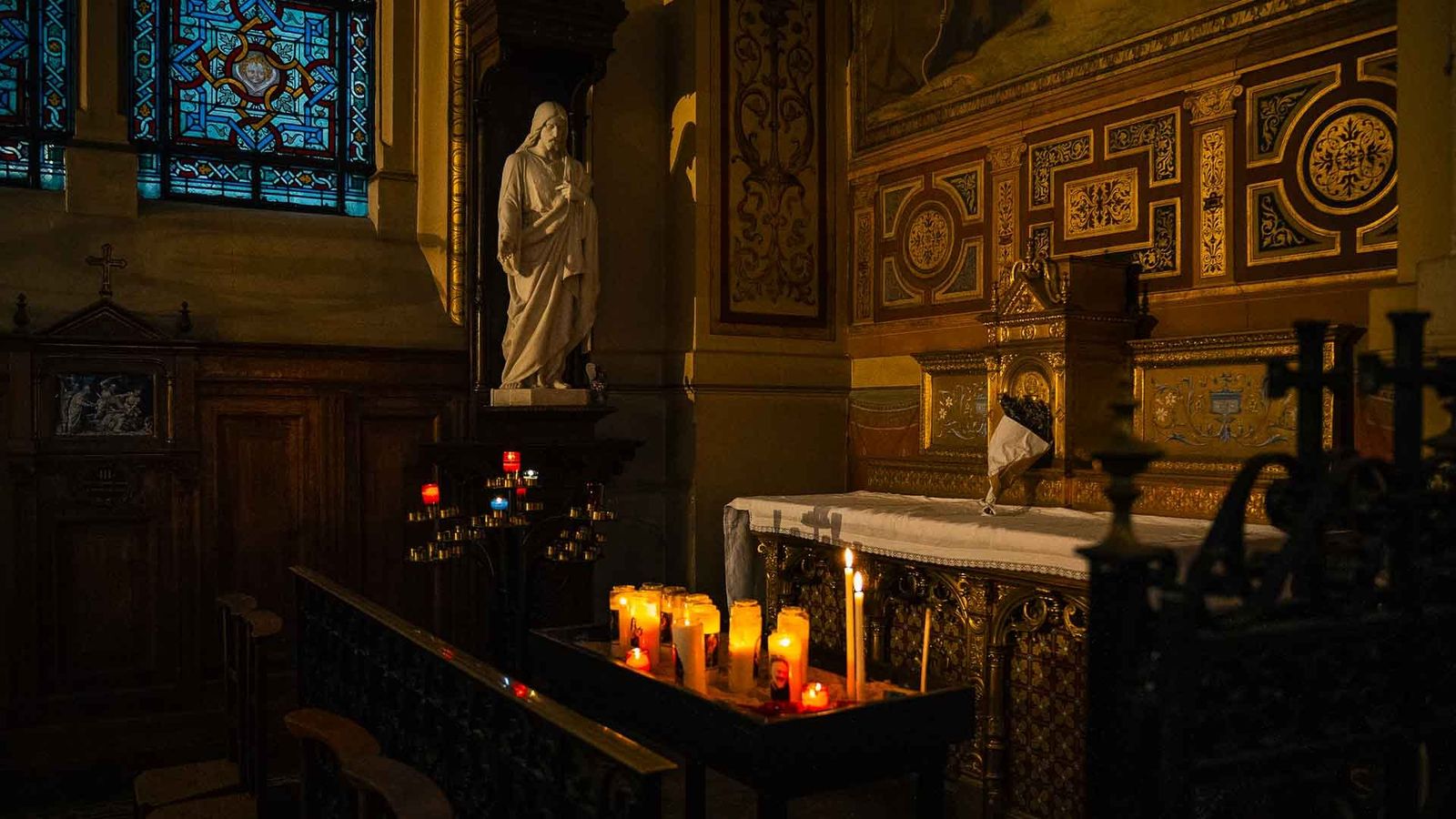
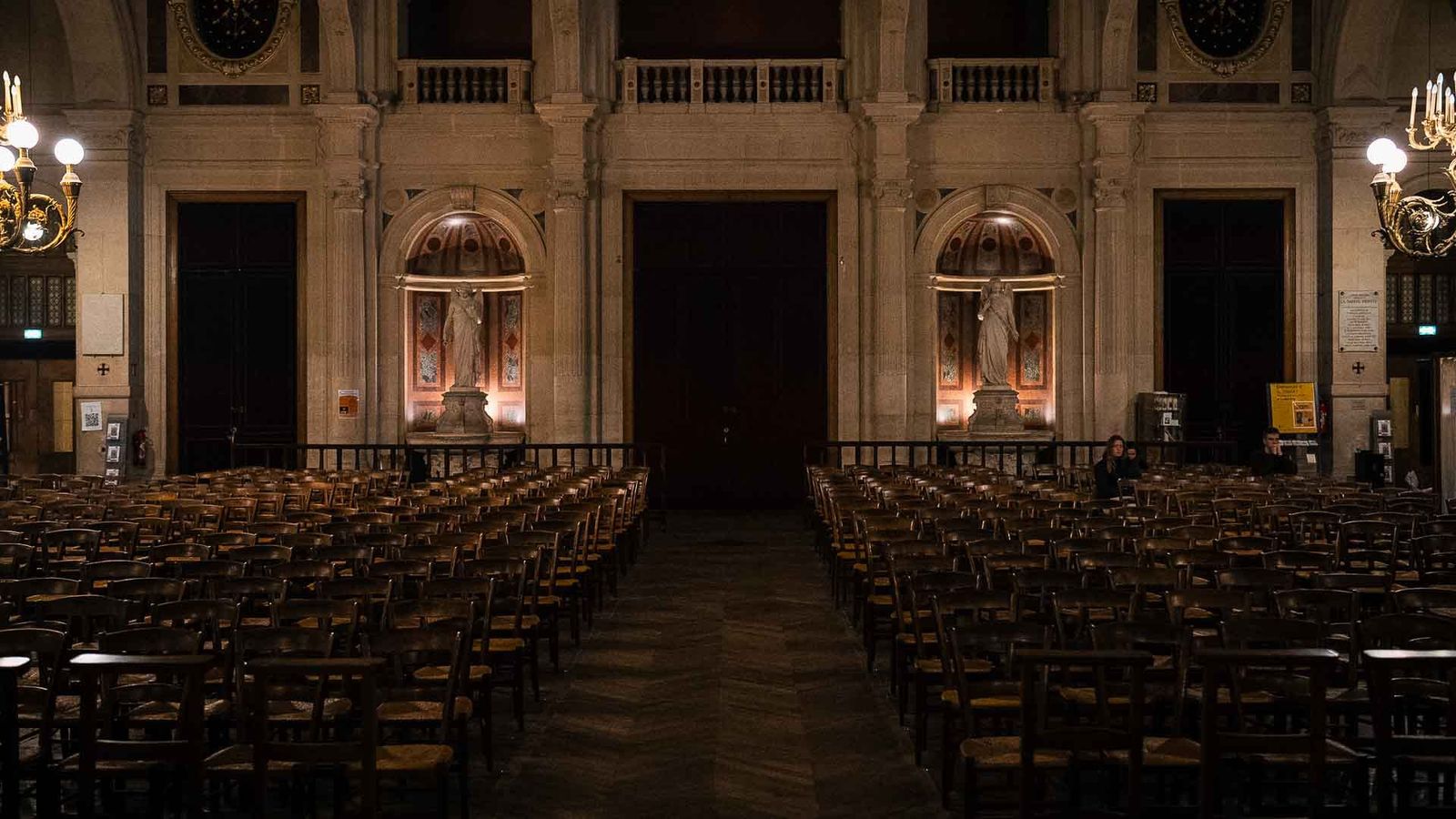
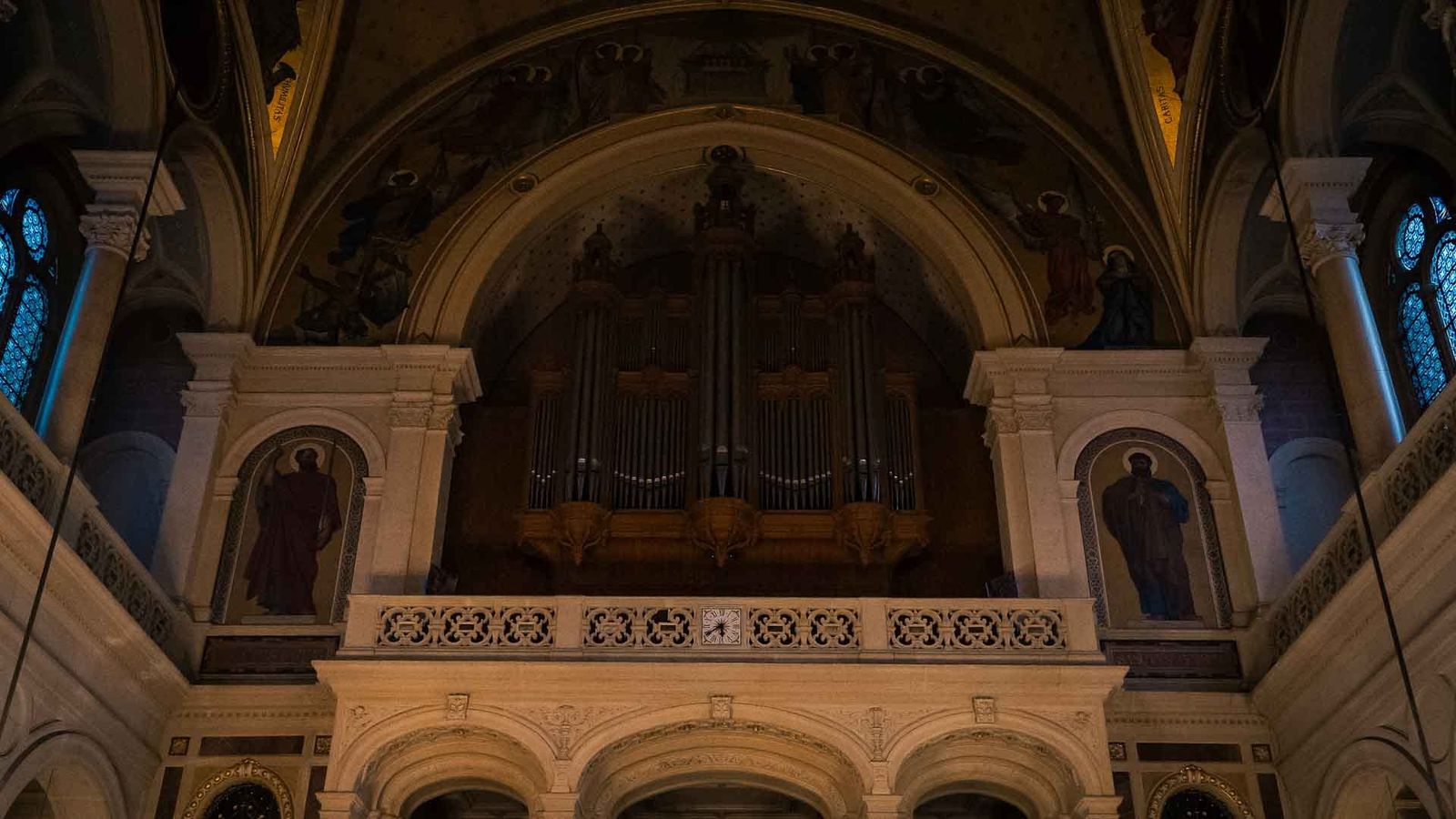
Inside, the elevated chancel is framed by a magnificent high altar and ten green stucco columns symbolizing the Ten Commandments. The nave’s six supporting pillars each showcase two apostles, enhancing the church’s spiritual grandeur. The walls are adorned with academic-style paintings, reflecting Napoleon III’s artistic influences. Above the chancel, the Holy Trinity is depicted, while a dramatic Apocalypse scene dominates the area above the grand organ.
A notable feature is the imperial balcony, originally intended for Napoleon III, though he never used it. Today, it remains the best vantage point to admire the church’s majestic nave and altar.