The Statue of Liberty is one of the most iconic symbols of freedom and democracy in the world.
Towering over New York Harbor, this colossal figure has welcomed generations of immigrants to the United States and continues to stand as a beacon of hope.
However, the story of Lady Liberty is as fascinating as the ideals she represents. A gift from France, her journey began in the heart of Paris, long before she found her home on Liberty Island.
A Vision of Friendship and Freedom
The origins of the Statue of Liberty date back to the mid-19th century, an era of grand industrial and engineering achievements. The idea of gifting a monument to the United States was conceived by the French politician and intellectual Edouard de Laboulaye. A staunch supporter of the Union cause and an advocate of republican ideals, Laboulaye saw this gesture as a way to celebrate Franco-American friendship and the shared commitment to democracy.
On the evening of April 21, 1865, Edouard de Laboulaye hosted a gathering at his home in Gatigny, Lorraine, to celebrate the victory of the Union over the Confederacy in the American Civil War. However, tensions were high, as Napoleon III had supported the Confederacy. Laboulaye proposed the idea of a joint Franco-American project: a monument symbolizing liberty. Among the attendees was a young sculptor, Frédéric Auguste Bartholdi, who was captivated by the concept. It would take a decade before the project took shape.
In 1871, Bartholdi traveled to the United States, bringing with him sketches and letters of introduction from Laboulaye. He envisioned a colossal figure, inspired by ancient statues like the Colossus of Rhodes. Originally, Bartholdi had designed a similar concept for a statue at the entrance of the Suez Canal, titled Egypt Bringing Light to Asia. That project was never realized, and he repurposed the design for New York Harbor.
Designing a Colossal Symbol
Bartholdi envisioned a figure draped in classical robes, holding a torch high in her right hand, symbolizing enlightenment. Her left hand would clutch a tablet inscribed with the date of the American Declaration of Independence: July 4, 1776. The statue’s face was said to be inspired by Bartholdi’s own mother, a testament to the deep personal connection he had with the project.
The construction of the statue required immense engineering prowess. Initially, the renowned architect Eugène Viollet-le-Duc was tasked with designing the internal structure. He designed the statue’s torch, but he died in 1879 before completing the project. The responsibility then fell to Gustave Eiffel, the mastermind behind the Eiffel Tower. Eiffel introduced an innovative iron framework that allowed the statue to withstand strong winds and the natural expansion and contraction of the metal.
From Paris to New York: The Assembly of a Giant
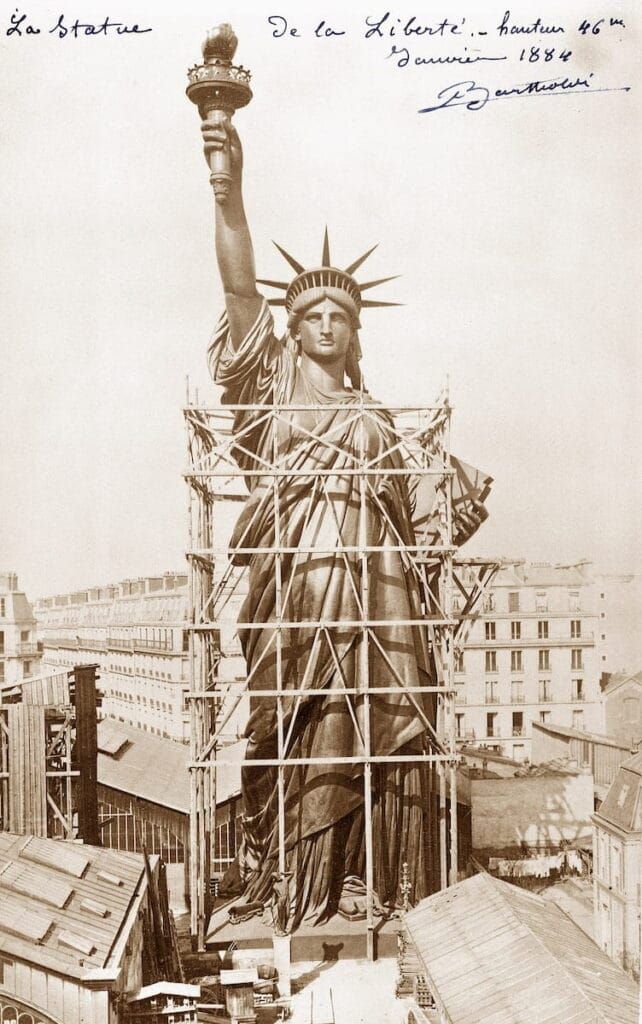
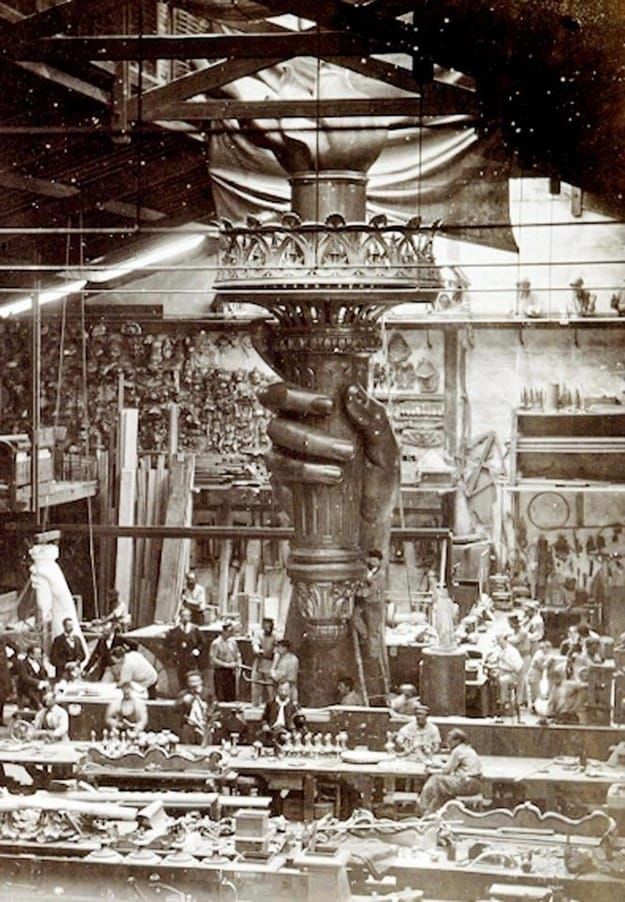
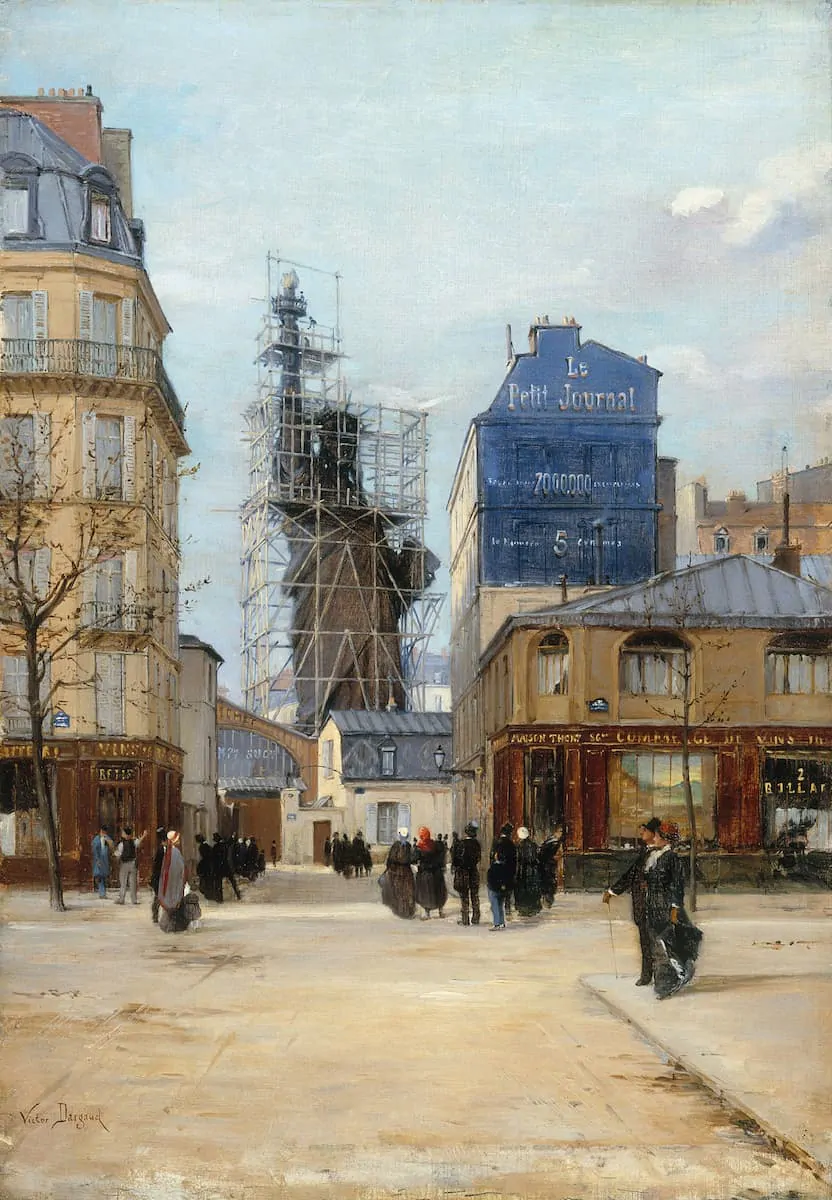
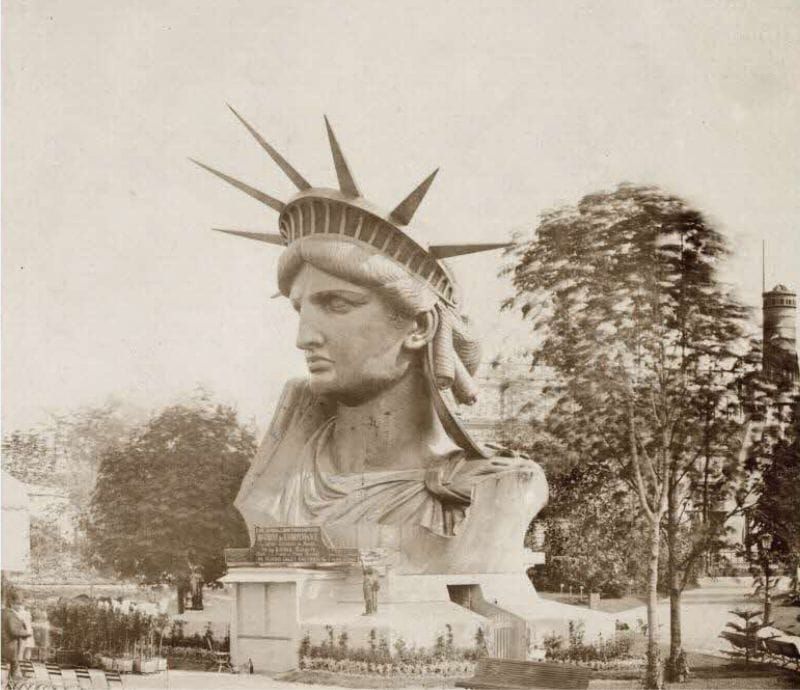
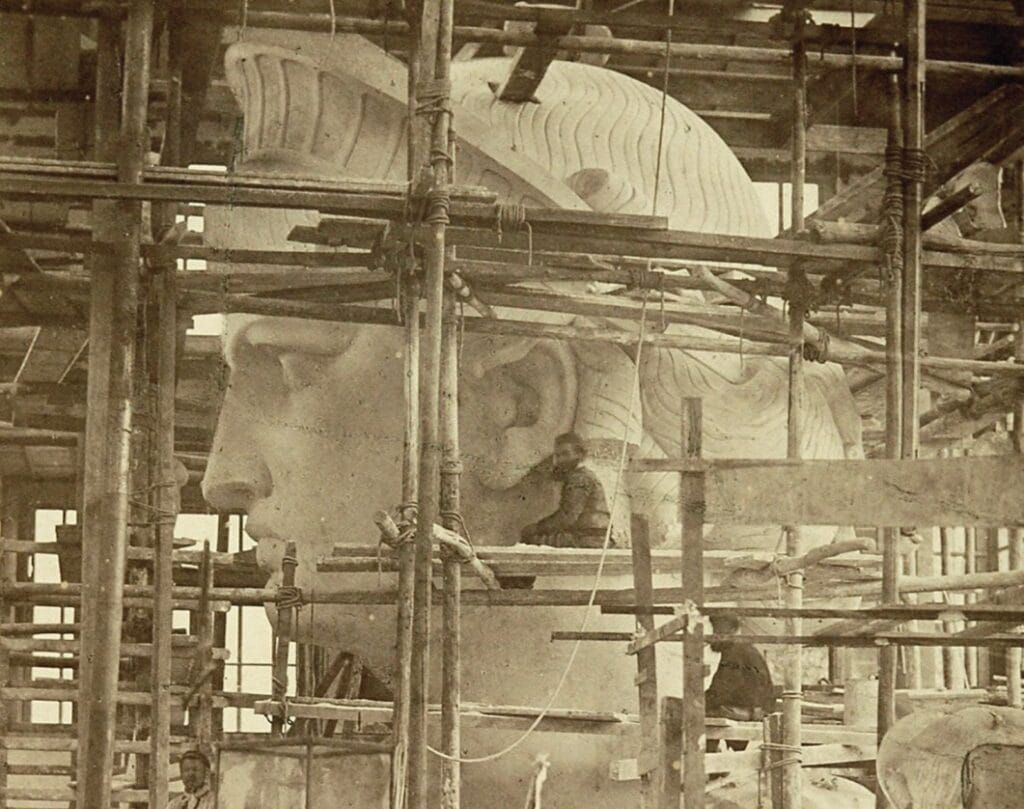
The fabrication of the statue took place at the workshops of Gaget, Gauthier & Co. at 25 Rue de Chazelles in Paris. Over the years, the Parisians watched as Lady Liberty slowly took shape. Pieces of the statue were displayed in public exhibitions to garner support and raise additional funds. The colossal right hand, holding the torch, was showcased at the 1876 Centennial Exposition in Philadelphia, while the massive head was exhibited at the 1878 Paris Exposition Universelle.
At the same time, the fundraising campaign in France lasted five years. A gala was held at the Louvre in 1875, raising 40,000 francs. French newspapers such as Le Petit Journal encouraged donations from the public. In the U.S., efforts were slower, as President Ulysses S. Grant showed little interest in the project, and conservative factions were wary of a French gift symbolizing liberty.
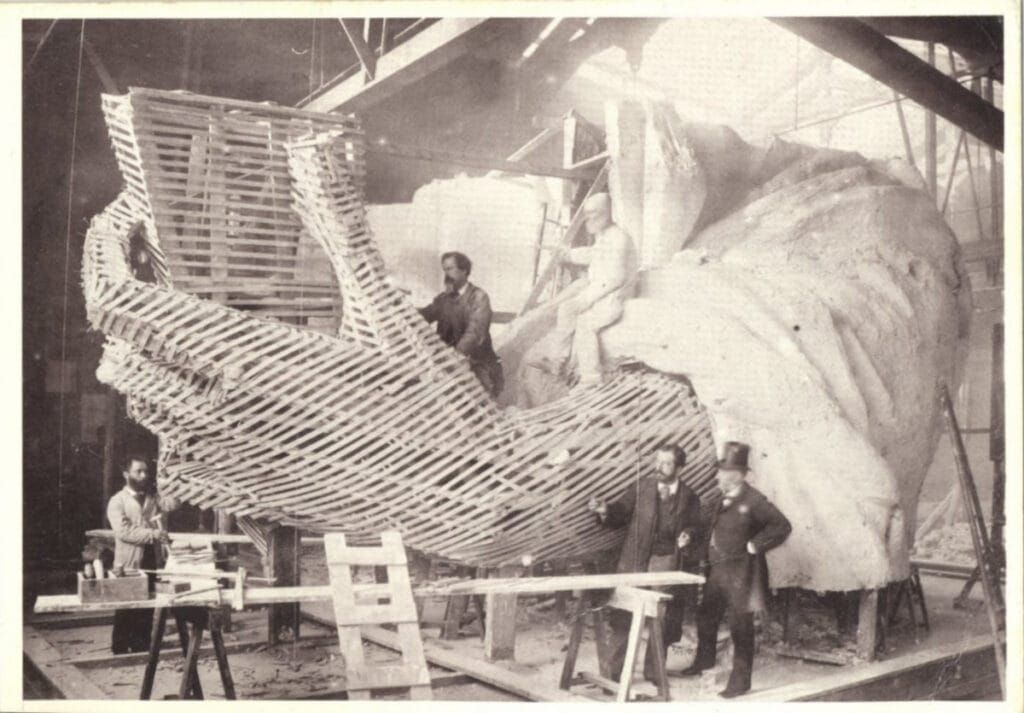
By 1884, the statue was fully assembled in Paris, standing as a temporary landmark in the French capital. On July 4, 1884, she was officially presented to the United States in a grand ceremony attended by dignitaries, including Ferdinand de Lesseps, the engineer behind the Suez Canal.
Dismantling and shipping the statue was no small feat. She was carefully taken apart into over 300 individual pieces, packed into 214 wooden crates, and transported aboard the French frigate Isère. After a month-long voyage across the Atlantic, she arrived in New York on June 17, 1885, to a hero’s welcome.
A Grand Homecoming and Inauguration
The statue’s arrival was met with immense excitement, but there was one problem: the pedestal was not yet completed. Designed by American architect Richard Morris Hunt, the construction of the pedestal faced financial difficulties. Thanks to a massive public fundraising campaign led by newspaper magnate Joseph Pulitzer, who encouraged Americans to donate, the funds were finally secured.
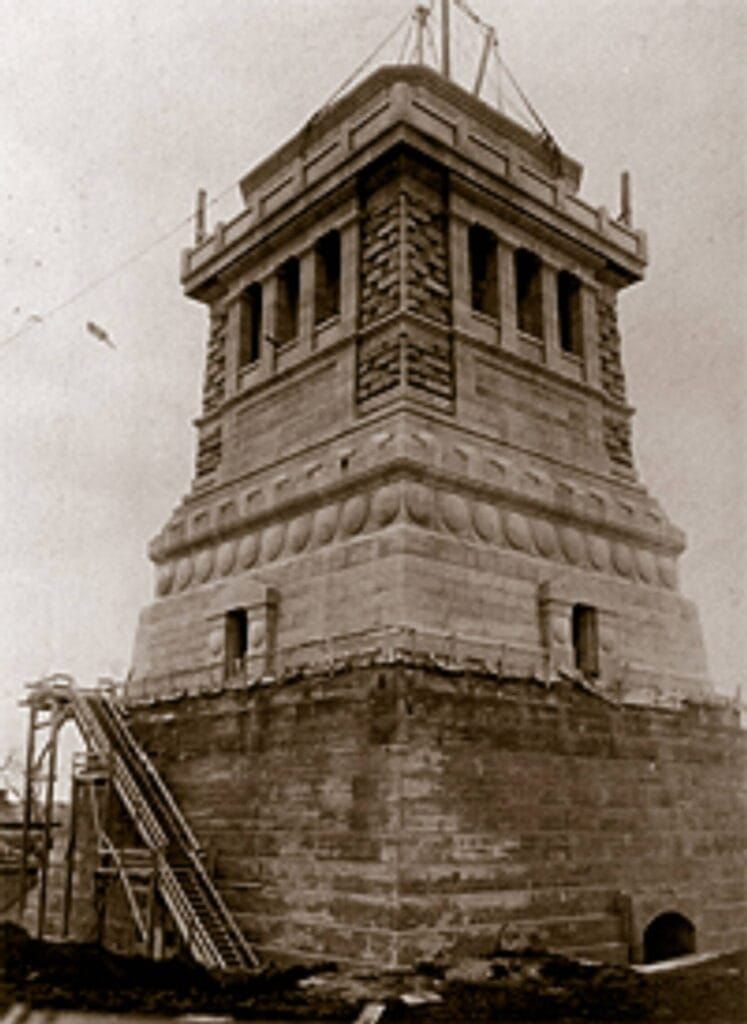
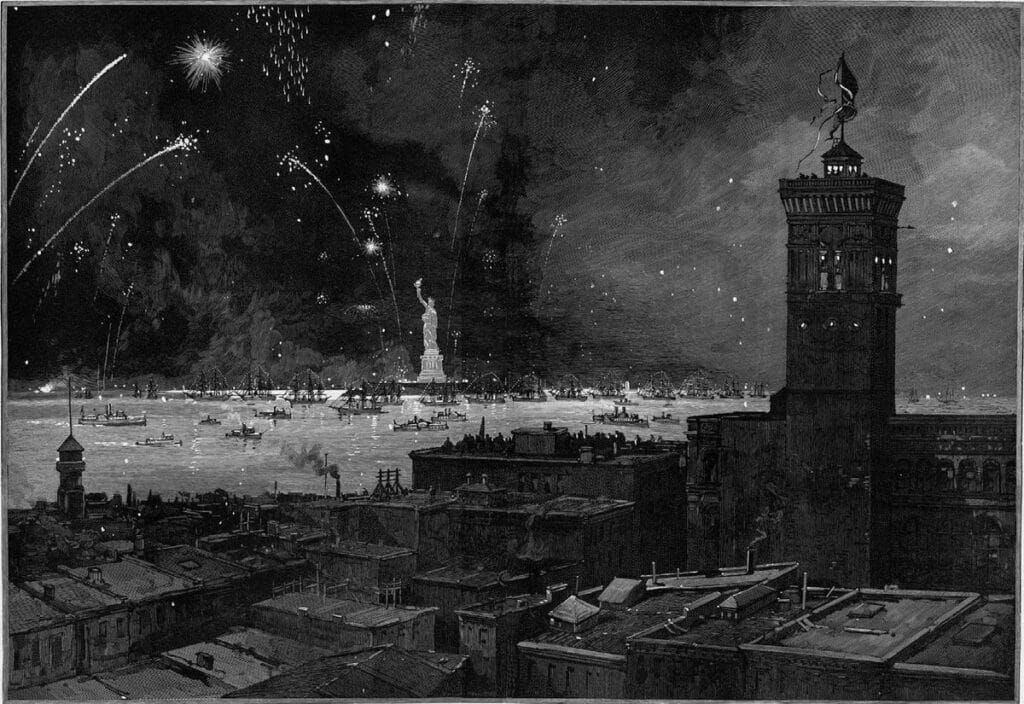
Once the pedestal was finished in the spring of 1886, the arduous task of reassembling the statue began. Using thousands of rivets and bolts, workers painstakingly rebuilt the massive figure. The statue was finally inaugurated on October 28, 1886, in a grand dedication ceremony presided over by President Grover Cleveland. Over a million spectators gathered for the event, which included a massive naval parade and a speech by Cleveland acknowledging the statue as a symbol of enduring Franco-American friendship.
The Legacy of Lady Liberty
The Statue of Liberty became a powerful symbol of hope and freedom. Between 1892 and 1954, millions of immigrants passed through Ellis Island, with Lady Liberty as their first sight of America. Her presence reassured those seeking a better future.
The statue has undergone several restorations over the years. In 1924, she was declared a national monument. From 1984 to 1986, a major restoration was undertaken for her centennial. The original torch, which had been altered in 1916, was replaced with a new gold-leafed replica.
A Timeless Emblem of Liberty
Today, the Statue of Liberty remains one of the most visited landmarks in the United States, drawing millions of tourists from around the globe. Her image is synonymous with the ideals of democracy, equality, and freedom. Whether viewed from the deck of a ferry, soaring above in a helicopter, or standing at her pedestal, she continues to inspire awe and admiration.
From the foundries of Paris to the shores of New York, the Statue of Liberty’s story is one of vision, perseverance, and unity. She is not just a monument; she is a promise—a reminder of the values that bind nations together and the hope that shines brightest in times of darkness.

Visiting the Paris replica of the Statue of Liberty
Lady Liberty quickly became an icon, but her story doesn’t end there. After she left Paris, the city found a new marvel in the Eiffel Tower (1887-1889), another testament to visionary engineering and human ingenuity.
For those in Paris, a visit to Île aux Cygnes offers a delightful surprise. There, you’ll find a replica of the Statue of Liberty, standing proudly on the Seine. This smaller version, gifted by the American community in Paris, faces west towards her larger sister in New York, symbolizing the enduring bond between the two nations. It’s a perfect spot for a leisurely stroll and a moment of reflection on the shared history and ideals of liberty and democracy.
So next time you gaze up at the Statue of Liberty, remember the incredible journey she took to get there. From the bustling streets of Paris to the shores of New York, she stands as a timeless symbol of freedom and friendship, a true marvel of the modern world.